
O que é CTA (call to action) e como usar no marketing
Por Tiago CostaAtualizado em 2 de julho de 2026
CTA (call to action, ou chamada para ação) é o convite que leva o usuário à próxima ação, geralmente um botão ou link. Um bom CTA costuma ter:
- um verbo de ação claro (comprar, baixar, assinar);
- um benefício explícito para quem clica;
- destaque visual, com cor de contraste;
- uma única ação por vez, sem competir com outras.
O que é um CTA (call to action)
CTA é a sigla em inglês para call to action, que em português vira chamada para ação. É o elemento que diz ao usuário, de forma direta, o que fazer em seguida: assine a newsletter, peça um orçamento, adicione ao carrinho. Pode ser um botão, um link com texto-âncora, uma frase ou até um banner.
A função do CTA é tirar a pessoa da dúvida. Um visitante interessado, mas sem uma instrução visível, tende a hesitar e sair. O CTA elimina esse atrito ao apontar o caminho e reduzir o esforço de decisão a um clique.
Por isso o CTA aparece em praticamente toda peça de marketing: no fim de um artigo, no topo de uma landing page, dentro de um email ou em um anúncio. Onde há um objetivo de conversão, há (ou deveria haver) um CTA.
Para que serve um CTA e por que ele é decisivo
O CTA existe para transformar atenção em ação. Ele conecta o conteúdo que atraiu a pessoa ao resultado que o negócio quer, seja gerar um lead, uma venda ou uma inscrição.
Sem um CTA claro, mesmo um ótimo conteúdo vira um beco sem saída: o leitor gosta, mas não sabe o que fazer com aquilo. Com um CTA bem posicionado, o mesmo conteúdo passa a alimentar o funil, encaminhando o visitante para a próxima etapa da jornada de compra.
É também o CTA que dá sentido às métricas de otimização de conversão (CRO). Testar palavras, cores e posição do botão só faz diferença porque cada ajuste no CTA muda diretamente quantas pessoas avançam.
Tipos de CTA e onde eles aparecem
Os CTAs assumem formatos diferentes conforme o canal e o objetivo. Os mais comuns são:
| Tipo de CTA | Exemplo de uso |
|---|---|
| Botão | "Começar agora" no topo de uma landing page. |
| Link no texto | Uma chamada dentro de um artigo, com âncora descritiva. |
| Banner ou pop-up | Convite para baixar uma isca digital. |
| CTA de email | "Confirmar minha vaga" no fim de uma mensagem. |
Além do formato, o CTA varia de intensidade. Um CTA primário pede a ação principal (comprar, agendar), enquanto um CTA secundário oferece um passo mais leve (saber mais, ver exemplos) para quem ainda não está pronto.
O que faz um bom CTA converter
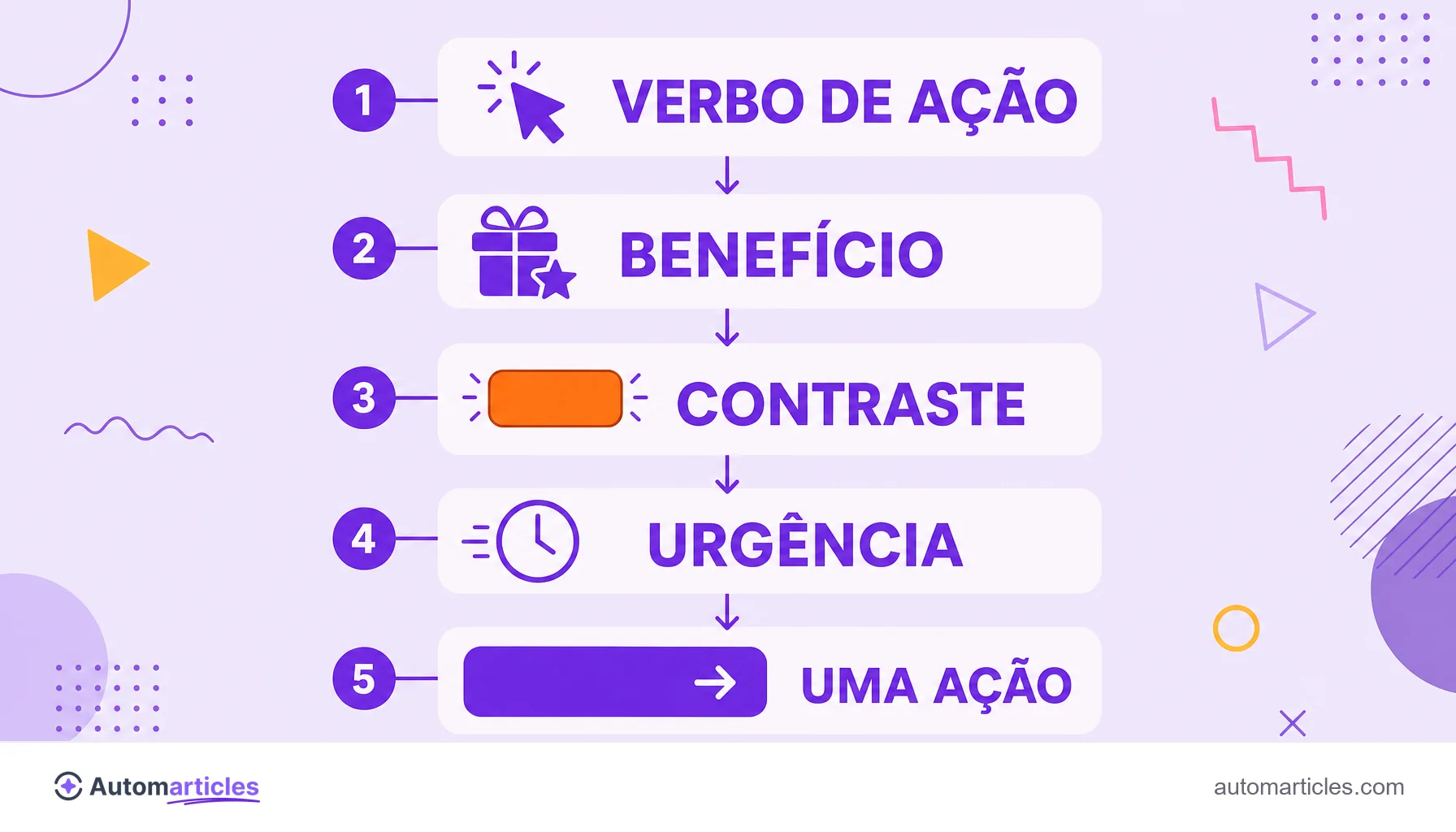
Um CTA eficiente não é só um botão bonito. Ele combina clareza, contexto e um motivo para clicar agora. Os ingredientes que mais importam:
- Verbo de ação no comando: comece com um verbo direto (baixe, garanta, experimente).
- Benefício explícito: deixe claro o que a pessoa ganha (receba o guia grátis, não só enviar).
- Contraste visual: o botão precisa saltar aos olhos na página.
- Relevância para o público: um CTA alinhado à persona e ao momento dela converte muito mais.
- Senso de oportunidade: quando é verdadeiro, um gatilho de urgência ou escassez aumenta o clique.
A personalização tem um peso enorme. Segundo dados da HubSpot, que analisou mais de 330 mil CTAs, os CTAs personalizados para o visitante convertem cerca de 202% melhor do que os genéricos. Ou seja, falar com a pessoa certa, na hora certa, vale mais do que qualquer detalhe estético.
CTA por etapa do funil
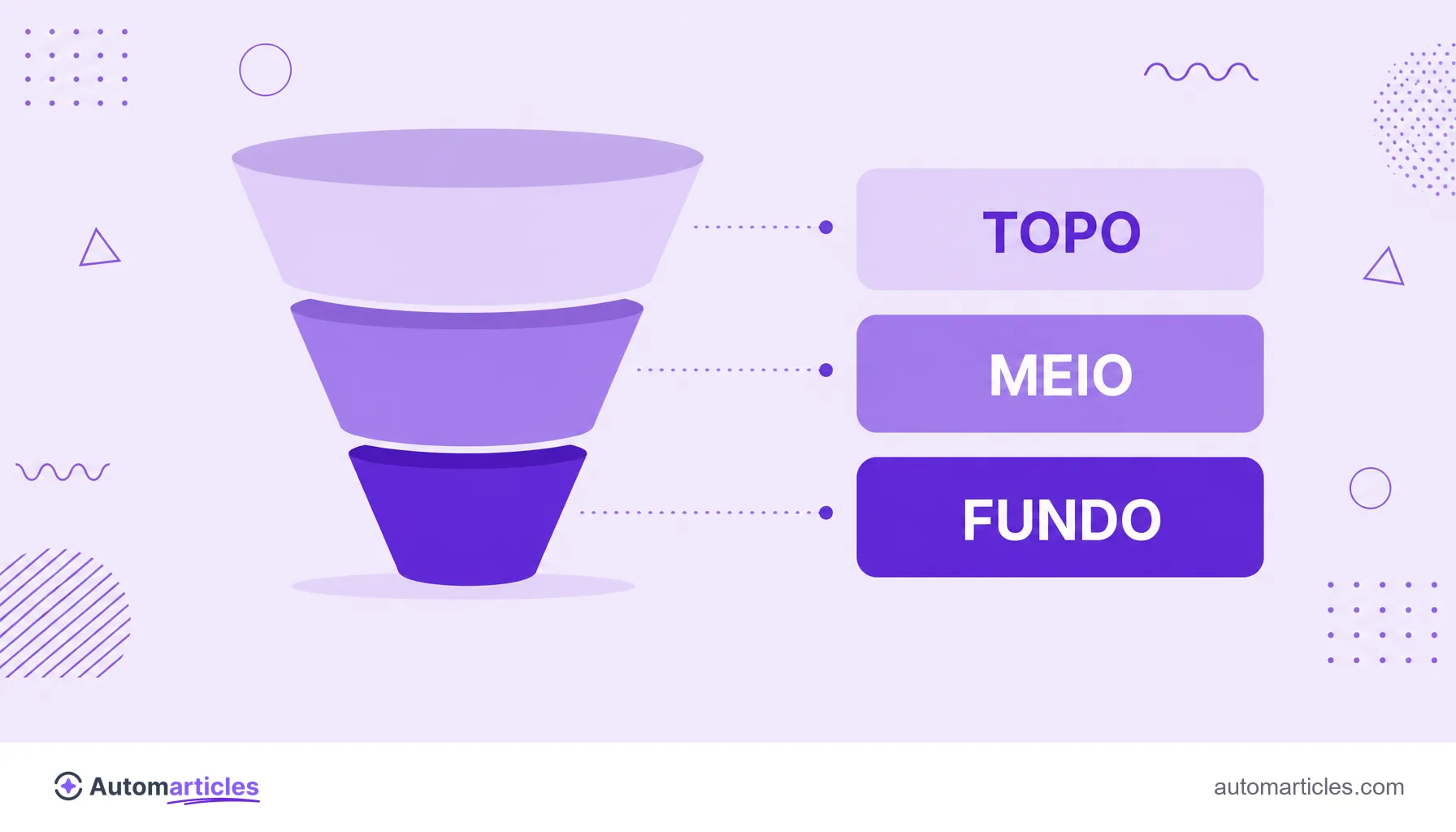
O melhor CTA depende de onde o visitante está. Pedir uma compra para quem acabou de chegar costuma assustar; oferecer só um artigo para quem já quer comprar desperdiça a intenção. Um roteiro por etapa:
- Topo de funil: no topo de funil, use CTAs leves, como ler o guia completo ou assinar a newsletter.
- Meio de funil: convide para aprofundar, com baixar o material ou receber um diagnóstico, alimentando a nutrição de leads.
- Fundo de funil: no fundo de funil, seja direto: falar com vendas, começar o teste grátis, comprar agora.
Casar o CTA com a etapa evita queimar oportunidades e faz cada peça de conteúdo empurrar o visitante um passo adiante, sem pressa nem atalhos forçados.
CTA na saúde, na administração e outros sentidos da sigla
Como CTA é uma sigla curta, ela nomeia coisas bem diferentes fora do marketing. Vale esclarecer as principais para não confundir:
- CTA na saúde: costuma significar Centro de Testagem e Aconselhamento, unidade do serviço público que faz testes e orientação, por exemplo para HIV e outras infecções.
- CTA na administração e nos negócios: pode aparecer como sigla de empresas, cursos ou sistemas específicos, sem relação com a chamada para ação.
- CTA em concursos e educação: nomeia faculdades e portais de concurso que usam a sigla no nome.
- CTA como call to action: o sentido usado aqui, no marketing e em SEO, é sempre a chamada que induz o usuário à próxima ação.
Neste glossário, sempre que falamos em CTA estamos tratando da chamada para ação, o convite que leva o visitante a converter.