
What demand generation is and how to do it
By Tiago CostaUpdated on July 2, 2026

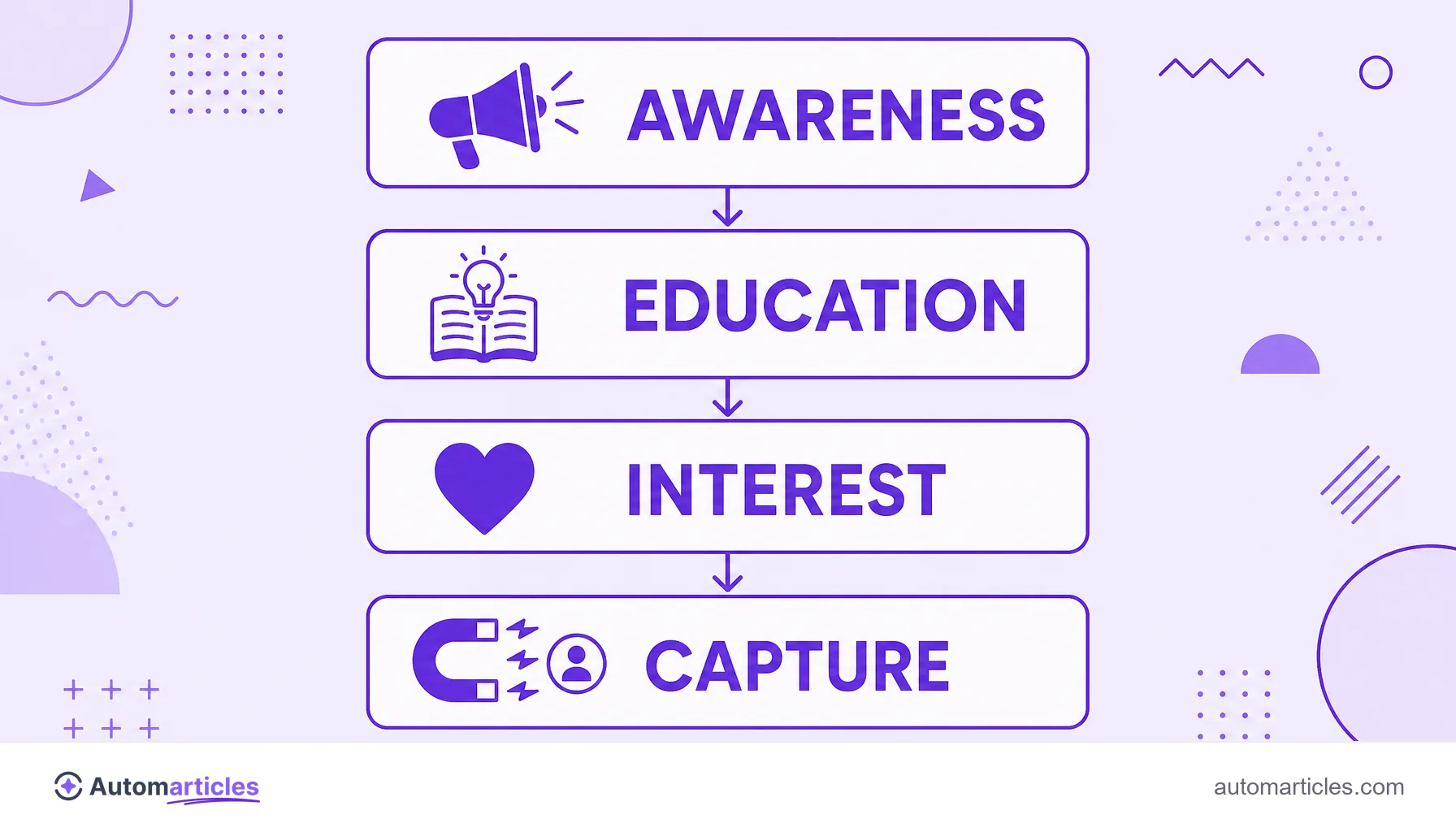
Demand generation is creating interest in a product or service before the active search. In practice, it involves:
- educating the market with relevant content;
- building brand awareness and authority;
- nurturing those not yet ready to buy;
- being present before the customer enters the market.
What demand generation is
Demand generation is the set of marketing strategies aimed at sparking interest in a product or service even before a person looks for it. Instead of waiting for the customer to arrive with the intent ready, the brand plants the seed: it points out a problem, educates about the solution and positions itself as a reference on the subject.
The concept usually walks alongside inbound marketing, since much of the demand is generated with content that attracts and informs. The difference in focus is that demand generation does not only want to capture those who search, it wants to expand the number of people who come to want what you offer.
That is why demand generation is considered the top of a sustainable growth strategy: without interest created up front, there are few people left to convert later.
Demand generation vs demand capture
Every mature strategy balances two movements. Demand generation creates the interest; demand capture harvests those already searching. Confusing the two leads to investing only in the harvest and forgetting to plant.
| Aspect | Demand generation | Demand capture |
|---|---|---|
| Goal | Create interest and need | Serve those who already want to buy |
| Audience | Not searching for the solution yet | Already searching actively |
| Typical channels | Content, social, video, PR | Paid and organic search, comparison sites |
| Return | Medium and long term | Short term |
In practice, the two feed each other. The demand generated today becomes the search captured tomorrow. Whoever only captures is hostage to the current volume of searches; whoever also generates demand expands their own market over time.
Why invest in demand generation: the 95% figure
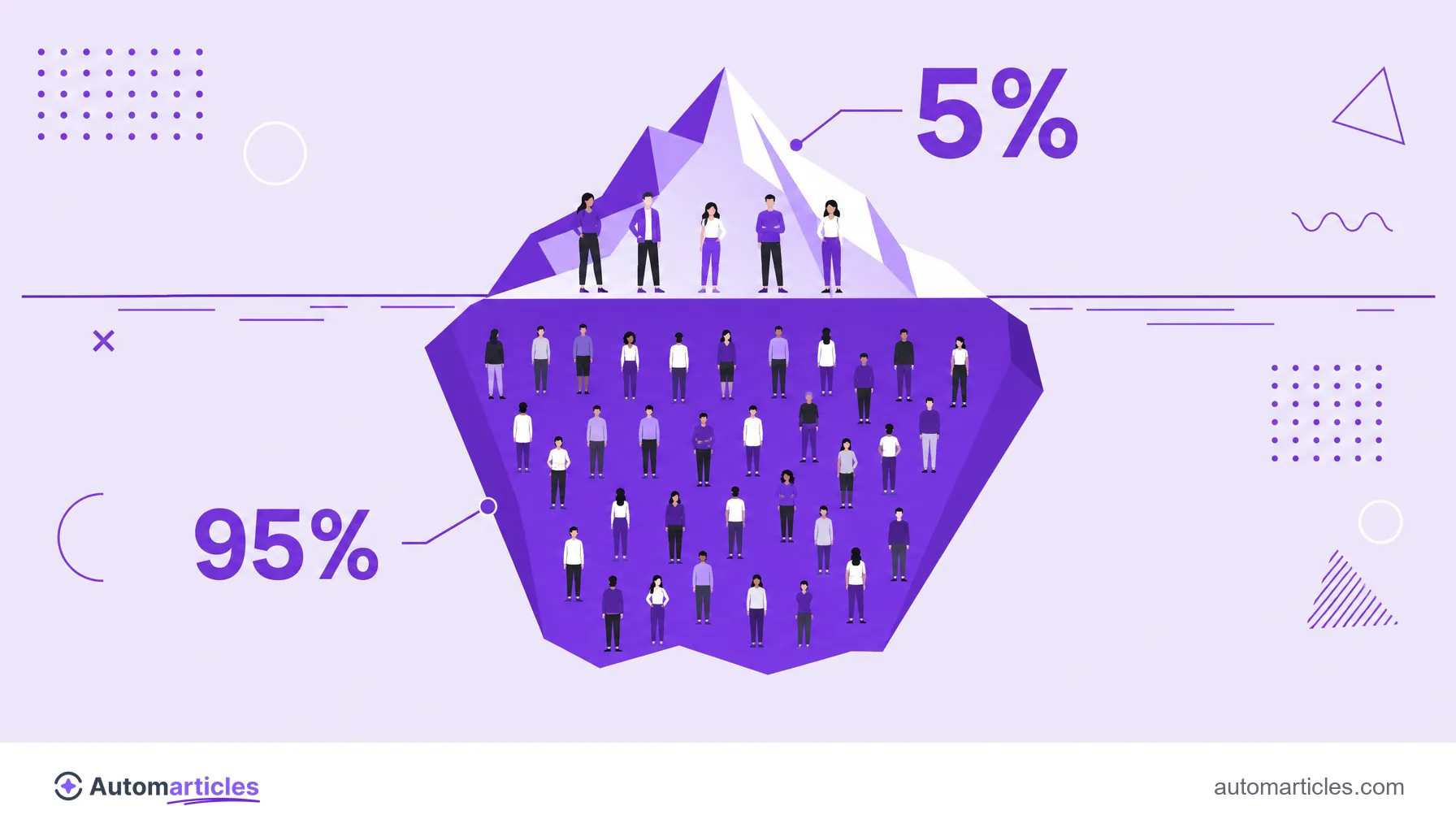
The biggest reason to generate demand is mathematical. At any given moment, only a small fraction of your market is actually ready to buy. The vast majority has not even started looking.
This is the famous 95-5 principle, popularized by the LinkedIn B2B Institute based on research from the Ehrenberg-Bass Institute: in B2B markets, only about 5% of buyers are in the market at a given moment, while 95% are not buying right now. If you only talk to those who are ready, you ignore almost your entire potential audience.
The strategic reading is clear. Investing only in capture means competing expensively for that 5% and always arriving late in the customer's mind. Generating demand is building familiarity and trust with the remaining 95%, so your brand is the first one remembered when they finally enter the market.
What are the types of demand
Before generating demand, it helps to understand that it is not one single thing. In practical terms, people usually talk about a few types:
- Existing demand: people already know they have the problem and are looking for solutions. Here capture weighs more.
- Latent demand: the problem exists, but the audience does not yet know the solution or has not even noticed the need. This is the most fertile ground for demand generation.
- Declining demand: interest in a category is falling and needs to be reheated with new angles.
- Seasonal demand: interest rises and falls with the time of year, which requires bringing the messaging forward before the peaks.
Knowing which scenario you operate in changes the tactic. Where there is latent demand, the work is to educate and raise awareness; where there is existing demand, the focus becomes making the decision easier for whoever is already in the sales funnel.
Demand generation actions in practice
Generating demand is, to a large extent, delivering value before asking for the sale. The most effective actions tend to be:
- Content marketing: articles, guides and videos that educate the audience form the base, which is why content marketing is the engine of demand generation.
- Top-of-funnel content: materials that address the problem, not the product, reach those at the top of the funnel who are not yet thinking about buying.
- Social and video presence: being where the audience spends time builds brand awareness on a recurring basis.
- Rich materials and events: webinars, ebooks and free tools generate qualified interest and trade value for contact details.
- Lead nurturing: after sparking interest, lead nurturing keeps the brand present until the moment of purchase.
The common thread is consistency. Demand generation is not a one-off campaign, it is the constant presence that makes the market remember you before it needs you.
How to measure demand generation
Since much of the return happens in the medium term, measuring demand generation requires looking beyond immediate conversion. Some useful indicators:
- Reach and awareness: audience growth, brand searches and mentions show whether interest is rising.
- Lead volume and quality: how many new contacts come in and how qualified they reach the sales team.
- Acquisition cost: tracking the customer acquisition cost shows whether the generated demand is making conversion cheaper over time.
- Performance by channel: understanding which acquisition channels create the most interest helps reallocate the investment.
The right yardstick combines brand metrics (top) and result metrics (bottom). Looking only at the bottom of the funnel underestimates the value of the demand you created and that is still going to mature.