
What NAP is in local SEO (name, address and phone)
By Tiago CostaUpdated on July 2, 2026
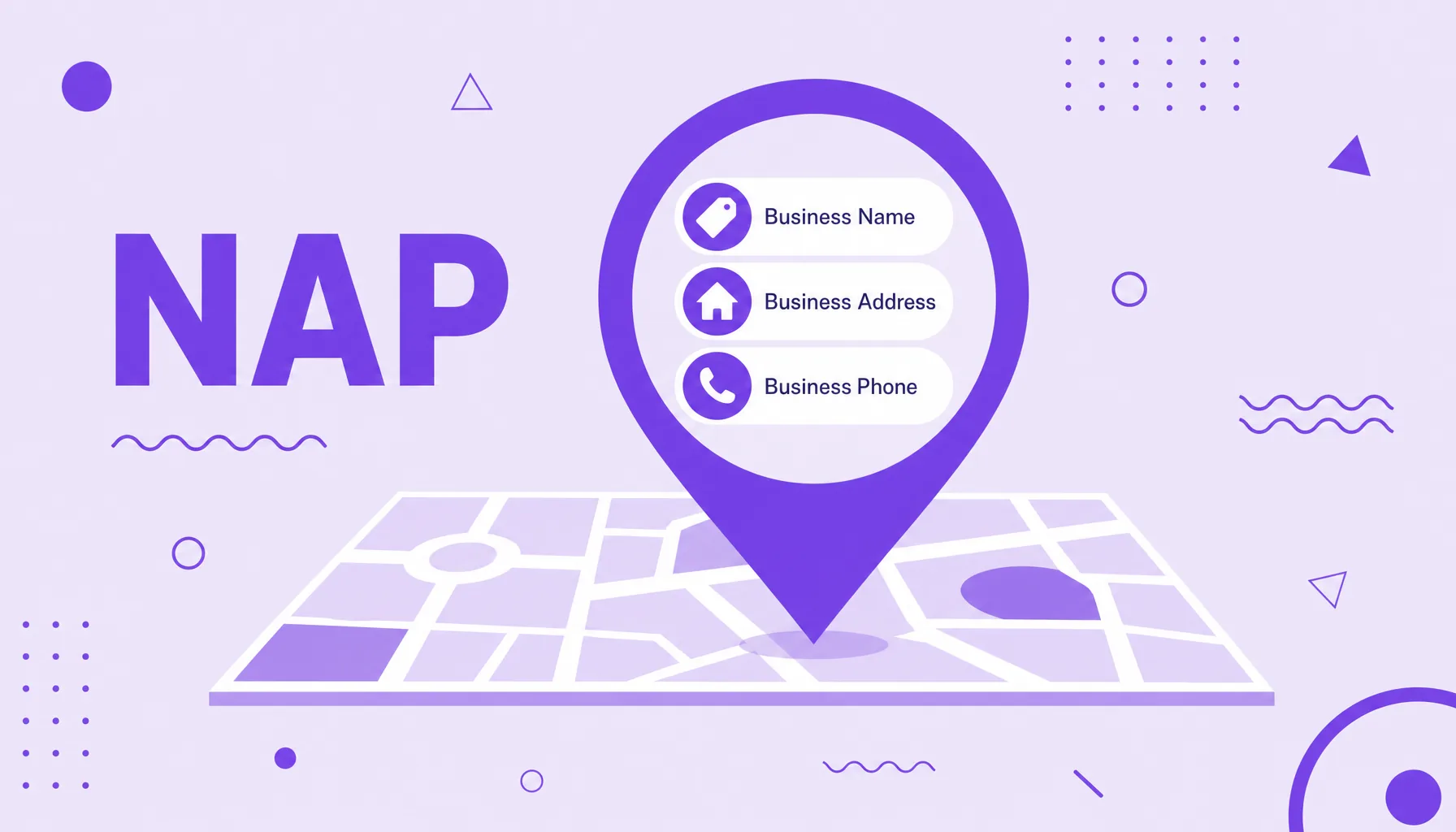
NAP means Name, Address, Phone and is a pillar of local SEO. What matters is NAP consistency, that is, the same data, written the same way, in:
- your site (footer and contact page);
- the Google Business Profile;
- local directories and citations;
- social networks and maps.
What NAP is in local SEO
NAP is the acronym for Name, Address, Phone: the name, the address and the phone of a business. It is one of the most basic pieces of information of any company and, at the same time, one of the most important signals for showing up in local searches, the ones where a person looks for a service or a store near them.
The idea behind NAP is simple: to recommend a business to someone searching for dentist near me, Google needs to be sure which company is which, where it is and how to contact it. The more consistent and reliable that data is across the web, the more confident the search engine is to display the business.
A quick context note: the acronym NAP also appears with other meanings, such as laboratories and support centers, network access points on the internet, and even the English word for a short sleep. Here, NAP always means name, address and phone in the context of local SEO.
Why NAP consistency matters for local SEO
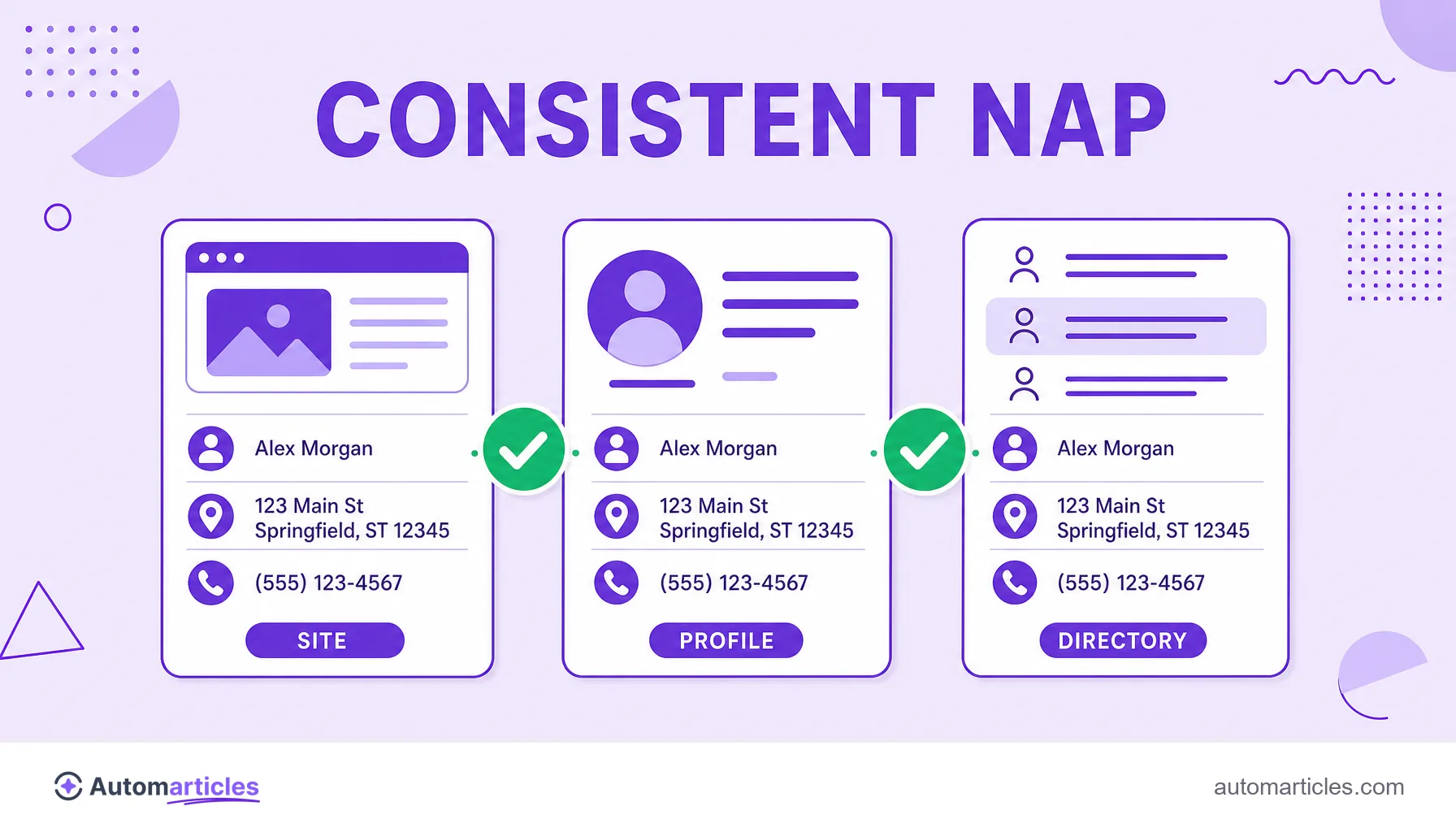
Google builds its trust in a business by cross referencing the NAP mentions spread across the web. When the name, the address and the phone match everywhere, the search engine gains certainty about the identity and location of the company, which helps position it in local SEO and in the local pack (that block with a map and three businesses at the top).
When the data diverges (an old address here, a different phone there), the opposite happens: Google is unsure which information is correct and may downgrade the business or simply not show it. And inconsistency does not only push the algorithm away, it pushes the customer away. According to the local citations report by BrightLocal, 80% of consumers lose trust in a local business when they find incorrect or inconsistent contact details or business names online.
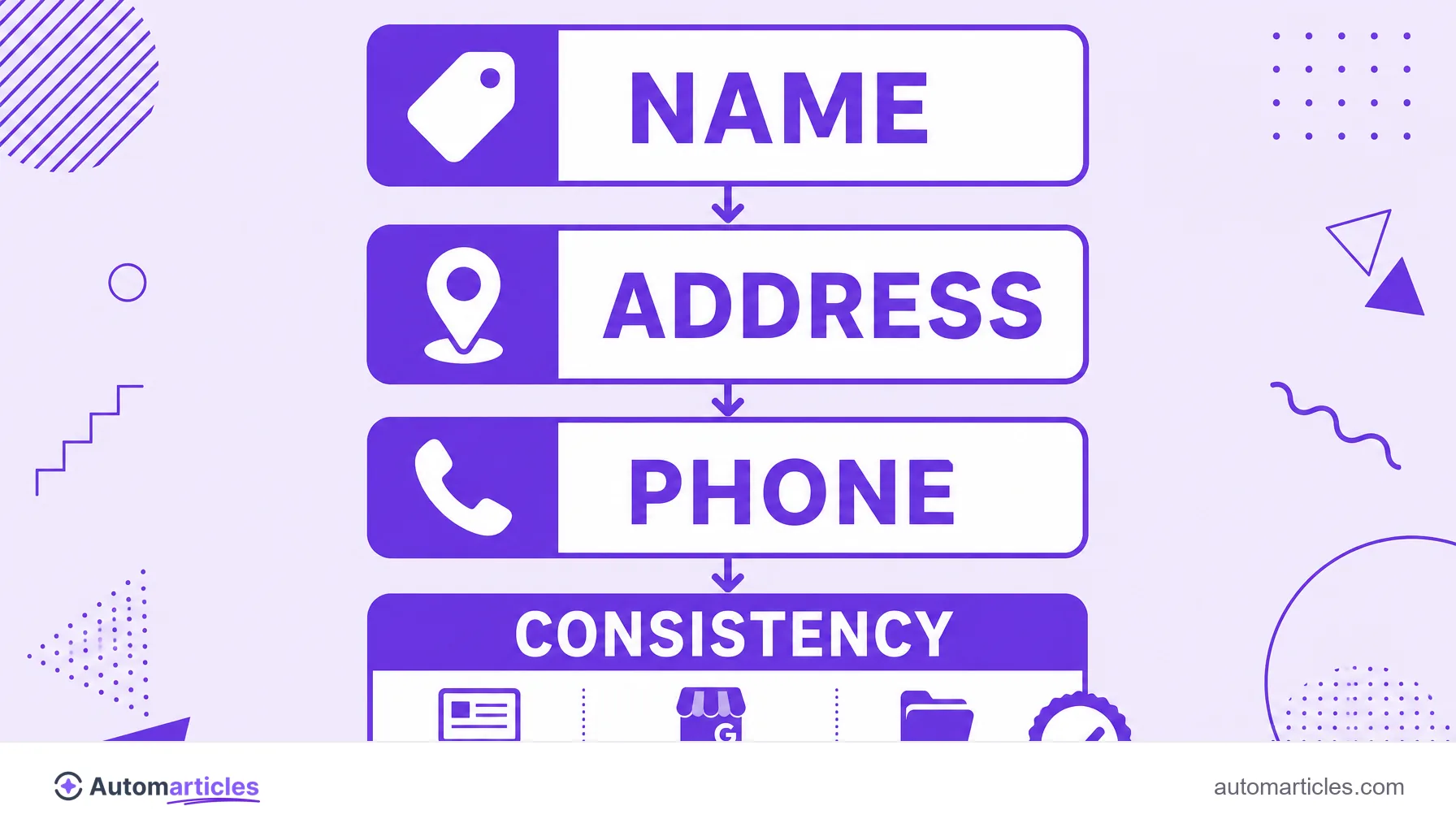
Where NAP needs to appear: site, Google Business Profile and citations
Consistency only pays off if it covers every point where the business is cited. The main ones are:
- Your site: preferably in the footer of every page and on a clear contact page.
- The Google Business Profile: the company profile that feeds the local pack and Maps, where the NAP needs to be flawless.
- Directories and citations: local guides, category listings, associations and review sites that mention the business.
- Social networks and maps: official profiles and other map services beyond Google.
Each consistent appearance of the NAP works as reinforcement. Each divergent appearance is noise that weakens the whole.
NAP and structured data: the LocalBusiness schema
Beyond displaying the NAP to the user, you can declare it in a machine readable way using schema markup. The LocalBusiness type from schema.org lets you mark up the name, the address and the phone directly in the page code.
This reduces the chance of the search engine misreading the data and helps connect the business to the correct entity. It is a technical layer that adds to the E-E-A-T signals (experience, expertise, authoritativeness and trustworthiness), especially useful for businesses that rely on local reputation. In practice, schema does not replace NAP consistency, it reinforces it, making the same data explicit for Google.
How to standardize NAP step by step
Making the NAP consistent is a job of auditing and standardizing. A direct workflow:
- Define the official NAP: choose a canonical way to write name, address and phone (with or without abbreviations, with or without the suite number) and always use it.
- Take inventory: search the company name and phone on Google and list every place where it appears.
- Compare: note where the data diverges, such as old addresses, swapped phones or variations of the name.
- Fix at the source: start with the Google Business Profile and the site, then adjust the directories one by one.
- Remove duplicates: repeated profiles of the same company compete with each other and confuse the search engine; request removal or a merge.
After standardizing, review it periodically, because address changes, a new number or a site redesign easily reintroduce inconsistencies.
Common NAP mistakes and how to avoid them
Some slips show up over and over and break consistency without anyone noticing:
- Name variations: using John's Bakery in one place and John Bakery LLC in another.
- Inconsistent abbreviations: Ave. in one listing and Avenue in another, or the suite number that only appears sometimes.
- Different phones: campaign tracking numbers that replace the real phone and create a mismatch.
- Outdated address: the business moved, but old listings still carry the old address.
- Duplicate profiles: more than one Google Business Profile for the same location.
The golden rule is to have a single official version of the NAP and replicate it faithfully. Simple, boring consistency, repeated everywhere, is worth more than any trick for local SEO.