
Readability: what it is and how to improve your content
By Tiago CostaUpdated on July 2, 2026
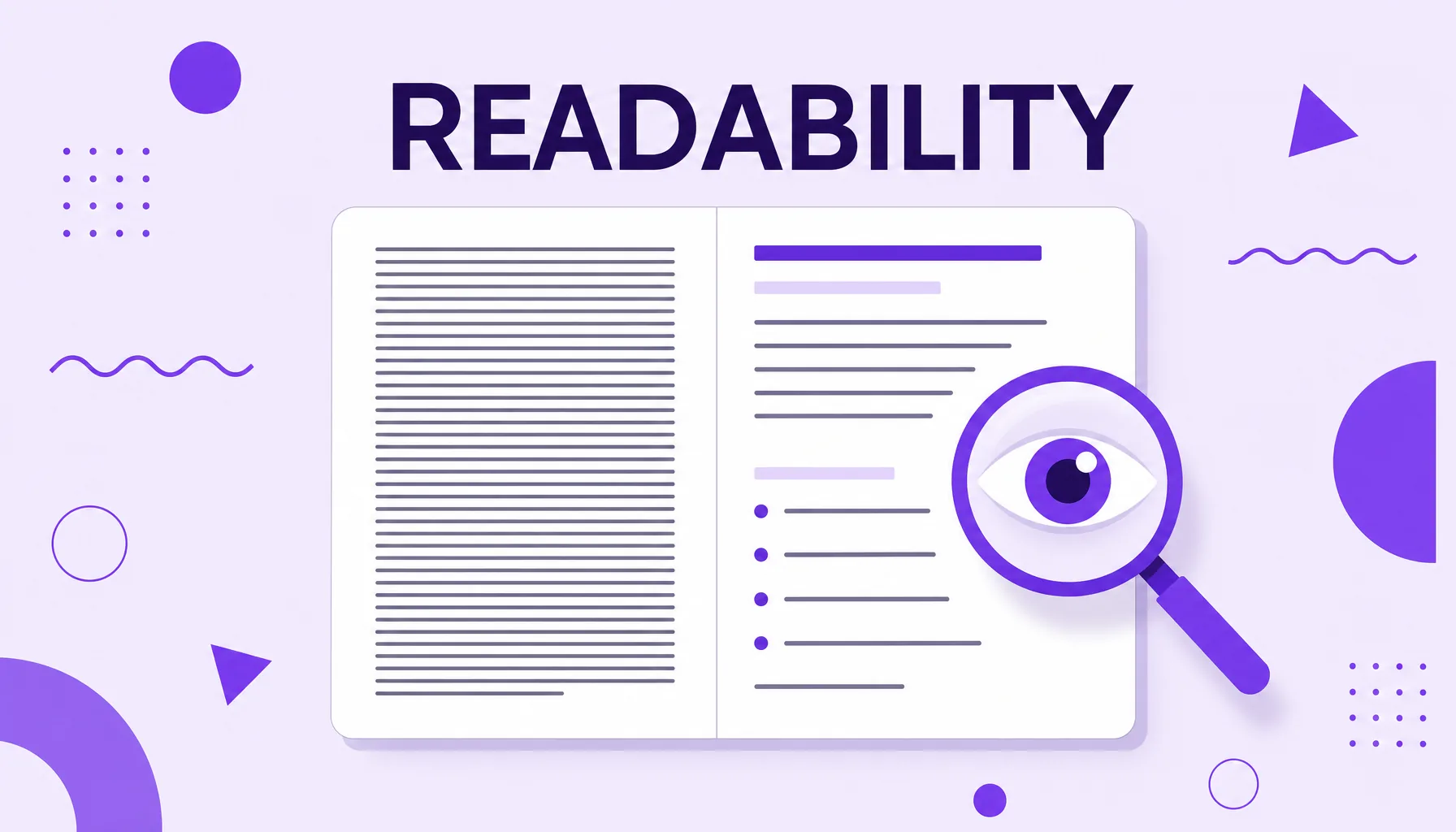
Readability is how easy a text is to read and understand. Readable content usually has:
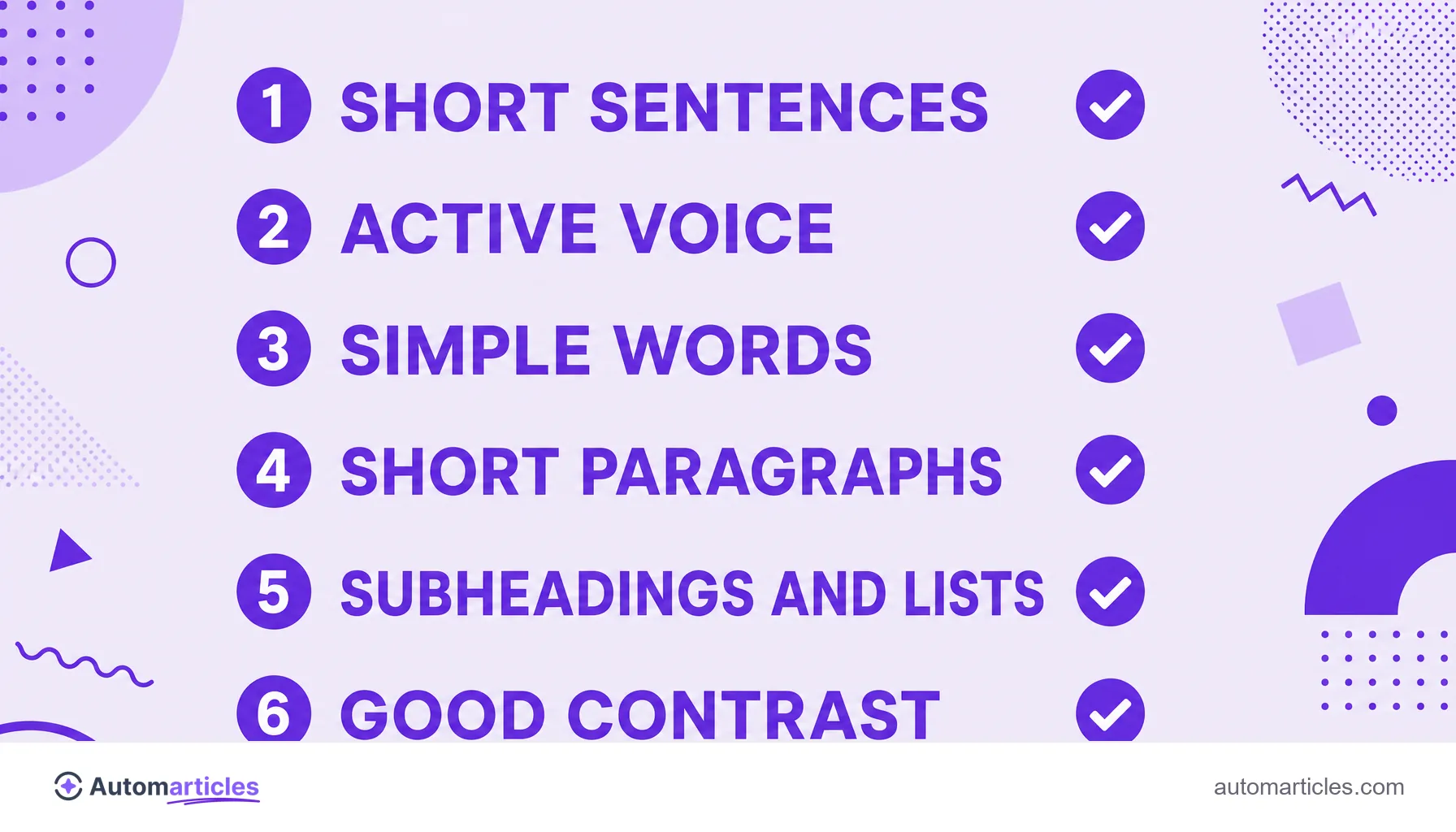
- short, direct sentences in the active voice;
- simple vocabulary, with no unnecessary jargon;
- short paragraphs, one idea each;
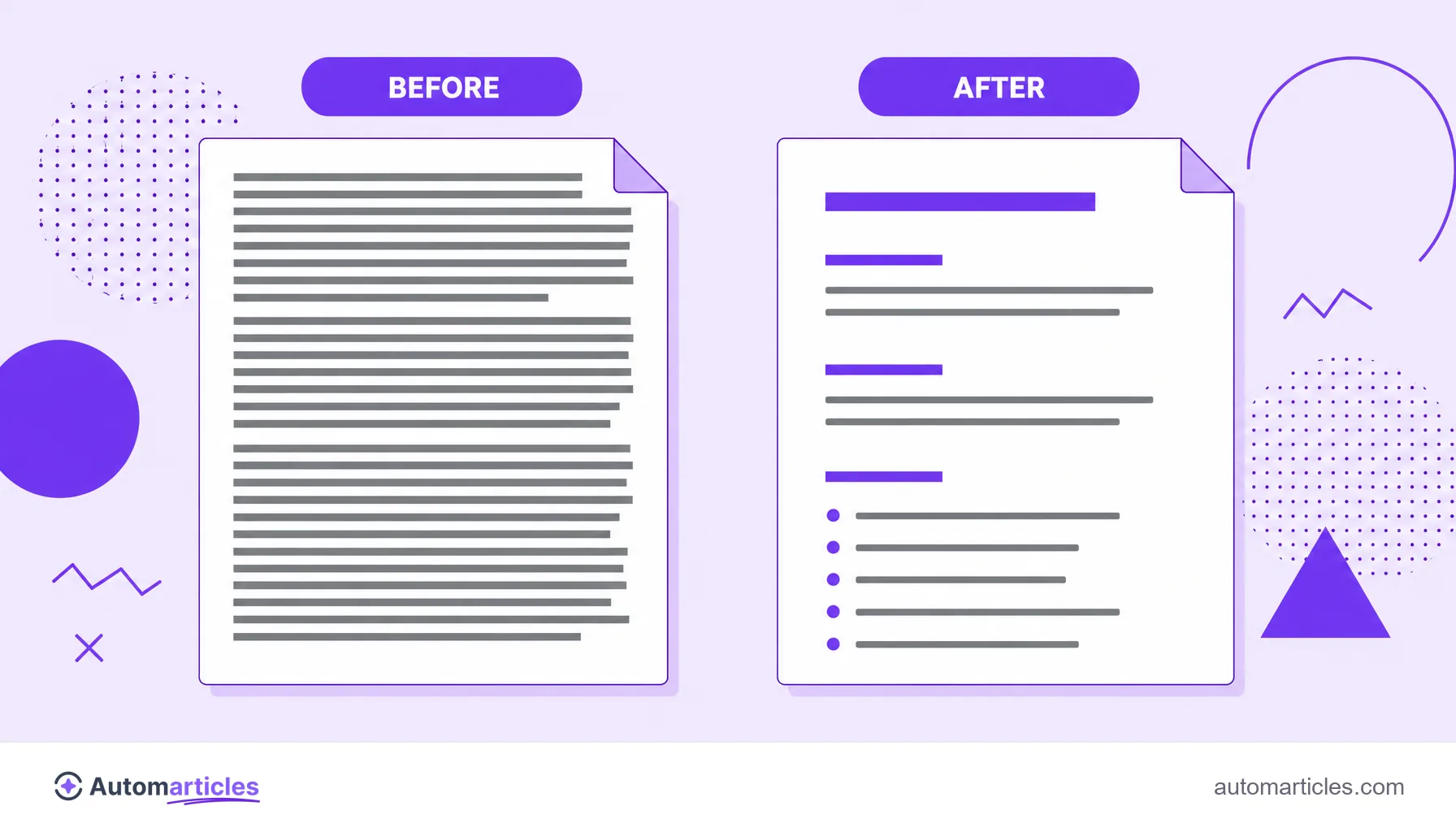
- scannable formatting, with subheadings, lists and highlights.
What readability is
Readability is a measure of how easy a text is to read. Content with good readability flows: the reader understands each sentence the first time, without rereading or straining to follow the reasoning. Content with poor readability does the opposite, it tires and pushes people away.
This reading comfort does not come from a single factor, but from the sum of several: sentence length, word complexity, paragraph length, how ideas are organized and even the visual presentation on the screen. When these elements work in the reader's favor, the page becomes inviting.
A common clarification: readability is not the same as eligibility. The words look alike, but eligibility is about meeting the requirements for something (being eligible), while readability is about the clarity of a text. Here, the topic is always the ease of reading.
Readability vs legibility: what is the difference
Two similar terms are often treated as synonyms, but theory keeps them apart. The distinction helps you know what to fix in each case.
- Legibility: in the strict sense, it is tied to the visual form of the text. It involves typography, font size, spacing, the contrast between letters and background. It is what makes a character easy (or hard) to see.
- Readability: it is tied to the content and the language. It involves sentence length, word complexity and how ideas are built. It is what makes a text easy (or hard) to understand.
In everyday practice and in SEO, though, the word readability has become an umbrella that gathers both dimensions, the seeing and the understanding. In this entry, we use readability in that broad sense, covering both visual clarity and clarity of language.
Why readability matters for SEO
Google does not have a readability number that adds points directly to the ranking. The impact is indirect, but powerful: a readable text holds the reader, and reader behavior counts.
This matters because, on the web, nobody reads at leisure. A classic study by the Nielsen Norman Group found that, on an average visit, people read at most 28% of the words on a page, with 20% being a more likely number. Another study by the same group showed that 79% of users only scan any new page, and just 16% read word by word.
The conclusion is direct: if the text is not easy to scan and understand, the reader gives up. A hard page tends to raise the bounce rate and shorten time on page, signals that the content did not satisfy the search. Caring for scannability and readability, then, is caring that the reader stays, reads and comes back.
What affects the readability of a text
Readability is built (or destroyed) by concrete writing and formatting choices. The factors that weigh the most:
| Factor | What to do |
|---|---|
| Sentence length | Prefer short sentences; break the long ones in two. |
| Voice | Use the active voice, more direct than the passive. |
| Vocabulary | Choose the simple word when one exists; explain the jargon. |
| Paragraphs | One idea per paragraph, a few lines each. |
| Structure | Use subheadings and lists to split the text. |
| Typography | Ensure good contrast, a legible font and comfortable spacing. |
Notice that much of this is also about organization. A clear hierarchy of headings (H1, H2, H3) guides the reader's eye and keeps the content scannable, which is exactly how people read on a screen.
Readability indexes: Flesch and the tests
There are formulas that estimate a text's readability from variables such as the number of words per sentence and syllables per word. The best known is the Flesch reading ease test, which produces a score from 0 to 100: the higher, the easier the text.
| Flesch score | Reading level |
|---|---|
| 90 to 100 | Very easy, accessible to almost everyone. |
| 60 to 70 | Standard, comfortable for a general audience. |
| 30 to 50 | Difficult, requires more experienced readers. |
| 0 to 30 | Very difficult, academic or technical level. |
These indexes were created for English and there are adaptations for other languages, since word length varies. It is worth using them as a thermometer, not as an absolute target. The score points to a direction, but who decides whether the text is clear is always the real reader, not the formula.
How to improve readability: a step by step
Improving readability is mostly cutting excess and organizing better. A routine that works on any text:
- Write first, edit later: in the review, cut words you do not need and shorten the long sentences.
- Open the text into blocks: short paragraphs, frequent subheadings and lists to enumerate.
- Prefer the concrete: swap abstract terms and jargon for everyday words and examples.
- Highlight the essential: use bold sparingly to mark what must not be missed.
- Read it out loud: if you stumble while reading, the reader stumbles too. Rewrite the passage.
These practices are part of on-page SEO and apply to all of your content marketing. A clear text respects the reader's time, and it is that respect that makes the person reach the end, trust the brand and come back.