
On-page SEO: what it is and how to optimize your pages
By Tiago CostaUpdated on July 2, 2026
On-page SEO is the optimization done within the page itself so it ranks better. It includes:
- relevant content aligned with search intent;
- well written title tag and meta description;
- headings (H1 to H6) that organize the text;
- a short URL, images with alt text and internal links.
What on-page SEO is
On-page SEO, also written on page SEO, is the set of optimization practices applied within a page so it shows up better in search results. The name says it all: they are the adjustments that stay on the page, under your direct control, from the text you write to the tags in the code.
When someone searches on Google, the search engine tries to deliver the page that best answers that query. On-page SEO is precisely the work of making clear, both to the search engine and to the reader, what your page is about and why it deserves to appear. This involves writing good content, using the correct title tag and meta description, structuring the text with headings and taking care of details like URL, images and internal links.
On-page, off-page and technical SEO: the differences
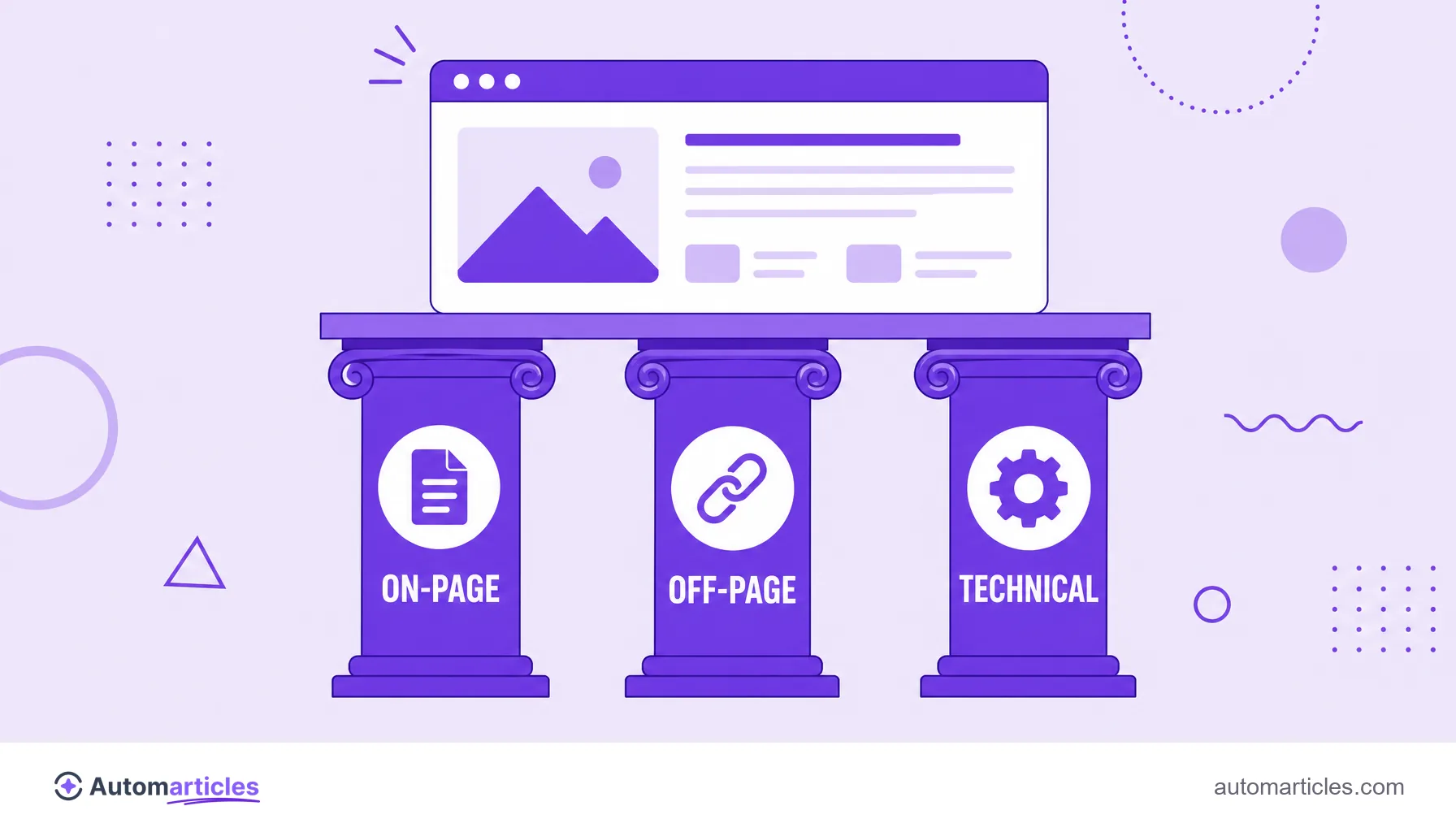
SEO is usually divided into three fronts that complement each other. Understanding where each one acts avoids confusion:
| Type of SEO | Where it acts | Examples | Main goal |
|---|---|---|---|
| On-page | Within the page itself | Content, title, headings, images, internal links | Content relevance and clarity |
| Off-page | Outside the site | Backlinks, mentions and reputation | Authority and trust |
| Technical | Site infrastructure | Crawling, indexing, speed | Access and performance |
While off-page SEO works the site's authority with links from other pages and technical SEO takes care of the crawling and speed base, on-page is what you do on each page, one by one. The three fronts add up: not even the best content ranks on its own if the site cannot be crawled, nor does the best technical structure make up for an empty page.
The main on-page SEO factors
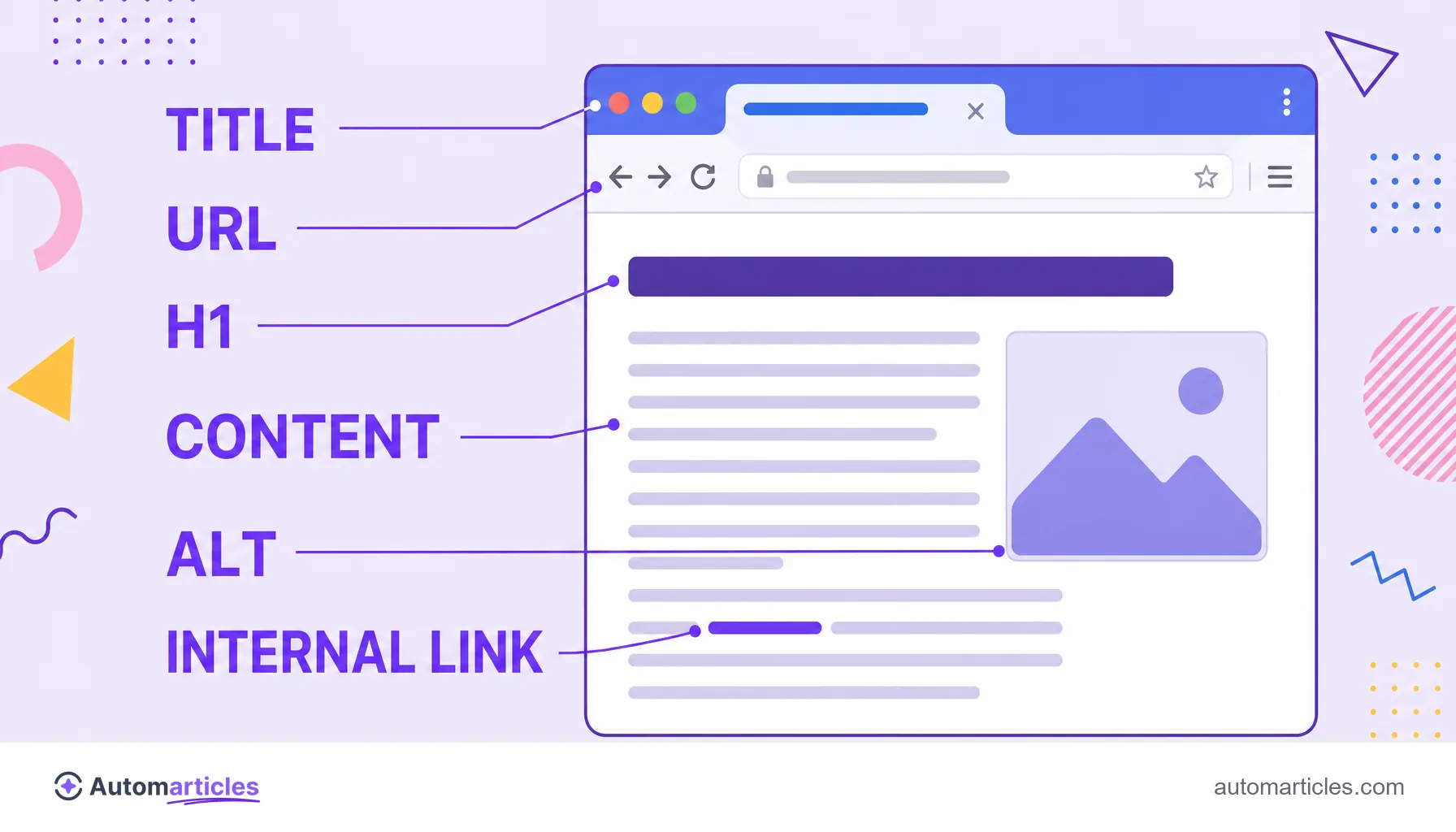
Optimizing a page on-page means taking care of several elements that, together, tell Google what it is about. The main ones are:
- Quality content: texts that truly answer the search intent, with depth and originality.
- Title tag: the page title, with the main keyword, which becomes the blue link on the SERP.
- Meta description: the summary that earns the click, complementing the title.
- Headings (H1 to H6): the heading tags that organize the hierarchy and the reading of the content.
- Friendly URL: a short and descriptive slug, easy to read.
- Optimized images: light files with alt text that describes what appears.
- Internal links: connections to other pages on the site that distribute relevance and help navigation.
None of these factors acts in isolation. On-page SEO is the combined effect of all of them pointing to the same topic in a coherent way.
How to do on-page SEO: step by step
Putting on-page SEO into practice follows a routine that fits any new or already published page:
- Choose the keyword and the intent: define the target term and analyze what already ranks for it before writing.
- Write the best content on the topic: answer the question completely, going beyond what the competition offers.
- Optimize the title and the meta: include the keyword naturally and write for the click.
- Structure with headings: a clear H1 and H2 and H3 that split the text into scannable sections.
- Take care of URL, images and links: a short slug, light images with alt and relevant internal links.
- Review readability: short sentences, lists and good spacing make reading easier.
Doing this on every piece of content ensures the page communicates its topic clearly. A well structured text also improves scannability, which helps both the reader and the search engine quickly understand what it is about.
Content and on-page SEO: the factor that weighs most
Of all the on-page factors, content is the most important. No technical optimization makes up for a shallow text that does not answer the user's question. Writing for search intent, with real depth, is what sustains good performance.
This does not mean long text wins for being long. The ranking factors study by Backlinko, which analyzed millions of results, found that the average page in Google's top 10 has around 1,447 words, but the study itself notes that more words do not, on their own, generate more positions. What counts is covering the topic with the depth the intent asks for. The same goes for the title: using the keyword in the title helps the page enter the race, although it does not guarantee the first position by itself.
Common on-page SEO mistakes
A few slips undo the optimization effort. The most frequent ones:
- Repeating the keyword too much: the so called keyword stuffing sounds artificial and can be penalized.
- Ignoring search intent: writing an article when the SERP asks for a product page, or the other way around.
- Generic title and meta: vague descriptions that do not earn the click waste good positions.
- Several H1 or a messy hierarchy: headings without order confuse the reader and the search engine.
- Forgetting the alt text of images: loses accessibility and presence in image search.
Avoiding these mistakes already puts your page ahead of much of the competition. On-page SEO rewards those who take care of the details consistently, page after page, instead of looking for shortcuts.