
Link Farm: qué es la granja de enlaces y por qué Google la penaliza
Por Tiago CostaActualizado el 2 de julio de 2026
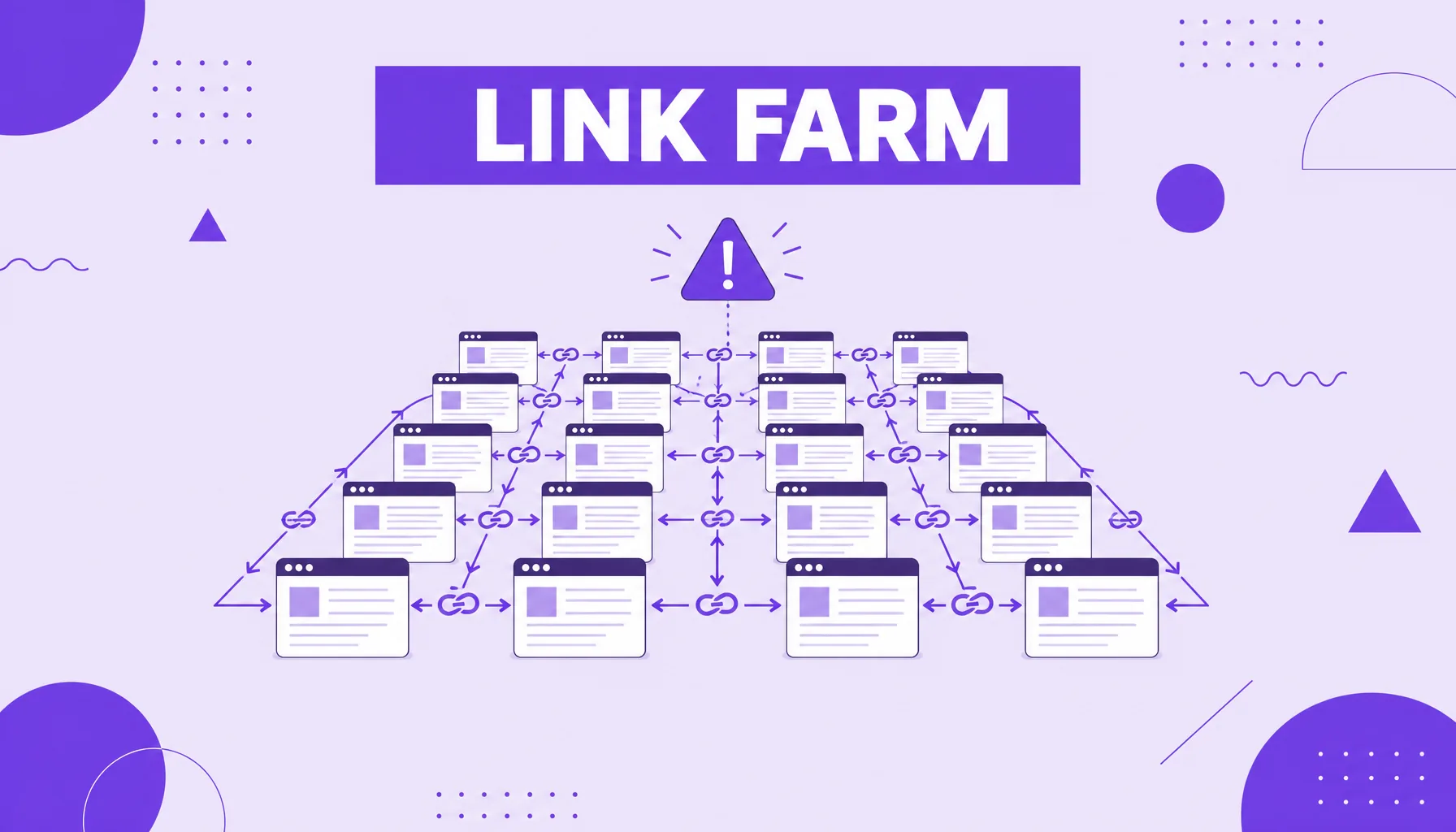
Una link farm (granja de enlaces) es una red de sitios que intercambian enlaces en masa solo para manipular el ranking, sin ninguna relevancia editorial. Google considera la práctica un esquema de enlaces prohibido porque:
- crea enlaces artificiales, sin mérito real;
- infla la autoridad de forma engañosa;
- viola las directrices de calidad del buscador;
- expone a los sitios participantes a la penalización.
Qué es una link farm
Una link farm, traducida como granja de enlaces, es un conjunto de sitios cuya función principal es apuntar enlaces unos a otros en gran cantidad. El nombre viene de la idea de cultivar enlaces a escala industrial, como quien planta un cultivo, sin ninguna preocupación por la relevancia o la calidad.
La lógica es simple y antigua. Como los backlinks funcionan como votos de confianza y ayudan a posicionar, alguien decide fabricar esos votos en masa, montando decenas o cientos de sitios que se enlazan mutuamente. El objetivo es engañar al algoritmo, haciendo que un sitio parezca mucho más popular y relevante de lo que realmente es.
Como depende de la manipulación en lugar del mérito, la link farm es una técnica clásica de black hat, el SEO que trabaja contra las reglas del buscador. Y, como veremos, es también una de las prácticas que Google detecta y castiga con más facilidad.
Cómo funciona una granja de enlaces
En su forma más burda, una link farm es un amontonamiento de sitios de baja calidad, muchas veces con contenido copiado o generado automáticamente, repletos de enlaces a los participantes del esquema. Cada página existe solo para alojar enlaces, no para servir a un lector.
Hay variaciones más sofisticadas. Las redes intercambian enlaces de forma cruzada para disimular el patrón, alquilan espacios en pies de página y barras laterales, o venden paquetes de cientos de enlaces por un precio fijo. En todas ellas, el denominador común es el mismo: enlaces que no existirían si dependieran de una decisión editorial genuina.
El atractivo es fácil de entender. Los datos muestran el peso de los enlaces en el ranking: en un estudio con 11,8 millones de resultados de búsqueda, Backlinko constató que la página en la primera posición de Google tiene, de media, 3,8 veces más backlinks que las de las posiciones 2 a 10. Es esa correlación la que tienta a los atajos, a pesar de todo el riesgo que conllevan.
Link farm, PBN e intercambio de enlaces: cuáles son las diferencias
La link farm suele confundirse con otras tácticas de enlaces artificiales, pero hay diferencias de grado y de disfraz:
- Link farm: muchos sitios de baja calidad que se enlazan indiscriminadamente entre sí, sin preocuparse por parecer naturales.
- PBN: una red privada de blogs es más elaborada, con sitios que aparentan ser independientes y de buena apariencia, creados solo para enlazar a un objetivo central.
- Intercambio recíproco en exceso: dos sitios que acuerdan enlazarse el uno al otro repetidamente, el famoso yo te enlazo y tú me enlazas.
Todas estas variaciones caen bajo el mismo paraguas de esquemas de enlaces prohibidos. La PBN es solo una versión mejor disfrazada de la misma idea, y Google es cada vez mejor identificando tanto las granjas burdas como las redes que intentan parecer legítimas.
Por qué Google penaliza las link farms
La guerra de Google contra las granjas de enlaces es antigua. El algoritmo nació justamente para medir la importancia de una página por la calidad de los enlaces que recibe, con el PageRank, y las link farms atacan el corazón de ese sistema al fabricar enlaces falsos.
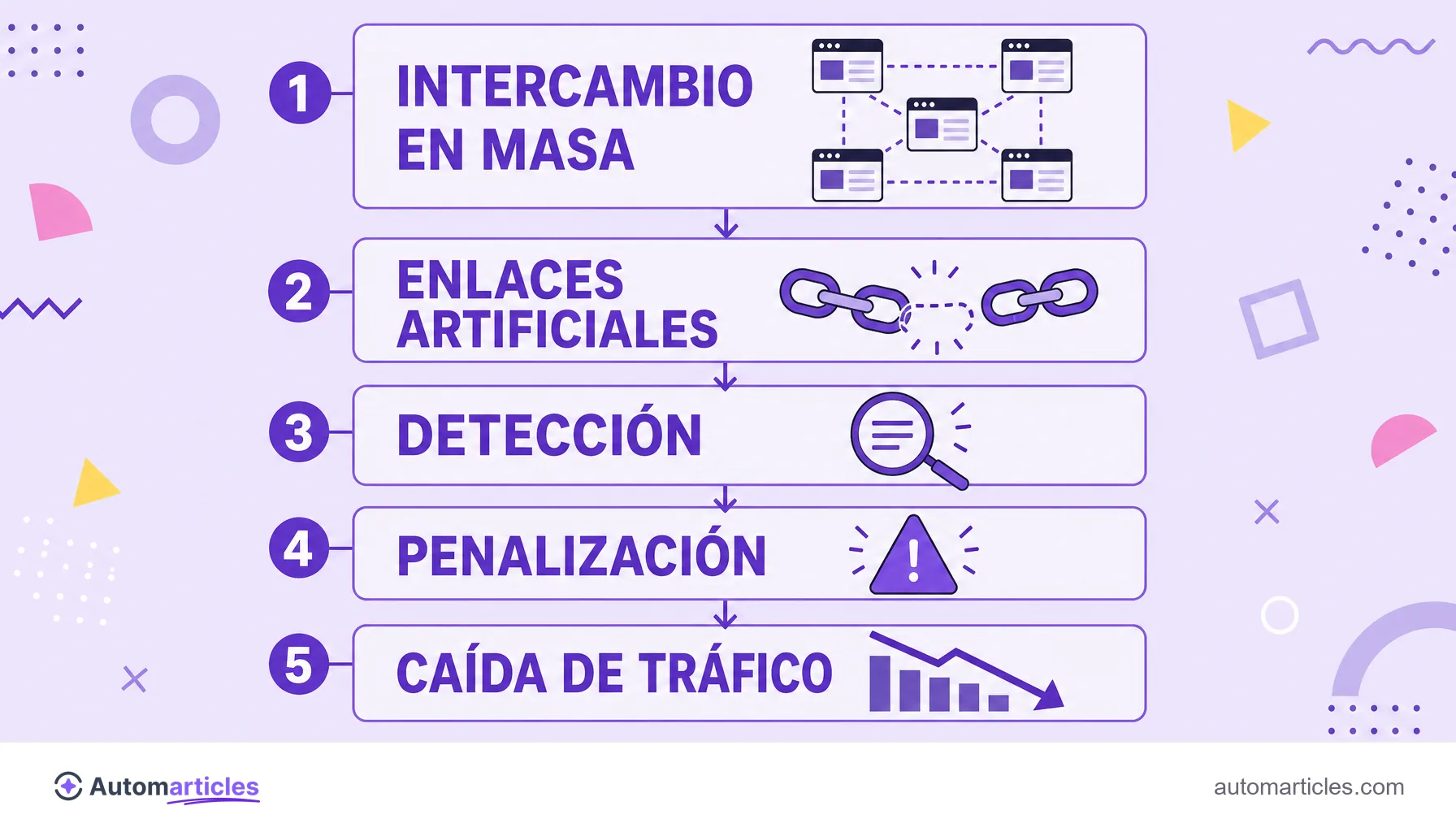
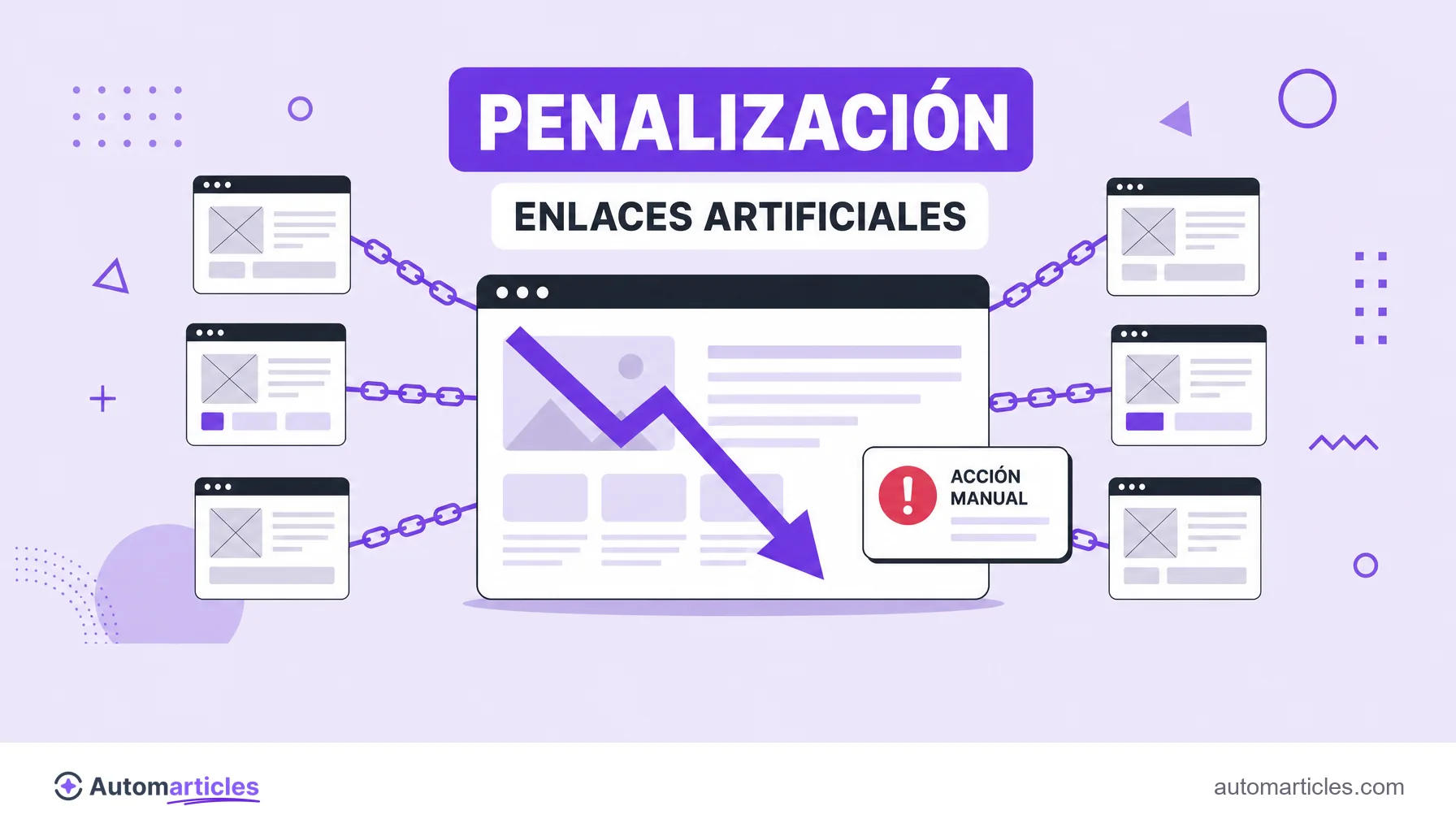
A lo largo de los años, el buscador creó defensas específicas. La actualización Penguin pasó a degradar los sitios con perfiles de enlaces manipulados, y las directrices de calidad clasifican la participación en esquemas de enlaces como una violación explícita. Cuando se detecta, el problema puede generar dos tipos de caída:
- Penalización algorítmica: el propio sistema devalúa los enlaces artificiales y hace caer el posicionamiento.
- Acción manual: un revisor humano aplica un castigo directo al sitio, que aparece como aviso en Google Search Console.
El resultado suele ser doloroso: pérdida de posiciones, caída de tráfico y un largo trabajo de recuperación. La ganancia a corto plazo casi nunca compensa el tamaño del riesgo.
Cómo identificar y evitar las link farms
Mantenerse lejos de las granjas de enlaces empieza por reconocerlas. Algunas señales de alerta:
- páginas llenas de enlaces sin relación temática entre sí;
- contenido superficial, repetido o generado automáticamente;
- ofertas de cientos o miles de backlinks por un precio bajo;
- sitios sin tráfico real, sin marca y sin un propósito editorial claro;
- promesas de resultado rápido y garantizado en la cima de Google.
Si recibiste enlaces de granjas sin querer, o heredaste un perfil sucio, la herramienta de disavow de Google permite pedir que esos enlaces sean ignorados. Y si un vendedor promete un paquete enorme de enlaces por poco dinero, tómalo como una señal clara de link farm y recházalo.
La mejor defensa, al final, es no depender de atajos. Construir autoridad de verdad es más lento, pero es el único camino que no pone tu dominio en la mira de una penalización.
Qué hacer en lugar de usar una link farm
La alternativa a las granjas de enlaces no es quedarse sin backlinks, sino conseguirlos por mérito. El link building hecho con calidad entrega el mismo objetivo, autoridad y posicionamiento, sin el riesgo de castigo.
En la práctica, eso significa:
- Crear contenido que merece ser citado: guías completas, datos propios y herramientas que la gente enlaza de forma espontánea.
- Buscar enlaces relevantes: unos pocos backlinks de sitios fiables y del mismo tema valen más que miles de enlaces de granja.
- Invertir en relaciones reales: alianzas, prensa y guest posts en medios de verdad.
Un solo enlace editorial de un sitio respetado puede superar, por sí solo, una granja entera de enlaces irrelevantes. La autoridad construida con paciencia es lo opuesto a una granja de enlaces: más difícil de conseguir, pero imposible de castigar por manipulación.