
Local SEO: what it is and how to appear in searches in your area
By Tiago CostaUpdated on July 2, 2026
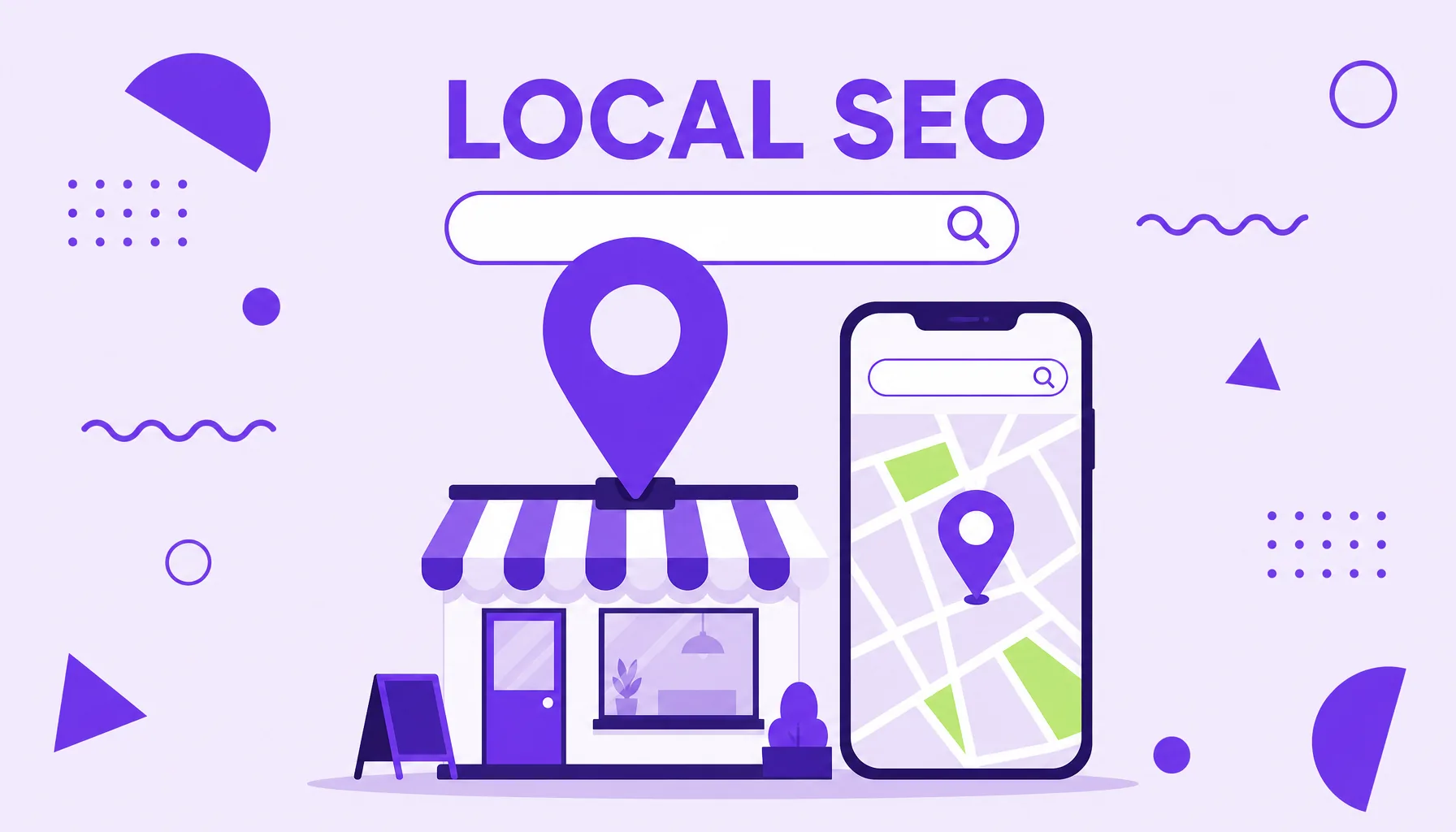
Local SEO is optimization to appear in searches with geographic intent, such as "near me" and "in my city". It works on a few fronts:
- the Google Business Profile listing;
- the reviews and the reputation of the business;
- the consistency of the NAP (name, address and phone);
- content and links focused on the area.
What local SEO is and why it matters
Local SEO is the part of SEO focused on searches with geographic intent, that is, queries where location changes the result, such as "dentist near me", "pizza place in Brooklyn" or "24 hour plumber". Instead of competing for the whole country, your business competes to appear for people who are nearby and ready to act.
This kind of search is huge. According to HubSpot's local SEO statistics, around 46% of all Google searches have local intent. Anyone with a store, an office or a service tied to a specific city cannot ignore this audience.
It all starts with understanding geographic search intent: when someone adds "near me", the name of a neighborhood or a city to the query, Google understands that the person wants a local solution and builds a very different results page, with a map and nearby businesses highlighted.
Local SEO vs traditional SEO: the difference
Local SEO and traditional SEO chase the same goal, ranking well in the results, but they play on different fields. Classic SEO aims at organic positions on a national or global scale; local SEO aims at the neighborhood and the maps.
| Aspect | Traditional SEO | Local SEO |
|---|---|---|
| Target | Broad audience, no geographic cut | Audience in a city, neighborhood or radius |
| Result at stake | Classic organic list | Local pack, Google Maps and organic |
| Main signals | Content, backlinks and technical SEO | Listing, reviews, proximity and NAP |
| Central tool | Website and blog | The Google Business Profile listing |
In practice, the two complement each other. A local business still needs a good website, but it is the local layer that puts it on the map when someone searches right next door.
How Google decides local rankings: relevance, distance and prominence
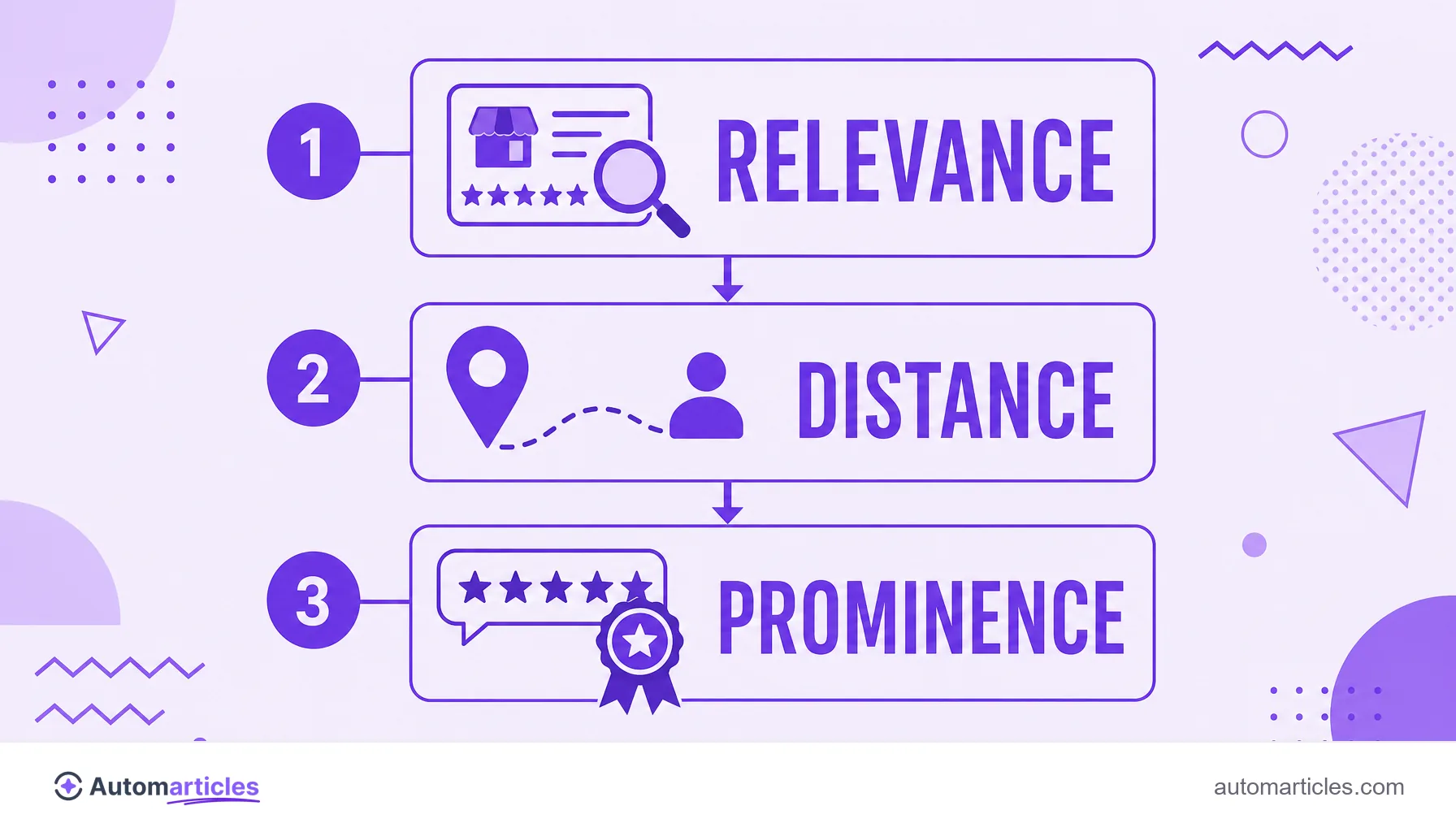
Google organizes local results around three main factors, which it describes itself in its documentation for businesses:
- Relevance: how well your listing and your site match what the person searched for.
- Distance: the proximity between the searcher and your address at the moment of the query.
- Prominence: the reputation and notoriety of the business, measured by reviews, mentions, links and consistency of information.
You do not control distance, but you can work a lot on relevance and prominence. Keeping the NAP (name, address and phone) identical everywhere the business appears is one of the most basic trust signals, and one of the most ignored.
Google Business Profile: the heart of local SEO
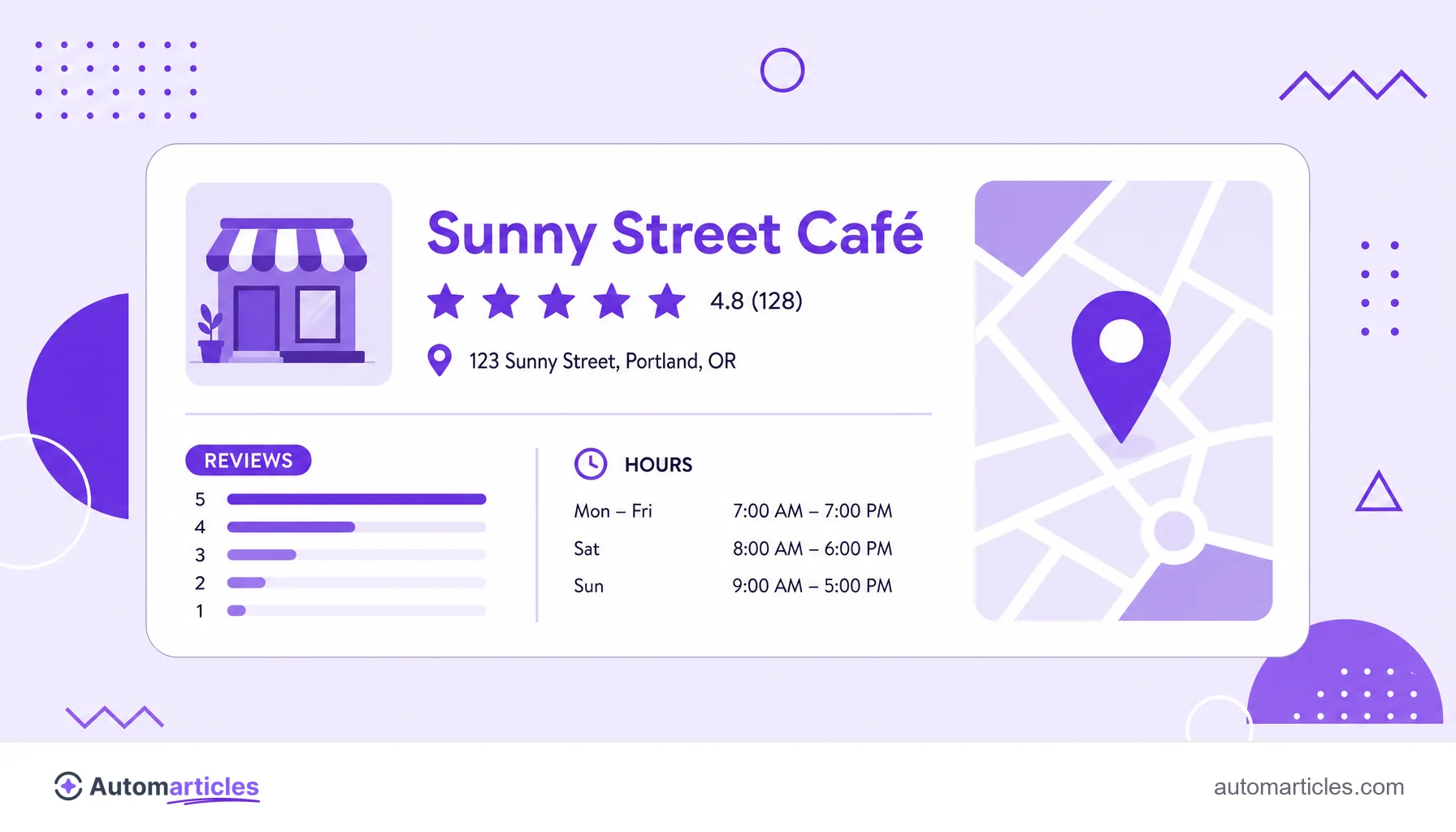
No asset weighs as much in local SEO as the Google Business Profile listing, formerly known as Google My Business. It is what feeds the local pack and Google Maps with name, category, hours, photos, reviews and a link to the site.
Reviews deserve special attention. BrightLocal's Local Consumer Review Survey shows that 83% of consumers use Google to read reviews of local businesses, which makes the stars and the comments a decisive factor for clicks and trust.
To get the most out of the listing, take care of a few points:
- choose the right primary category and complete every field;
- publish real photos and update hours and holidays;
- ask satisfied customers for reviews and reply to all of them, good and bad;
- use the description field and posts to reinforce your services and your area.
How to do local SEO in practice: step by step
Getting local SEO running is a job of consistency. A roadmap that works well:
- Claim and complete the listing: take ownership of the Business Profile and fill everything in carefully.
- Standardize the NAP: use exactly the same name, address and phone on the site, the listing and the directories.
- Create pages by location: if you serve several cities or neighborhoods, produce a dedicated, useful page for each one, without copying the same text.
- Ask for and answer reviews: turn the post sale moment into a natural invitation to review.
- Mark up the address with structured data: the LocalBusiness schema helps Google understand name, address and hours straight from the page code.
- Build local citations: list the business in trustworthy directories and industry associations, always with a consistent NAP.
Local SEO in the age of AI and 'near me'
Searches for "near me" exploded with the smartphone, and the arrival of AI generated answers changes the game again. The search engine now summarizes options and suggests businesses right on the screen, often pulling data from the listing and the reviews.
The good news is that the foundation stays the same: a complete listing, consistent reviews, a correct NAP and honest local content remain what makes a business get chosen, whether in a traditional list or inside an AI summary. Those who organize these signals today get ahead when local searches become even more conversational.