
Search engine: what it is and how it works
By Tiago CostaUpdated on July 2, 2026

A search engine is a system that organizes the information on the web and returns it in response to a query. It works in three stages:
- Crawling: bots roam the web and discover pages;
- Indexing: the content is analyzed and stored in an index;
- Ranking: the algorithm orders and displays the most relevant pages for the search.
What is a search engine
A search engine is an automated system that crawls, organizes and ranks the content of the internet to answer users' queries. When you type a word into Google and get a list of results, it is a search engine working behind the scenes.
The best known name is Google, but the category includes Bing, Yahoo, DuckDuckGo, Ecosia and regional engines such as Baidu, in China, and Yandex, in Russia. They all perform the same function: to find, understand and classify billions of pages to deliver the most useful ones in seconds.
Every search generates its own results page, built in real time according to the language, location and device of whoever is searching. Understanding how this system works is the first step to making a site appear in it.
Search engine, browser and directory: what is the difference
People often confuse search engine, browser and directory, but each one plays a different role when it comes to finding information on the web. The table sums up the differences:
| Aspect | Search engine | Browser | Directory |
|---|---|---|---|
| What it does | Finds and ranks web pages | Opens and displays the pages | Lists sites grouped by category |
| Examples | Google, Bing, DuckDuckGo | Chrome, Safari, Firefox | Curlie (former DMOZ), Yahoo Directory |
| How it organizes | Algorithm that crawls and indexes | Does not organize, just renders | Human curation done by editors |
| How the user reaches a site | Searches by keywords | Types the URL or uses an engine | Browses through categories to the site |
In short, you open the browser to reach a search engine, which does the heavy lifting of finding the pages. The directory is the old, manual way of organizing sites, rarely used today.
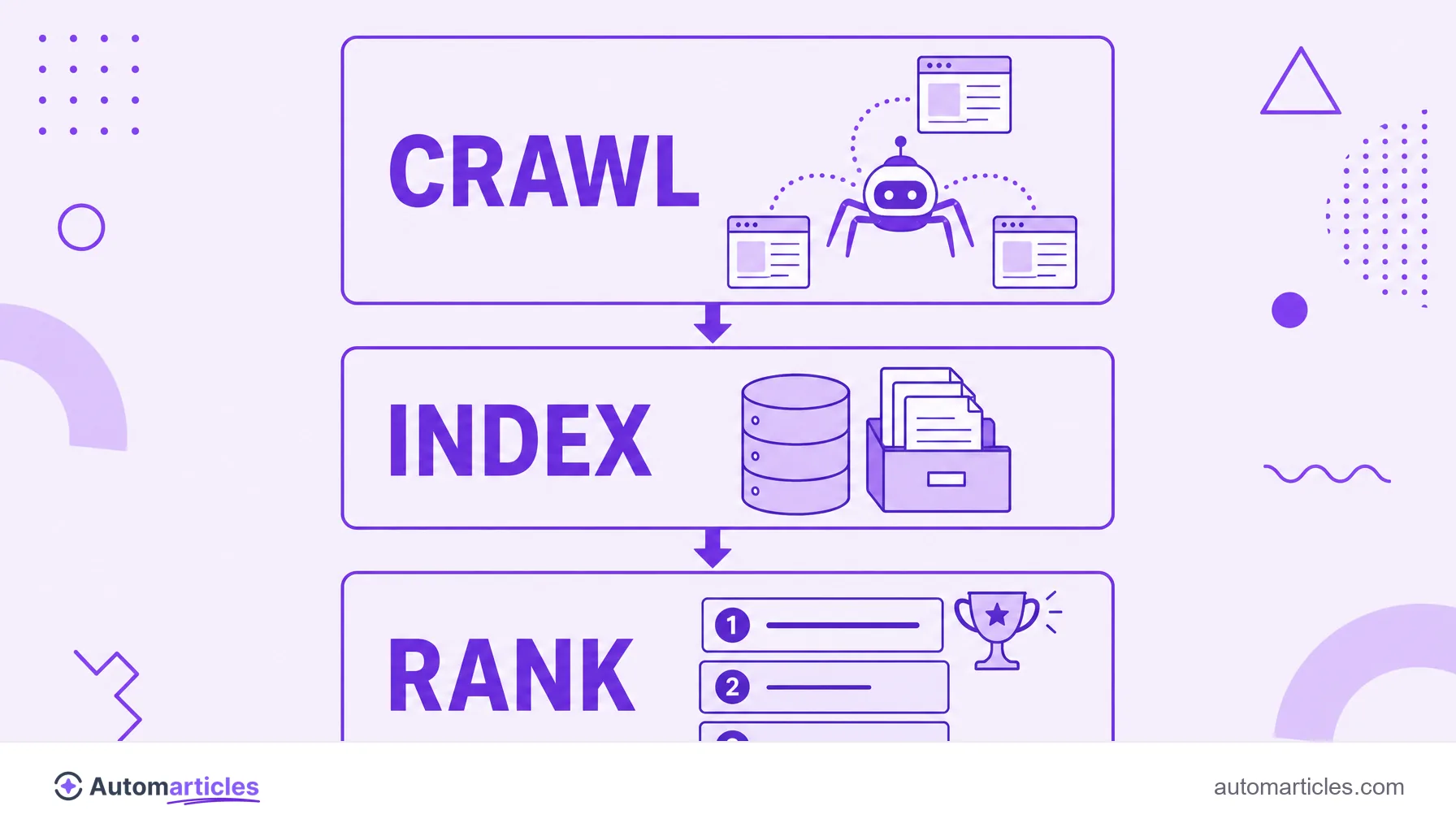
How a search engine works: crawling, indexing and ranking
A search engine works in three big stages, carried out continuously:
- Crawling: automated programs called crawlers, or bots, roam the web following links and discovering new or updated pages.
- Indexing: the engine analyzes the content of each page (text, images, titles) and stores it in a huge database. Without this indexing, a page simply cannot appear in the results.
- Ranking: when someone searches, the algorithm scans the index and orders the most relevant pages, considering hundreds of factors such as content, links and user experience.
The original algorithm that gave Google the ability to order pages by importance became known as PageRank, which measured the authority of a page by the quantity and quality of the links pointing to it. Today, it is just one among many ranking signals.
What are the main search engines
Although there are dozens of engines, the market is heavily concentrated. According to StatCounter, Google accounts for around 90% of all searches in the world, leaving competitors with small shares.
| Search engine | Global share | Highlight |
|---|---|---|
| around 90% | Absolute leader, sets the SEO standard | |
| Bing | around 4% | Integrated with Windows and Microsoft Copilot |
| Yahoo | around 1% | Uses Bing's search technology |
| DuckDuckGo | less than 1% | Focus on privacy and zero tracking |
| Baidu and Yandex | regional leaders | Dominate China and Russia, respectively |
In practice, optimizing for Google means optimizing for almost the entire market. That is why SEO best practices usually treat the Mountain View engine as the main reference.

Search engines with artificial intelligence
The biggest recent change in search engines is the arrival of generative artificial intelligence. Instead of just listing links, engines started assembling ready made answers at the top of the page, synthesizing several sources.
On Google, this shows up in the AI Overviews and in AI Mode, a conversational search mode. Beyond it, tools like Perplexity and ChatGPT Search work as generative search engines, answering in natural language and citing a few pages as a basis.
For content creators, this opens a new front: beyond ranking among the links, the goal becomes being cited inside these AI answers, a practice known as optimization for generative engines. Objective answers, data with a clear source and a scannable structure increase that chance.
Why search engines matter for your site
Search engines are the main gateway to the internet. Appearing well in them means receiving qualified visits from people who are already looking for what you offer, the so called organic traffic.
The problem is that most sites never win that space. According to the traffic study by Ahrefs, 96.55% of pages receive no organic traffic from Google, largely because they do not follow good optimization practices or have no links pointing to them.
This is where SEO comes in, the set of techniques to make a site be well understood and ranked by search engines. Whoever understands how the engine works gets a head start in this dispute.
How to appear well on search engines
Winning positions on a search engine is the sum of several adjustments. A good starting point:
- Make crawling easy: have a good link architecture and take care of the crawl budget so bots reach your pages.
- Ensure indexing: check in Google Search Console whether the important pages are indexed.
- Write for search intent: understand what the person wants when searching and deliver that format.
- Optimize the page: nail the titles, content and experience with on-page SEO.
- Build authority: earn quality backlinks and cover your topic in depth.
The work is ongoing, because the engine itself changes all the time. But the logic remains: the more useful, clear and trustworthy your page is, the greater the chance the search engine will place it ahead of the others.