
Search intent: what it is and the different types
By Tiago CostaUpdated on July 2, 2026
| Intent type | Example query | Ideal content format | Typical SERP feature |
|---|---|---|---|
| Informational | "what is search intent" | Article, guide, glossary or tutorial | Featured snippet, People Also Ask, AI Overview |
| Navigational | "semrush login" | Homepage or brand page | Sitelinks, knowledge panel |
| Commercial | "best SEO tools 2026" | Comparison, review or list | People Also Ask, carousel, reviews |
| Transactional | "subscribe to SEO tool" | Product, pricing or checkout page | Ads (Shopping/Ads), price sitelinks |
What is search intent?
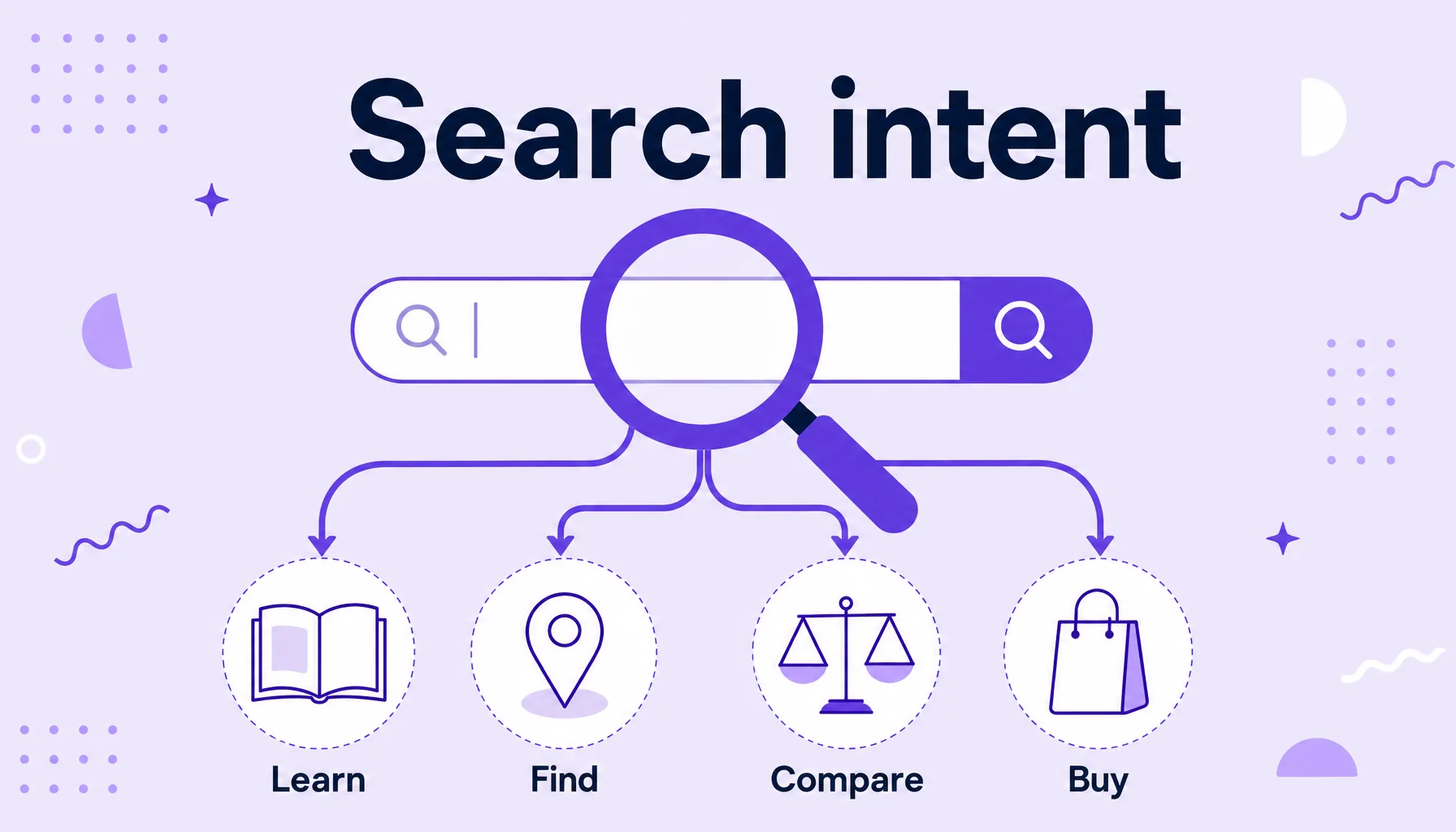
Search intent (or user intent) is the goal that drives someone to type a query into a search engine. It's not the keyword itself, but the problem the person wants to solve when searching for it.
Google itself formalizes this idea. In the Search Quality Rater Guidelines, a public document that guides its human evaluators, each query is classified by user intent into categories such as Know, Website (reaching a specific site), Visit-in-person (going to a place) and Do (performing an action). In SEO vocabulary, this same logic becomes the four intent types you'll see in the next section.
The angle that often goes unnoticed: nailing intent isn't just nailing the topic, it's nailing the format. Two pages can cover the same subject and only one ranks, because only that one delivers the format the intent calls for.
What are the types of search intent?
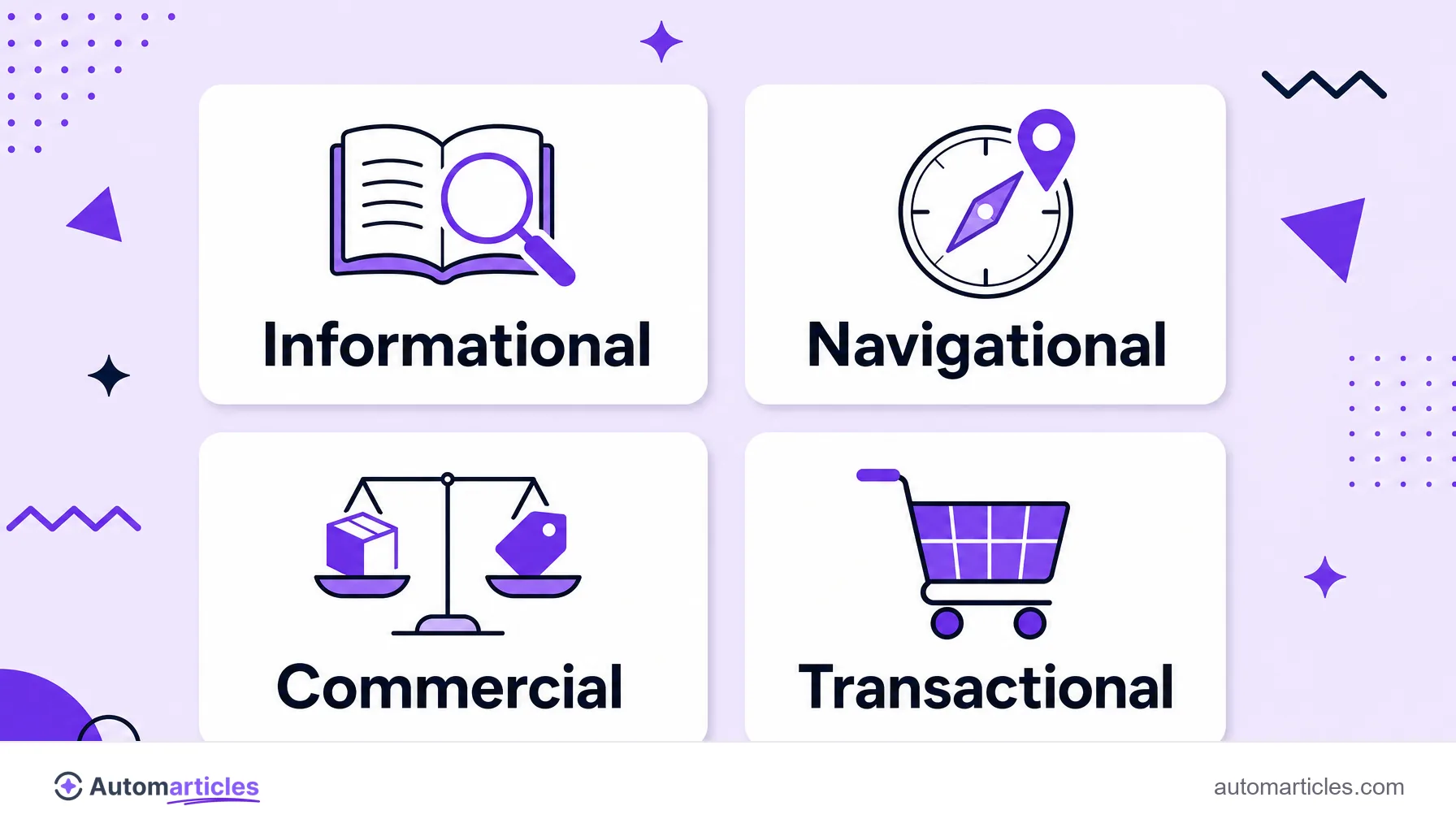
There are four main types of search intent. It's the classification used by SEO tools: according to Semrush, each keyword automatically gets an intent label, and that label guides what kind of page you should create to rank.
| Intent type | Example query | Ideal content format | Typical SERP feature |
|---|---|---|---|
| Informational | "what is search intent" | Article, guide, glossary or tutorial | Featured snippet, People Also Ask, AI Overview |
| Navigational | "semrush login" | Homepage or brand page | Sitelinks, knowledge panel |
| Commercial | "best SEO tools 2026" | Comparison, review or list | People Also Ask, carousel, reviews |
| Transactional | "subscribe to SEO tool" | Product, pricing or checkout page | Ads (Shopping/Ads), price sitelinks |
These are the four search concepts that structure any strategy. Notice that commercial intent sits in the middle of the funnel: the person is still researching, but already thinking about buying. Confusing commercial with transactional is the most common mistake, and it leads to building a sales page for someone who only wanted to compare.
Search intent examples by type
Seeing intent in real queries makes the difference obvious:
- Informational: "how to do keyword research", "what is SEO", "how many grams in a cup". The person wants to learn. Ideal format: guide, tutorial or glossary entry.
- Navigational: "gmail login", "Moz blog", "nubank app". The person already knows where they want to go and uses Google as a shortcut. Ideal format: the homepage or brand page of the destination.
- Commercial: "best CRM for small business", "Dell or Lenovo laptop", "is an SEO tool worth it". The person compares before deciding. Ideal format: comparison, review or list.
- Transactional: "buy running shoes", "streaming subscription price", "hire an SEO tool". The person wants to act now. Ideal format: product, pricing or checkout page.
How does Google identify the intent behind a query?
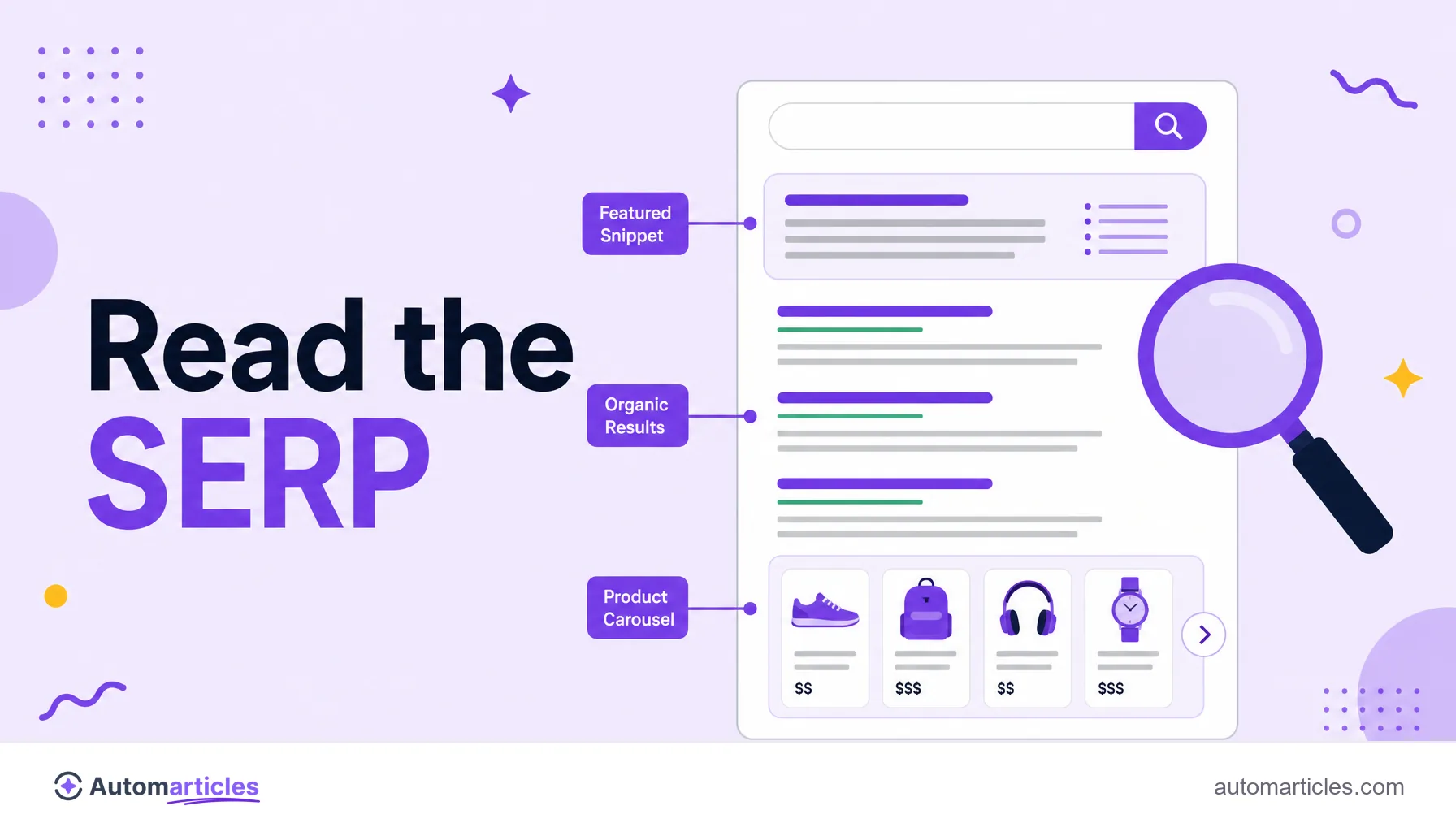
You don't have to guess the intent: the SERP itself shows it. Google has already tested millions of clicks and builds the results page with the format that satisfies that search. If the top is taken over by comparisons, the intent is commercial; if a featured snippet with a direct definition appears, it's informational.
Each intent tends to trigger different SERP features. Informational searches usually open a featured snippet, People Also Ask and, increasingly, AI Overviews. Transactional searches bring Shopping ads and e-commerce results to the top. In a study of about 2 million featured positions, Ahrefs found that the featured snippet captures a meaningful share of the page's clicks, which reinforces the value of winning that position on informational queries.
This weight of intent isn't new. Moz points out that meeting the user's goal became one of the main relevance factors ever since updates like Hummingbird and RankBrain, when Google started interpreting the meaning of the query rather than just exact keyword matching.
How to optimize your content for search intent?
Ahrefs sums up intent alignment in three Cs: content type, content format and content angle. Before writing, research the keyword and look at what already ranks.
- Type: is it a blog post, product page, category or landing page? Deliver the same type that dominates the top.
- Format: guide, list, comparison or step-by-step tutorial? Copy the predominant format.
- Angle: what hook shows up (cheaper, for beginners, in 2026)? It reveals what the audience values.
Once you've nailed the content, align the click signals too. The title tag and the meta description should promise exactly what that intent is after: an objective definition for informational intent, or price and terms for transactional intent. A title that promises the right intent boosts CTR and confirms to Google that your page resolves the query.
Why does search intent matter for SEO and GEO?
Aligning intent is no longer just a matter of ranking on Google and has become a requirement to appear in AI answers. Search assistants and AI Overviews read the query, infer the intent and cite the pages that answer it most directly and in the most structured way.
In practice: informational content that answers the question right in the first paragraph is more likely to be cited by an AI model, the same way it wins the featured snippet. This connection between answering quickly and being highlighted is the same one Semrush describes when treating intent as the foundation of content strategy. Getting intent wrong means being left out of both the traditional SERP and the AI-generated answer. That's why search intent is the starting point of any SEO and GEO strategy, not an optimization detail.