
Meta description: what it is and how to write a good one
By Tiago CostaUpdated on July 2, 2026
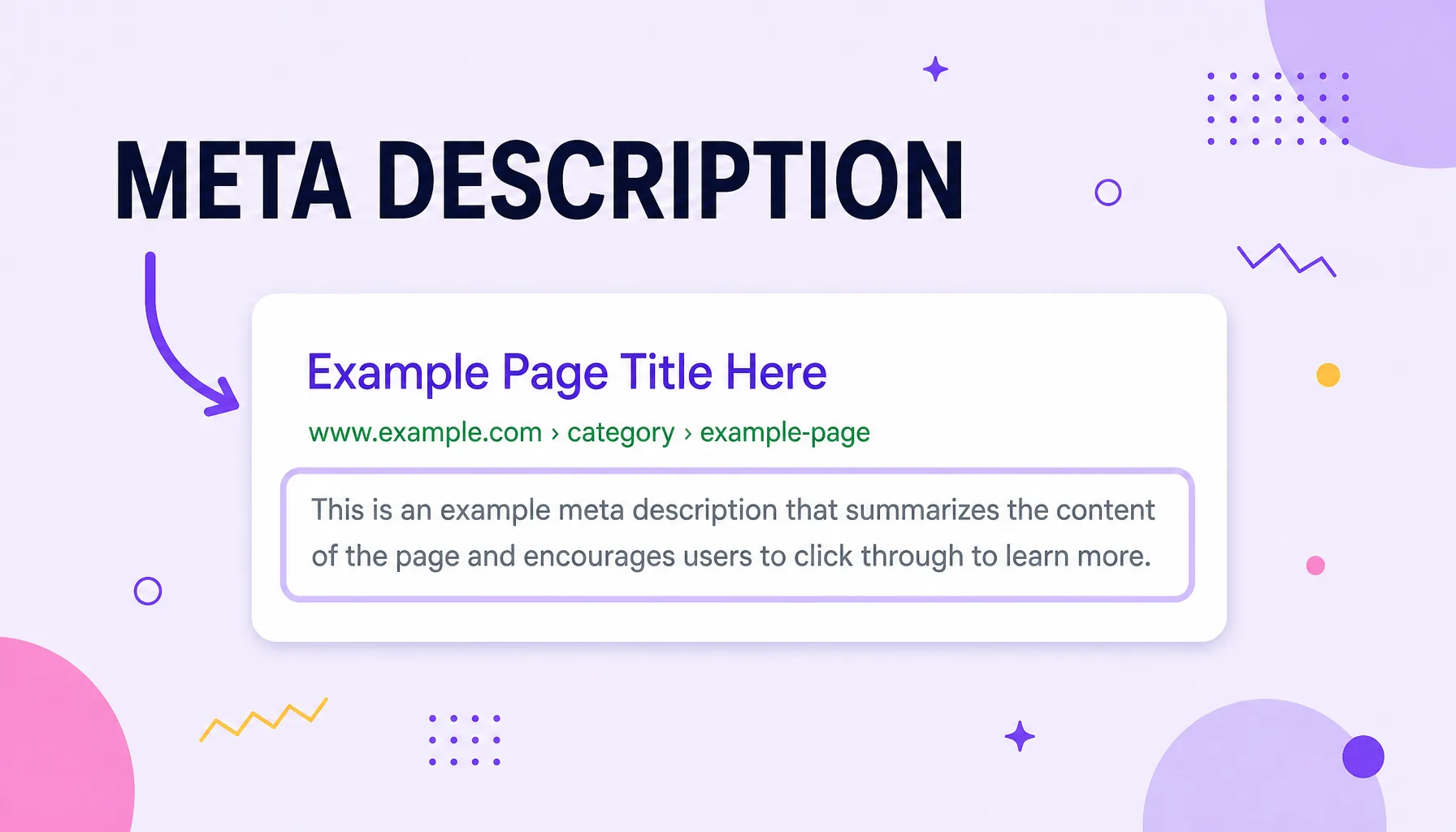
The ideal length of a meta description is between 150 and 160 characters on desktop and around 120 characters on mobile, where space is tighter. To write a good description:
- Summarize the page in 1 or 2 clear sentences;
- Include the main keyword naturally;
- Start with a verb or benefit and add a call to action (CTA);
- Write a unique description for each page;
- Put the essential message in the first 120 characters, before the cutoff.
What is a meta description?
A meta description is an HTML metadata attribute that describes, in a few lines, what a page is about. Search engines read this tag and often use it as the snippet of text shown below the link title on the SERP.
It works together with the title tag: while the title grabs attention, the description explains what the person will find. According to Google Search Central, the meta description is not a direct ranking factor, but an attractive description increases the click-through rate (CTR), which indirectly impacts the page's performance in the results.
Meta description in HTML: code example
In the source code, the meta description goes inside the page's <head> section, using the <meta> tag with the name="description" attribute. Here is a real example:
<head>
  <title>Como escrever uma boa meta description | Automarticles</title>
  <meta name="description" content="Aprenda o tamanho ideal, boas práticas e exemplos de meta description para aumentar os cliques nos resultados do Google.">
</head>
The value of the content attribute is the text that can appear in search. Each page on the site should have its own meta description, without repeating the same description across different URLs.
What is the ideal meta description length?
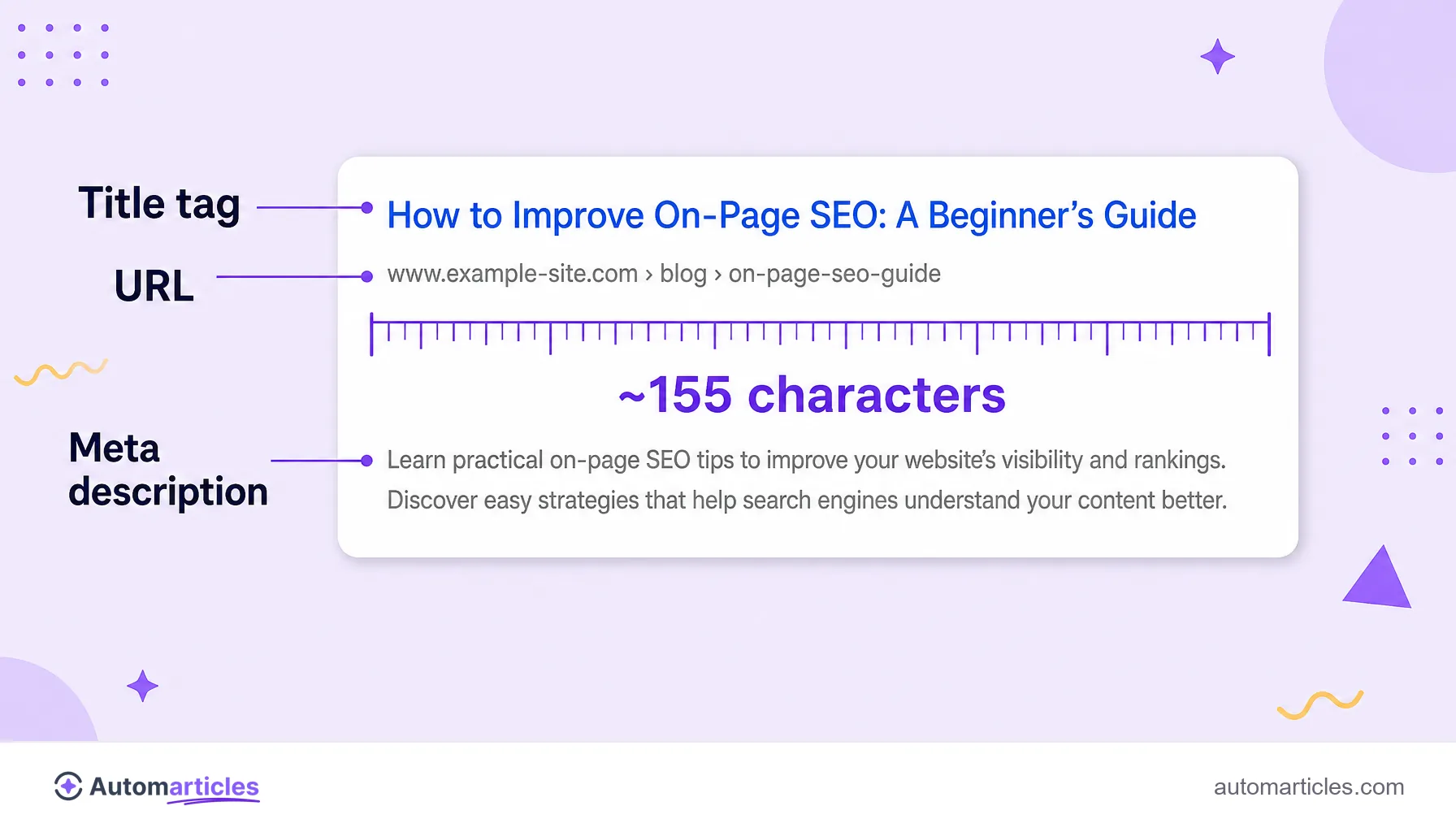
There is no official character limit. According to Google Search Central, there is no maximum length for the meta description, but the snippet is truncated as needed to fit the device width. That is why Moz uses around 150 to 160 characters on desktop as a practical reference.
Portent measured that the cutoff happens by pixel width, not by a fixed number of letters: around 920 px on desktop and about 680 px on mobile.
| Device | Approximate width | Visible characters |
|---|---|---|
| Desktop | ~920 px | ~150 to 160 |
| Mobile | ~680 px | ~120 |
Since mobile shows less text, put the most important information and the keyword in the first 120 characters, making sure the main message appears before the cutoff on any screen.
Does Google rewrite the meta description?
Yes, and often. Google may replace the meta description you wrote with an excerpt from the page itself when it judges that another text better answers the person's search intent. This mainly happens when the query uses words that are not in your description.
Two studies illustrate the scale of this: research by Ahrefs found that Google rewrites the meta description in around 62.78% of desktop searches; and a study by Portent found rewriting in roughly 68% of cases. The lesson is not to abandon the tag, but to write it well to increase the chance that Google keeps it as is.
How to write a good meta description (before and after)
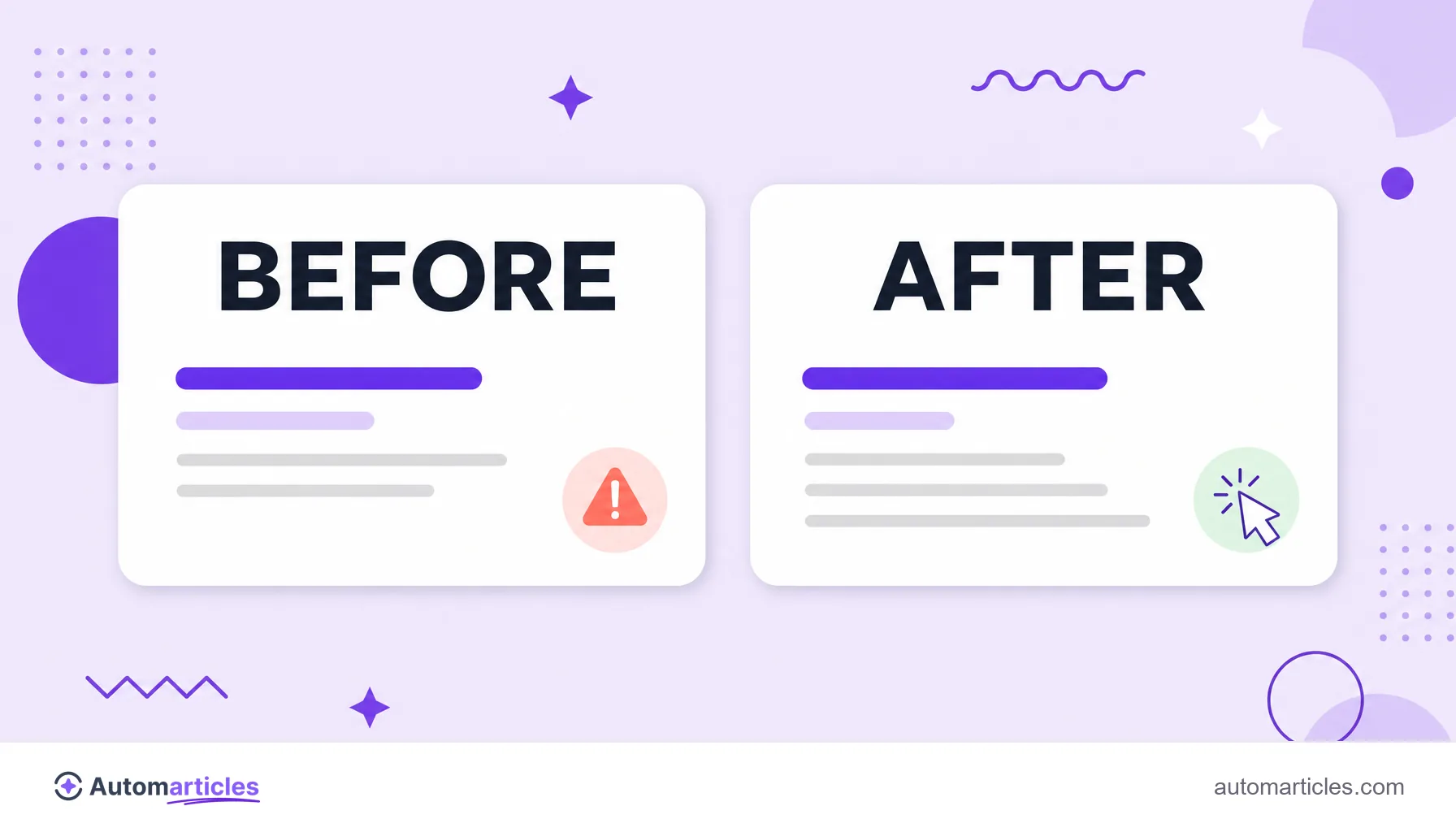
A good meta description summarizes the page, uses the keyword naturally and includes a clear invitation. Compare the examples:
Before (weak):
Welcome to our website. Here you will find plenty of content about marketing, sales, SEO and much more for your business.
After (optimized):
Discover the ideal meta description length, best practices and ready-to-use examples to boost your clicks on Google. A straight-to-the-point guide.
The optimized version has a keyword, a concrete promise and a call to action, all within the recommended limit. The writing best practices from Google Search Central reinforce these points:
- Write a unique description for each page;
- Include the main keyword without forcing it;
- Use active voice and an action verb at the start;
- Make clear the benefit or answer the page delivers;
- Respect the limit of roughly 155 characters.
Meta description and featured snippet: what's the difference?
It is common to confuse the meta description with the featured snippet (position zero). They are different things: the meta description is a text you write in the HTML that appears alongside your regular link; the featured snippet is a highlighted block at the top of the results page that Google builds automatically from the content, without using the description tag.
In other words, you control the meta description, but you do not write the featured snippet directly. To win position zero, the way forward is to structure the content well (objective answers, lists and tables), not to tweak the description.