
SERP: what the Google results page is and how it works
By Tiago CostaUpdated on July 2, 2026
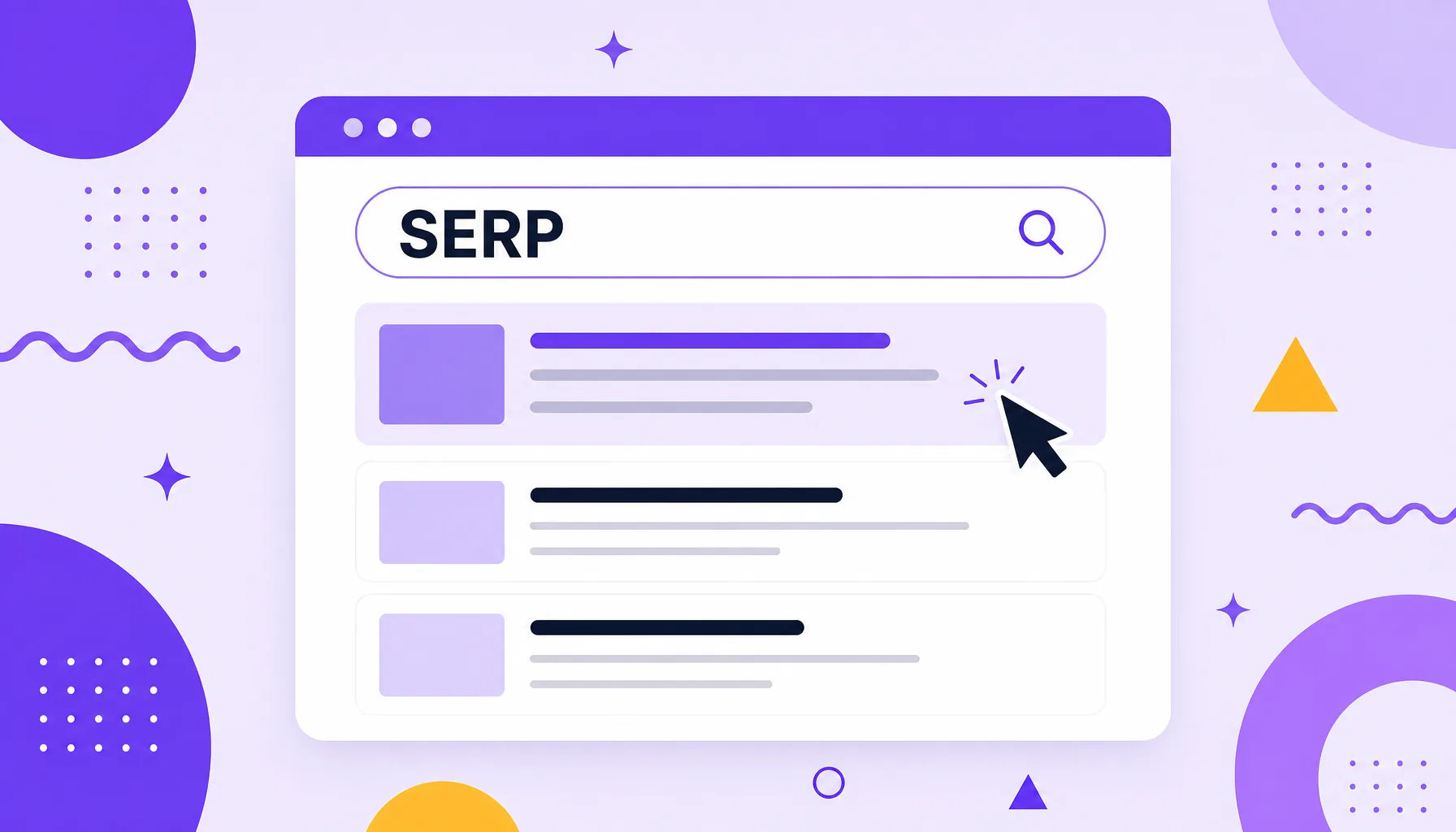
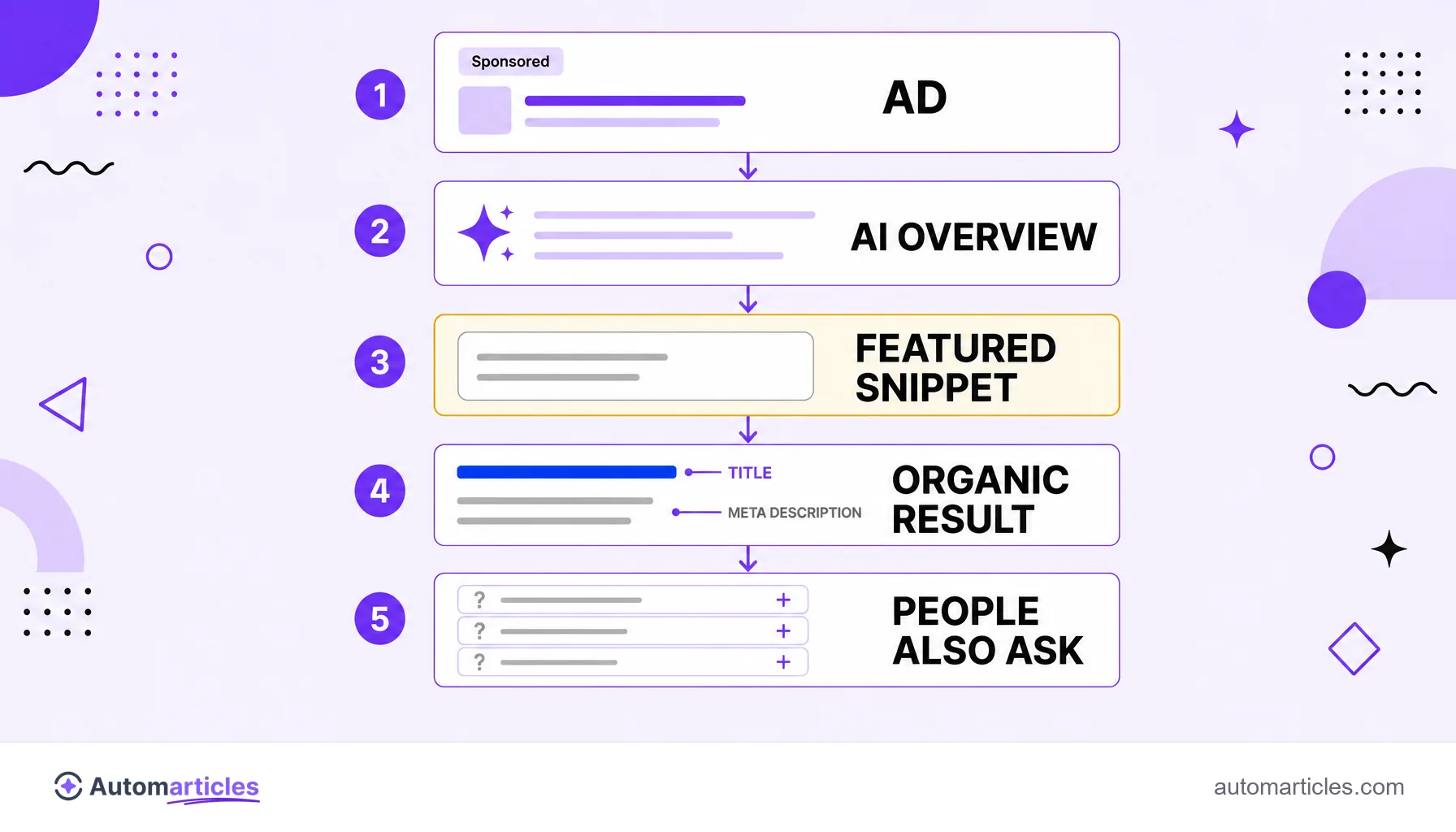
SERP (Search Engine Results Page) is the results page that a search engine like Google displays after a query. About the searched term, it brings together:
- ads (sponsored links);
- AI Overview (AI generated summary);
- featured snippet (position zero);
- organic results (title and meta description);
- People Also Ask (related questions).
What SERP means and where the acronym comes from
SERP is the acronym for Search Engine Results Page, that is, the results page of a search engine. It is the screen that appears as soon as you type a word or phrase into Google (or Bing, DuckDuckGo, YouTube) and press enter.
Every search generates a different SERP, built in real time to answer that specific query. That is why there is no single SERP: the same word can return quite different pages depending on the language, location, history and device of whoever is searching.
A heads up for anyone searching in Portuguese: in Brazil, the acronym SERP also shows up tied to government systems, such as the Sistema Eletrônico dos Registros Públicos. In this glossary, SERP always means the search results page, the central concept in SEO.
What are the elements of the SERP
A modern SERP is much more than ten blue links. Google combines paid results, organic results and a series of visual features called SERP features. The main ones are:
- Ads (sponsored links): paid results marked as "Sponsored", usually at the top and bottom of the page.
- AI Overview: a summary generated by artificial intelligence that answers the question right at the top, with links to the sources.
- Featured snippet: the featured snippet, or position zero, is a highlighted block that pulls the answer from a page and shows it before the first organic result.
- Organic results: the unpaid links, each made up of a clickable title tag and a meta description just below.
- People Also Ask: an accordion of related questions that expand with short answers.
- Other features: images, videos, local map, knowledge panel, reviews and related search boxes.
According to the traffic study by Ahrefs, around 90.63% of pages receive no organic traffic from Google, largely because they never reach these prominent positions on the SERP.
Organic and paid SERP: how clicks are distributed
The SERP mixes two types of result. The paid ones come from Google Ads and charge per click; the organic ones are earned with SEO and have no cost per click. Understanding how attention is split between them is what separates an efficient content strategy from wasted effort.
Position matters a lot. According to the CTR study by Sistrix, the first organic result gets on average around 28% of clicks, while the tenth ends up with less than 3%. Similar numbers appear in the survey by Backlinko, which estimates around 27.6% of clicks for the first position.
The takeaway is direct: moving from page two to the top of the SERP does not double traffic, it multiplies it. And every new feature (ad, snippet, AI Overview) pushes the blue links further down, making the fight for the first positions even more decisive.
How search intent shapes the SERP
The format of each SERP is a powerful clue. Google shapes the page according to the search intent behind the word, that is, what the person really wants when they search.
If the SERP for a word is full of stores and product ads, the intent is transactional and a blog article will hardly rank there. If guides, tutorials and featured snippets show up, the intent is informational and that is where educational content has room. Reading the SERP before writing, therefore, is worth more than any guess: it shows, in practice, the type of page that Google has already decided to reward for that term.
SERP and AI: AI Overviews and the new search behavior
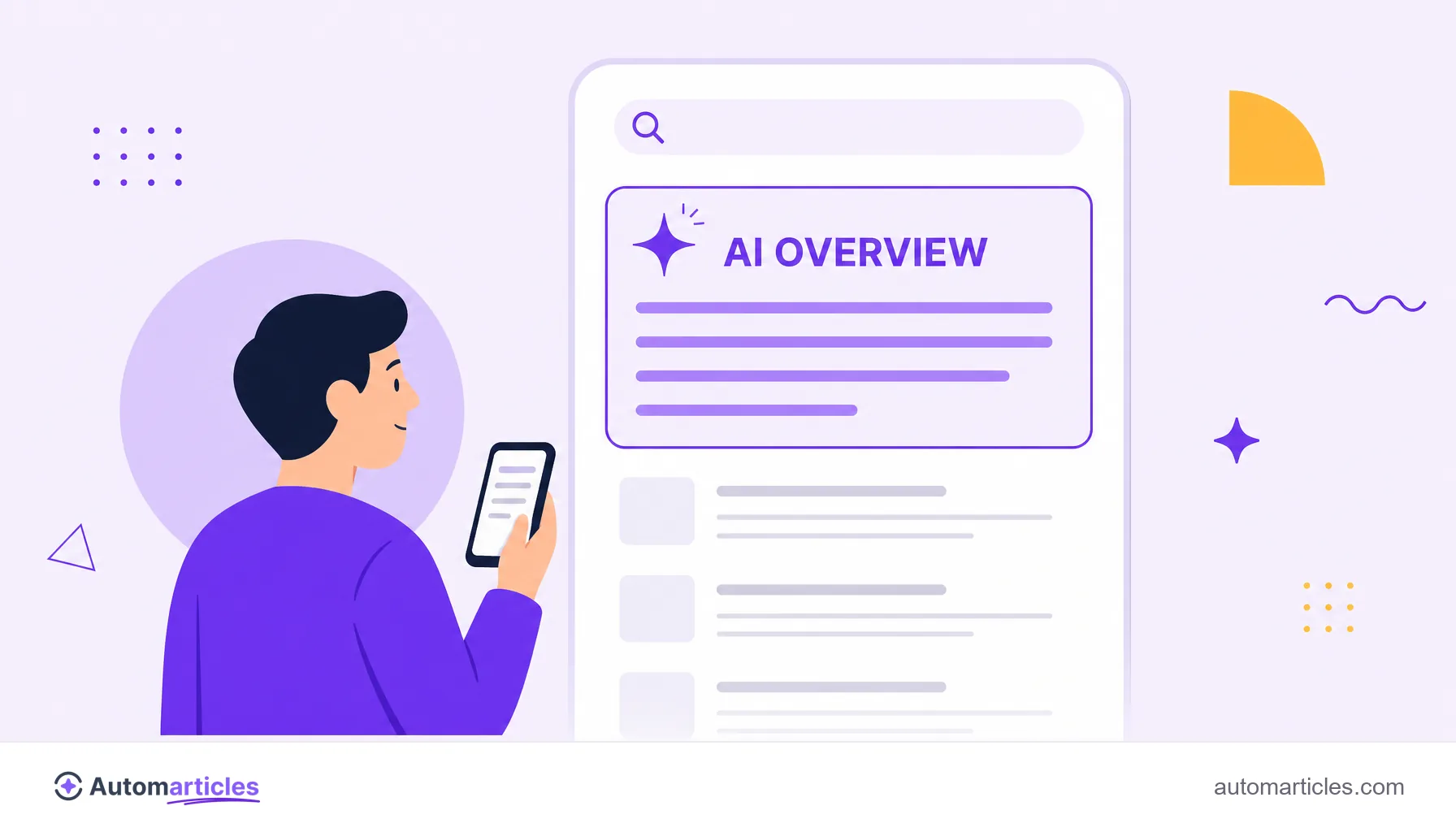
The biggest recent transformation of the SERP has a name: the AI Overviews, AI generated summaries that Google displays at the top of many searches. Instead of sending the user to a link, the search engine tries to answer right there, citing a few sources. It is the peak of the so-called zero click search.
The numbers confirm the shift. A study by the Pew Research Center showed that, when there is an AI summary on the page, users click on a link in only 8% of visits, against 15% when there is no summary. Semrush has also been documenting the rise of searches that end without any click out of Google.
For content creators, this opens the agenda of GEO (Generative Engine Optimization), the optimization to be cited inside these AI answers. The logic changes: beyond ranking, the goal becomes turning into a trusted source that the model chooses to mention. Objective answers, data with a clear source and a scannable structure are what increase that chance.
How to appear well on the SERP: SEO and GEO in practice
Winning space on the SERP is the sum of several adjustments. A good starting point:
- Write for the right intent: analyze the SERP for the word and deliver the format it rewards.
- Nail the title and the meta: the title tag and the meta description are your organic ad and define much of the click.
- Aim for position zero: answer the question directly, in a paragraph or short list, to compete for the featured snippet.
- Use structured data: schema markup helps Google display features such as reviews and FAQ, as recommended by the Google Search Central documentation.
- Optimize for GEO: offer clear answers and citable sources to gain space in AI Overviews.
Monitoring the SERP closely, with tools like Semrush or Ahrefs, helps track positions, active features and competitors' moves over time.