
AI Overviews: what Google's AI answers are and how to optimize
By Tiago CostaUpdated on July 2, 2026
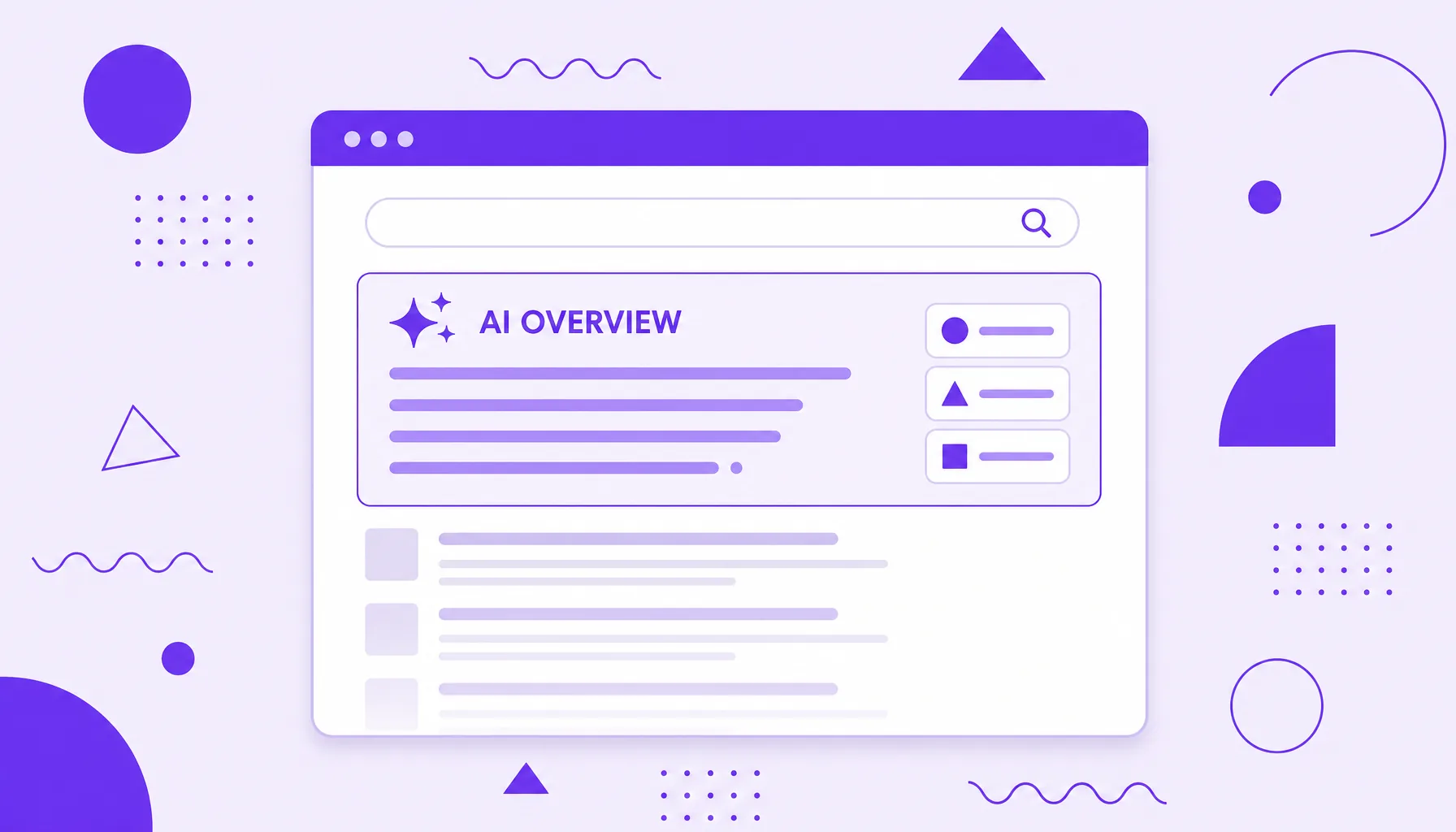
AI Overviews are AI generated summaries at the top of Google search. They pull information from several pages to answer the question right there and show, alongside, the links to the sources used. They appear mostly on informational queries and take up the space before the first organic result.
What Google's AI Overviews are
AI Overviews are summaries generated by artificial intelligence that Google shows at the top of the results page, before the organic links. Instead of only listing pages, the engine reads several sources, synthesizes an answer in a few paragraphs and shows the links it used alongside.
They came out of the Search Generative Experience and now appear on a large slice of searches, especially informational ones (questions like what is, how to, why). The block usually sits above even the first result, taking the most valuable space on the Google results page.
In practice, the AI Overview works as a direct answer layer: the person reads the summary and often solves the question right there, without clicking on any site.
How AI Overviews changed search behavior
The arrival of AI Overviews accelerated the so called zero click search, when the user finds what they need on the SERP itself and does not visit any site.
The data shows the scale of the change. An analysis by the Pew Research Center found that, when there is an AI summary on the page, users click on a link in only 8% of visits, against 15% when there is no summary. The same study noted that around 26% of sessions end right after reading the AI Overview.
On the content creator side, Ahrefs analyzed 300,000 keywords and found an average 34.5% drop in the CTR of the first organic position when an AI Overview appears. The conclusion is direct: still ranking well no longer guarantees the same traffic as before.
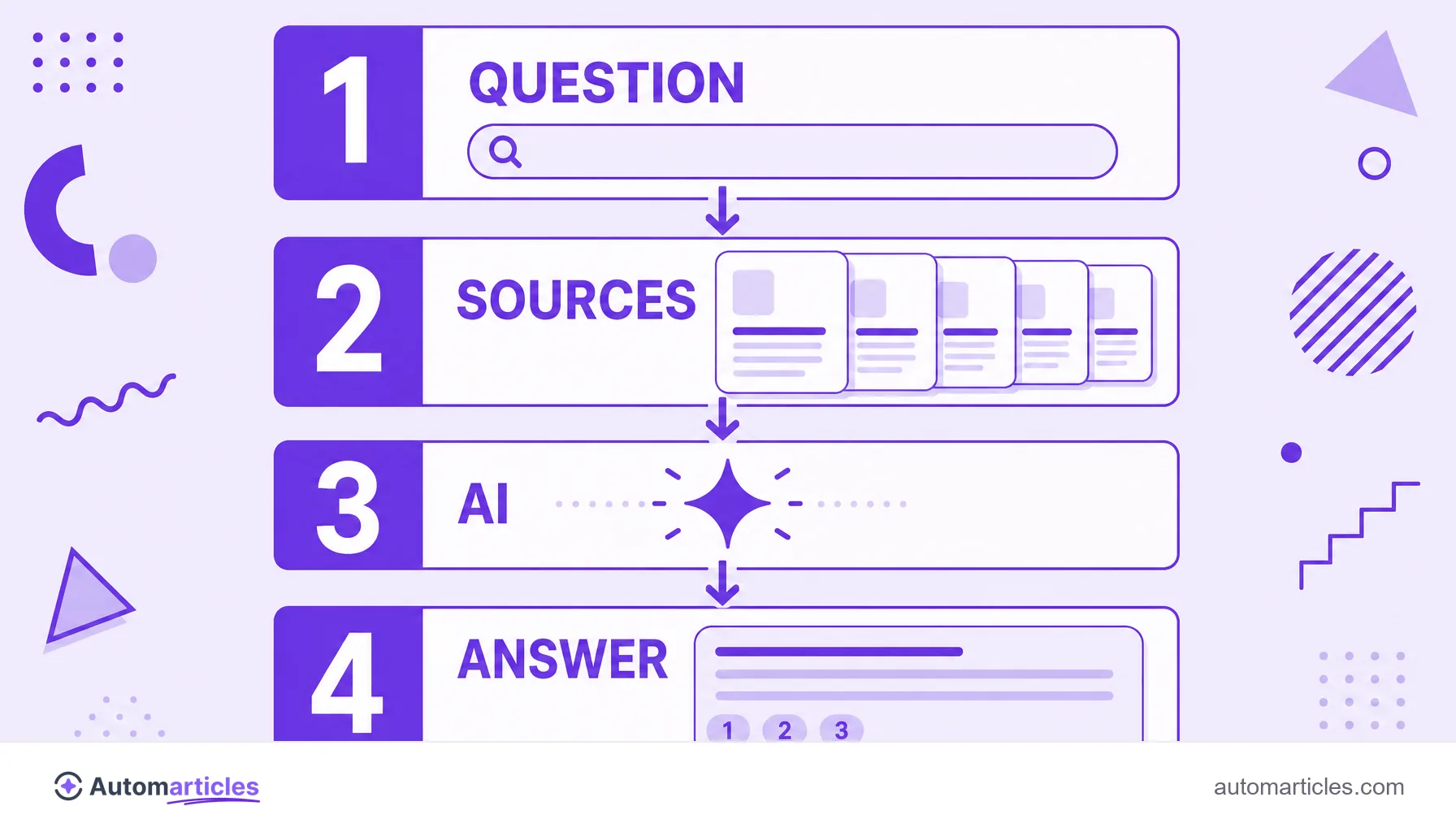
How Google picks the sources for an AI Overview
The AI Overview does not invent the answer from scratch: it builds the summary from pages that Google already considers relevant and trustworthy for that query. The same quality signals as always come into play, now with even more weight.
- Relevance and coverage: pages that answer the question clearly and completely have a better chance of being cited.
- Trust and authority: the criteria of experience, expertise, authoritativeness and trust help the model decide who to trust.
- Scannable structure: objective answers, lists and short passages are easier to extract and summarize.
- Consensus across sources: information that repeats across several trusted pages tends to become the default answer.
That is why appearing in the AI Overview is rarely luck. It is the result of having content that Google already recognizes as a good source on the topic.
AI Overviews, SGE and AI Mode: how they fit together
It is worth separating three names that often get mixed up. SGE (Search Generative Experience) was Google's initial experiment with AI answers in search. AI Overviews are the version that came out of that lab and became an official feature inside the traditional SERP.
AI Mode, in turn, is a separate search mode, almost a chat, in which the whole conversation happens with the AI and the traditional links stay in the background. While the AI Overview coexists with the organic results, AI Mode points to a scenario where search looks more and more like a conversation.
For your content, the underlying logic is the same in all three: being clear, trustworthy and easy to cite increases the chance the model picks your page as a source.
How to optimize to appear in AI Overviews (GEO)
Optimizing for AI answers is the goal of GEO (Generative Engine Optimization). There is no magic button, but there is a set of practices that greatly increase the chance of being cited:
- Answer the question right away: open the section with a direct, objective answer, in one or two sentences, before going deeper.
- Structure in scannable blocks: use clear subheadings, lists and tables so the model extracts passages easily.
- Cite data with a source: concrete numbers and named sources convey trust and are easy to reuse.
- Cover the topic in depth: pages that fully solve the question have a better chance of becoming the main source.
- Reinforce authority signals: clear authorship, recent updates and reputation help Google trust the page.
In short, GEO does not replace SEO: it adds a layer of clarity and credibility on top of a well optimized base.
AI Overviews and traditional SEO: what changes in practice
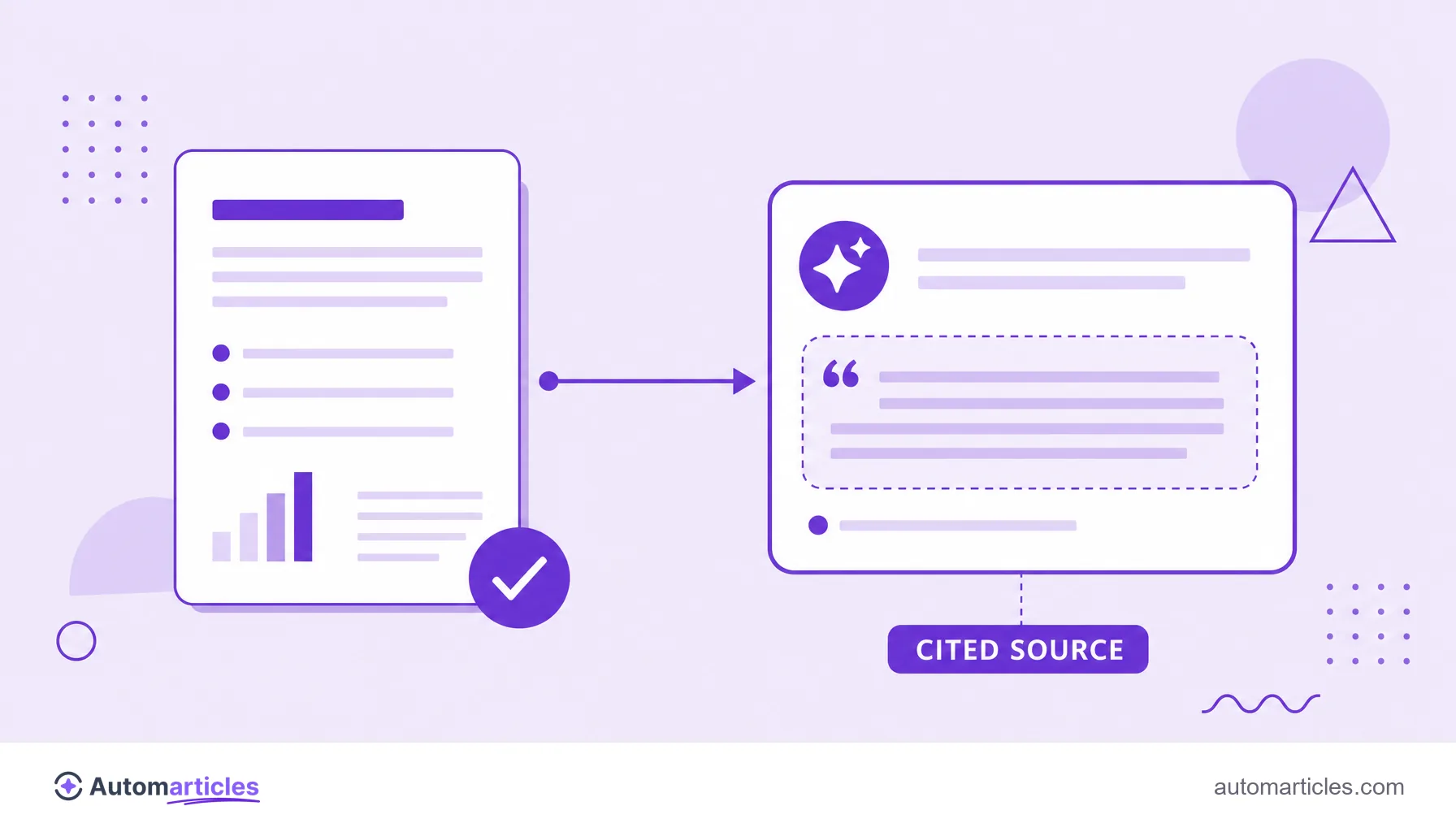
It is tempting to think AI Overviews killed SEO, but the more honest reading is different. The engine builds these summaries from well ranked pages, so still appearing in the top positions remains the prerequisite for being cited.
What changes is the goal. Before, the objective was the click; now it shares space with the citation. A brand mentioned inside the AI Overview gains visibility and authority even when the click does not happen, which reinforces recognition and direct searches over time.
In practice, the winning strategy combines both fronts: solid SEO to rank and an extra care for clarity and credibility to be chosen as the source of the AI answer.