
What AMP (Accelerated Mobile Pages) is and how it works for SEO
By Tiago CostaUpdated on July 2, 2026

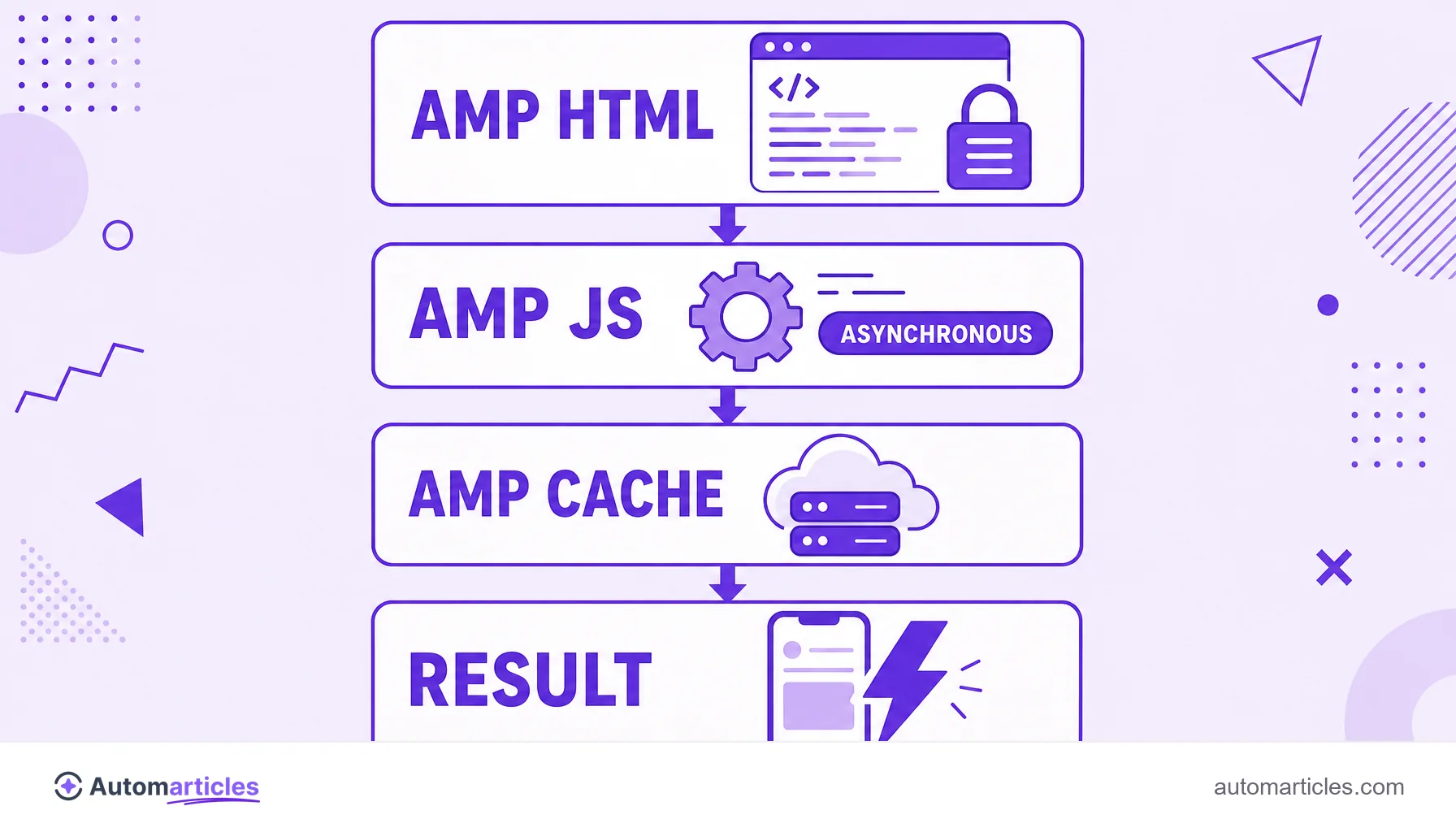
AMP (Accelerated Mobile Pages) is an open format created by Google to load pages almost instantly on mobile. It relies on three parts:
- AMP HTML: a restricted version of HTML;
- AMP JS: a JavaScript that loads everything asynchronously;
- AMP Cache: a Google CDN that serves the page pre-loaded.
What AMP (Accelerated Mobile Pages) is
AMP is short for Accelerated Mobile Pages. It is an open format, tied to technical SEO, created by Google in 2015 to make web pages load almost instantly on mobile. In practice, AMP is a stripped down version of a page, written with strict HTML and JavaScript rules so it weighs less and renders faster.
The idea was born at a time when most sites were slow on mobile and connections were unstable. AMP delivered a light experience, with text and images showing up right away, which was especially useful for news portals and long articles.
A quick context note. The acronym AMP also shows up in very different fields, such as adenosine monophosphate in biochemistry (AMP in health), the ampere in electricity and several associations and agencies. In this glossary, AMP always means Accelerated Mobile Pages, the web page format.
How AMP works: AMP HTML, AMP JS and the AMP Cache
AMP speeds up a page with three main components, each with a clear role:
- AMP HTML: a restricted version of HTML that forbids heavy elements and enforces performance best practices.
- AMP JS: a dedicated JavaScript library that loads everything asynchronously, so no script blocks the display of the content.
- AMP Cache: a Google content delivery network (CDN) that keeps a copy of the page and serves it pre-loaded straight from the search results.
This cache causes one of the biggest sources of confusion with AMP: the page opens with a Google URL (in the google.com/amp/... format) instead of the original domain. For the search engine to understand that the AMP version and the normal version are the same page, you need to link the two with the rel="amphtml" tag and a canonical URL pointing back to the original.
Advantages and disadvantages of AMP
AMP solves a real problem (mobile speed) but charges a price in flexibility. It is worth weighing both sides before adopting it:
| Advantages | Disadvantages |
|---|---|
| Near instant loading on mobile | Restricted HTML and JS limit design and features |
| Pre-loading straight from search | Maintaining two versions of the same page |
| Good experience on slow connections | The Google cache URL hurts branding and analytics |
| Less data usage for the user | Depends on a project led by Google |
For many sites, especially news portals with heavy mobile traffic, the trade off was worth it. For stores and pages with forms and rich interactions, the restrictions weighed more than the speed gain.
AMP and SEO: is the format still a ranking factor?
Here lies the biggest misunderstanding. AMP was never, on its own, a ranking factor. What existed was a requirement: until 2021, to appear in the Top Stories carousel (the main news at the top of Google), the page had to be AMP.
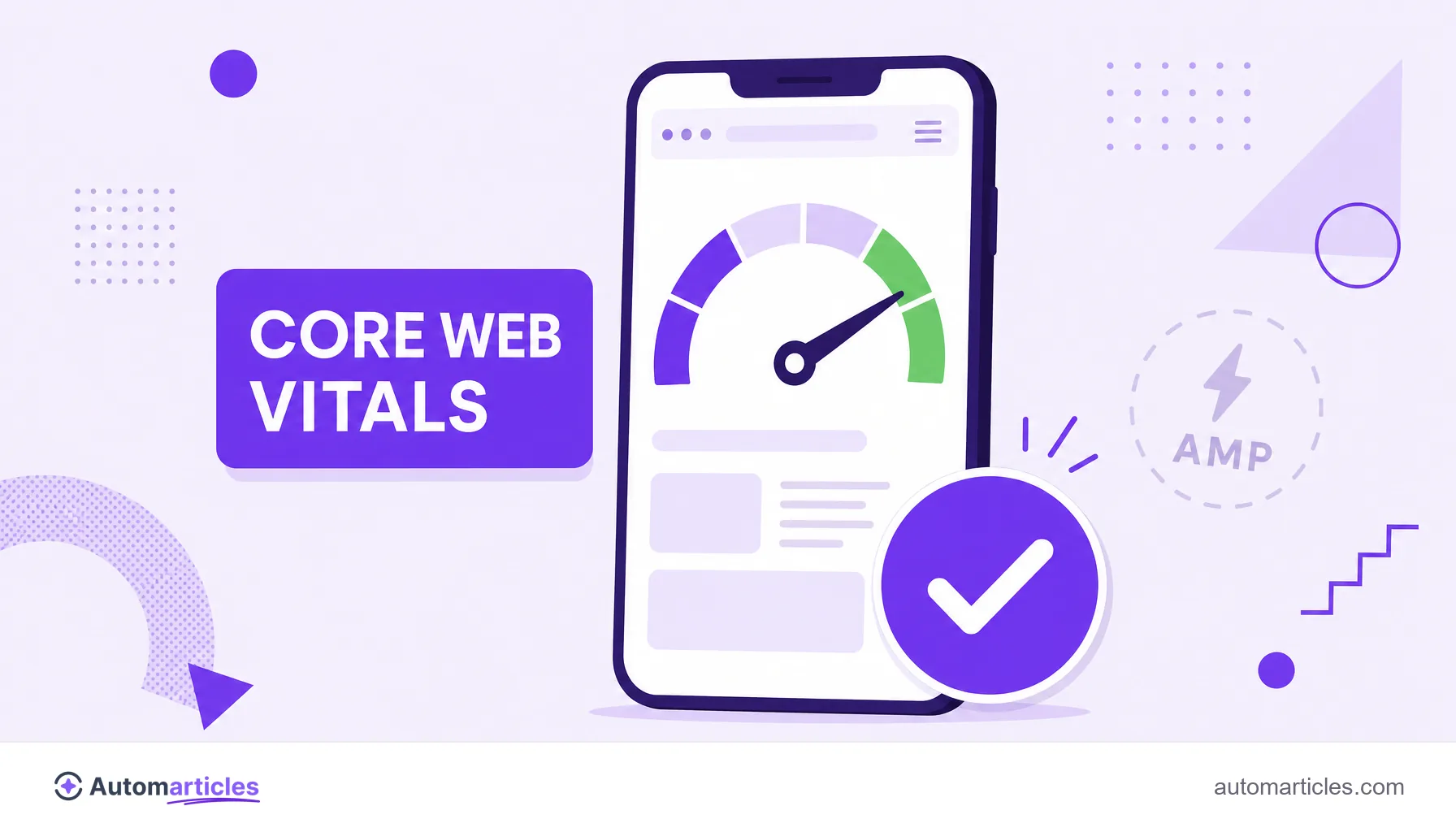
That changed with the Google Page Experience update, which opened Top Stories to any page, with or without AMP, as long as the experience was good. The focus moved from the format to the page experience signals, measured by Core Web Vitals, such as LCP (the time until the largest element appears on screen).
In other words: today you can have a fast page, passing Core Web Vitals, without writing a single line of AMP. What Google rewards is real speed and stability, not the format used to get there.
Is AMP worth it in 2026? What to use instead
The short answer: for most sites, not anymore. Adoption of the format has shrunk. According to the W3Techs survey, AMP is used by around 0.1% of all sites with a known markup language, a tiny and declining slice.
Major outlets and platforms dropped AMP starting in 2021, when it stopped being mandatory for Top Stories. With modern frameworks and performance best practices, you can reach the same speed without the format's constraints.
In place of AMP, the path today is:
- a single responsive design that serves desktop and mobile well;
- optimizing images, fonts and scripts to pass Core Web Vitals;
- using your own cache and CDN, without depending on the Google URL.
How to implement AMP step by step
If your case still calls for AMP (a legacy news portal, for example), the basic step by step is:
- Create the AMP version of each page following the AMP HTML rules.
- Link the two versions: on the normal page, add
<link rel="amphtml">pointing to the AMP; on the AMP, a canonical pointing back to the original. - Validate each page in the official AMP validator to make sure it is eligible.
- Track the errors in Google Search Console, which has a specific AMP report.
Once that is done, monitor whether the speed gain is worth the work of keeping two versions. On most new projects, investing directly in responsive performance pays off more than adopting AMP.