
Technical SEO: what it is and how to do it on your site
By Tiago CostaUpdated on July 2, 2026

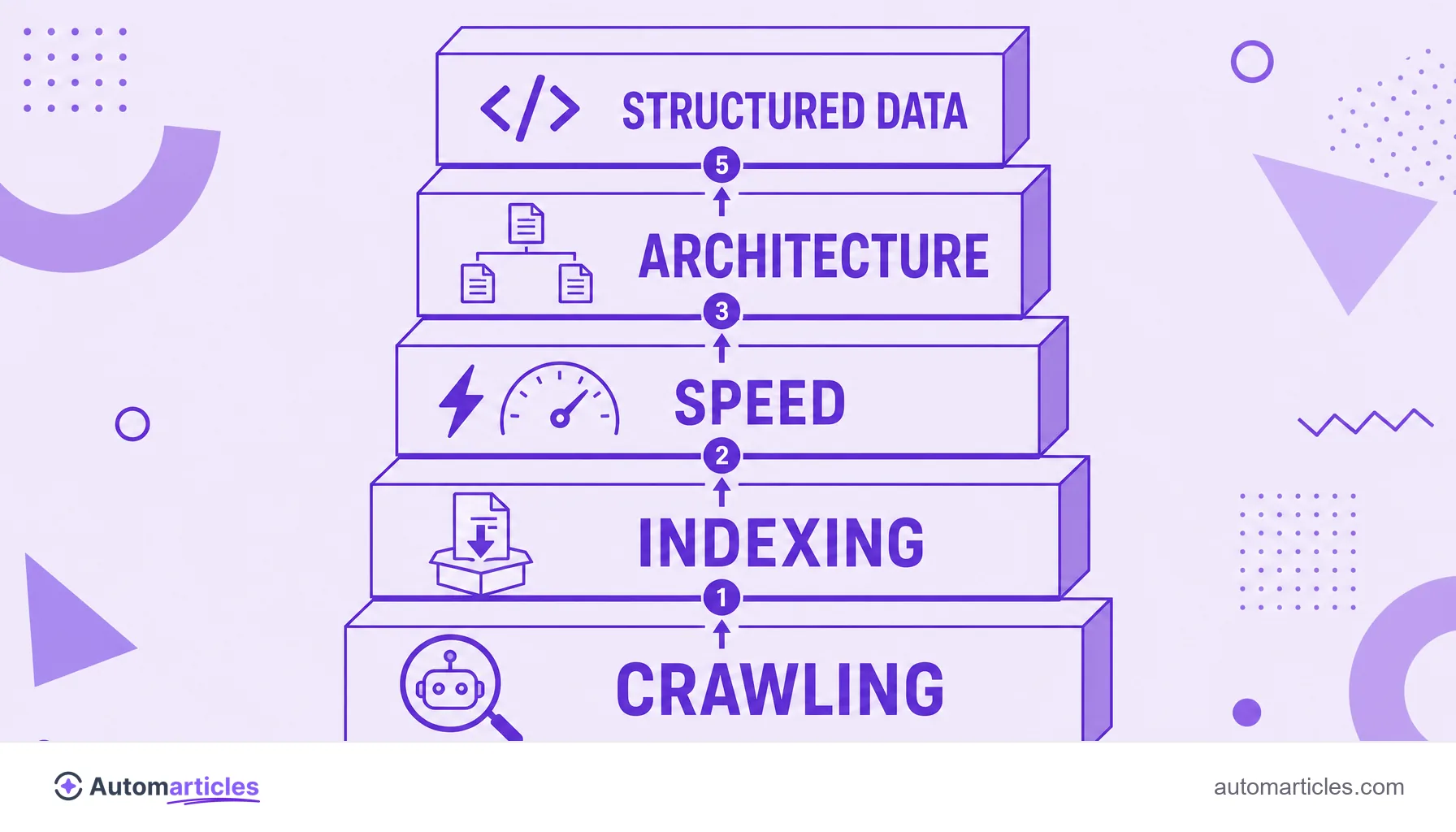
Technical SEO is the optimization of a site's foundation so that search engines crawl and index its pages without obstacles. In practice, it takes care of:
- crawling and indexing (robots.txt, sitemap, status codes);
- speed and experience (Core Web Vitals);
- site architecture, URLs and internal links;
- mobile version and security (HTTPS);
- structured data that helps Google understand the content.
What technical SEO is
Technical SEO is the part of SEO that takes care of a site's infrastructure, that is, everything that allows a search engine like Google to find, crawl, understand and index your pages. It does not deal with the text itself, but with the technical conditions that get that text to the search results.
A good analogy is a house. The content is the furniture and the decoration, what the visitor sees and uses. Technical SEO is the foundation, the plumbing and the wiring: nobody notices when everything is fine, but any fault brings the whole experience down. A slow site, with pages blocked by mistake or with server errors, sinks in search no matter how well written the content is.
In practice, technical SEO rests on three questions Google asks about each page: can I crawl it, can I index it and is the experience good enough to show the user. Getting a yes to all three is the central goal of the discipline, and it is what connects technical SEO to on-page SEO and to off-page SEO.
Technical, on-page and off-page SEO: where each one acts
SEO is usually split into three fronts that work together. Confusing one with another is common, but each one solves a different problem.
| Front | What it handles | Examples |
|---|---|---|
| Technical SEO | Infrastructure and the search engine's access to the site. | Speed, indexing, sitemap, HTTPS, structured data. |
| On-page SEO | Optimization within each page. | Title, headings, content, images, internal links. |
| Off-page SEO | Reputation earned off the site. | Backlinks, mentions, domain authority. |
Their relationship is one of dependence. On-page SEO only pays off when the page is crawlable, and the authority built by off-page SEO is lost if Google cannot index the URL that receives the links. That is why technical SEO is usually solved first: it unlocks the value of everything else.
Crawling and indexing: the base of everything
Before ranking, a page has to go through two technical stages. First the search engine's crawler visits the URL and reads the content (crawling). Then, if the page is considered valid, it enters the index and becomes able to appear in the results (indexing). If either one fails, the page stays invisible.
The weight of this shows in the numbers. A study by Ahrefs of around 14 billion pages found that 96.55% of them get no traffic from Google, and crawling and indexing failures are among the reasons that keep much of that content out of search.
The main technical control points at this stage are:
- Robots.txt file: the robots.txt guides what the crawler may or may not visit. A wrong rule here blocks the whole site by accident.
- XML sitemap: the XML sitemap lists the important URLs and helps Google discover them faster.
- Noindex directive: the noindex tag keeps pages with no search value (login areas, filters) out of the index.
- Canonical URL: the canonical URL indicates the preferred version of similar pages and avoids duplicate content.
- Crawl budget: on large sites, the crawl budget defines how many pages Google visits per period, so it must not be wasted on useless URLs.
To audit all of this, Google Search Console is the central tool: the coverage report and the URL inspection show exactly which pages were indexed and why others were left out.
Speed and Core Web Vitals
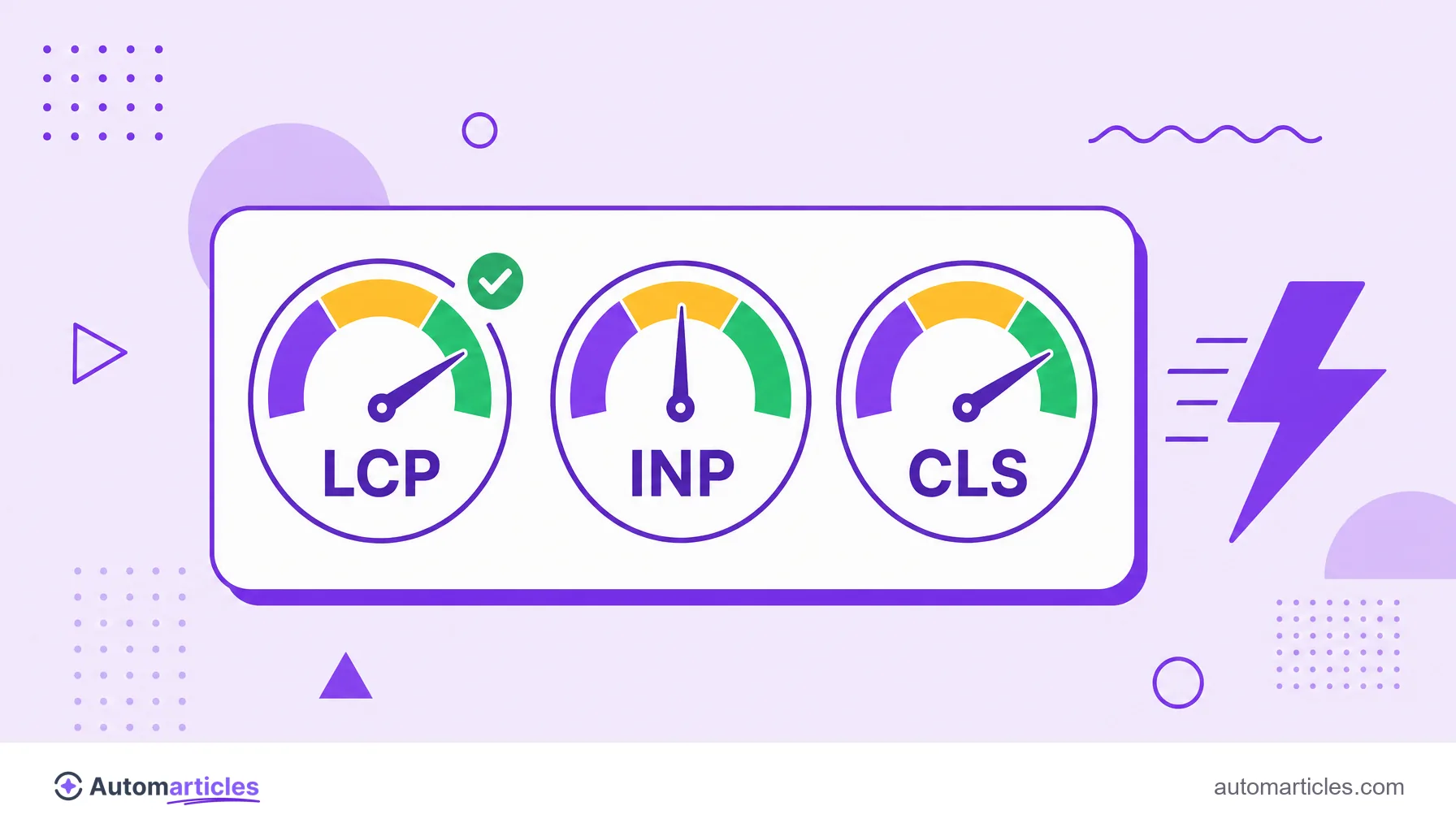
After making sure Google can access the site, the next pillar is the loading experience. Since 2021 Google has used the Core Web Vitals as a ranking signal, a trio of metrics that measures how fast, stable and responsive the page feels to whoever uses it.
- LCP: the Largest Contentful Paint measures the time until the largest visible element loads. The target is under 2.5 seconds.
- INP: the Interaction to Next Paint measures the response to clicks and taps. The target is under 200 milliseconds.
- CLS: the Cumulative Layout Shift measures how much the layout jumps during loading. The target is under 0.1.
Even before those three, the Time to First Byte reveals how long the server takes to respond, a bottleneck that affects everything else. Optimizing images, reducing JavaScript, using cache and good hosting are the adjustments that move the needle the most.
Here there is a clear opportunity for those who invest in the technical side. According to the Core Web Vitals study by Ahrefs, done with 5.2 million pages via CrUX, only around 33% of sites pass the recommended thresholds, and at the individual page level that number drops to 21.2%. In other words, most of the web still fails on this criterion, and improving speed is a direct way to stand out.
Architecture, URLs, HTTPS and structured data
With access and speed in order, technical SEO turns to the organization and machine reading of the site. The main elements are:
- Architecture and internal links: a shallow structure, where any page is reached in a few clicks, distributes relevance and eases crawling.
- Clean URLs: short and descriptive addresses help users and search engines. An excess of URL parameters can create duplication and confuse the index.
- Redirects: when changing an address, use the 301 redirect to preserve authority, and avoid the redirect chain, which wastes crawl time.
- Correct status codes: removed pages should respond with the right code. Understanding the HTTP status codes keeps a 404 error from becoming a silent indexing problem.
- HTTPS: a secure connection is a basic trust requirement and a light ranking signal.
- Internationalization: multilingual sites use the hreflang markup to serve the right version to each audience.
The semantic layer closes the package: structured data, implemented with schema markup, describes the content for the search engine and enables rich results, such as review stars and frequently asked questions on the SERP.
A technical SEO checklist in practice
Good technical work is made of routine, not heroism. This roadmap covers most sites and helps prioritize what gives the most return:
- Check indexing: see in Search Console how many pages are indexed and investigate the excluded ones.
- Review robots.txt and sitemap: make sure nothing important is blocked and that the sitemap is up to date and submitted.
- Measure Core Web Vitals: test the most important URLs and tackle LCP first, which tends to be the most problematic.
- Hunt errors and redirects: fix pages with 404 and 500 errors, eliminate redirect chains and broken links.
- Check mobile: Google's indexing is mobile-first, so the phone version needs the same content as the desktop version.
- Validate structured data: test the markup and track the enhancements report.
You do not need to fix everything at once. Start with the problems that affect the whole site (blocks, general slowness, indexing) and only then go down to page-by-page adjustments. With that solid base, every content and link effort starts to pay off far more.