
Core Web Vitals: what they are and how to improve the metrics
By Tiago CostaUpdated on July 2, 2026

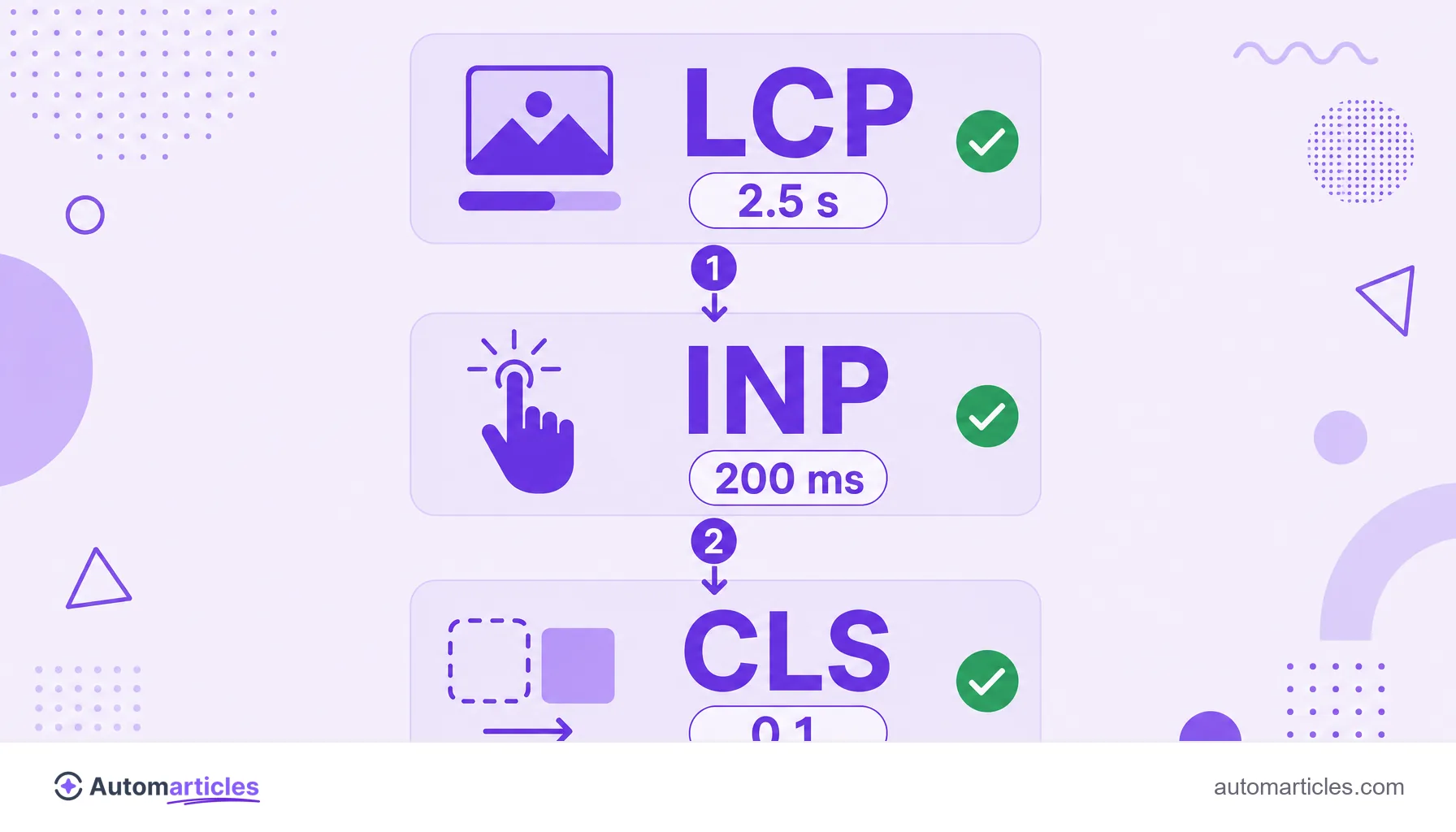
Core Web Vitals are three Google metrics that measure the experience of using a page. They are:
- LCP (Largest Contentful Paint): loading speed, good up to 2.5 s;
- INP (Interaction to Next Paint): response to interactions, good up to 200 ms;
- CLS (Cumulative Layout Shift): visual stability, good up to 0.1.
What Core Web Vitals are
Core Web Vitals are a group of three metrics created by Google to measure, objectively, the quality of the experience of someone browsing a page. Instead of opinion, they use numbers: how fast the content appears, how quickly the page responds and how stable the layout stays.
They were born within the Web Vitals initiative and became part of the page experience signals that Google uses as a ranking factor. The logic is simple: a site that loads fast and does not glitch tends to hold the visitor better.
Because they measure experience, not content, Core Web Vitals are a classic technical SEO topic. They add to factors like security and mobile friendliness to make up the page assessment.
The three metrics: LCP, INP and CLS
Each Core Web Vital looks at a different aspect of the experience. Knowing the recommended limits helps you know where to act:
| Metric | What it measures | Good up to |
|---|---|---|
| LCP | Time for the largest visible element to load | 2.5 seconds |
| INP | Responsiveness to user interactions | 200 milliseconds |
| CLS | Visual stability (how much the layout moves) | 0.1 |
A historical note is worth making: in March 2024, INP officially replaced the old FID (First Input Delay) as the interactivity metric, because it measures the page's response more completely. A good experience requires passing all three at once, not just one.
Why Core Web Vitals matter for SEO
Core Web Vitals matter for two reasons that go together: user experience and ranking. A slow or unstable page frustrates the visitor, who tends to give up before even seeing the content, which pushes the bounce rate up.
The impact goes beyond the search engine: a fast and stable page holds attention better and reduces abandonment before load, which usually shows up as more conversion. It is performance turning into retention and, in the end, revenue.
In SEO, they work as part of the page experience signals. They are not the silver bullet of ranking, but they usually weigh as a tiebreaker between pages with similar content.
How to measure Core Web Vitals
There are two ways to measure, and the two complement each other. Field data comes from real users (via the Chrome User Experience Report, or CrUX) and shows how the page behaves in the real world. Lab data are controlled simulations, useful to diagnose before publishing.
The most used free tools are:
- PageSpeed Insights: combines field and lab data for a URL.
- The Core Web Vitals report in Google Search Console: shows the performance of the whole site, grouped by status.
- Lighthouse: a lab audit inside the Chrome browser.
- The Web Vitals extension: measures the three metrics live as you browse.
The recommendation is to prioritize field data to decide what to fix, since it reflects the experience of those who actually visit the site.

How to improve each metric
Improving Core Web Vitals means attacking each metric by its most common cause:
- LCP (loading): optimize and compress images, use a good server or CDN and reduce the time to first byte.
- INP (interactivity): reduce and split the heavy JavaScript that blocks the main thread, a central concern in SEO for JavaScript.
- CLS (stability): set dimensions for images and videos, reserve space for ads and avoid fonts that cause layout jumps.
The effort is worth it because the web on average still has a lot to improve. According to the HTTP Archive Web Almanac, only around 43% of mobile sites had good Core Web Vitals in 2024. In other words, most sites have clear room to gain positions by taking care of the experience.
Core Web Vitals and ranking: the real weight
It is common to overestimate the effect of Core Web Vitals on ranking. They are a real factor, but of moderate weight: they are part of the page experience assessment, they do not replace relevance, content and authority.
In practice, Google tends to reward first the page that best answers the query. Between two pages equally good in content, though, the one that offers the fastest and most stable experience has an edge. That is where Core Web Vitals become a tiebreaker.
The healthy path is to treat them as part of the site's technical hygiene, not as a race for perfect scores. A solid experience helps SEO and, above all, respects the time of those who visit.