
Black Hat SEO: what it is and why to avoid these techniques
By Tiago CostaUpdated on July 2, 2026
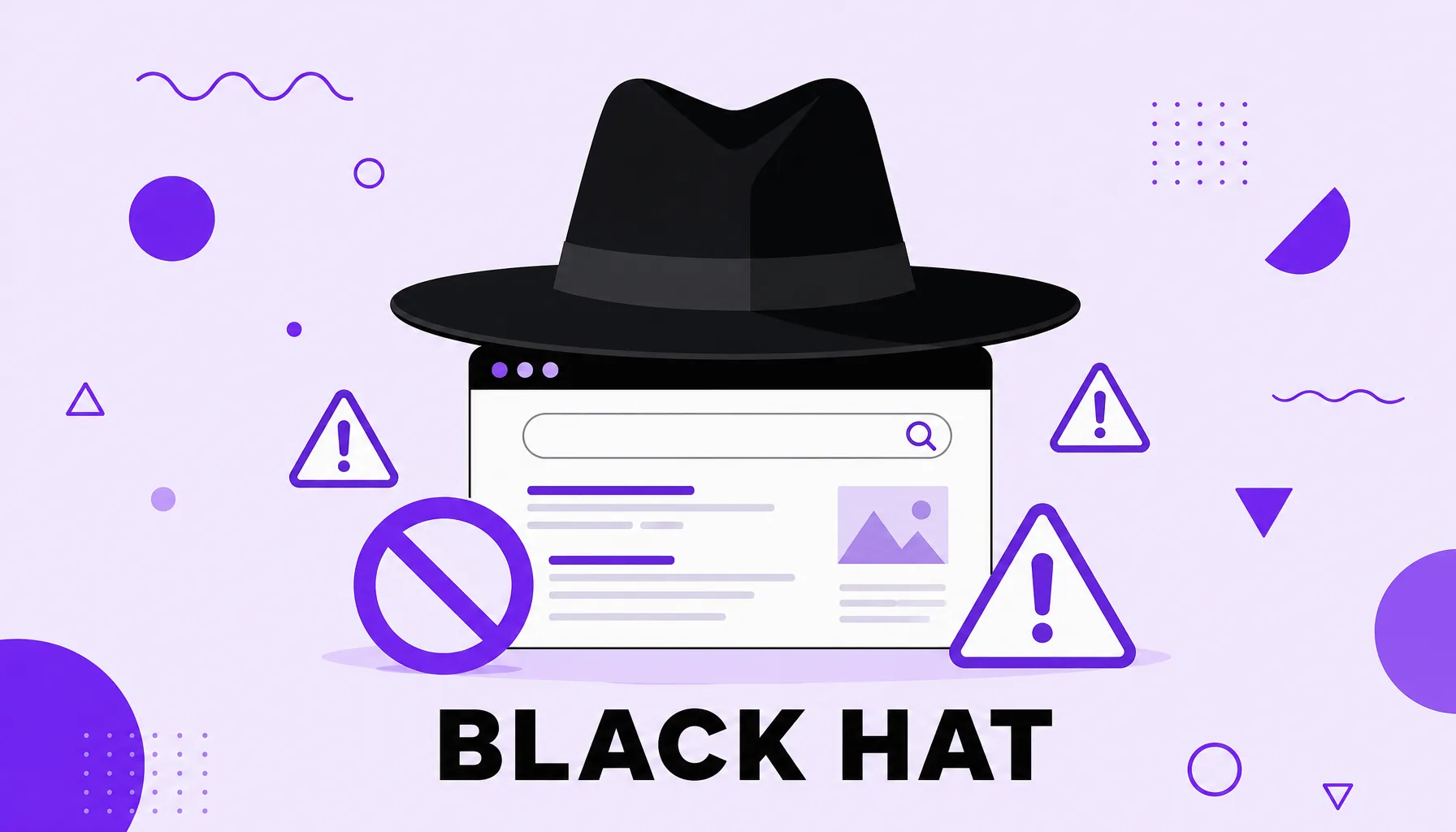
Black hat SEO gathers forbidden techniques that try to fool the search engine to rank faster. The most common ones include:
- keyword stuffing (excessive keywords);
- hidden text and links on the page;
- cloaking (showing different content to Google and to users);
- buying links and private networks (PBN);
- automated content and mass spam.
What black hat SEO is
Black hat SEO is the name given to the optimization techniques that try to win positions on search engines by breaking the rules, that is, by manipulating the algorithm instead of earning the ranking with quality. The term is the opposite of white hat SEO, which works within Google's guidelines and focuses on the reader's experience.
The image comes from western movies, where the villain wore a black hat and the hero a white one. Brought into SEO, it separates those who chase results at any cost from those who build authority in a sustainable way. There is also a middle ground, grey hat, which mixes acceptable tactics with risky shortcuts.
In practice, black hat is anything done to please the robot and fool the user: repeating a keyword until it no longer makes sense, hiding text in the background color, inflating the link profile with purchases or showing one page to Google and another to whoever clicks. The gain tends to be fast, but fragile.
Main black hat SEO techniques
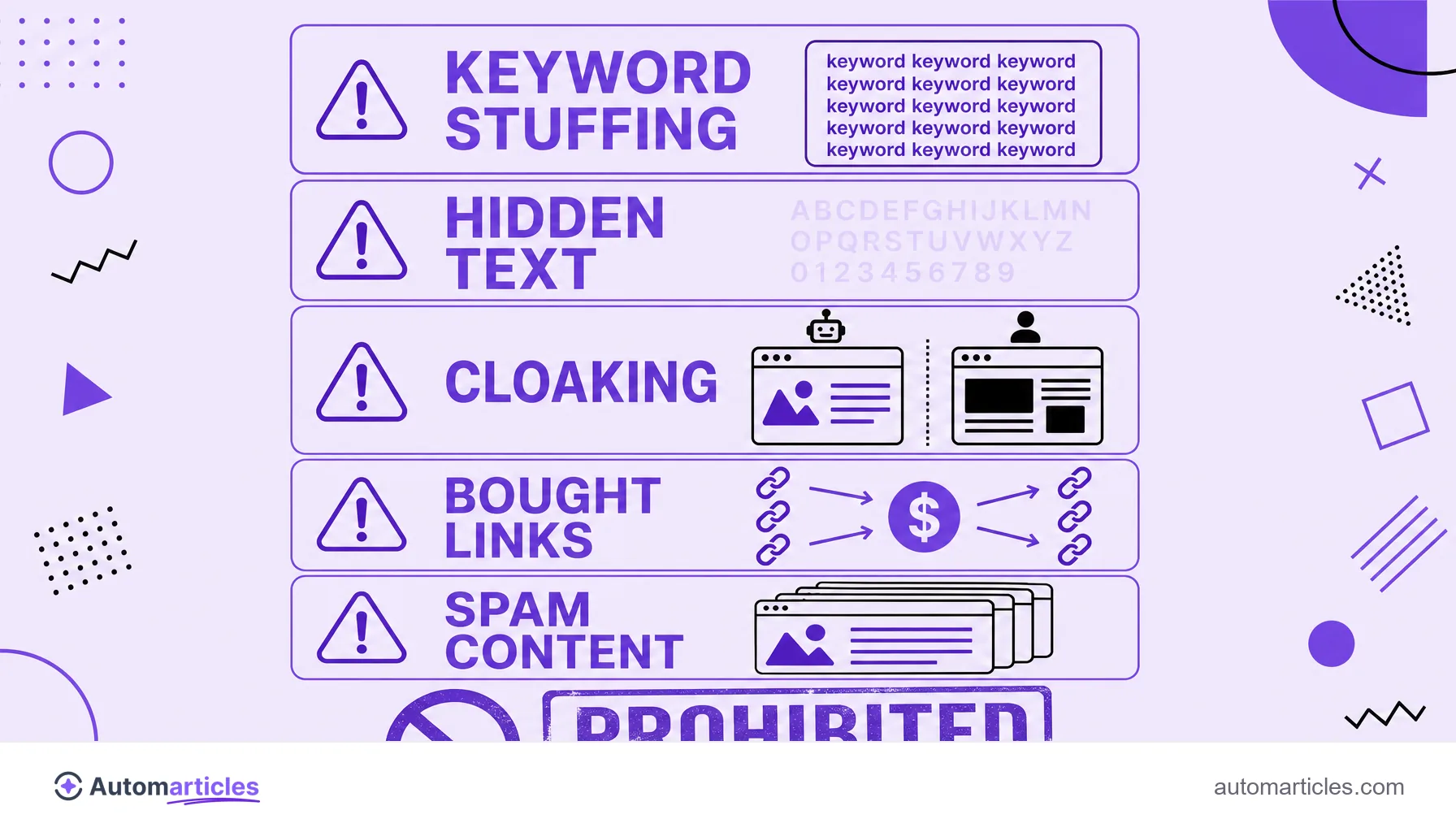
Black hat is not a single tactic, but a family of shortcuts that break the guidelines. Knowing the most common ones helps you recognize them (and never repeat them):
- Keyword stuffing: cramming the text, headings and meta tags with repeated keywords, a practice detailed in keyword stuffing.
- Hidden text and links: hiding words in the background color, with tiny fonts or off screen, just for the robot to read.
- Cloaking: serving one version of the page to the search engine and another to the user, which cloaking explains in depth.
- Link schemes: buying backlinks, joining mass exchanges or building a link farm and a PBN to fake popularity.
- Automated content and spam: generating worthless text at scale, copying third party pages or creating doorway pages made only to grab traffic.
They all share one trait: they put the algorithm ahead of the person. That is exactly the signal Google has learned to hunt.
Why Google fights black hat
For Google, a poor result drives users away, and a user who does not trust the results moves to another engine. That is why the company invests heavily in antispam systems, such as SpamBrain, and in specific updates to clean up search. Every spam update targets precisely these manipulative tactics.
The scale of the effort shows in the numbers. According to the Google webspam report, the company's systems manage to keep more than 99% of visits from search free of spam, and SpamBrain alone started detecting five times more spam sites in 2022 than in the previous year.
The takeaway is direct: betting on black hat means competing against an opponent that improves every year. What worked in 2010 is now detected at scale, and the bill arrives as a drop in positions or the removal of the page.
Black hat, white hat and grey hat: the difference
Separating the three styles helps you see where the risk line is. The table sums it up:
| Approach | How it acts | Risk |
|---|---|---|
| White hat | Follows the guidelines and focuses on the user | Low, sustainable result |
| Grey hat | Mixes acceptable practices with shortcuts | Medium, depends on interpretation |
| Black hat | Breaks the rules to manipulate the ranking | High, subject to penalty |
White hat SEO builds authority with useful content, solid technical structure and links earned naturally. Black hat tries to skip steps. In the medium term, those who follow the guidelines almost always come out ahead, because they do not have to start over after a penalty.
What happens to those who use black hat: the penalties
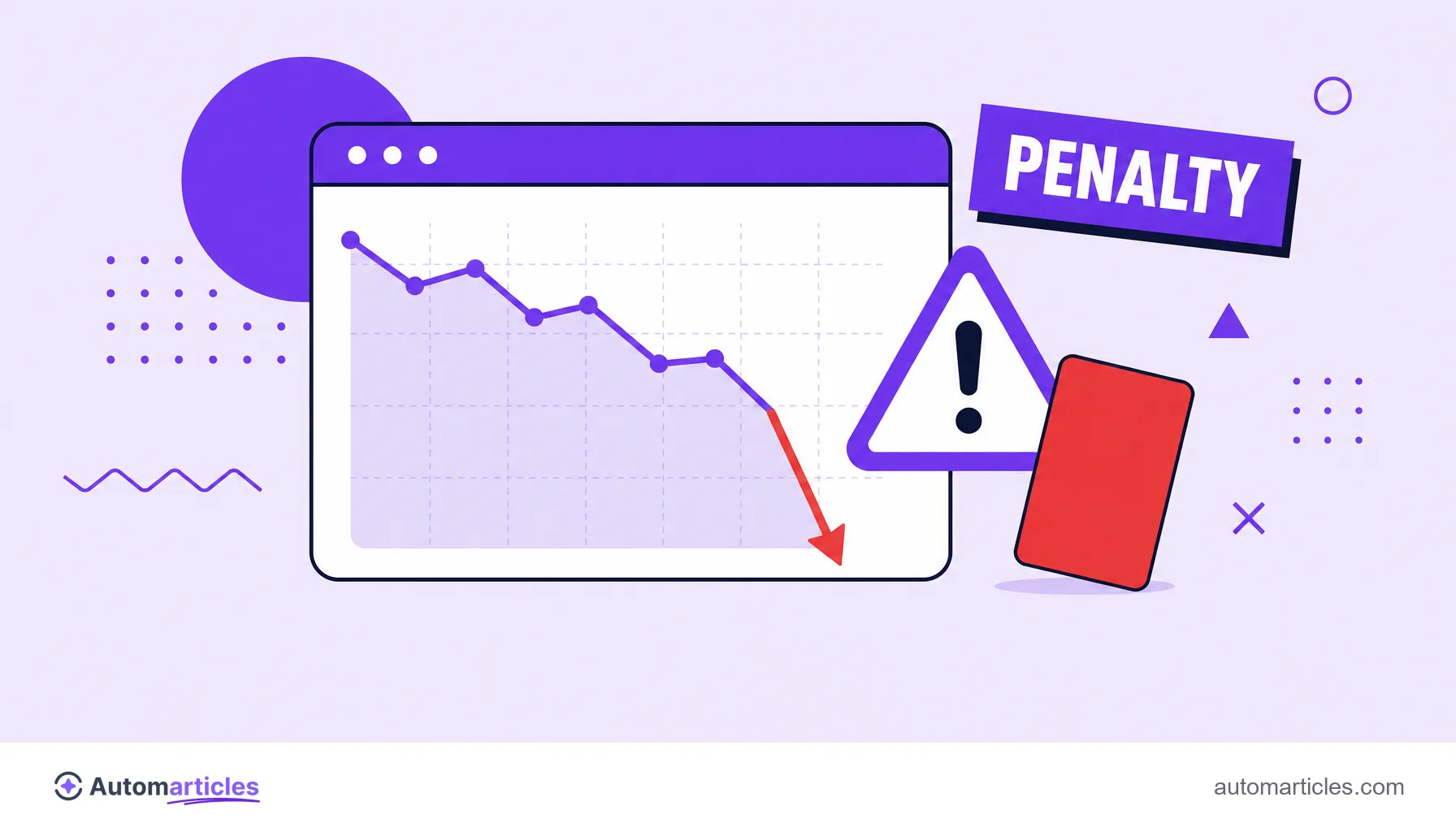
Punishment for black hat comes through two paths. The first is a manual action: a Google reviewer analyzes the site, confirms the violation and applies the penalty, which shows up in Google Search Console. The second is algorithmic: an update starts understanding the manipulation better and the site drops without warning.
The effects range from losing a few positions to disappearing from the results entirely. Recovery tends to be slow: you have to remove the tactic, clean up what was done (for example, disavowing toxic links with the disavow tool) and, in the case of a manual action, request a reconsideration and wait for the review.
Add to that the opportunity cost. All the time invested in bought backlinks and tricks could have gone into real content, which would keep bringing traffic instead of turning into a liability. In the end, black hat usually costs more than the right path.
Black Hat beyond SEO: event, character and other meanings
Much of who searches for 'black hat' is not after SEO, so it is worth clarifying the other meanings of the term:
- Black Hat (event): one of the biggest information security conferences in the world, focused on hacking and cyber defense, with no link to marketing.
- Black Hat (character): the villain of the animated series Villainous, from Cartoon Network, an evil businessman with a top hat.
- Black hat hacker: in the security world, the hacker who breaks into systems with bad intent, the opposite of the white hat hacker.
- Movies and pop culture: the term names films and productions that explore the world of digital crime.
In this glossary, however, black hat always means the set of forbidden SEO techniques, the ones that try to fool the search engine and put the site at risk.