
Backlink: what it is and why it matters for SEO
By Tiago CostaUpdated on July 2, 2026
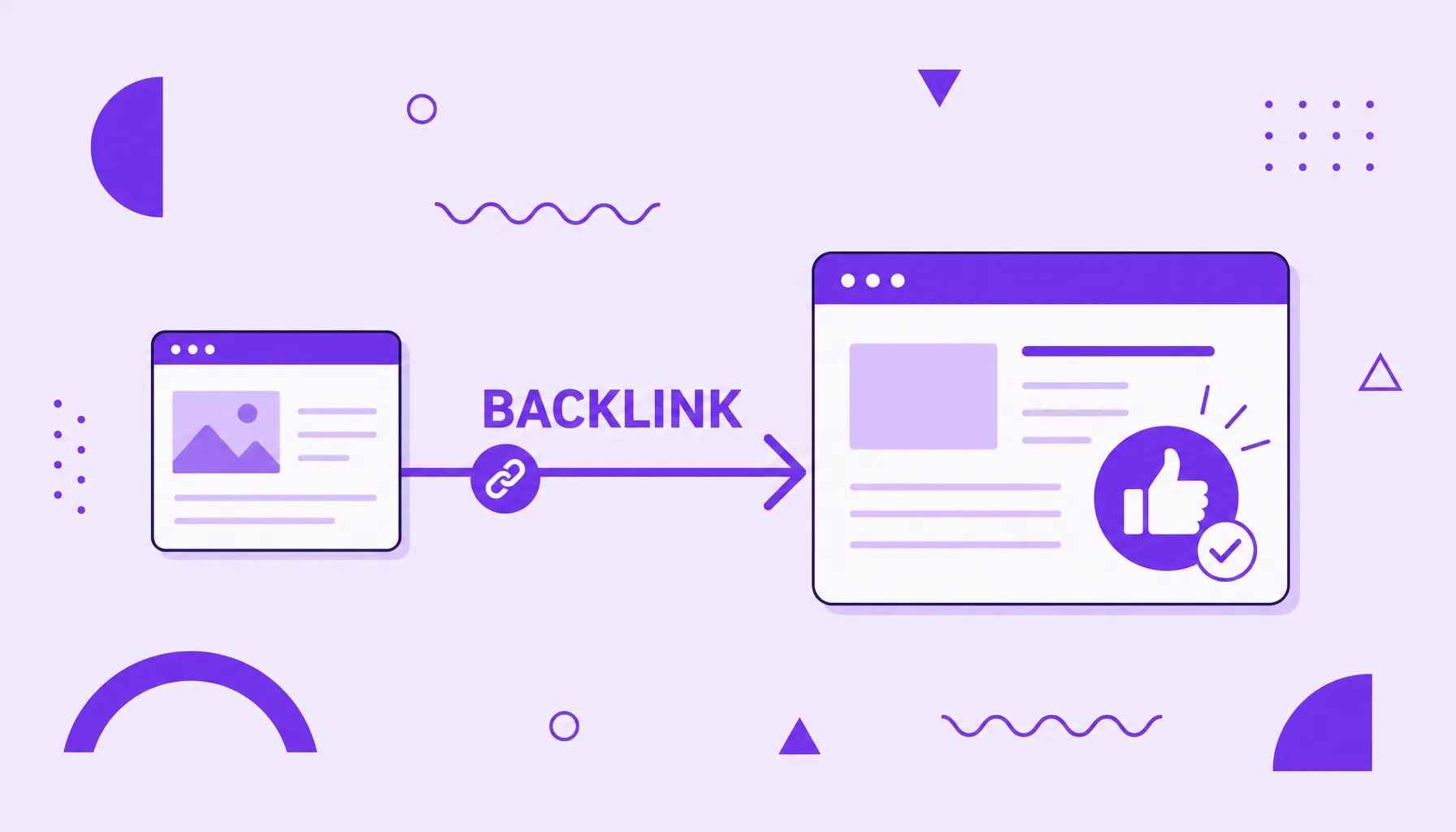
A backlink is a link from another site that points to a page of yours. It matters because:
- it works as a vote of confidence to Google;
- it helps transfer authority between pages;
- it directly influences your position in search results;
- it is worth more when it comes from relevant, trustworthy sites.
What a backlink is and why it counts as a vote of confidence
A backlink (or inbound link) is any link that leaves one site and points to a page on another site. If a blog cites your article and inserts a link to it, you just earned a backlink. From your site's point of view, it is a received link; from the point of view of whoever linked, it is a link going out.
The idea behind the value of a backlink is old and simple: if many people point to a page, it is likely useful. That reasoning gave rise to PageRank, the algorithm that put Google ahead of its rivals by treating each link as a vote. And a vote from a relevant, trustworthy site weighs far more than dozens of votes from dubious ones.
Because these votes come from outside your domain, backlinks are the pillar of off-page SEO, the part of optimization that happens away from your own pages and that you do not control on your own.
Why backlinks are so important for SEO
Backlinks remain among the strongest ranking signals in Google, and the data helps explain why. In a study of 11.8 million search results, Backlinko found that the page in the first position has, on average, 3.8 times more backlinks than the pages in positions 2 to 10.
At the same time, earning links is hard, and that is exactly what makes them valuable. Ahrefs, analyzing more than one billion pages, found that 66.31% of them have no backlinks at all. In other words, most content on the web never receives a single link, and those who do get ahead.
In practice, a good backlink profile brings three gains: it raises your domain authority, helps Google discover and index your pages faster and improves your positions for the words you want to rank for. No wonder quality links tend to be one of the biggest drivers of organic traffic.
Types of backlink: dofollow, nofollow and more
Not every backlink is equal. The most important difference lies in the link's rel attribute, which tells the search engine whether or not it should pass authority to the destination:
| Type of link | What it means |
|---|---|
| Dofollow | A regular link, with no restriction. It passes authority and contributes the most to rankings. |
| Nofollow | Carries the rel="nofollow" attribute, which asks Google not to pass authority. It still generates traffic and awareness. |
| UGC | Marked with rel="ugc", it flags links created by users, such as comments and forums. |
| Sponsored | Marked with rel="sponsored", it identifies paid links, from ads or sponsorships. |
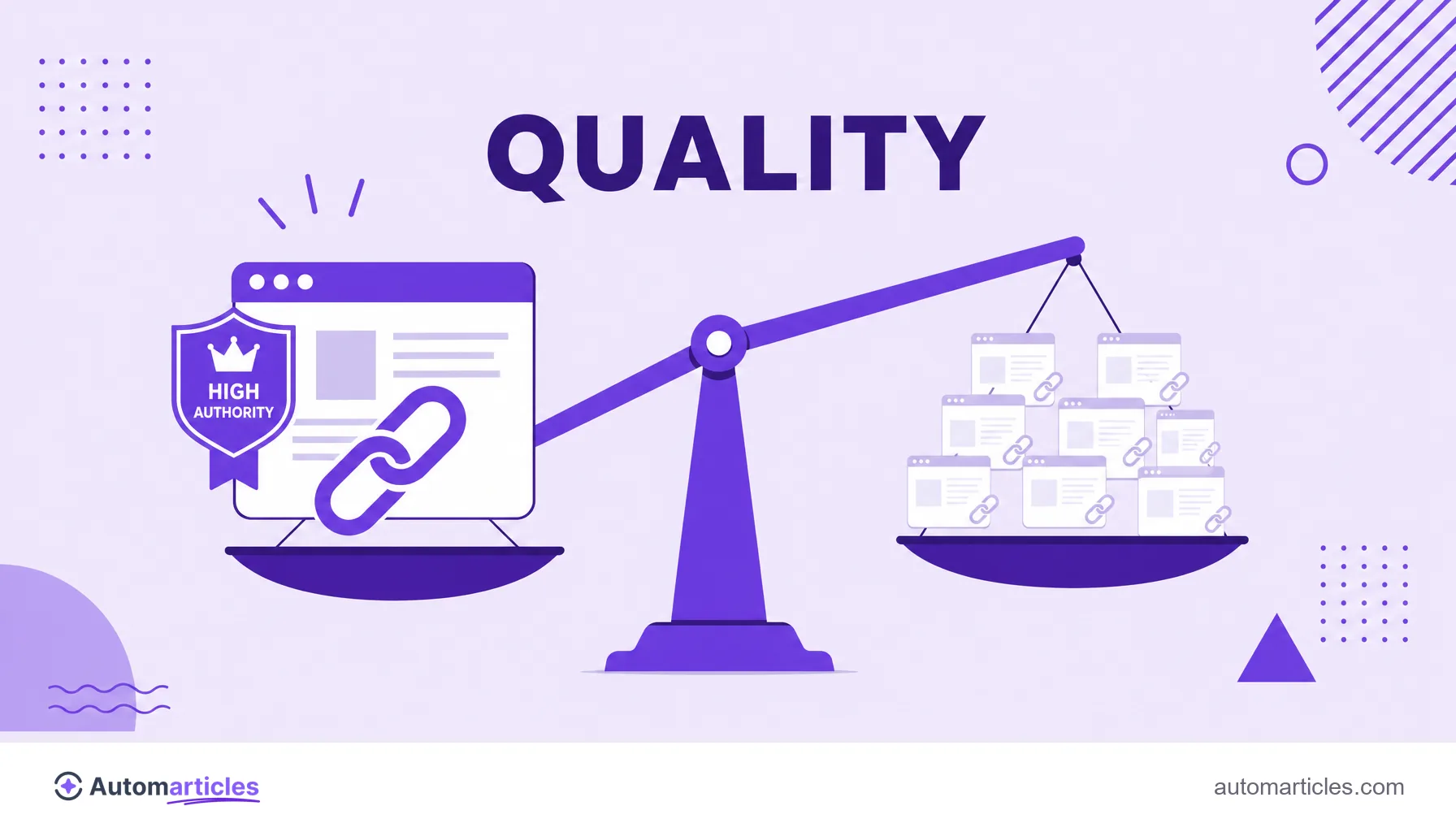
It also helps to separate links by origin: an editorial link, given spontaneously within a piece of content, is worth far more than a footer, directory or comment link. And quality always beats quantity: a few strong backlinks are worth more than hundreds of weak ones.
What makes a backlink high quality
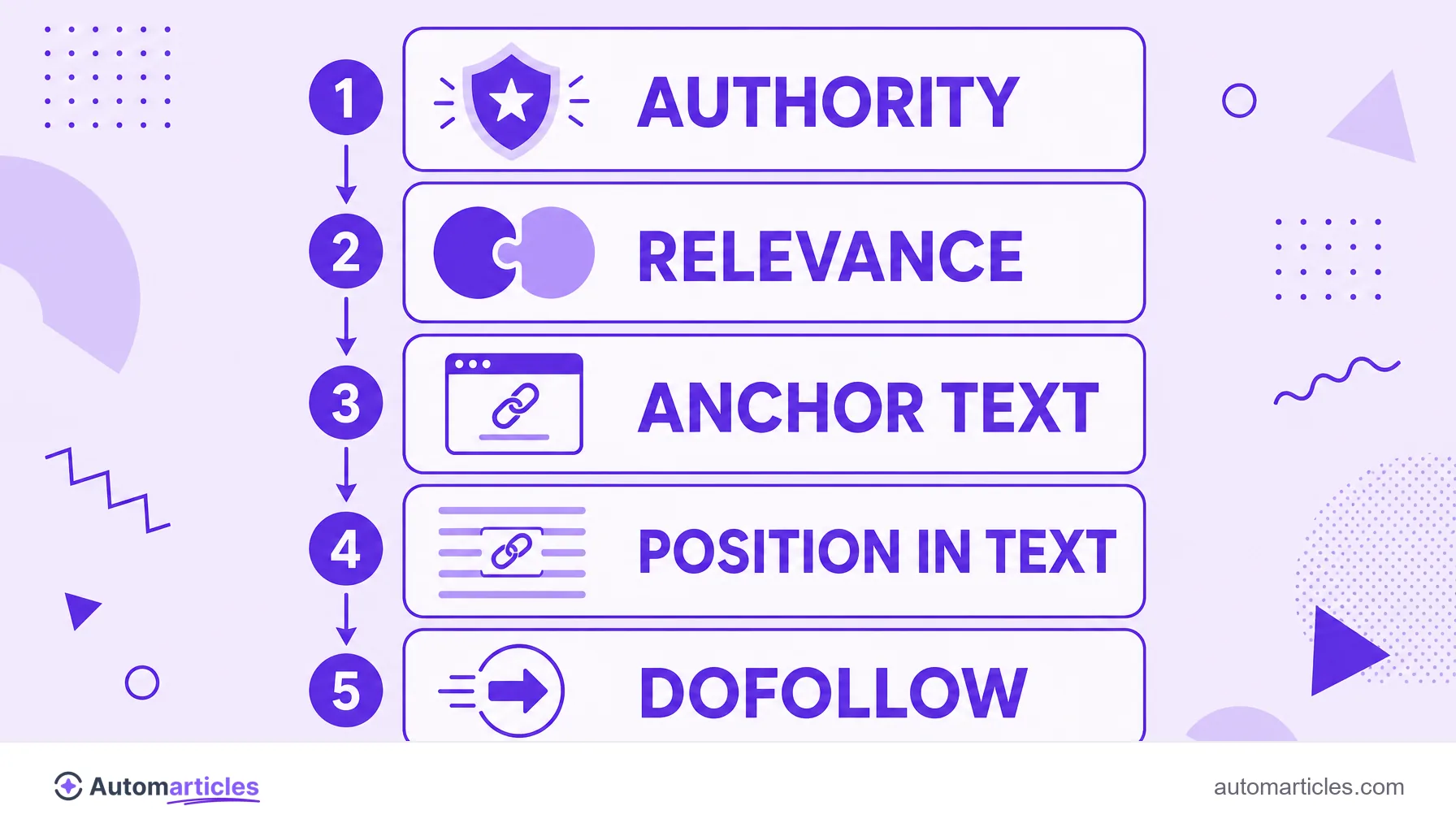
If a vote is worth more when it comes from someone respected, the same happens with links. A few factors separate a powerful backlink from an irrelevant one:
- Authority of the source: links from strong sites weigh more. Metrics such as Domain Rating help estimate that strength.
- Topical relevance: a link from a site in the same niche is worth more than a random link with no relation to your subject.
- Anchor text: the anchor text, the clickable part of the link, gives Google context about the subject of the destination page.
- Position in the content: a link within the body of the text, surrounded by related content, is worth more than a link lost in the footer.
- Link attribute: a dofollow link passes authority, while a nofollow one serves more for traffic and brand.
The sum of these factors is what defines the real impact of each backlink on your ranking. That is why a single very good link can be worth more than a flood of weak ones.
How to earn backlinks: link building strategies
The work of earning links consistently is called link building. There is no magic formula, but some strategies work well when applied with patience:
- Create link worthy content: complete guides, original data, studies and free tools are the formats that attract the most natural links.
- Write guest posts: writing a guest post for a relevant site in your sector earns a link and also introduces your brand to a new audience.
- Invest in digital PR: offer data, opinions and stories to journalists and creators to become a cited source with a link.
- Recover unlinked mentions: when someone cites your brand without linking, a polite request usually solves it.
An important warning: avoid shortcuts such as buying links, joining link farms or building a private blog network (PBN). These tactics violate Google's guidelines and can lead to a penalty. If your site has already accumulated toxic links, the disavow tool lets you ask Google to ignore them.
How to know if your site has backlinks
You do not need to guess how many and which links point to your site. There are tools made for that:
- Google Search Console: free, it shows in the Links section the main domains pointing to your site and your most linked pages.
- Ahrefs, Semrush and Moz: paid tools with detailed reports on link profile, anchor text, source authority and comparison with competitors.
- Free checkers: several of these platforms offer a limited version for a quick check.
Monitoring this profile regularly helps you understand what works, spot toxic links in time and discover where your best links come from so you can repeat the strategy.