
Keyword stuffing: what it is and why it hurts SEO
By Tiago CostaUpdated on July 2, 2026

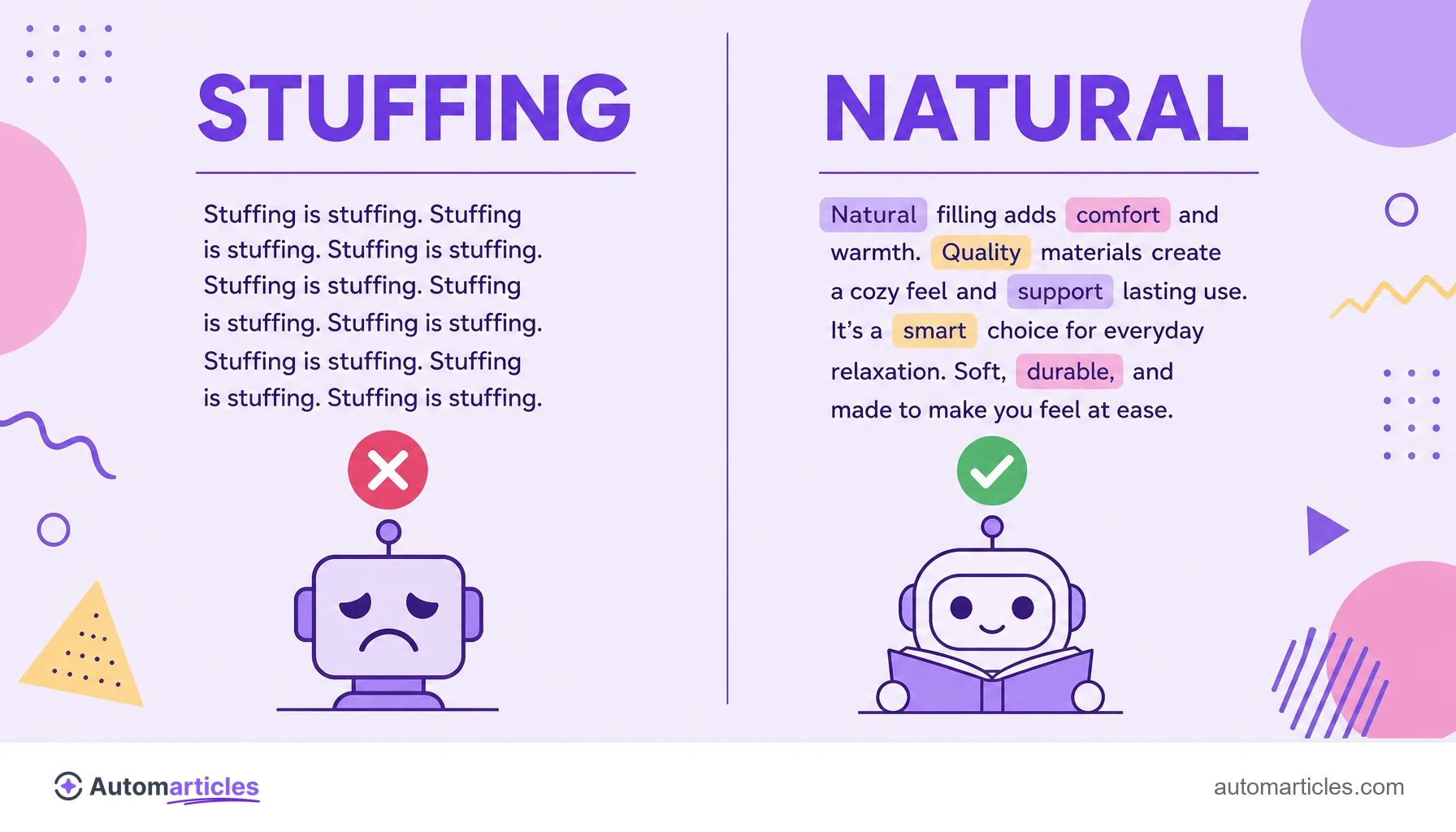
Keyword stuffing is the overuse of keywords on a page to try to trick the search engine. You can spot the practice when:
- the same word repeats in a forced way in almost every sentence;
- there are lists of terms or cities with no context;
- there are hidden words (white text on a white background);
- the text sounds artificial and hard to read.
What keyword stuffing is
Keyword stuffing (or keyword overuse) is the excessive, artificial repetition of a term inside a page with the goal of manipulating its position in search results. The idea, inherited from the early days of SEO, was simple and mistaken: the more times the word appeared, the more relevant Google would find the page.
Back then the algorithms were rudimentary and really did count repetitions. Today the picture is different. The search engine understands context, synonyms and the relationship between terms, so piling up the same word only worsens the reading experience and raises a spam flag. That is why keyword stuffing joined the list of black hat tactics, the SEO that breaks the guidelines in search of a shortcut.
It helps to separate the concept from a close relative: keyword density, which measures how often a term appears in the text. Density is a neutral metric; keyword stuffing is the abuse of it.
Examples of keyword stuffing
Keyword overuse shows up in several forms, some visible and some hidden. The most common types are:
- Repetition in the text: the target word hammered into almost every sentence, like "cheap shoes: here you buy cheap shoes, the best cheap shoes, because cheap shoes are our cheap shoes".
- Lists of terms: blocks with dozens of variations or cities lined up with no context, in the footer or at the end of the article.
- Hidden text: words in the same color as the background, with zero font size or placed off screen, visible to the bot but not to the user.
- Inflated meta tags: repeating the term in the keywords meta tag or in the description, an old habit that no longer fools the search engine.
- Repeated anchors: many links using exactly the same optimized anchor text.
A practical sign: if you read the text out loud and it sounds robotic, with the same word landing over and over, there is probably stuffing there.
Why keyword stuffing hurts SEO
Repeating the keyword to exhaustion brings the opposite of the desired effect. There are three main problems:
- It worsens the experience: the text becomes artificial, tiring and hard to trust, which drags down readability and pushes the reader away.
- It is treated as spam: Google's guidelines cite keyword overuse as a practice fought at every spam update. The punishment ranges from losing positions to removing the page from the index.
- It does not deliver the promised gain: hammering the term simply does not move the ranking.
That last point is backed by data. In Backlinko's analysis of 11.8 million search results, between 65% and 85% of top 10 pages use the keyword in the title, yet the presence of that term barely correlates with better positions: the estimated difference between the first and the tenth result is only 1%. In other words, forcing the word does not buy rankings, and overdoing it still charges the price of a penalty.
Keyword density: is there an ideal number
A classic question is what the safe keyword density would be. The honest answer is that there is no magic number. Google never disclosed a limit, and chasing an exact percentage is the very road to stuffing.
Instead of counting repetitions, think about semantic coverage. A text on a topic naturally uses the main term a few times and, alongside it, synonyms, variations and related words, the so called LSI terms. That is what techniques like TF-IDF try to measure: not raw repetition, but the balance between the term and the vocabulary that tends to come with it.
The practical rule is to write for the person first. If the text flows and truly covers the subject, density takes care of itself, with no spreadsheet at all.
How to identify keyword stuffing
You can audit a page, yours or a competitor's, with a few simple steps:
- Read it out loud: the fastest test. If the same word sounds repetitive and the text feels written for a robot, it is stuffing.
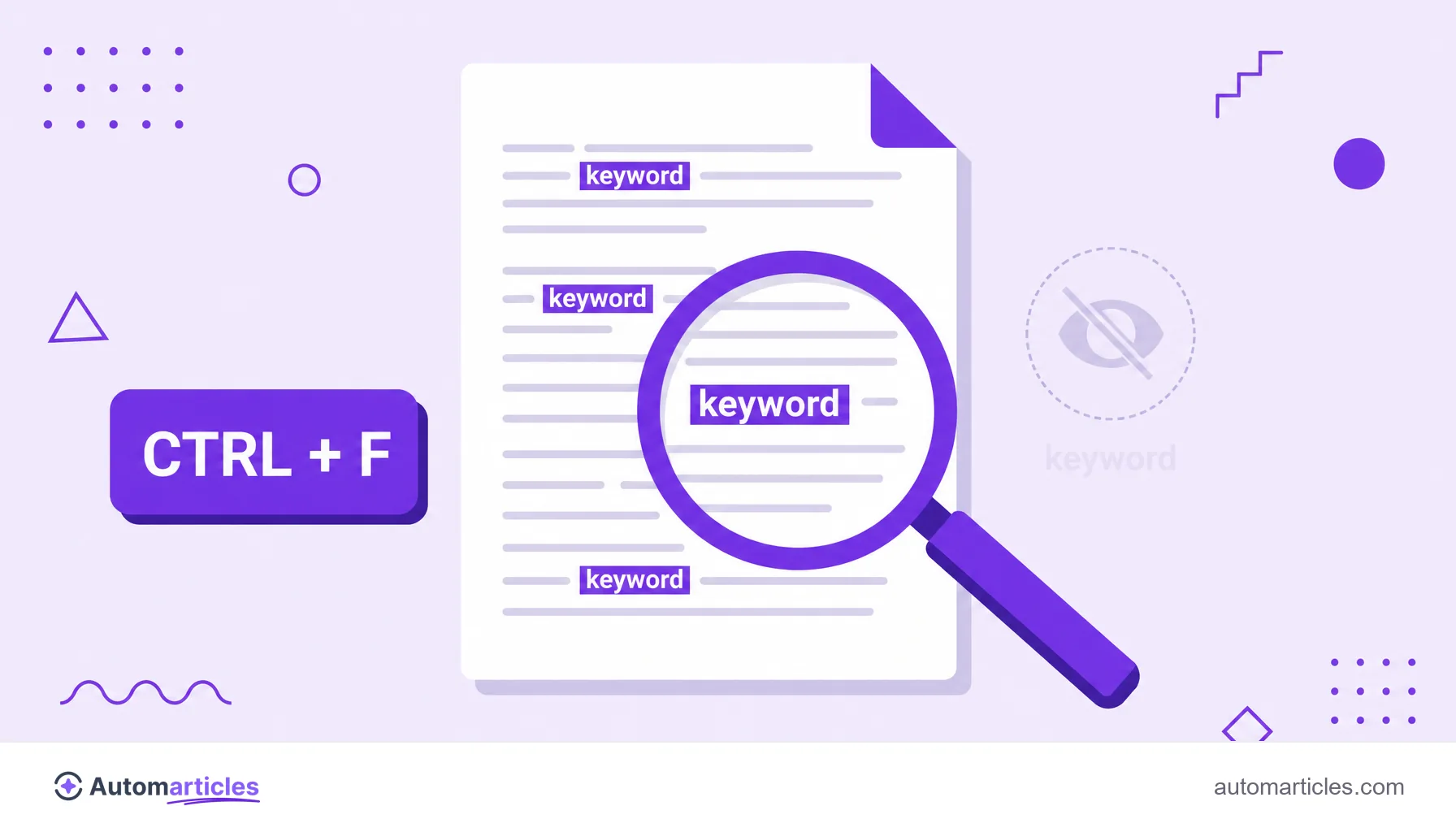
- Use Ctrl+F: highlight the main term on the page and see whether it appears in a concentrated way, in blocks or in almost every paragraph.
- Check the code: look for text in the background color, zero font size or blocks positioned off screen.
- Look at the footer and the lists: lining up cities or variations of the term is one of the most common patterns.
- Run a checker: on-page SEO tools flag high density and suspicious repetition automatically.
Found any of these signs? Then it is time to rewrite.
How to avoid keyword stuffing and optimize the right way
Avoiding the excess is easier than it seems once the focus shifts from the search engine to the reader. A few white hat practices solve it:
- Write for people: answer the question clearly; the keyword will show up naturally where it makes sense.
- Use variations and synonyms: instead of repeating the exact term, explore its semantic field.
- Spread the ideas: instead of several pages fighting for the same term (which causes keyword cannibalization), handle each intent in its own piece of content.
- Place the term at key points: title, first paragraph and one or another subheading are enough to signal the topic.
- Review at the end: one final read cuts the repetitions that slipped through.
In the end, the best optimization is the one that does not even look like optimization: useful content, pleasant to read and covering the subject in depth.