
PBN: what a private blog network is and the SEO risk
By Tiago CostaUpdated on July 2, 2026
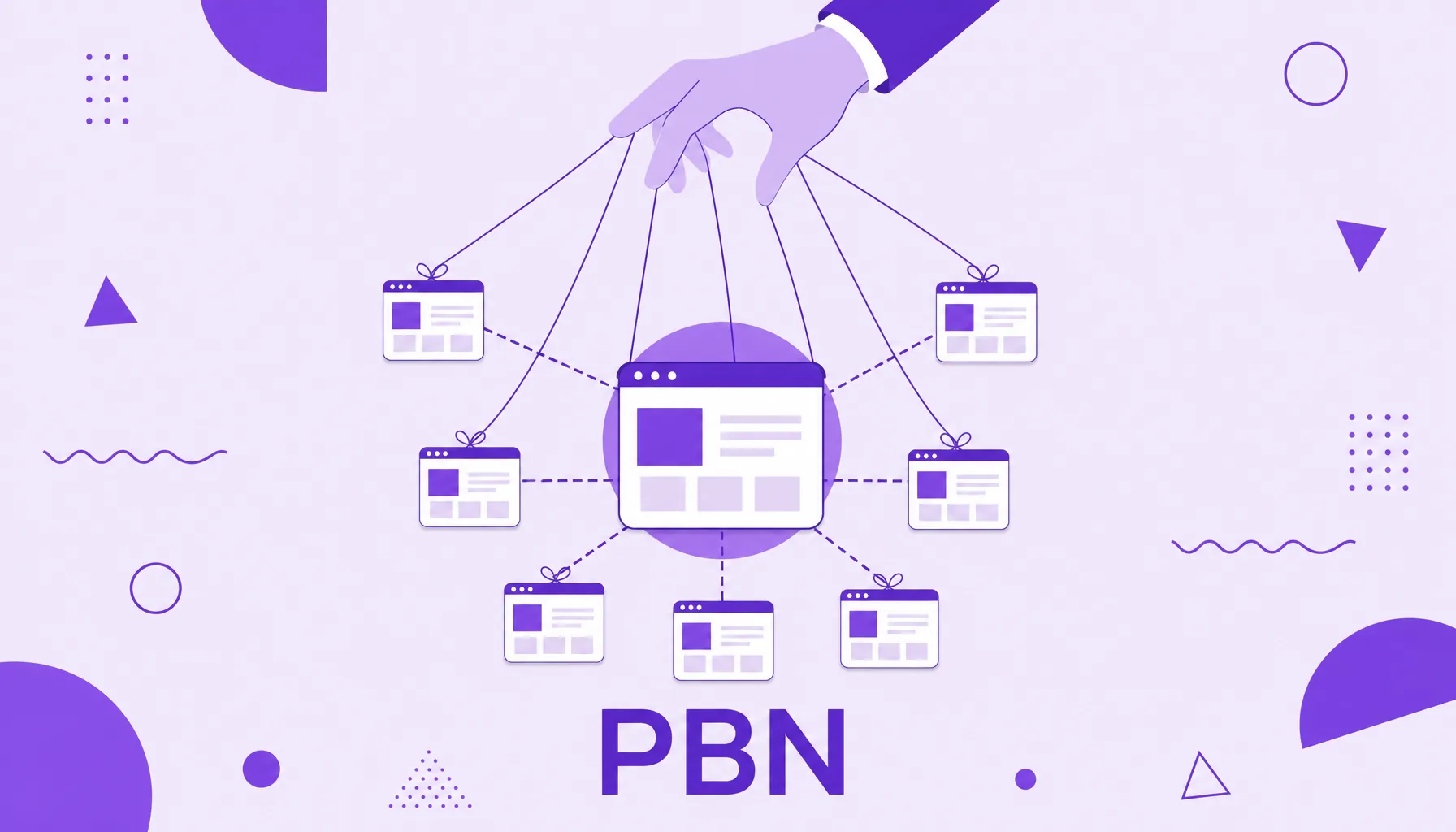
PBN (Private Blog Network) is a network of sites controlled by the same person only to generate links. In SEO, it:
- simulates links from independent sites that are actually owned by the same person;
- tries to inflate a main site's authority artificially;
- violates Google's link guidelines (link scheme);
- is a black hat tactic, with a high risk of penalty.
What a PBN (private blog network) is
PBN stands for Private Blog Network. It is a group of sites that look independent but belong to the same person or company, built with a single goal: to publish backlinks pointing to a main site (the so-called money site) to try to manipulate rankings in search engines.
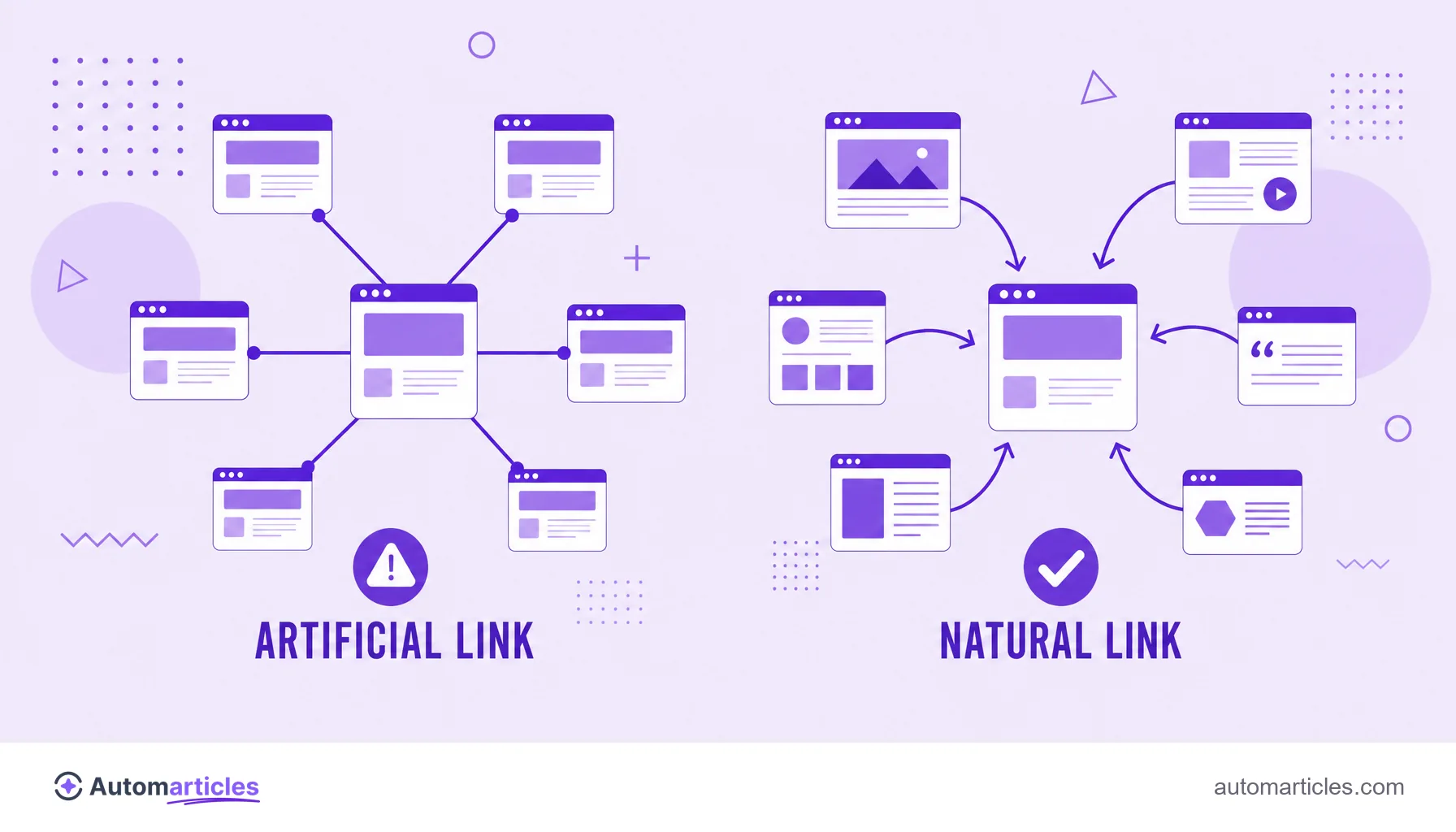
The logic is to fool the algorithm. Since Google treats links from other domains as votes of confidence, whoever runs a PBN creates several domains just to simulate those votes. On the surface, the money site receives links from varied sources; in practice, they all come from the same owner. That is why a PBN is classified as black hat, the group of tactics that violate the search engine guidelines.
A context note for readers who search in Portuguese: the acronym PBN also appears in aviation, where it means Performance Based Navigation, and in exam prep courses. In this glossary, PBN always means private blog network, the concept tied to SEO and link building.
How a PBN works
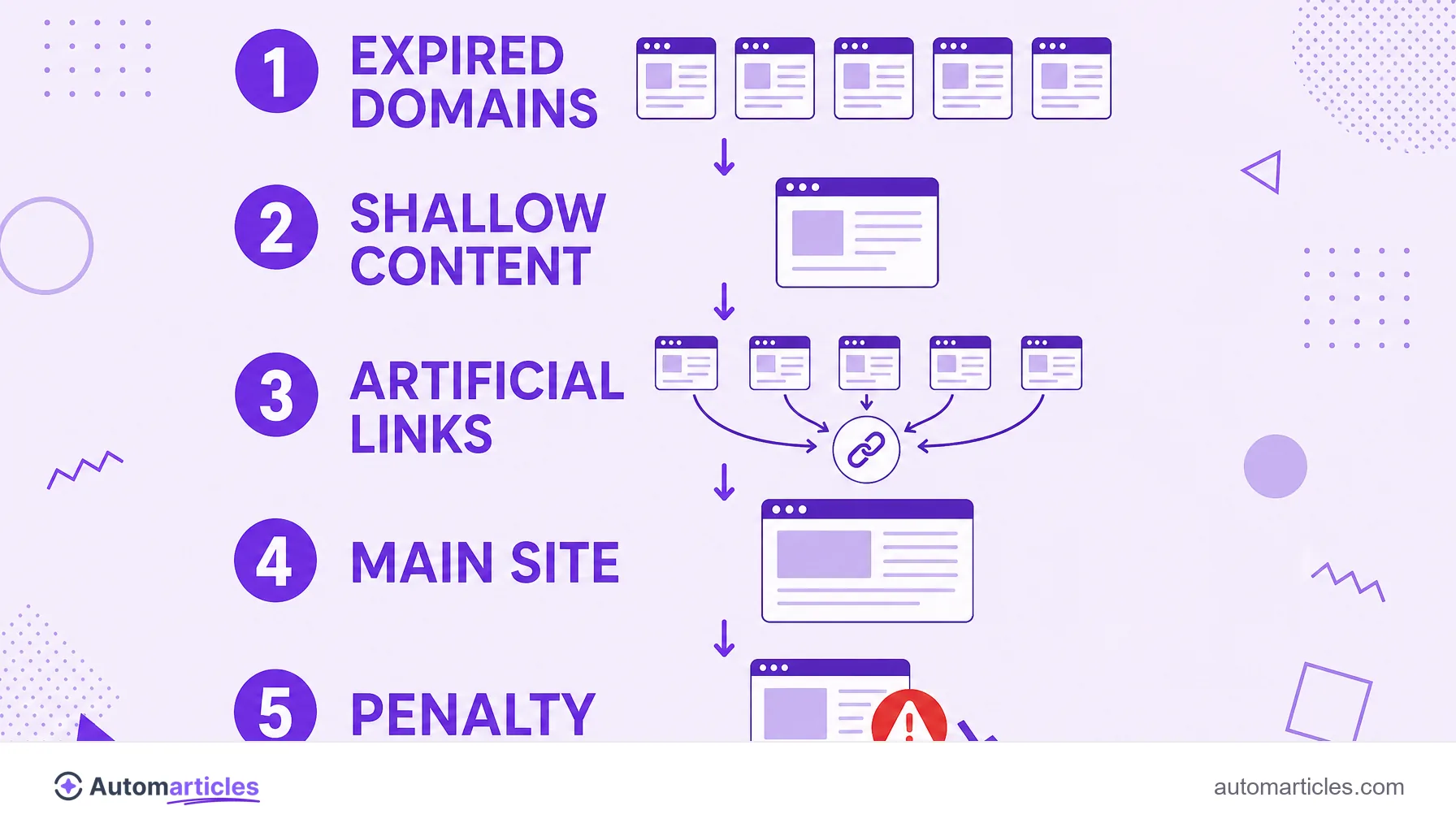
Building a PBN almost always follows the same recipe, and knowing it helps you recognize the scheme:
- Buying expired domains: the operator looks for domains that once had authority and lapsed, to inherit the strength of old links.
- Publishing shallow content: each site in the network gets generic articles, often low quality, just to look like a real blog.
- Inserting the links: in the middle of that content go the links to the money site, with anchor text chosen to reinforce keywords.
- Hiding the network: the owner tries to conceal that the sites are connected, using different domain registrations, varied hosting and distinct IPs.
The promise being sold is control over your own authority: instead of earning links organically, the operator manufactures whatever links they want, whenever they want. It is exactly that manufacturing that Google classifies as a prohibited link scheme.
Why a PBN is a black hat tactic
Google is explicit in prohibiting buying, selling and manufacturing links for the purpose of manipulating rankings. According to Google Search's spam policies, any link whose main purpose is to inflate a site's position, including networks of sites created for that end, is treated as link spam and violates the guidelines.
The difference from white hat is one of intent. An editorial link, given spontaneously because the content deserves it, is legitimate. A link planted by yourself, on a site you control only to benefit yourself, is not. A PBN falls entirely into the second case, which is why it is considered one of the riskiest link building tactics there is.
It is worth remembering that a PBN is a close relative of another prohibited practice, the link farm. Both manufacture links at scale; the PBN simply disguises itself better, trying to look like a set of real blogs rather than an obvious link farm.
The risks of using a PBN
The appeal of a PBN is the quick result, but the cost when the scheme is discovered tends to be high and hard to reverse. The main risks are:
- Manual penalty: if a Google reviewer identifies the network, the site can receive a manual action and plunge in the rankings.
- Loss of indexing: the network sites can be removed from the index, and the links stop having any value overnight.
- Wasted investment: all the money spent on domains, hosting and content becomes a loss when the network is neutralized.
- Slow recovery: reversing a penalty requires removing or disavowing the links and going through reconsideration, a process that can take months.
Beyond manual actions, Google's automated systems have evolved a lot to detect network patterns. The more a PBN grows, the more footprints it leaves, and the easier it becomes for the algorithm to connect the dots and devalue all the links at once.
How to spot signs of a PBN
Knowing how to recognize the footprints of a PBN helps both to avoid buying links from a network and to audit your own backlink profile. Some classic signs:
- Generic, disconnected content: blogs that talk about a bit of everything, with no focus and no real author, serving only as a frame for links.
- The same technical patterns: several sites with the same visual theme, the same hosting or the same registration data.
- Outbound links to mismatched niches: a recipe blog pointing to a betting site, for example.
- Artificial link profile: many links with exact keyword anchors, with no natural brand mentions.
Audit tools and Google Search Console itself help map where a site's links come from. When you find toxic links coming from networks like these, the recommended path is to clean the profile, using disavow when necessary, and not keep feeding the scheme.
What to do instead of a PBN
The good news is that you can earn authority without risking a penalty. The white hat alternatives are slower, but sustainable:
- Content that deserves links: original material, with your own data and real usefulness, attracts links spontaneously.
- Legitimate guest posts: collaborating with relevant outlets in your niche, with quality content, is different from planting links in a network you control.
- Digital PR and outreach: showing up in stories and citations generates links from genuinely authoritative sources.
- Real partnerships: integrations, joint studies and customer mentions earn honest links.
In the end, the question that separates a safe tactic from a risky one is simple: would this link exist if Google gave no weight to links? If the answer is no, it is a sign of manipulation. Building real authority, with strong content and real relationships, is what sustains rankings in the long run without putting the site at risk.