
PageRank: what it is and how Google's algorithm works
By Tiago CostaUpdated on July 2, 2026

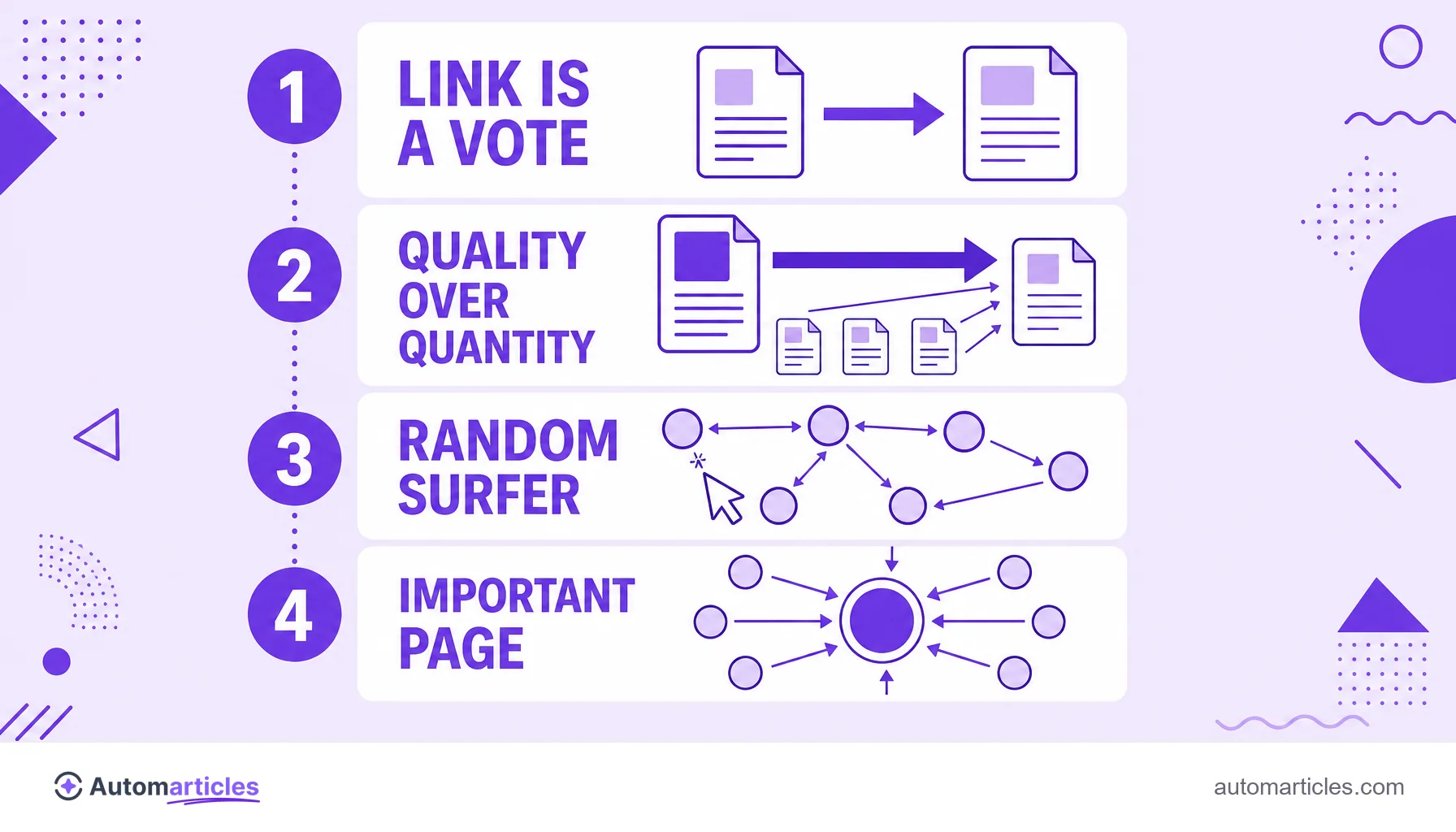
PageRank is Google's algorithm that measures a page's importance based on the links it receives. The core idea:
- each link to a page counts as a vote;
- links from important pages are worth more than links from weak pages;
- the more quality links a page gathers, the higher its PageRank.
The name is a tribute to Larry Page, Google's cofounder, and not to the word page.
What PageRank is and why it mattered so much
PageRank is the algorithm that put Google on the map. Created in the late 1990s by Larry Page and Sergey Brin at Stanford University, it solved a problem the search engines of the time could not handle: how to rank pages by importance, not just by containing the searched word.
The insight was to look at links. Instead of trusting only the text of each page, PageRank started treating every link as a vote of confidence. A page cited by many others would probably be more relevant. And votes from already important pages would weigh more than votes from obscure ones.
The name still causes confusion. It does not come from page, but from the surname of Larry Page, one of the creators. It was this reputation by links criterion that made Google return far better results than its competitors and become a synonym for search.
How the PageRank algorithm works
At its core, PageRank models a random surfer: someone who starts on any page and keeps clicking links at random, without stopping. The PageRank of a page is the probability that this random surfer ends up on it at a given moment.
Two rules shape the calculation:
- Quantity and quality of links: a page passes part of its importance to the pages it links to. Receiving links from strong pages raises your own value.
- Dilution by outgoing links: if a page points to many destinations, each link carries a smaller slice of its importance. That is why a link from a selective page usually counts more.
There is also the damping factor (usually 0.85), which represents the chance that the surfer gets tired and starts over on a random page. This detail keeps the score from getting stuck in dead ends and keeps the calculation stable. Spreading importance across this network of links is what brings PageRank close to a measure of centrality in graphs.
PageRank and backlinks: quality over quantity
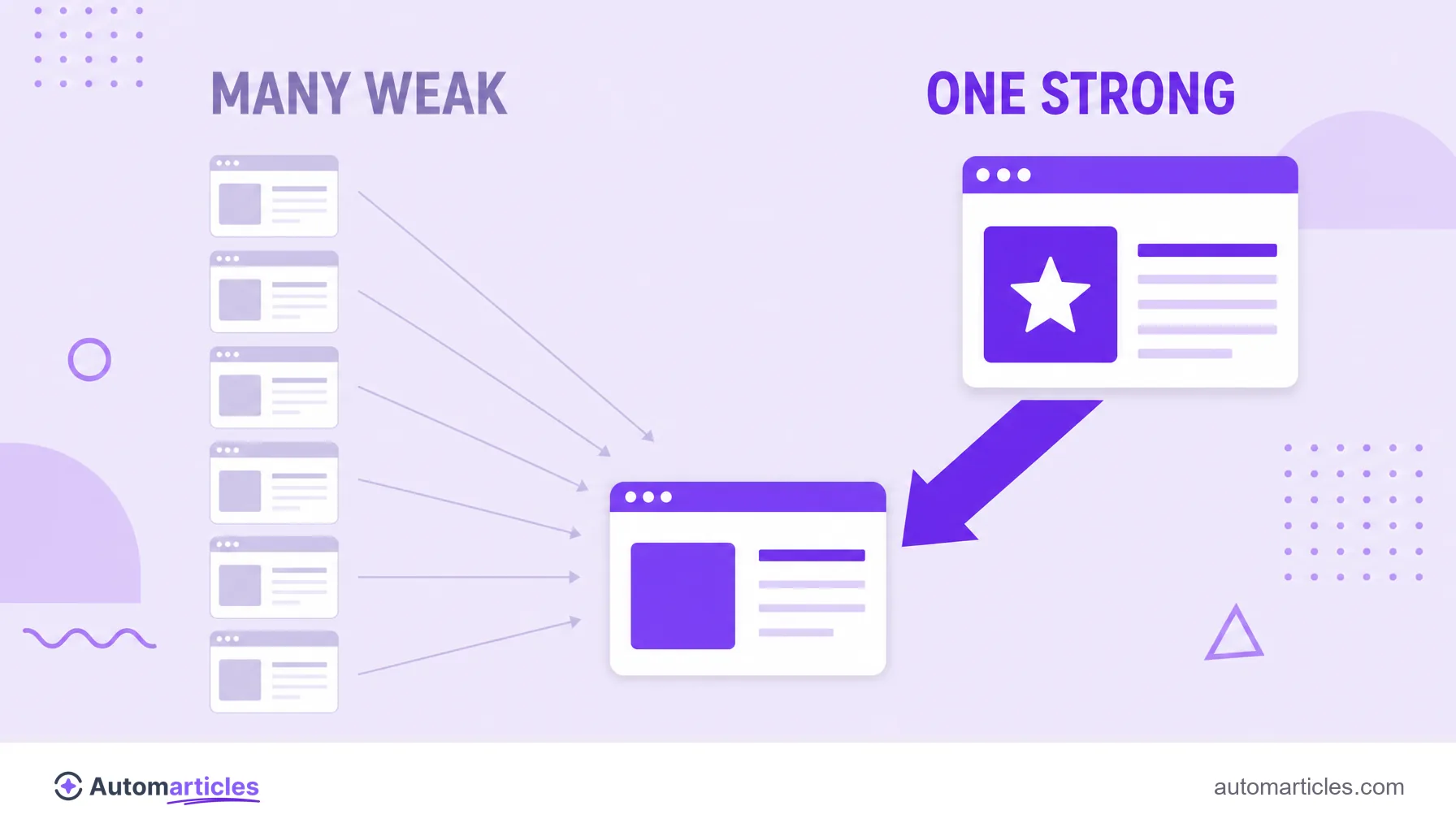
If every link is a vote, the backlink is the raw material of PageRank. But the algorithm was never about counting links, it was about weighing them. Ten links from fragile sites may count less than a single link from a strong, topical source.
This flow of importance that passes from one page to another through links became known in SEO jargon as link juice. It is the basis of third party metrics that try to estimate a site's strength, such as domain authority, since Google no longer exposes the real value.
The practical lesson is direct: instead of chasing volume, prioritize relevant links from pages that already have reputation in your topic. A single editorial backlink from a respected site usually moves the needle more than dozens of irrelevant mentions.
The end of public PageRank (the Toolbar)
For years, Google displayed a score from 0 to 10 for each page in its Toolbar, and the SEO market treated that number as an official scoreboard. This fueled an industry of buying and selling links, focused on raising the digit instead of improving the site.
In 2016, Google ended that display for good. As Search Engine Land confirmed, the company removed Toolbar PageRank from public view, but was clear that it kept using the data internally within the ranking algorithm. The scoreboard vanished; the criterion did not.
For SEO, the message was healthy: it stopped making sense to optimize for a visible number. The right focus became earning links on merit, with good content and a solid network of well built internal links, instead of hunting the next decimal place.
Does PageRank still exist? What the 2024 leak showed
Yes. Despite the end of the public score, PageRank never stopped existing inside Google. As early as 2017, engineer Gary Illyes publicly confirmed that the algorithm was still in use.
The most recent proof came with the leak of Google's internal documents in 2024. According to the analysis by Semrush, the files revealed several versions of the signal still active, with names such as RawPageRank and PageRank2, plus evidence that a site's homepage PageRank helps strengthen its internal pages.
The takeaway is clear: the PageRank of 2026 is not the simple Toolbar number, but a family of link importance signals combined with dozens of other quality and trust factors. Links still weigh a lot, only in a more sophisticated and invisible way.
How to strengthen your site's PageRank in practice
You no longer see the number, but you can still work in its favor. An objective script:
- Earn links on merit: original content, proprietary data and useful materials attract natural link building, the kind Google values.
- Prioritize relevance: a link from a site in your niche counts more than many generic, disconnected links.
- Take care of internal links: spread importance across your pages by pointing from the strongest ones to the pages you want to promote.
- Avoid schemes: buying links and link farms violate the guidelines and may trigger penalties.
- Add other signals: speed, experience and topical relevance go hand in hand with links in modern ranking.
In the end, strengthening PageRank became a synonym for building real reputation on the web. There is no shortcut to the digit, because the digit became the result of doing the basics very well.