
Link Juice: what it is, what it does and how to earn it in SEO
By Tiago CostaUpdated on July 2, 2026
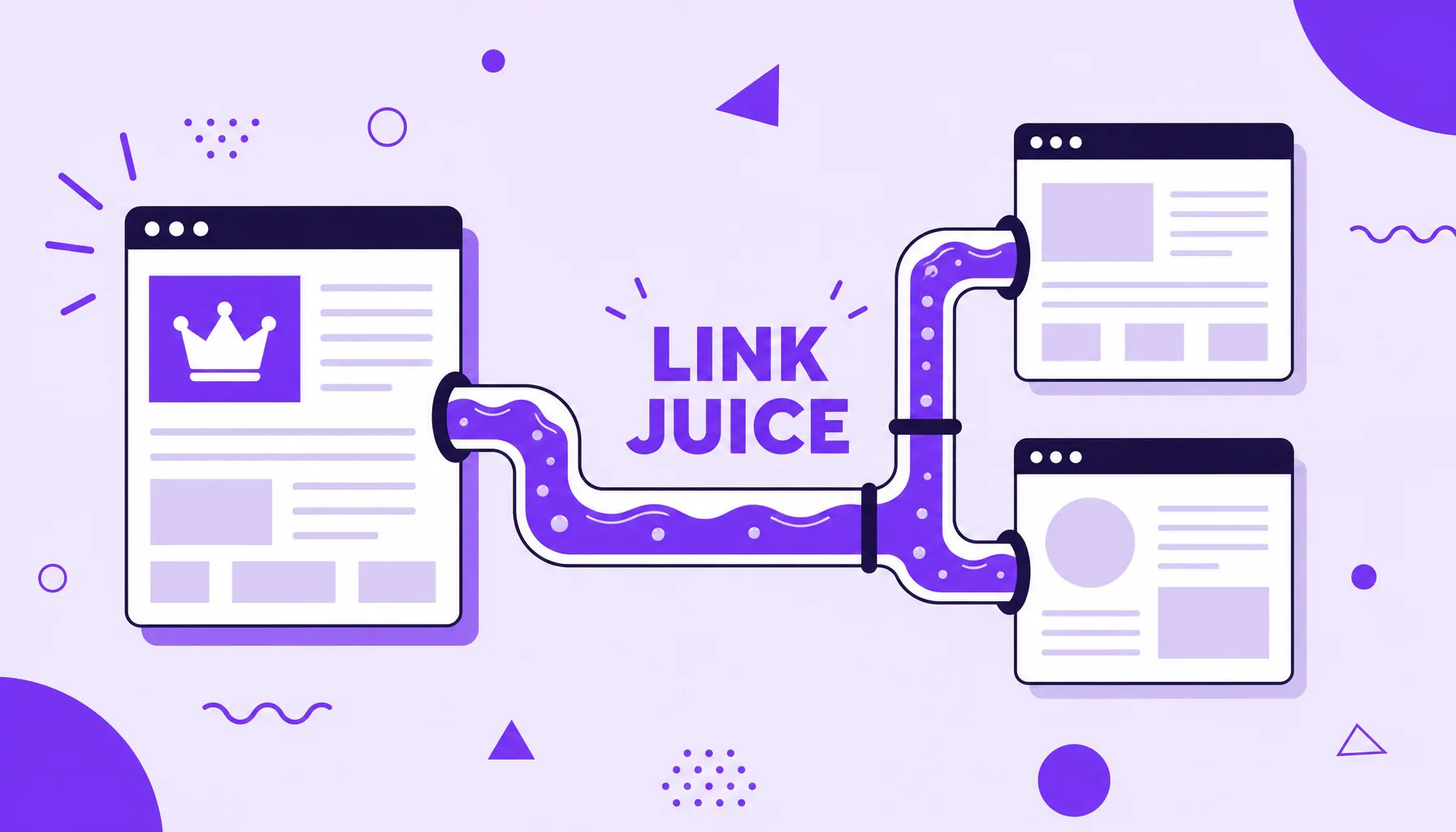
Link juice is the authority a link transfers from one page to another. It depends on factors such as:
- the authority of the page giving the link;
- the relevance between the two pieces of content;
- the link attribute (dofollow passes it, nofollow tends not to);
- the number of links on the source page, which splits the value.
What link juice is in SEO
Link juice is an informal expression used in SEO to describe the authority, or ranking value, that a link passes from one page to another. The idea behind the term is simple: each link works like a pipe through which part of a page's reputation flows to the destination.
The concept comes from the way Google understands links. A backlink from another site works as a vote of confidence, and part of the weight of that vote passes to the linked page. So when a strong page links to yours, it lends a bit of its own strength to help you rank better.
A note on vocabulary: link juice is not an official Google term. It is a market metaphor that explains, in a visual way, something the search engine calculates with algorithms such as PageRank.
How link juice works
To understand the flow of link juice, it helps to think of each page as a reservoir of authority. That authority comes from two main sources: the links the page receives from outside and the overall strength of the domain it lives on, measured by domain authority indicators.
When that page places a link, a fraction of its value travels through the link to the destination page. The original model that describes this behavior is PageRank, the algorithm that gave rise to Google and that treats the web as a network of recommendations. Each link is a recommendation, and recommendations from strong sources are worth more.
In practice, this means not every link is worth the same. A link from a reference site in your topic carries far more link juice than dozens of links from weak pages with no relation to the subject.
What affects the amount of link juice
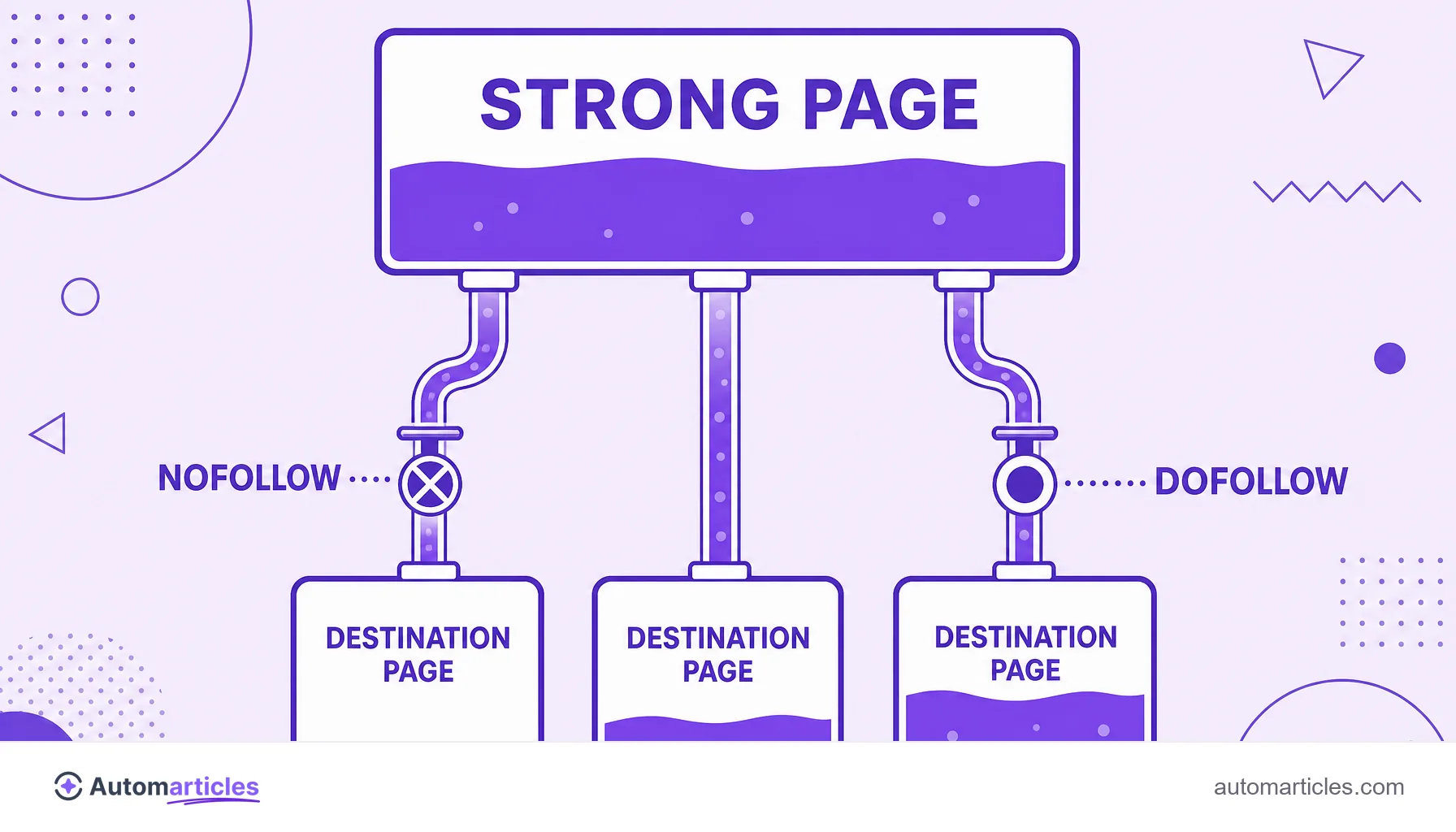
The amount of authority that passes through a link is not fixed. A few factors decide whether the pipe is wide or narrow:
- Source authority: the stronger the page linking out, the more value it has to pass on.
- Topical relevance: a link between pages on the same subject transmits more value than a random link.
- Link attribute: a dofollow link passes authority, while a nofollow link signals the search engine not to transfer all of that value.
- Number of links on the page: the available value is split among all outgoing links, so a page with few links concentrates more juice in each one.
- Position and context: a link inside the body text, with descriptive anchor text, usually weighs more than a loose link in the footer.
This splitting logic is what gave rise, long ago, to the technique of PageRank sculpting: distributing internal links deliberately to concentrate authority on the most important pages.
Internal and external link juice
Link juice moves through two paths, and both matter:
- External (backlinks): links from other domains bring new authority to your site. They are the main way to increase the total juice available.
- Internal: good use of internal links does not create authority from scratch, but redistributes what already exists, moving strength from the pages that receive the most links to those you want to see ranking.
The power of backlinks shows up in the data. Analyzing 11.8 million search results, Backlinko found that the page in the first position on Google has, on average, 3.8 times more backlinks than the pages in positions 2 to 10. In other words, more sources passing link juice tends to go hand in hand with better positions.
This does not cancel the care needed with outgoing links. By pointing to a good source with an external link, you give up a little juice, but gain in context and trust, which usually pays off.
How to earn and increase link juice
Increasing your site's link juice is, to a large extent, a job of link building combined with good internal organization. A practical roadmap:
- Produce content that deserves links: complete guides, original data and reference material attract backlinks naturally.
- Earn relevant backlinks: pursue links from sites in your niche, with real authority, rather than volume for volume's sake.
- Strengthen internal linking: point from your strongest pages to the ones that need a push, always with descriptive anchor text.
- Recover lost authority: use a 301 redirect to carry link juice from old or broken URLs to the current version of the page.
- Avoid waste: fix error pages that receive backlinks and do not let authority leak to worthless pages.
The goal is not to pile up links at any cost, but to make sure the authority you already have reaches, without leaks, the pages that need to rank.

Mistakes that waste link juice
As important as earning link juice is not throwing away what you already have. The most common mistakes:
- Buying links in bulk: taking part in a link farm or in artificial schemes can generate a penalty instead of authority.
- Ignoring toxic backlinks: when low quality links point to you, considering a disavow helps protect your link profile.
- Too many outgoing links: filling a page with links dilutes the value passed through each of them.
- Redirecting everything to the home page: sending old URLs to the home page instead of the equivalent one throws away the topical link juice of that content.
- Blocking strong pages: keeping a page full of authority out of crawling prevents it from distributing value across the site.
Taking care of these points is what separates a site that makes the most of every drop of authority from one that lets much of it run down the drain.