
SGE (Search Generative Experience): what Google's AI search was and what it became
By Tiago CostaUpdated on July 2, 2026

SGE (Search Generative Experience) was the test version of Google's AI search, which later became AI Overviews. In short, SGE:
- generated an AI answer at the top of the search;
- was restricted to Search Labs (experimental phase);
- cited sources and suggested follow up questions;
- evolved into AI Overviews in 2024;
- is the basis of Google's current AI Mode.
What SGE (Search Generative Experience) was
SGE, short for Search Generative Experience, was the experiment through which Google brought generative artificial intelligence into search. Announced in May 2023, it displayed an AI generated summary right above the traditional results, trying to answer the user's question without them having to open several links.
Throughout the whole period, SGE was available only as an optional test inside Search Labs, Google's environment for experimental features. In other words, it was not the default search: the user had to turn the feature on to see the AI answers.
A heads up for anyone searching in Portuguese: in Brazil, the acronym SGE also shows up tied to public and school systems, such as Sistema de Gerenciamento Escolar and Sistema de Gestão de Eventos. In this glossary, SGE always means Search Generative Experience, Google's AI search concept.
How SGE worked
In the SGE experience, the user typed a question and, instead of just ten blue links, first got a colored block at the top with a summary written by the AI. That summary gathered information from several pages into a single, direct text.
A few elements defined the experience:
- Answer generated on the spot: a synthesized text that combined data from different sources.
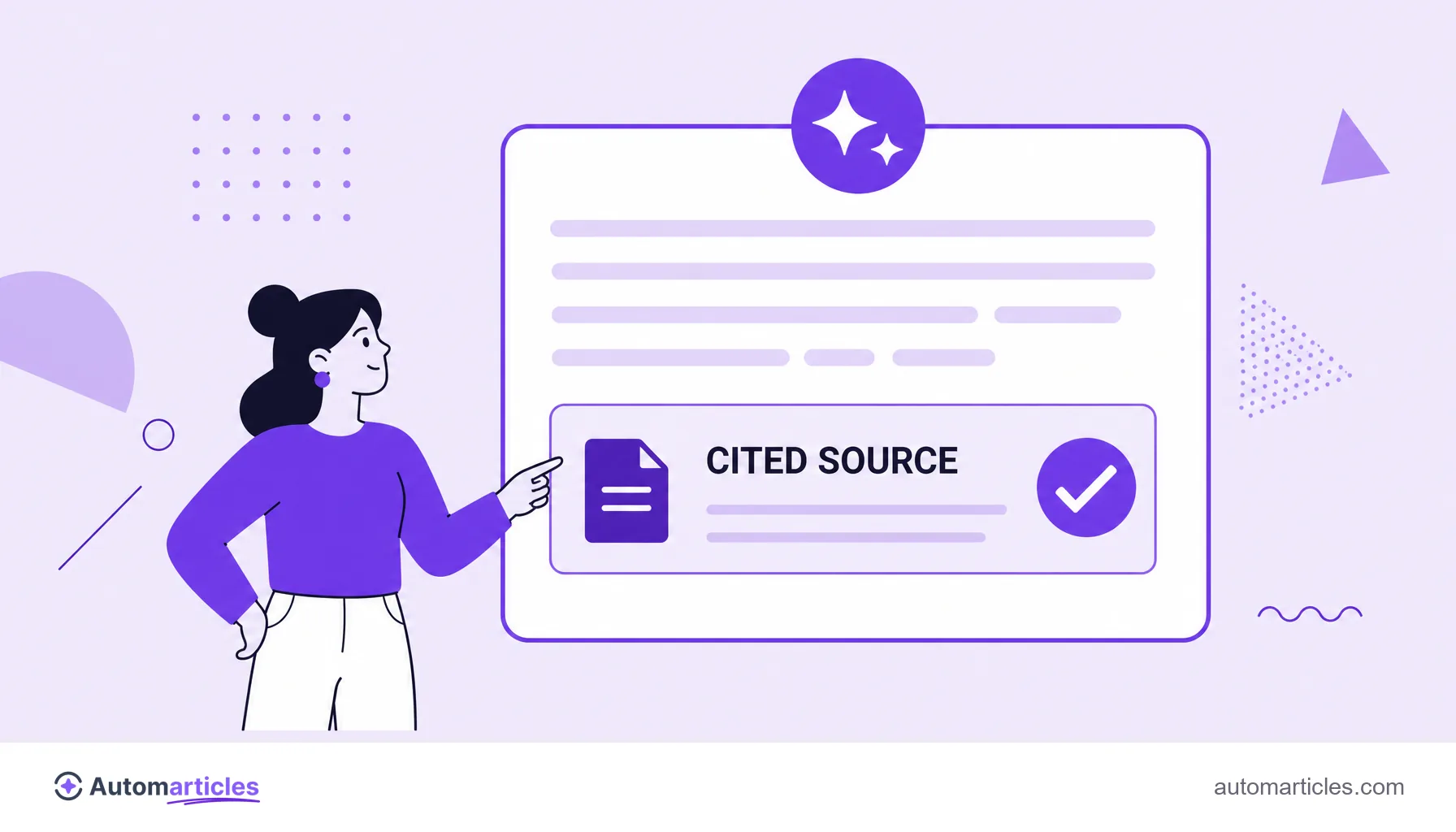
- Supporting links: side cards citing the pages used as reference.
- Follow up questions: suggestions to continue the conversation and refine the search, a behavior closer to a chat than to a traditional results page.
The idea was clear: turn search into a dialogue, in which Google summarizes and the person goes deeper. That conversational format is what later matured into the so called AI Mode.
SGE, AI Overviews and AI Mode: the timeline
SGE was never a final product. It was the lab phase of a bigger shift. The timeline helps explain what it became:
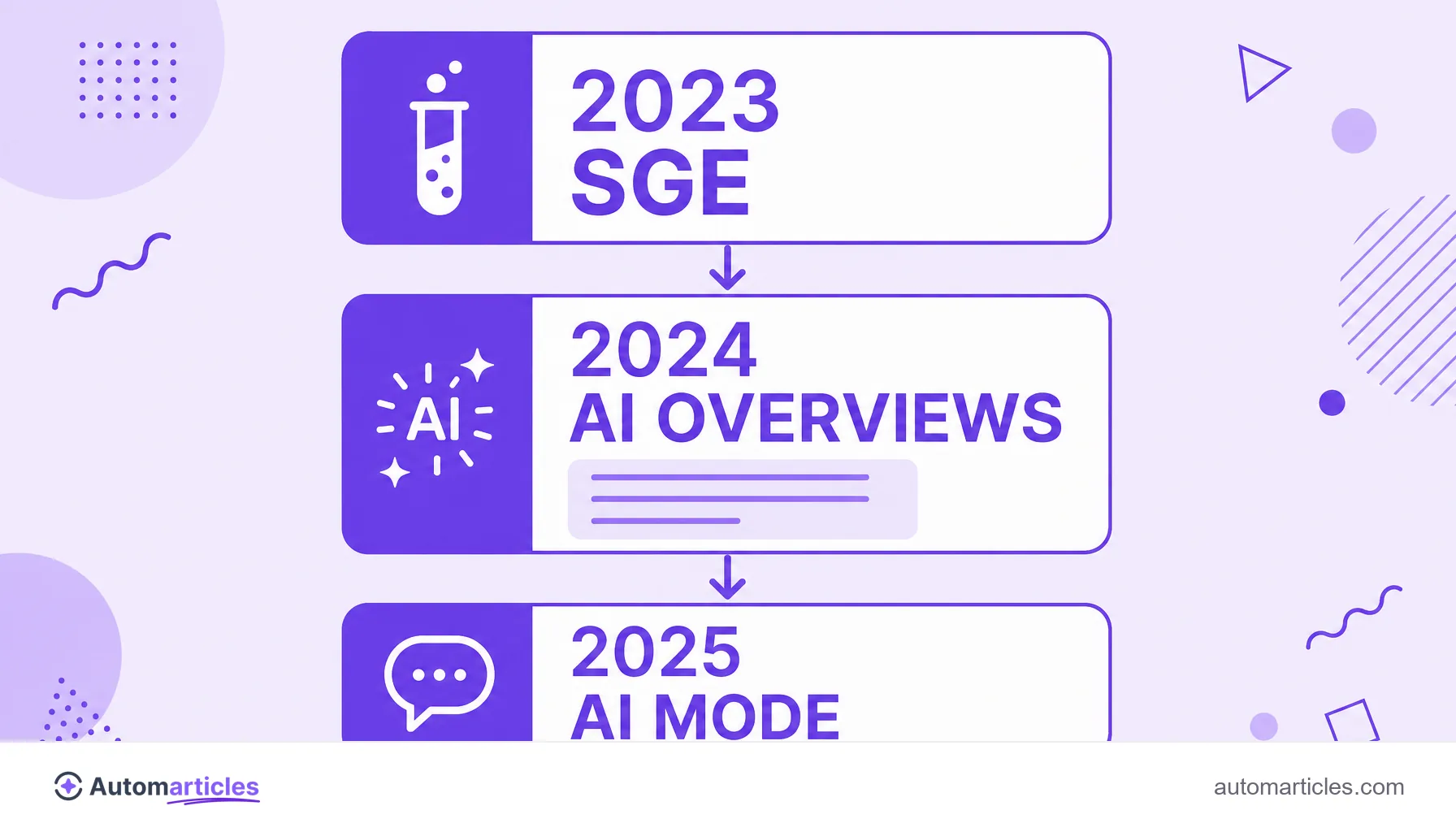
- May 2023: Google announces SGE at the Google I/O event and opens it in Search Labs for testing.
- 2023 and early 2024: the feature is expanded to more countries and languages, still in experimental mode.
- May 2024: Google graduates the experience and renames it AI Overviews, now on by default for many users, without depending on Search Labs.
- 2025 onward: the AI Mode appears, a fully conversational search tab that takes the SGE idea even further.
In other words, anyone looking for SGE today is, most of the time, looking for AI Overviews, the current name of that same AI answer at the top of search.
What SGE changed in search and in clicks
More than a new feature, SGE introduced a different search behavior. By answering right at the top, it pushed the traditional links down and widened the so called zero click search, when the person finds what they wanted without leaving the results page.
The numbers from its successor already show the scale. A study by Semrush, which analyzed more than 10 million keywords, found that AI Overviews appeared in around 13% of searches by mid 2025, reaching over 57% in informational queries. In other words, the format born in SGE stopped being an exception and became routine in research and learning topics.
The effect on clicks is measurable too. A study by the Pew Research Center showed that, when there is an AI summary on the page, users click on a link in only 8% of visits, against 15% when there is no summary.
What SGE means for content creators: GEO and AEO
If the answer happens inside search itself, the goal for content creators changes. Ranking first is no longer enough; you need to be the source the AI chooses to cite. That is the territory of GEO (Generative Engine Optimization), the optimization to appear inside generative answers.
Right next to it is AEO (Answer Engine Optimization), aimed at becoming the direct answer in assistants and answer engines. In practice, both disciplines call for the same care:
- Objective answers: define the concept in the very first sentence, in clear language.
- Data with a source: citable numbers and statements raise the chance the AI uses your content.
- Scannable structure: headings, lists and short blocks make it easier for the machine to read.
- Authority and trust: E-E-A-T signals help the model trust the page.
How to optimize for the generative search SGE introduced
SGE left the stage as a name, but the model it created is the present of search. Optimizing for that scenario is optimizing for AI Overviews and AI Mode at the same time. A good starting point:
- Answer the core question fast: a direct paragraph at the top of the content works as a ready made summary for the AI to reuse.
- Cover the topic in depth: complete content covers the follow up questions generative search tends to suggest.
- Use structured data: structured data markup helps Google understand and reuse the content.
- Track your mentions: watch whether your brand shows up cited in AI Overviews for searches in your niche.
In the end, the lesson of SGE is simple: search stopped just listing links and started writing answers. Those who write to be cited, and not only clicked, get a head start.