
Google AI Mode: what it is, how it works and how to appear in AI search
By Tiago CostaUpdated on July 2, 2026
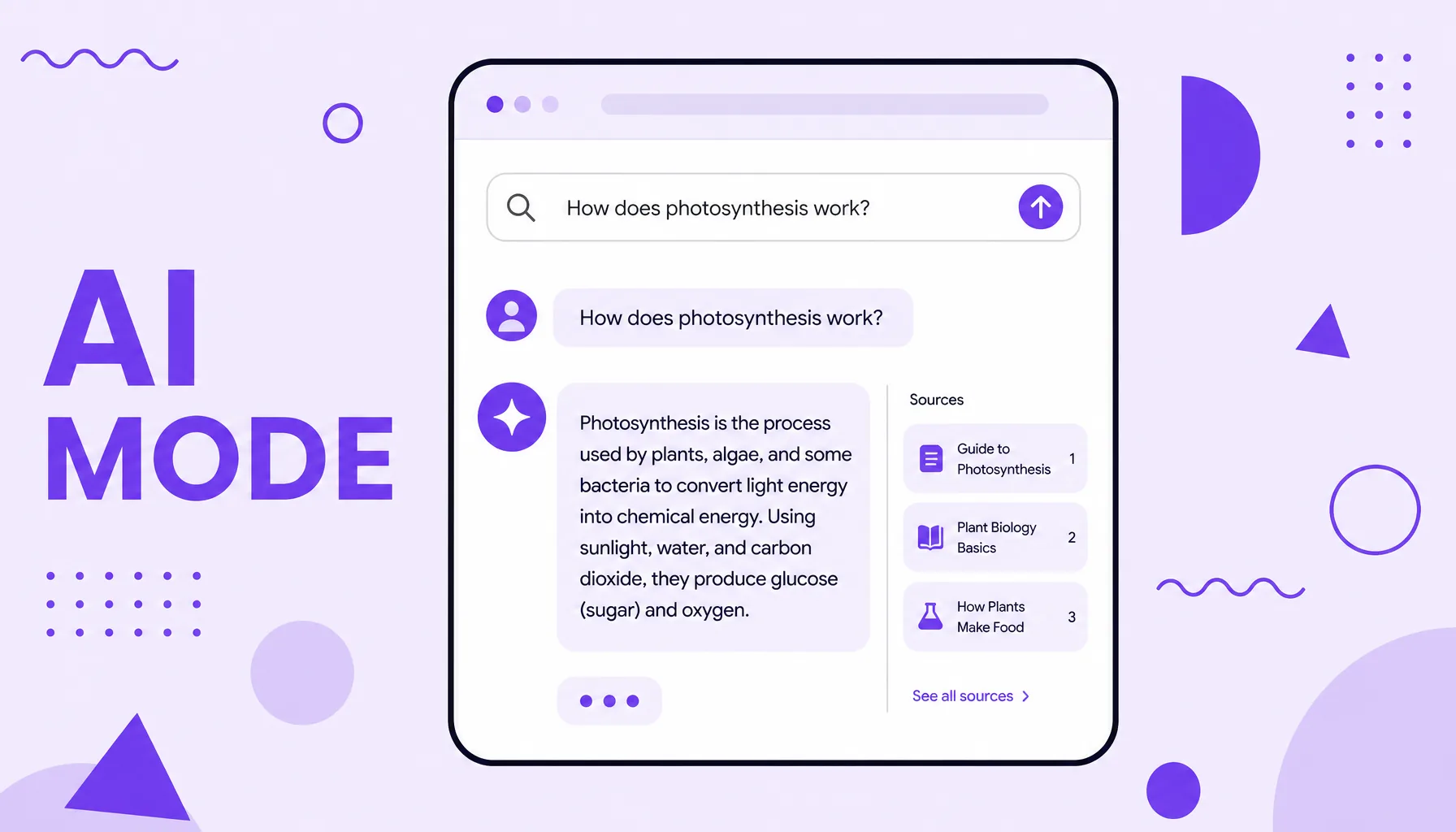
AI Mode is Google's conversational search mode, powered by Gemini's AI, which answers with generated text instead of only listing links. In it you can:
- ask long questions in natural language;
- continue the conversation with follow up questions;
- get an answer that combines several cited sources;
- dig into a topic without opening many results.
What Google AI Mode is
AI Mode is a way to use Google's search engine as if it were a conversation. Instead of typing a word and getting ten links, you ask a full question and receive an answer generated by artificial intelligence, with a few supporting links.
It works as a dedicated tab or mode inside Search, powered by the Gemini model. The idea is to handle longer and more complex questions, the ones that used to require several searches in a row, in a single interaction.
In practice, AI Mode turns search from a list of results into a dialogue: you ask, read the answer, refine with a new question and go deeper into the topic without losing the context of what has already been said.
AI Mode, AI Overviews and SGE: what is the difference
These three names travel together and cause confusion, but they describe different things. The table below helps separate them:
| Feature | What it is | Where it appears |
|---|---|---|
| AI Overviews | An AI summary at the top of normal search | Above the traditional results |
| AI Mode | A fully conversational search mode | In its own tab or mode |
| SGE | The experiment that gave rise to both | Test phase in Search Labs |
In short: AI Overviews coexist with the blue links on the same page, while AI Mode is a separate, deeper experience. As for SGE (Search Generative Experience), it was Google's initial lab that matured and became both AI Overviews and AI Mode.
How AI Mode works under the hood
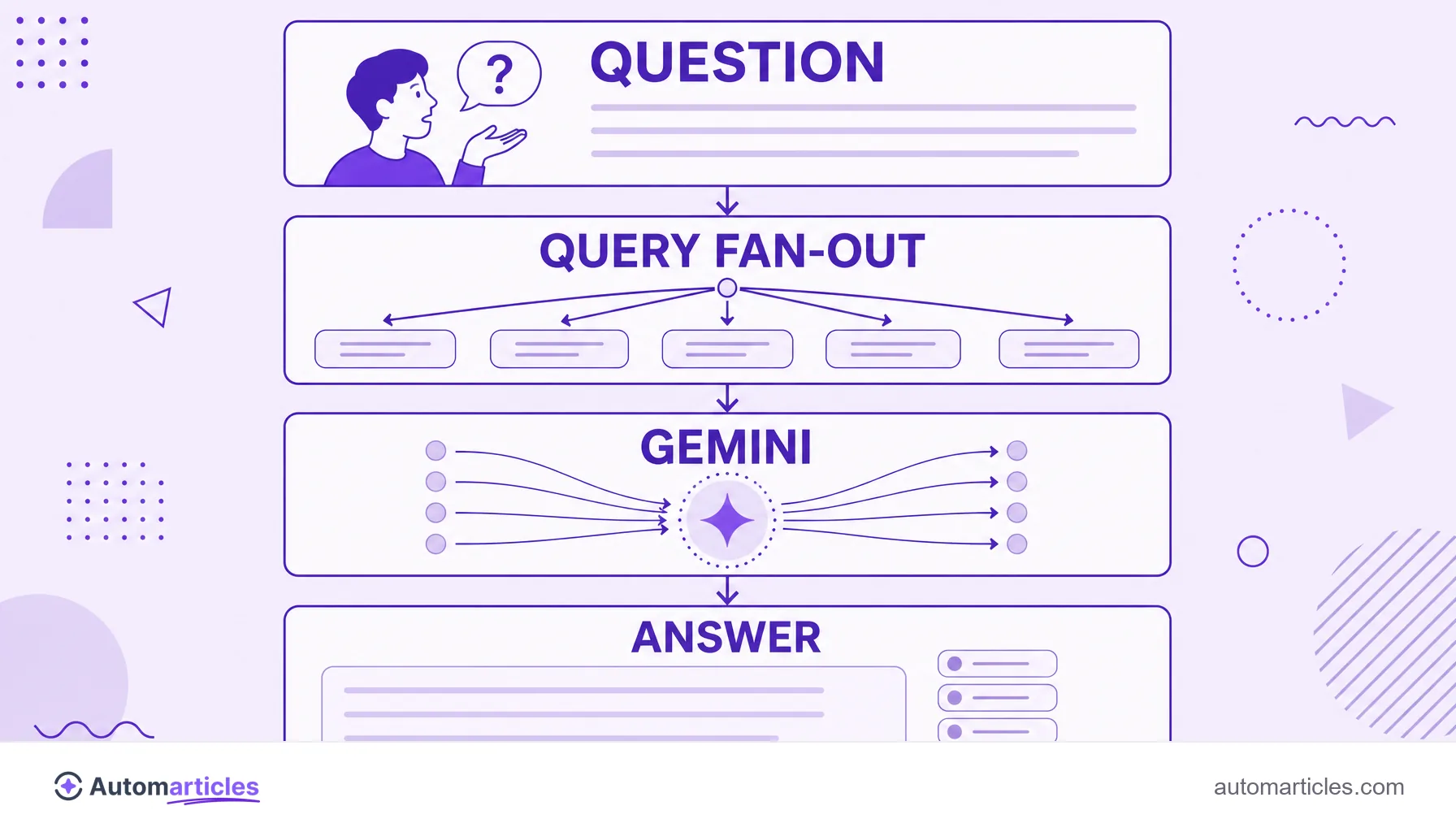
What looks like a single answer hides several steps. AI Mode uses a technique Google calls "query fan-out": it breaks your question into several sub queries, runs each one in parallel and then brings everything together into one answer.
This mechanism brings AI Mode close to the logic of generative search: instead of ranking ten pages, the system synthesizes information from many sources at once, tries to reconcile what they say and returns a cohesive text with citations. That is why a single question can trigger dozens of queries behind the scenes.
For content creators, the consequence is important: ranking well for an exact word is not enough. Your material needs to be clear, well structured and easy to excerpt, because the model will look for specific passages that answer each part of the question.
How to turn on and use AI Mode
Access to AI Mode has varied a lot depending on the country and the moment. In general, the path tends to be this:
- Through Search Labs: the feature debuted in the United States as an experiment in Search Labs, Google's testing space, and has since expanded to more countries and languages.
- Through a dedicated tab: when active, AI Mode appears as an option or tab on the search page itself, next to tabs like Images and News.
- On the app and the browser: it works both in the Google app on your phone and in search on the browser, without requiring a separate install.
It is worth remembering that AI Mode is optional. It does not replace traditional search nor does it need to stay always on; it is an alternative way to search that you trigger when you want a more elaborate answer.
The impact of AI Mode on SEO and traffic
AI search is already a reality at scale. In figures shared in Google's earnings and reported by TechCrunch, AI Mode had already passed 100 million monthly users in the United States and India, while AI Overviews reached 2 billion users per month. In other words, a huge share of searches now start with an AI answer.
This changes click behavior. A study by the Pew Research Center showed that, when there is an AI summary on the page, users click on a link in only 8% of visits, against 15% when there is no summary. It is the rise of zero-click, the search that ends without a visit to the site.
For SEO, the message is not panic, but adaptation. Traffic that comes from links tends to get more contested, and a new goal gains weight: being the source that the AI chooses to cite inside its own answer.

How to appear in AI Mode: GEO in practice
Being cited by an AI answer is the heart of Generative Engine Optimization (GEO), the optimization for generative search engines. A few principles help:
- Answer directly: start each section with an objective, citable answer that is easy for the model to excerpt.
- Structure the content: use clear headings, lists and tables, so the text is scannable by both humans and machines.
- Bring data with a source: numbers and claims with a clear origin increase trust and the chance of an AI citation.
- Show authority: deep, consistent and bylined content signals credibility to the model.
In the end, optimizing for AI Mode and for GEO is a natural extension of good SEO: whoever writes clearly, covers the topic in depth and cites trustworthy sources gets a head start on becoming a reference inside AI generated answers.