
Buyer persona: what it is and how to create one for your company
By Tiago CostaUpdated on July 2, 2026
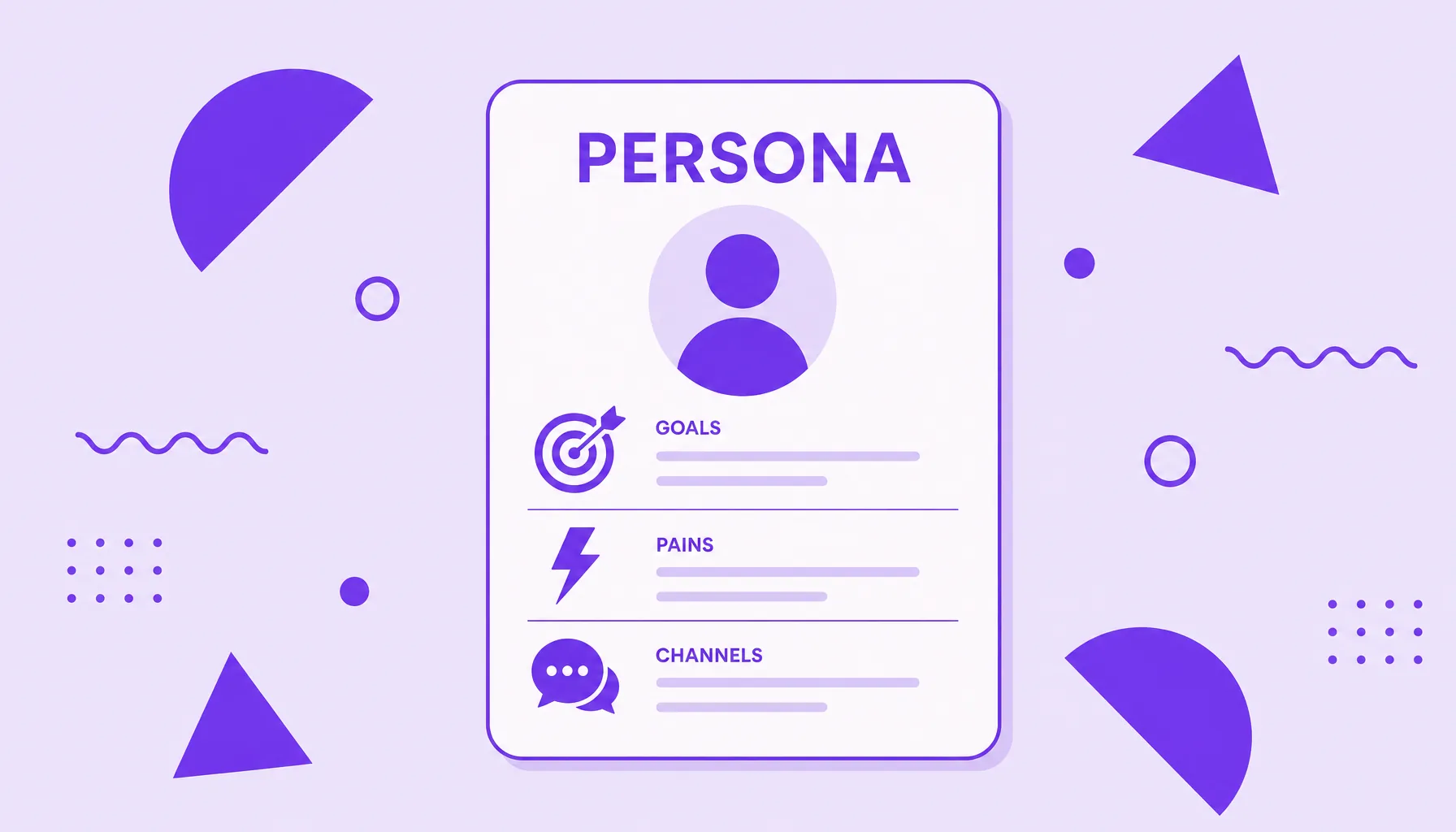
A buyer persona is the semi fictional representation of the ideal customer, created from real data and interviews. It describes goals, pains, behavior and preferred channels in a concrete profile that guides marketing, content and sales. Instead of talking to an abstract audience, the company starts talking to a clear, specific person.
What a buyer persona is
A buyer persona is a semi fictional character that represents a business's ideal customer. It is built from real customer data, interviews and research, and is given a name, context, goals and pains, as if it were a real person.
The idea is simple and powerful: it is much easier to create a campaign, a product or an article thinking about one concrete person than about a generic mass. The persona gives the audience a face and turns assumptions into an evidence based portrait.
A context note, because the word persona has other uses. There is the persona of psychology (the social mask described by Jung) and there are game and TV franchises with that name. Here, persona always means the buyer persona, the customer profile used in marketing and sales.
Buyer persona, target audience and ICP: the differences
Three concepts are often confused, but they describe different and complementary things:
- Target audience: a broad, demographic cut, like women aged 25 to 40, marketing managers in Brazil. It is generic and impersonal.
- ICP (ideal customer profile): in B2B sales, it describes the ideal type of company, with criteria like industry, size and revenue.
- Buyer persona: goes beyond the numbers and draws a specific person within that audience, with a name, goals, pains and behavior.
In short, the target audience defines which group you sell to, the ICP defines which type of company you sell to, and the persona humanizes all of it into an individual. The three add up, but it is the persona that guides tone and message day to day.
Why the buyer persona matters
The persona is not a decorative exercise. It aligns whole teams around who really matters and improves decisions end to end, from content marketing to the sales approach.
The data reinforces that value. According to the benchmark study by Cintell, 71% of companies that exceed their revenue and lead goals have documented personas, against 37% of those that merely meet their goals.
In practice, a good persona helps choose topics aligned with the buying journey, define the right language, prioritize channels and anticipate objections. It turns marketing from an educated guess into a conversation with someone you know well.
How to create a buyer persona step by step
A useful persona is born from research, not imagination. A simple script to build yours:
- 1. Gather real data: analyze your customer base, the CRM and behavior metrics to find patterns among those who already buy.
- 2. Interview customers: talk to current customers, especially the most satisfied ones, to understand goals, pains and decision criteria.
- 3. Identify patterns: group similar answers into recurring profiles, instead of trying to please everyone at once.
- 4. Document the persona: build a profile with name, context, goals, pains, objections and preferred channels.
- 5. Share and review: distribute the persona to marketing, sales and product, and update it whenever the market or the base changes.
The most neglected step is the interviews. That is where the customers' real phrases come up, the ones that later become headlines, sales arguments and alignment with the sales funnel strategy.

What to include in a buyer persona
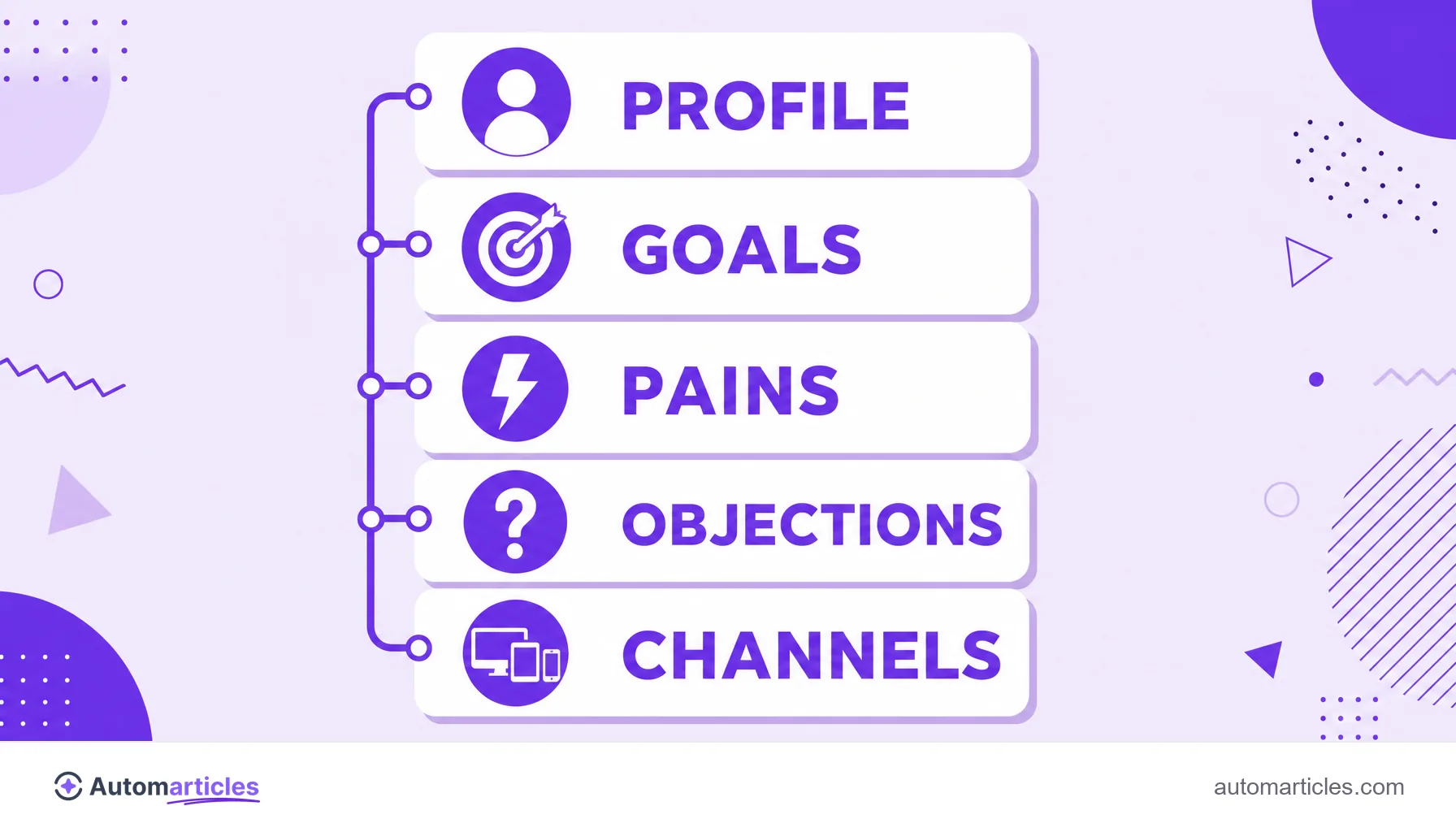
There is no single template, but good personas usually cover a few essential blocks. The table below sums up what to capture in each one:
| Component | What to capture |
|---|---|
| Profile and context | Role, industry, routine and level of decision |
| Goals | What the person wants to achieve at work and in life |
| Pains and obstacles | Frustrations and barriers that get in the way of those goals |
| Objections | Reasons that would make them hesitate before buying |
| Channels and sources | Where they look for information and who they trust |
A detail worth its weight in gold is recording a typical phrase from the persona, in the words they would use themselves. This real vocabulary even helps with SEO, because it reveals the search intent behind the queries they run on Google.
Common mistakes when creating personas
A poorly made persona hurts more than it helps. The most common slips are:
- Inventing without data: creating a profile from hunches alone produces a pretty but false persona, which leads to wrong decisions.
- Creating too many personas: a pile of profiles dilutes focus. It is better to have a few well defined personas than a dozen shallow ones.
- Focusing only on demographics: age and role matter less than goals, pains and decision criteria.
- Leaving the persona frozen: markets change. A persona that is never reviewed ages and loses touch with the real customer.
The antidote is to treat the persona as a living document, anchored in research and reviewed regularly. That way it stays a reliable guide, and not an ornament forgotten in a folder.