
What content marketing is and how to use this strategy
By Tiago CostaUpdated on July 2, 2026

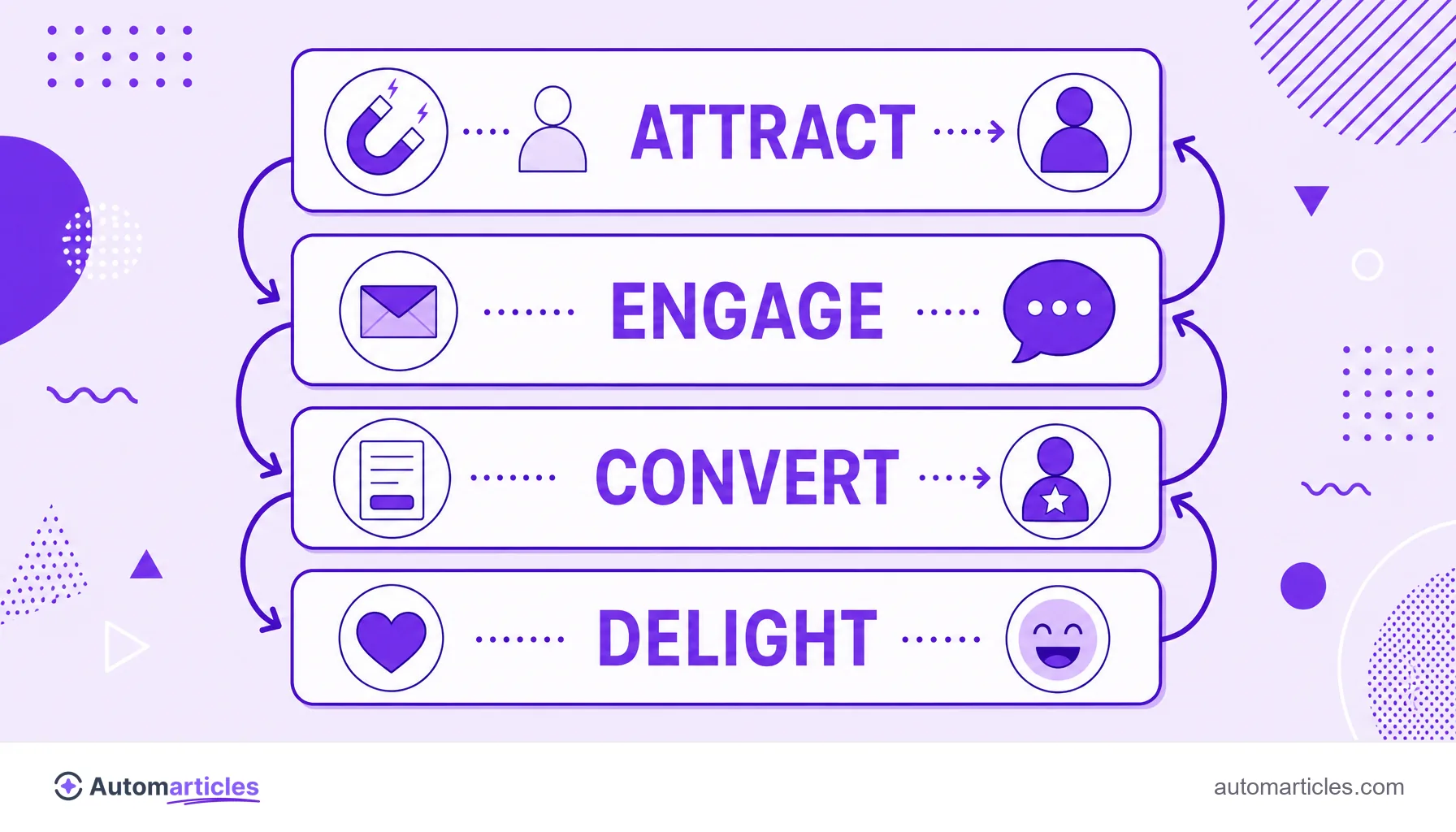
Content marketing is the strategy of attracting, engaging and keeping customers through useful, relevant content instead of advertising directly. In practice, it works in four steps:
- attract strangers with content that answers their questions;
- engage that audience over time;
- convert visitors into leads and customers;
- delight buyers to drive repeat purchases and referrals.
What content marketing is
Content marketing is a marketing approach focused on creating and distributing relevant, useful and consistent content to attract and keep a well defined audience. Instead of pushing an offer onto someone who did not ask for it, the brand delivers the information the person is actually looking for and, in doing so, earns attention and trust before talking about a sale.
The logic is simple: whoever helps first earns the right to sell later. An article that teaches, a video that solves a problem or a free calculator all build a relationship based on value. Over time, that audience starts to associate the brand with authority on the subject and to consider its products when the moment to decide arrives.
That is why content marketing is one of the pillars of inbound marketing, the model in which the customer finds the company and not the other way around. It leans heavily on SEO to be discovered in search and feeds almost every other channel, from email to social media.
How content marketing works in practice
Content marketing usually follows a four stage cycle that mirrors the person's relationship with the brand:
- Attract: produce content that answers the audience's questions and shows up in search through organic traffic, bringing in visitors who do not yet know the company.
- Engage: keep that audience close with newsletters, email sequences and new content, deepening the relationship.
- Convert: offer richer materials (e-books, webinars, tools) that turn visitors into identified leads.
- Delight: keep delivering value to existing customers, which drives repeat purchases, loyalty and referrals.
All of this depends on choosing the right topics. The foundation of the work is keyword research and mapping the audience's real questions, so every piece has a clear purpose within the strategy and is not just content for the sake of content.
Content marketing vs traditional advertising
The core difference is who takes the first step. In traditional advertising, tied to outbound marketing, the brand interrupts the person with an ad. In content marketing, it is the person who looks for the information and finds the brand along the way.
| Aspect | Content marketing | Traditional advertising |
|---|---|---|
| Logic | Attract (the person comes) | Interrupt (the brand goes) |
| Cost over time | An asset that keeps paying off | Stops working when the ad stops |
| Trust built | High, because it educates | Lower, because it sells directly |
| Time to results | Medium and long term | Immediate, while you pay |
The data helps size up adoption. According to the annual survey by the Content Marketing Institute, 95% of B2B marketers already have a content strategy in place, a sign that the practice stopped being an edge and became a market standard.
Content marketing formats and examples
Content marketing is much more than a blog. The most used formats include:
- Articles and guides: the base for attracting search and building topical authority on a subject.
- Videos and podcasts: ideal for explaining concepts and creating a connection with the audience.
- E-books and rich materials: in depth content usually exchanged for an email, becoming a lead capture gateway.
- Newsletters: a direct channel to nurture people who already showed interest.
- Tools and calculators: free resources that deliver immediate value and earn links.
A classic example is a software company that keeps a blog answering the industry's questions. Each well ranked article attracts qualified visitors every day, with no cost per click. It is no coincidence that, according to the same survey by the Content Marketing Institute, 87% of brands say content helped create awareness and 74% say it generated demand and leads over the last year.

Content marketing and the sales funnel
A mature strategy creates content for every stage of the sales funnel, because the question of someone just starting to research is different from the question of someone about to buy.
- Top of the funnel: educational, broad content that attracts the top of the funnel and answers general questions (the classic what is it and how does it work).
- Middle of the funnel: comparisons, case studies and guides that help people who already understand the problem evaluate solutions.
- Bottom of the funnel: product pages, demos and proof that give the final push toward a decision.
Mapping the buyer's journey ensures there is always a natural next step, guiding the person from the first article to the conversion without rush or pressure.
How to build a content marketing strategy
Building a consistent content strategy comes down to a few objective steps:
- Define the goal and audience: know what you want to achieve (traffic, leads, sales) and who you are writing for.
- Research topics and keywords: find out what the audience searches for and prioritize by volume, intent and difficulty.
- Organize a calendar: use an editorial calendar to publish with frequency and predictability.
- Produce with quality and depth: go beyond what already exists in search and solve the question better than competitors.
- Distribute: take the content to email, social and wherever the audience is, without relying only on organic.
- Measure and adjust: track traffic, leads and sales to know what to repeat and what to cut.
Betting on evergreen content, which stays relevant for years, is what turns the strategy into an asset that compounds results over time, instead of campaigns that vanish when the budget runs out.