
What a sales funnel is and what its stages are
By Tiago CostaUpdated on July 2, 2026
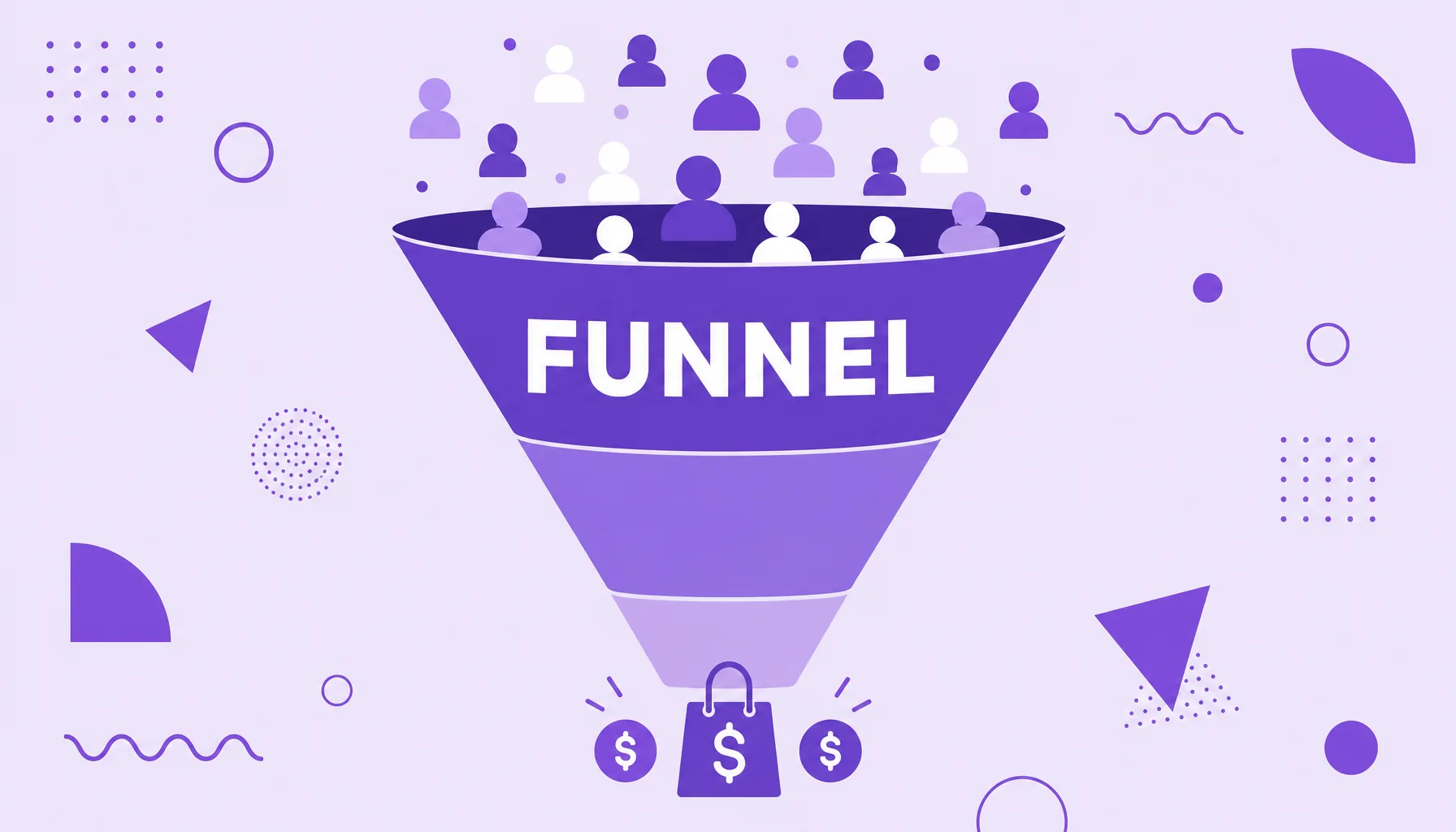
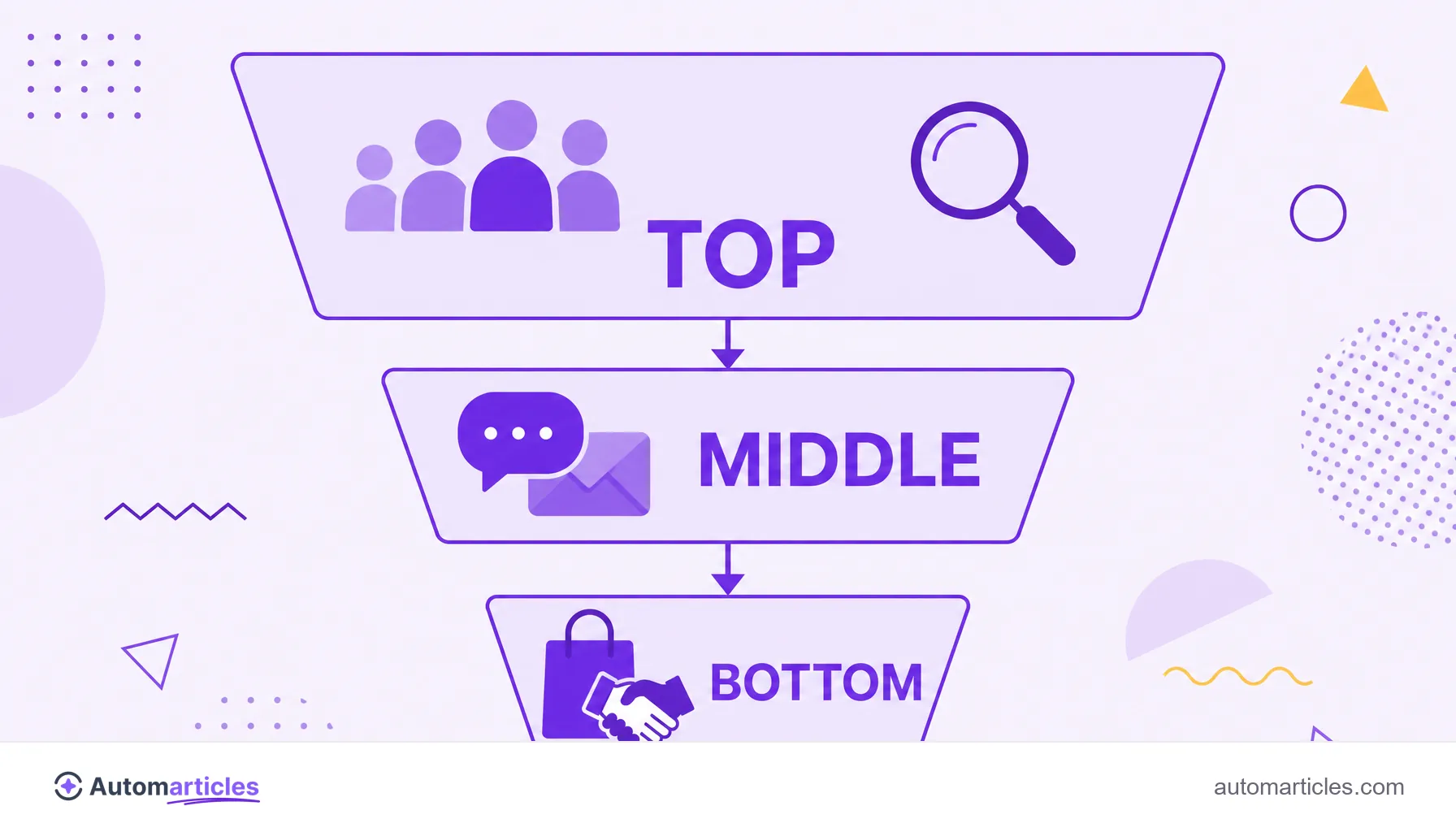
A sales funnel is the model that describes the customer journey in stages, from the first contact to the purchase. It usually has three phases:
- Top (awareness): the person discovers they have a problem;
- Middle (consideration): they evaluate the possible solutions;
- Bottom (decision): they choose and buy.
What a sales funnel is and how it works
The sales funnel, also called a pipeline, is the visual representation of the stages a potential customer goes through from the first contact with your brand to closing the purchase. The name comes from the shape: many people enter at the top, and only a portion reach the bottom and become customers.
The core idea is simple. Not everyone who discovers your company is ready to buy right now. The funnel organizes that buying journey into phases, so you deliver the right message at the right time, instead of trying to sell to someone who is still just researching.
Each stage filters and qualifies people. Along the way, an anonymous visitor becomes a lead, the lead becomes an opportunity and the opportunity becomes a customer. Understanding this flow is what lets you forecast revenue and find out where sales are getting stuck.
The 3 stages of the sales funnel (top, middle and bottom)
The most common model divides the funnel into three broad stages. Each one matches a level of the person's awareness about the problem and the solution:
| Stage | Customer moment | Goal |
|---|---|---|
| Top (ToFu) | Discovers they have a problem | Attract and educate |
| Middle (MoFu) | Considers the solutions | Nurture and qualify |
| Bottom (BoFu) | Decides what to buy | Convert into a sale |
At the top of the funnel, the focus is on attracting strangers with broad content that answers the first questions. In the middle of the funnel, the person already recognizes the problem and compares alternatives, so the role is to nurture with deeper material. At the bottom of the funnel, the lead is ready to decide, and it is time to present the offer, the proof and a clear call to action.
Funnels of 4, 5 and 7 stages: the variations of the model
Beyond the three-phase model, there are more detailed versions of the funnel. They do not compete with each other, they just slice the same journey with more granularity:
- 4-stage funnel (AIDA): attention, interest, desire and action, the classic advertising model.
- 5-stage funnel: usually detailed as awareness, interest, consideration, intent and purchase.
- 7-stage funnel: a version common in B2B sales, which separates phases such as awareness, interest, evaluation, decision, purchase, loyalty and referral.
In practice, more stages make sense in long and complex sales cycles, where several people take part in the decision. For simple operations, the three-phase funnel already covers the essentials well. What matters is not the number of stages, but mapping how your customer actually decides.
Sales funnel and marketing funnel: where one ends and the other begins
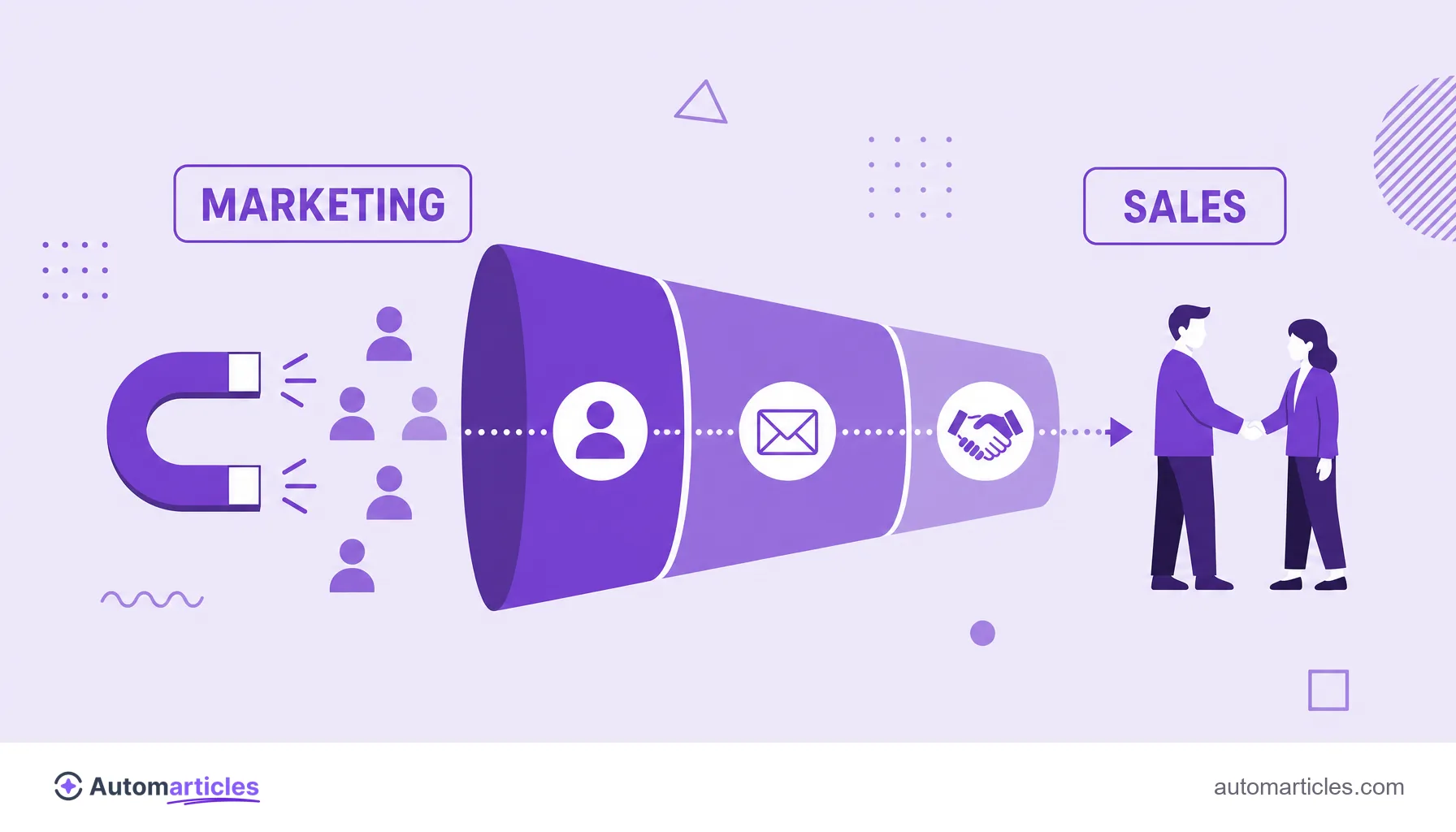
Many people confuse the sales funnel with the content funnel or with the marketing funnel. The difference lies in who is responsible for each part. Marketing usually handles the top and the middle, attracting and educating; sales takes over the bottom, when the lead is already qualified for a commercial approach.
In inbound marketing strategies, the two funnels fit together: content attracts and nurtures, and the sales team steps in when the lead shows purchase intent. Aligning that handoff, the famous moment when marketing hands the lead to sales, is what avoids losing opportunities along the way.
How to build a sales funnel step by step
Building an effective sales funnel follows a logical sequence:
- Know your persona: map the questions and objections of your persona at each phase.
- Design the stages: define top, middle and bottom and what characterizes the move from one to the next.
- Create content for each phase: broad material at the top, comparisons and proof in the middle, offers and demos at the bottom.
- Capture contacts: use landing pages and lead magnets to turn visitors into leads.
- Nurture the leads: guide those who are not ready yet with lead nurturing through email and content.
- Measure and adjust: track the conversion rate between stages and fix the bottlenecks.
You do not need to have everything ready at once. The funnel evolves as you better understand how your audience buys.
Sales funnel metrics and optimization
A funnel only improves if you measure the transition between stages. The main metrics are the conversion rate of each phase, the average journey time and the customer acquisition cost. They show where leads get stuck and how much it costs to turn a contact into a sale.
The biggest drop-off point is usually in the middle of the funnel, when the lead is not ready to buy yet. That is where nurturing makes the difference. According to Forrester Research, in a compilation by HubSpot, companies that excel at lead nurturing generate 50% more sales-ready leads at a 33% lower cost. The same material brings a figure from the Annuitas Group: nurtured leads make 47% larger purchases than non-nurtured ones.
The takeaway is direct: optimizing the funnel is not only about attracting more people to the top, but about reducing friction at each stage so more people reach the bottom ready to decide.