
Buyer journey: what it is and what the stages are
By Tiago CostaUpdated on July 2, 2026
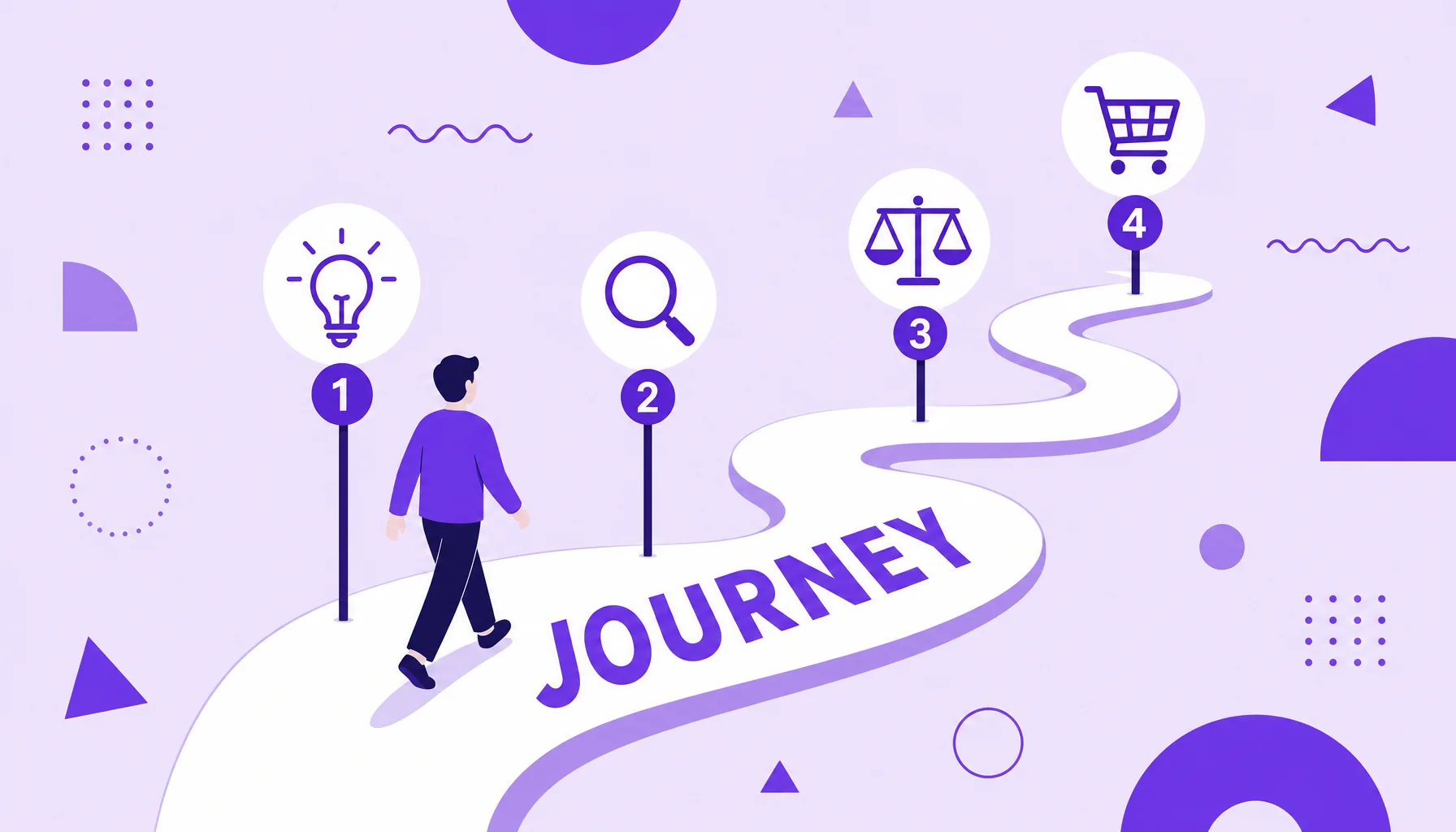
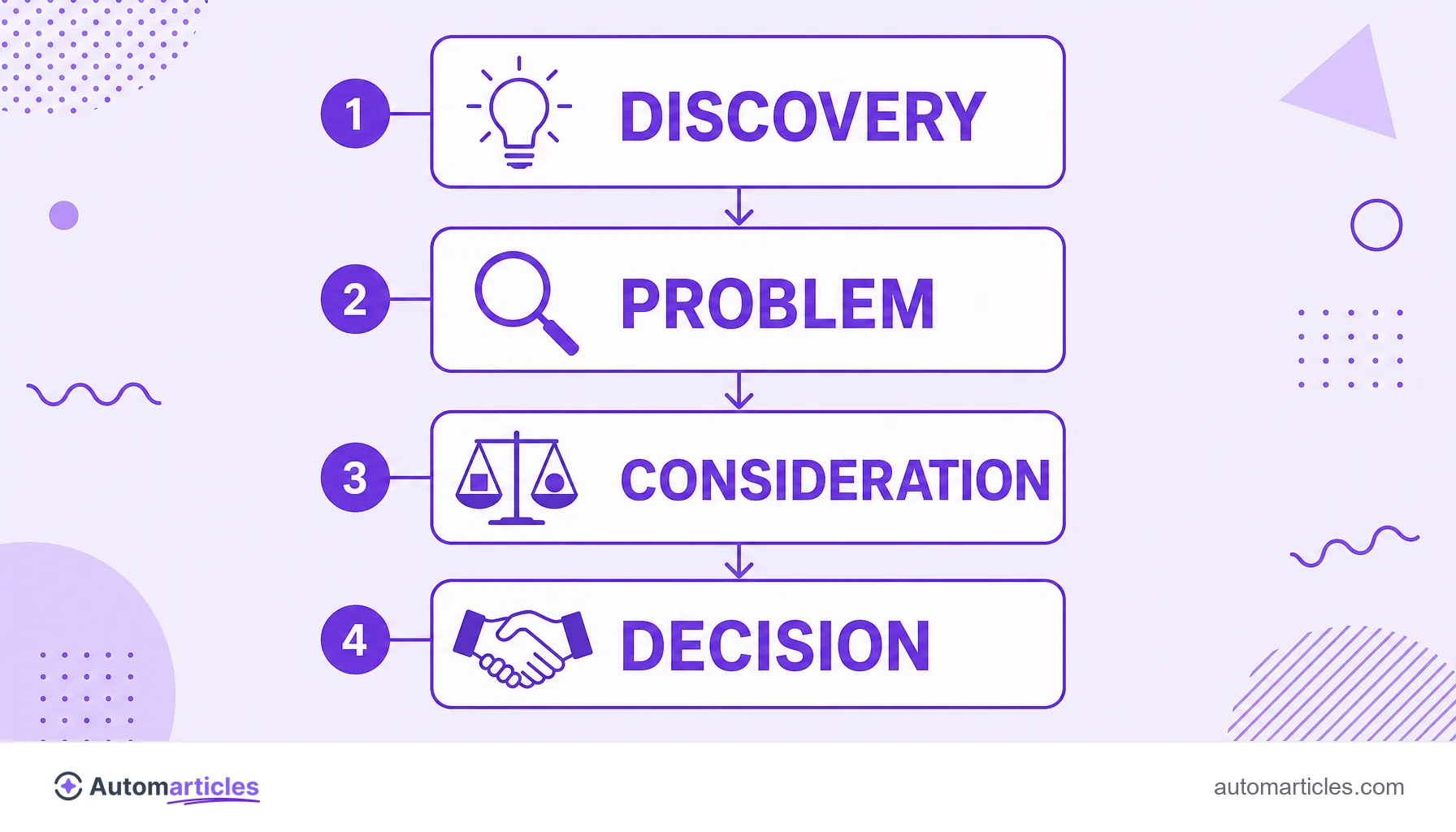
The buyer journey is the consumer's path from discovering the problem to the decision. It usually has four stages:
- Awareness and discovery: the person does not yet know they have a problem;
- Problem recognition: they understand the need and look for information;
- Solution consideration: they compare the available options;
- Buying decision: they choose and hire the solution.
What the buyer journey is
The buyer journey (or customer journey) is the path a consumer takes from the first spark of interest to closing a purchase, and even beyond it. Instead of an instant decision, the purchase is the result of a process: the person discovers a problem, researches, compares alternatives and only then chooses.
Mapping this path helps the company see the world through the customer's eyes. Each stage brings a different question to the consumer's mind, and the role of marketing is to answer those questions at the right time, with the right content. A well understood journey is the basis for aligning marketing and sales and for building a sales funnel that follows the real pace of whoever buys.
What the stages of the buyer journey are
The most used model, popularized by inbound methodologies, divides the journey into four stages. They describe the consumer maturing toward the purchase:
| Stage | What happens | What the customer needs |
|---|---|---|
| 1. Awareness and discovery | Does not yet know they have a problem | Broad content that sparks awareness |
| 2. Problem recognition | Realizes the need and seeks to understand | Material that helps name and size the problem |
| 3. Solution consideration | Evaluates paths and alternatives | Comparisons, proof and selection criteria |
| 4. Buying decision | Chooses and hires | Trust arguments, cases and a clear offer |
Not everyone uses four phases. Some models talk about five stages, adding the after sale and loyalty; others sum it up in three (top, middle and bottom). The number changes, but the logic is the same: the person moves from vague awareness to an informed decision. Each phase asks for a type of stimulus, and that is why the top of the funnel educates while the bottom of the funnel convinces.
Buyer journey and sales funnel: what the difference is
The buyer journey and the sales funnel go together, but they look at different sides of the same process. It helps to separate them:
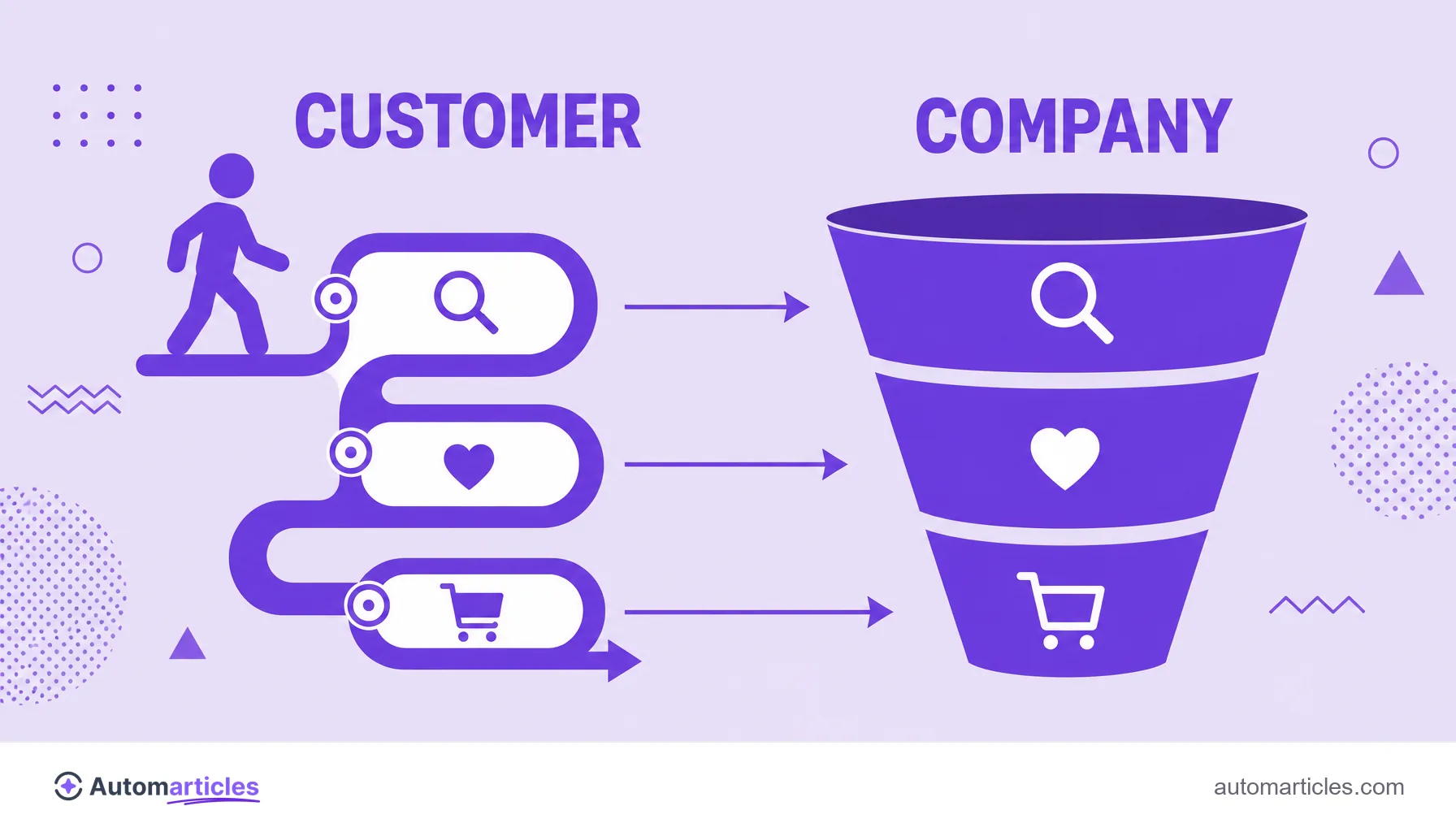
- The buyer journey describes the customer's point of view: what they feel, think and do at each phase.
- The sales funnel describes the company's point of view: the marketing and sales actions to guide the person from one stage to the next.
In practice, one is the mirror of the other. The discovery stage of the journey matches the top of the funnel; consideration, the middle; the decision, the bottom. Understanding this match avoids a common mistake, which is talking about price and a proposal with someone still in the discovery phase. Aligning the message to the journey stage is what makes the content funnel truly efficient.
How to map your customer's buyer journey
Mapping the journey turns assumption into method. A simple path to start:
- Define the persona: describe who the ideal customer is, with pains and goals, supported by your persona.
- List the questions of each phase: what the person searches for in discovery, in consideration and in the decision.
- Identify the touchpoints: where they find your brand (search, social, referrals, ads).
- Match content to each stage: an educational article at the start, a comparison in the middle, a success story at the end.
- Track and adjust: use data to see where people get stuck and refine the map.
In the end, you have a map that shows which content to deliver at each moment, feeding lead nurturing with the message that fits each phase.
Buyer journey in B2B: longer and with more people
In selling to companies (B2B), the journey tends to be longer, more rational and collective. Instead of a single person, a buying group evaluates the purchase, and each participant travels their own journey. This stretches the process and increases the independent research before any conversation with a salesperson.
The numbers show the size of this shift. According to Gartner, B2B buyers spend only about 17% of the total buying journey in meetings with potential suppliers, and that time is still split among all the competitors under evaluation. Most of the decision happens before that, in research on their own. For the company, the lesson is direct: the content needs to be ready to answer the buyer's questions even when no one from the sales team is in the room.
How to use the buyer journey in your content
The buyer journey stops being theory when it turns into a content plan. Each stage deserves a type of material designed for the person's moment:
- Discovery: broad, educational articles that attract those still defining the problem, supported by content marketing and SEO.
- Consideration: comparisons, solution guides and webinars that help evaluate paths.
- Decision: success stories, demos, reviews and a clear offer that reduces the perceived risk.
Covering the whole journey, and not just the buying stage, is what turns visitors into customers predictably. When every question finds a ready answer in your content, the person moves through the journey on their own and reaches the decision already trusting your brand.