
What CRO (conversion rate optimization) is and how to apply it
By Tiago CostaUpdated on July 2, 2026
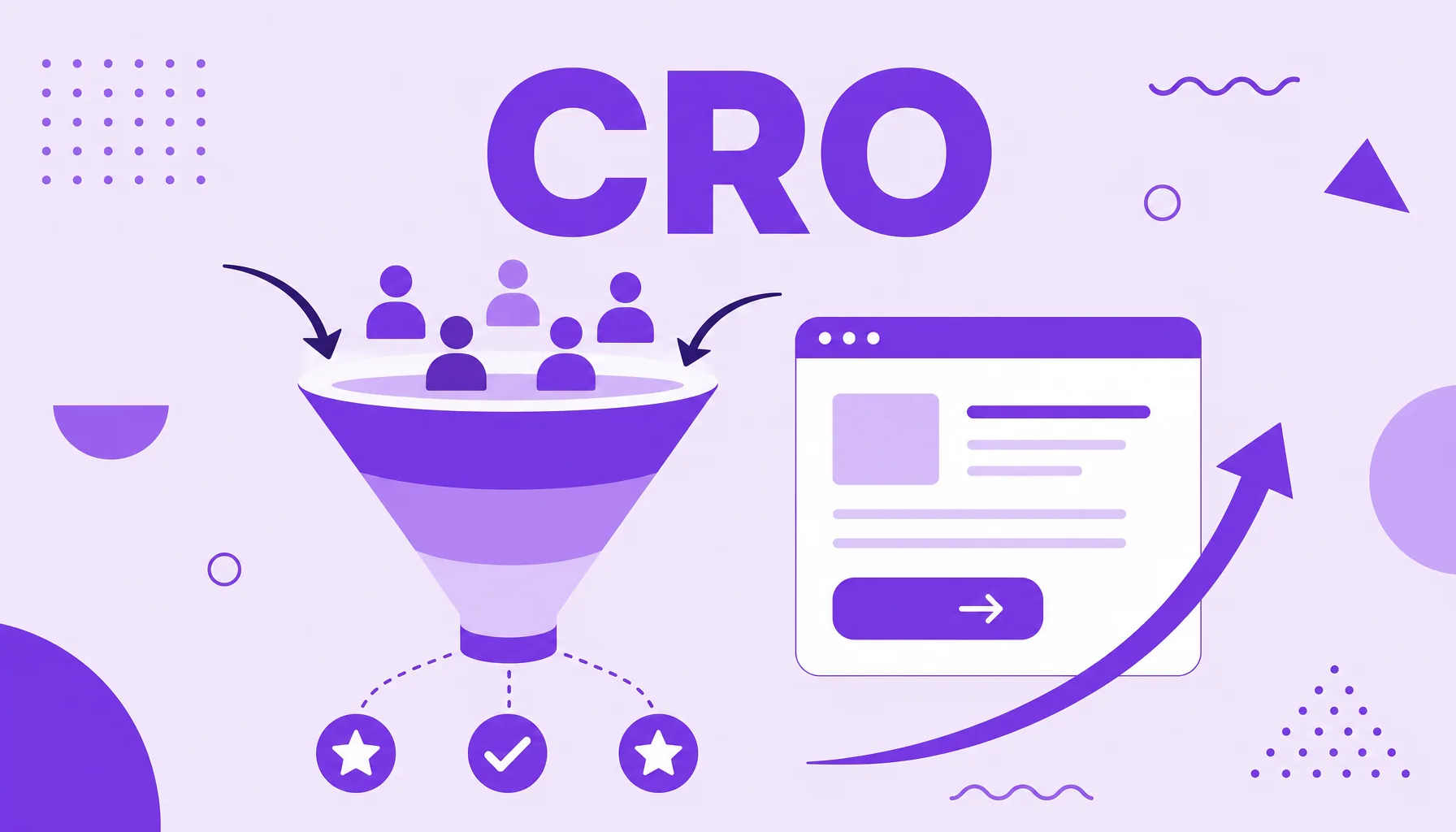
CRO (Conversion Rate Optimization) is optimizing pages to raise the conversion rate. In practice, it involves:
- analyzing visitor behavior;
- forming hypotheses about what blocks conversion;
- testing changes with A/B tests;
- keeping what converts more and repeating the cycle.
What CRO (conversion rate optimization) is
CRO stands for Conversion Rate Optimization. It is the discipline that works on a site's pages so a larger share of visitors completes the action that matters, whether filling out a form, creating an account or finishing a purchase.
The big idea behind CRO is efficiency. Instead of spending more to attract visitors, it extracts more results from the audience the page already receives. If a landing page converts 2% and starts converting 4%, the number of customers doubles without a single extra visitor.
That is why CRO walks side by side with SEO and traffic. Attracting the right people is half the work, and the other half is not wasting those visits because of a confusing, slow or unconvincing page.
How to calculate the conversion rate
The conversion rate is the foundation of CRO, and the math is simple: divide the number of conversions by the number of visitors and multiply by 100.
Conversion rate = (conversions / visitors) x 100.
A direct example: if a page received 2,000 visits in a month and generated 60 sign-ups, the rate is (60 / 2,000) x 100, that is, 3%. What counts as a conversion depends on the page's goal, and it can be a sale, a lead, a download or a click on a specific button.
It is worth measuring conversion by page and by traffic source. The same offer usually converts quite differently depending on whether the visitor comes from organic search, an ad or an email.
What a good conversion rate is
There is no magic number, because the ideal rate varies by industry, page type and traffic source. Even so, you can have a reference.
According to the benchmark report by Unbounce, which analyzed more than 41,000 landing pages, the median conversion rate landed around 6.6%, and the top-ranked pages convert above 10%. These are numbers from dedicated, optimized pages, so ordinary sites usually see much lower rates.
The right reading is not to chase other people's average, but to beat your own baseline. If today you convert 1.5%, the goal of CRO is to reach 2%, then 2.5%, comparing each version of the page with the previous one, not with the whole market.
How to do CRO in practice
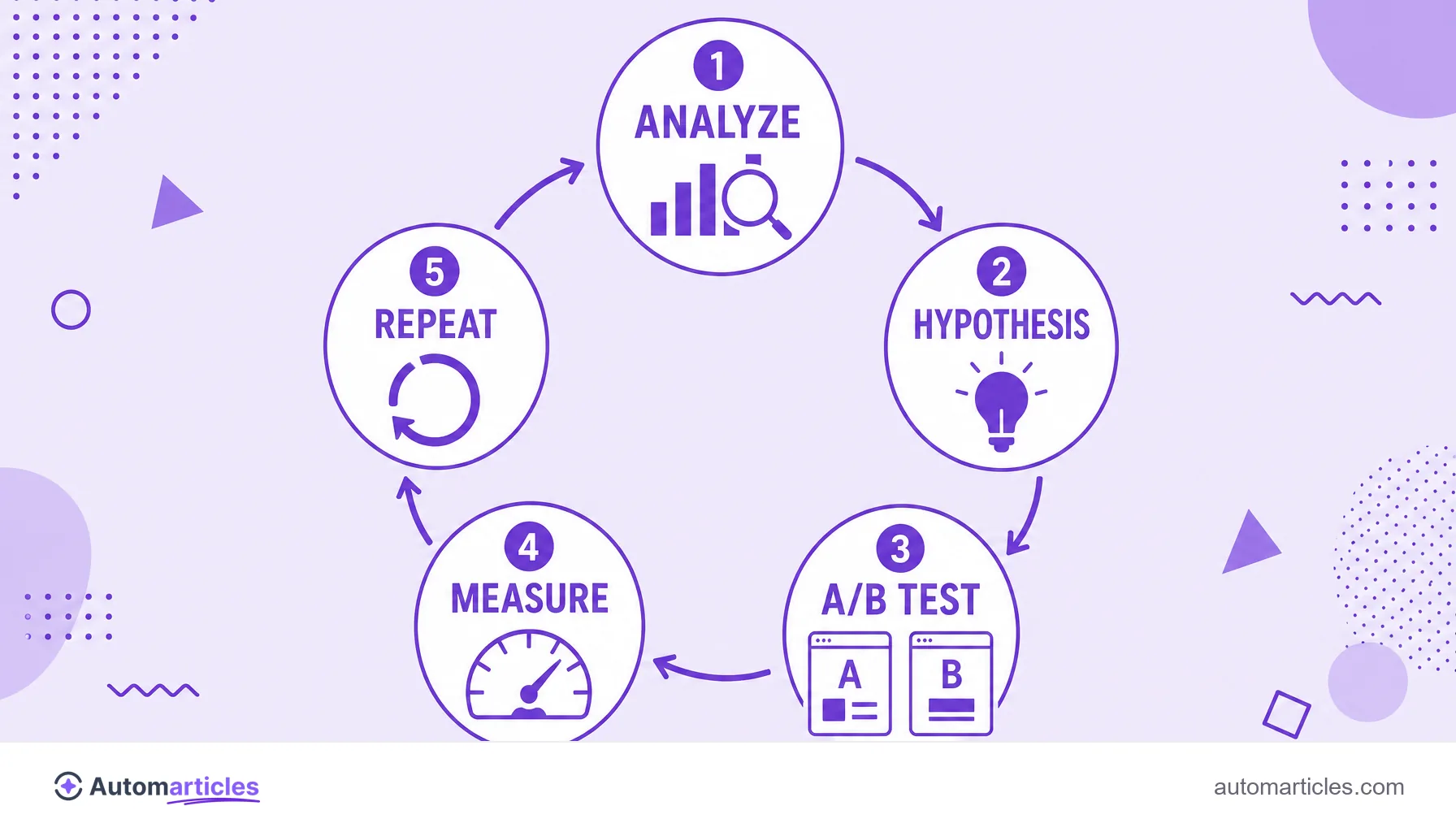
CRO is not a guess or an opinion, it is a data-driven method. The cycle usually follows these steps:
- Analyze the data: use analytics and heatmaps to see where people get stuck, drop off or hesitate.
- Form hypotheses: turn each problem into a clear bet, like "if I simplify the form, more people finish the sign-up".
- Run A/B tests: compare two versions of the page with real traffic and let the numbers decide which one wins.
- Implement and repeat: keep the winning version and start again, because CRO is a continuous process, not a one-off project.
Among the elements that move conversion the most are the headline, the value proposition, the CTA, the form length, social proof and load speed. Slow or confusing pages raise the bounce rate and drag down conversion before the visitor even reads the offer.

CRO, SEO and the path to conversion
CRO and SEO solve different parts of the same problem. SEO and organic traffic bring the right person to the page, and CRO makes sure that visit is not lost.
That is why the two pay off more together. There is no point attracting a thousand visitors a day if the page converts almost no one, nor optimizing a page that gets no visits at all. The ideal is to align the content with the buying journey, delivering at each stage what the visitor needs to move forward.
In the sales funnel, CRO acts on every step: it improves lead capture at the top, engagement in the middle and closing at the bottom. A small improvement in the conversion rate of each stage multiplies across the entire funnel.
Marketing CRO vs other meanings: watch the acronym
The acronym CRO causes a lot of confusion, because it names quite different things depending on the context. Before you search, it helps to know which CRO you are after:
- Marketing CRO: the Conversion Rate Optimization of this glossary, tied to sites, pages and conversion.
- Chief Revenue Officer: the executive responsible for a company's entire revenue, a role in commercial leadership.
- Regional Council of Dentistry (CRO): in Brazil, the body that registers and oversees dentists, with an acronym per state such as CRO-SP, CRO-MG and CRO-RJ. It has nothing to do with digital marketing.
In this glossary, whenever we mention CRO we are talking about conversion rate optimization, the content and experience strategy that turns visitors into customers.