
What a landing page is and how to create one
By Tiago CostaUpdated on July 2, 2026
A landing page is a page with a single conversion goal, where the visitor is sent after clicking on an ad, an email or a link. A good landing page usually has:
- a clear headline with the main promise;
- focus on a single action, with no menu or distractions;
- a form or conversion button that stands out;
- proof (testimonials, numbers, guarantees) that reduces objections.
What a landing page is and what it is for
A landing page is the page where the visitor "lands" after clicking on an ad, an email or a search result. What defines it is not its appearance, but its purpose: it exists to generate a single conversion.
While the corporate website introduces the company and offers many paths, the landing page removes distractions and guides the visitor to one decision: fill in a form, buy, book a demo or download a resource. That is why it is often the central piece to capture a lead or close a direct sale.
Every effective landing page revolves around a single offer and a single call to action. The more focused it is, the higher the chance the person completes what the page asks.
Landing page and website: what is the difference
Confusing a landing page with a website is common, but the two have distinct functions. The table below sums it up:
| Aspect | Website | Landing page |
|---|---|---|
| Goal | Several (inform, browse, explore) | Only one (a single conversion) |
| Navigation | Full menu and many links | Few or no exit links |
| Audience | Varied visitors | Segmented traffic from a campaign |
| Main metric | Visits and pages per session | Conversion rate |
In practice, the website is the storefront and the landing page is the closing counter. Reducing exits and keeping the focus on one action is usually what lowers the bounce rate tied to the offer and raises conversion.
Types of landing page
There are different formats depending on the goal:
- Lead generation page: trades a resource or offer for contact details, feeding the generation of leads.
- Click-through page: warms up the visitor and sends them to another step, such as the checkout.
- Sales page: presents a product or service aiming at a direct sale, usually long and rich in arguments.
- Event or registration page: captures sign ups for webinars, courses or waiting lists.
- Squeeze page: a minimalist version, focused on capturing only the email with a lead magnet.
Choosing the right format depends on where the visitor is in the journey and what you want them to do next.
Anatomy of a high converting landing page
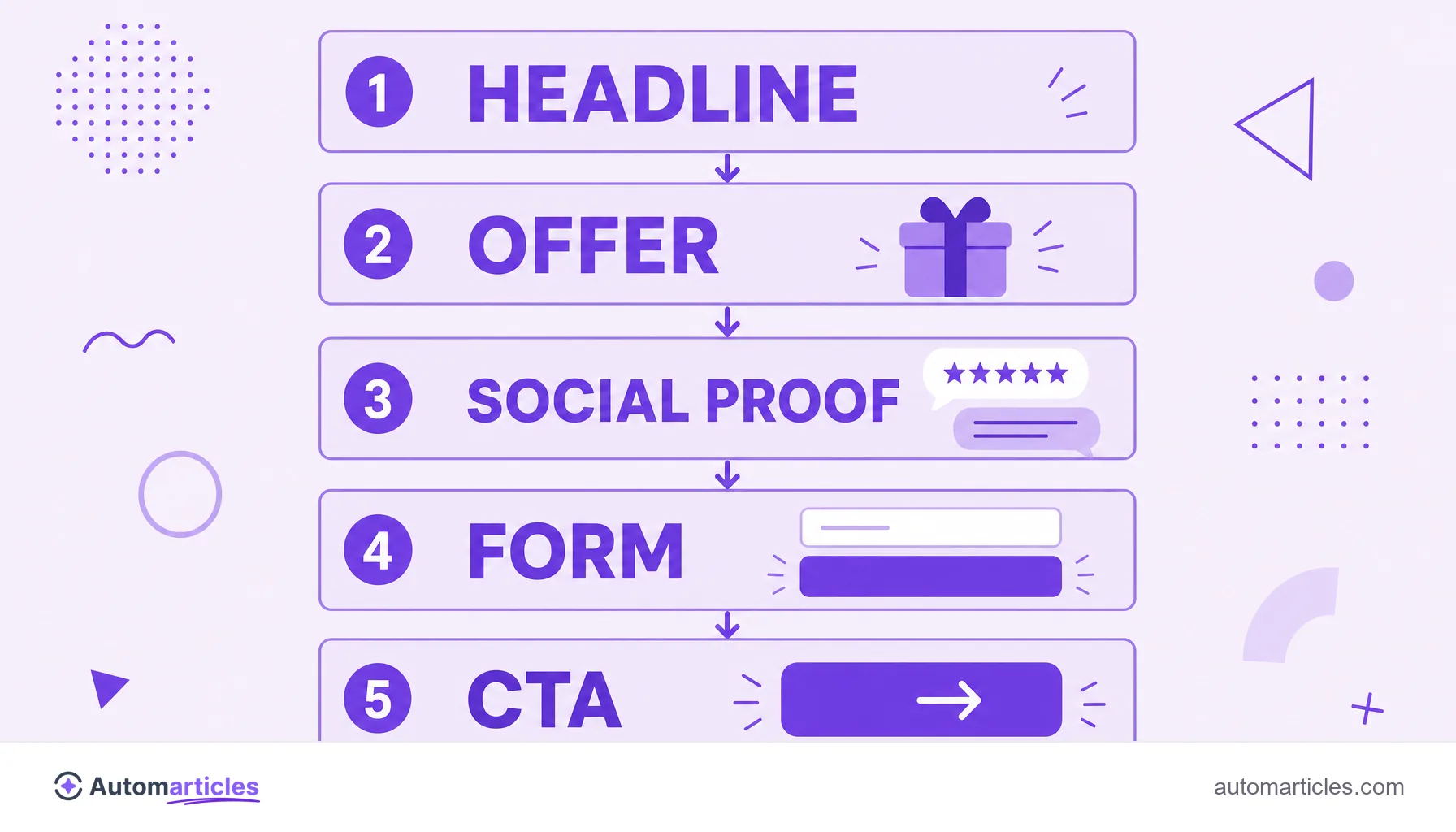
Landing pages that convert well follow a similar structure. The essential elements are:
- Headline and subheadline: make the main promise clear in seconds.
- Single offer: one goal, without competing with other actions.
- Social proof: testimonials, logos, reviews and numbers that reduce distrust.
- Lean form: ask only for what is needed; every extra field lowers conversion.
- Prominent call to action: a visible CTA, with an action verb and a clear benefit.
- Fast and responsive loading: poor performance kills conversion, especially on mobile.
According to the Conversion Benchmark Report by Unbounce, which analyzed thousands of landing pages, the average (median) conversion rate is around 6.6%, with meaningful variation across sectors. In other words, small improvements to the page tend to pay off quickly.
How to create a landing page step by step
Building an effective landing page follows a logical sequence:
- Set a single goal: capture a lead, sell or sign up. One page, one goal.
- Know the audience: write for your persona, using their language and objections.
- Create the offer and the headline: make the value clear right in the first fold.
- Build the structure: headline, benefits, social proof, form and CTA, in that logical order.
- Align with the traffic source: the ad or email message must carry over to the page (the so called "scent").
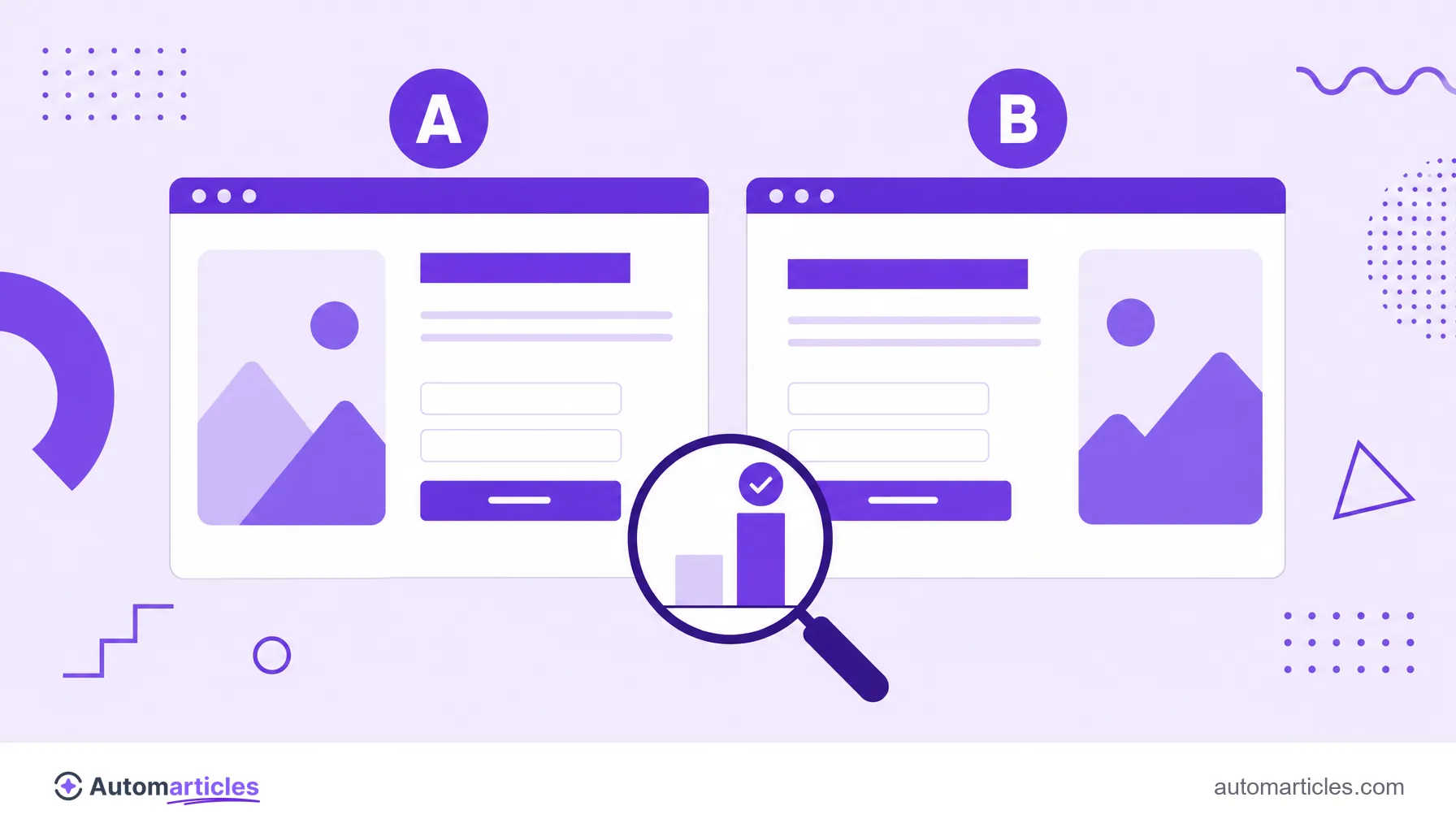
- Test and optimize: use A/B tests and CRO principles to improve conversion continuously.
You do not need to get everything right the first time. The best landing pages are the result of constant, data driven adjustments.
Why landing pages multiply results
Investing in landing pages tends to have a compounding effect. Each specific page works as a new entry door, aligned with a campaign or keyword, which increases relevance and conversion.
The numbers reinforce this. A study by HubSpot points out that companies that increased the number of landing pages from 10 to 15 saw around 55% more leads. The logic is simple: more segmented offers mean more conversion opportunities.
Combined with good lead nurturing and a well designed funnel, landing pages stop being isolated pages and become the predictable capture engine of a marketing operation.