
llms.txt: what the file that hands your content to AIs is
By Tiago CostaUpdated on July 2, 2026
llms.txt is a text file at the root of a site (at /llms.txt) that guides AIs about your content. It usually lists:
- a short description of the site or brand;
- the most important pages, as links;
- a short summary of what each page brings;
- reference materials the AI should prioritize.
What the llms.txt file is
llms.txt is a simple text file, published at the root of a site (at the address /llms.txt), created to guide language models on which content matters and how to interpret it. The idea is to give the AI a curated map of the site, instead of leaving it to rely only on what it can crawl on its own.
The most common analogy is with robots.txt, the file that guides search crawlers on what they can access. llms.txt follows the same logic of a convention at the root of the site, but with a different audience and goal: instead of saying what to block, it highlights what to prioritize and summarizes the content for AI models.
That is why llms.txt usually enters the conversation about GEO and about optimizing sites for artificial intelligence. The promise is to make it easier for the AI to understand your content and, with that, increase the chance of it being cited and mentioned in the answers.
llms.txt, robots.txt and sitemap: what are the differences
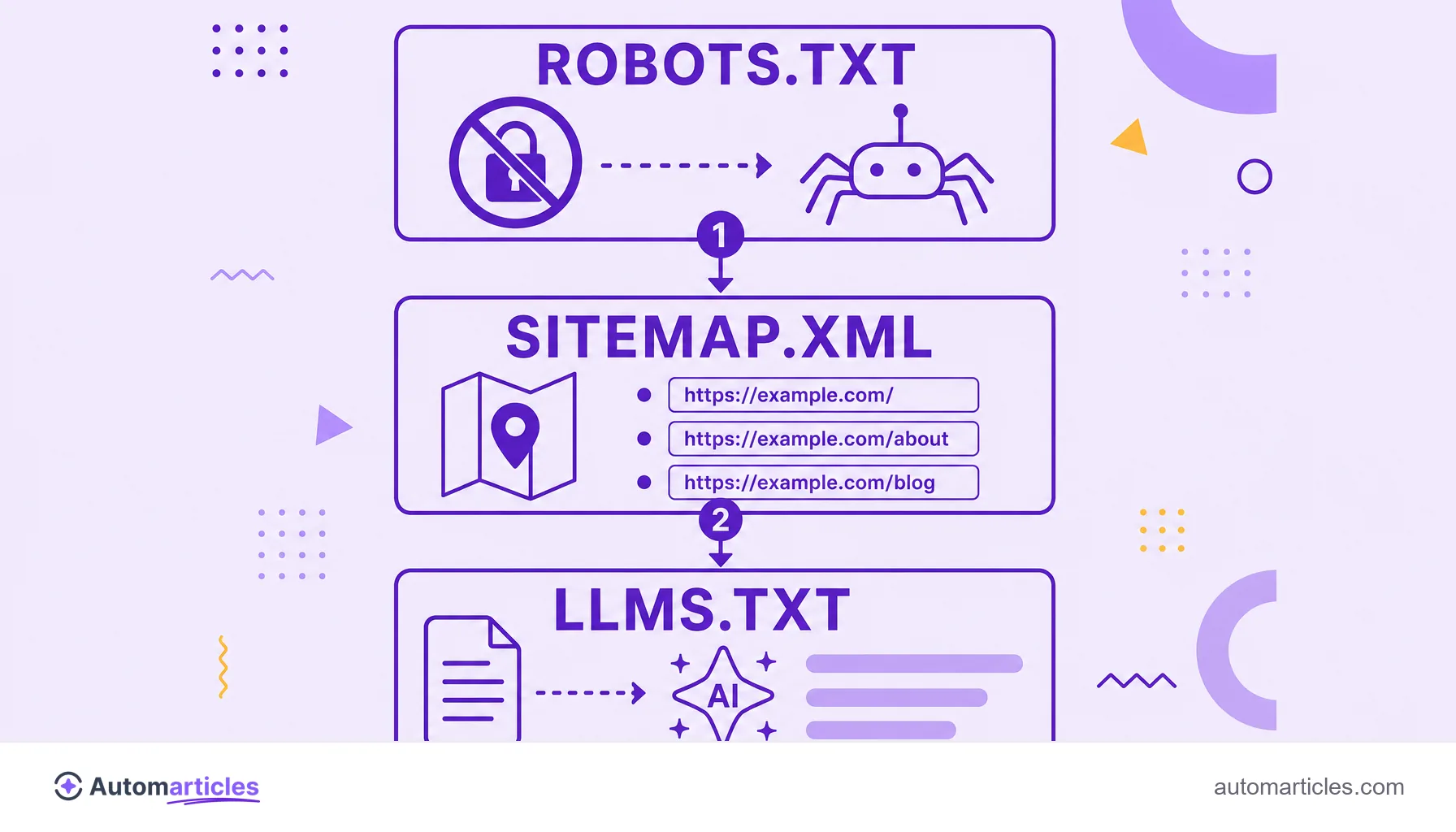
The three are convention files that live on the site, but each speaks to a different audience and solves a different problem:
| File | For whom | Function |
|---|---|---|
| robots.txt | Search crawlers | Say what can or cannot be accessed |
| sitemap.xml | Search engines | List all URLs for indexing |
| llms.txt | AI models (LLMs) | Highlight and summarize the most important content |
The difference in intent is the central point. The sitemap wants the AI or search engine to find everything, while llms.txt wants the opposite: to point out the essential and give context. It is worth remembering that llms.txt does not block anything nor control the crawler, it only suggests a cleaner reading path for the models.
What the structure of an llms.txt file looks like
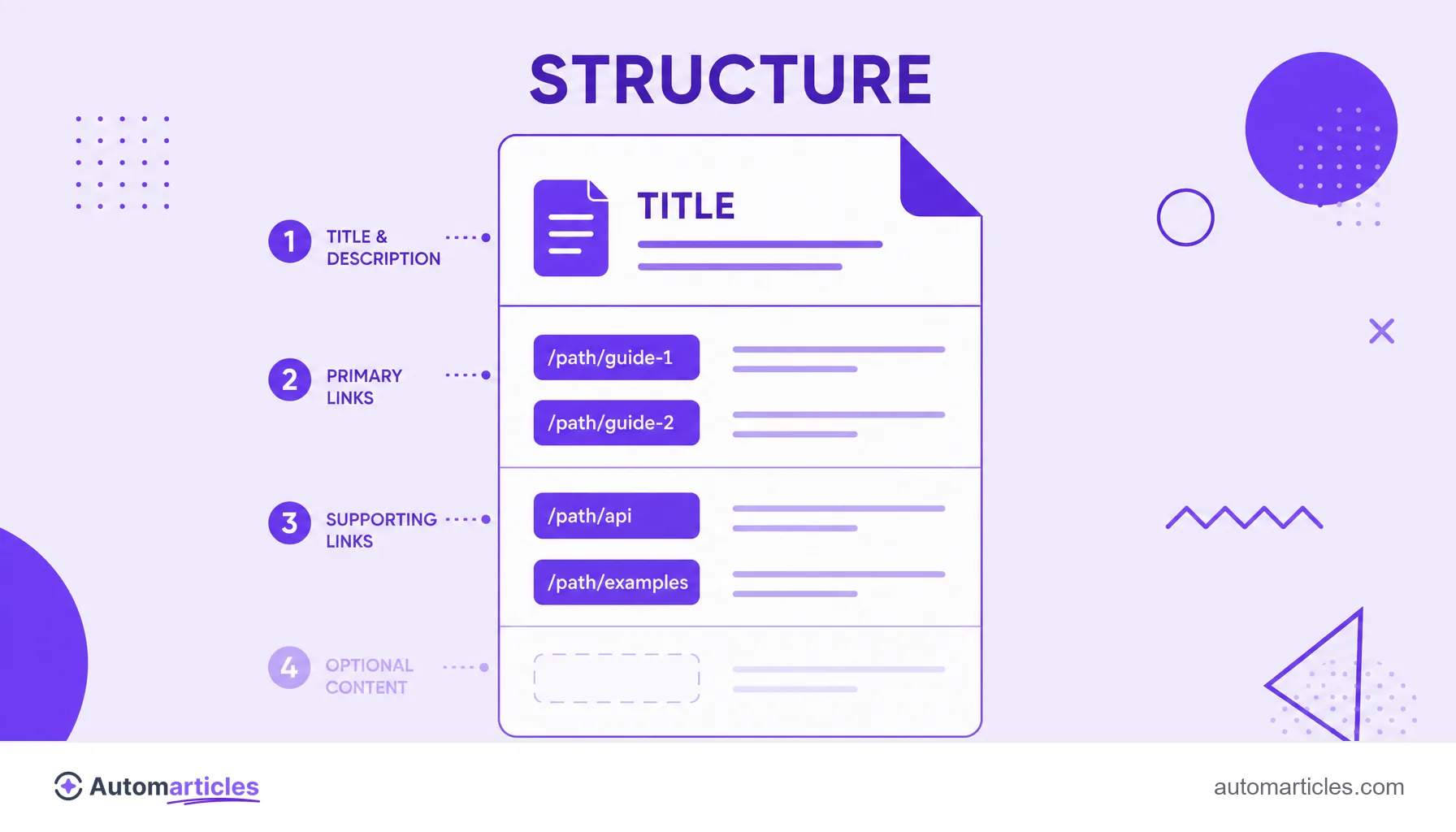
llms.txt is written in Markdown, the same lightweight format used in many text documents, which makes it easy to read for both humans and machines. The most common structure follows this order:
- Title and description: the name of the site or brand and a sentence explaining what it does.
- Sections by theme: blocks that group related pages, such as Documentation, Products or Guides.
- Commented links: each link comes with a short summary of what the page brings, to give context to the model.
- Optional content: a final section with secondary materials, which the AI can ignore if it needs something leaner.
Some sites also publish an expanded version, llms-full.txt, which gathers the full content of the main pages into a single file. The golden rule is clarity: the more direct and well summarized the file, the easier it becomes for the model to understand your site's structure.
Does llms.txt work? What the data says
Here honesty is needed. llms.txt is a community proposal, not a standard the big AI providers committed to following. In practice, adoption by the models is still low.
A study by Ahrefs analyzed 137,000 domains and showed the size of the gap: among the sites that already published a valid llms.txt, 97% received no request for the file in May 2026. And, of the traffic that did exist, AI bots linked to tools like ChatGPT and Perplexity accounted for only 1% of the visits. Most of the visits came from SEO audit tools and other bots, not from AIs actually reading the file.
The balanced read is this: today llms.txt is rarely read by the models, so do not expect a jump in AI visibility just from publishing it. It is a low-cost bet on a standard that may gain traction, not a guaranteed lever of results.
Is it worth creating an llms.txt today
Even with low adoption, creating an llms.txt can make sense, as long as you keep realistic expectations. The arguments in favor:
- Low cost: it is a simple text file, quick to build and maintain.
- A bet on the future: if the standard takes hold, being early can give an edge.
- Organization: the exercise of summarizing the main pages helps clarify your own site structure.
But do not confuse priorities. What moves the needle today is still the content itself: clear answers, trustworthy data and authority, the base of optimization for generative engines and of answer engine optimization. llms.txt is an extra, not a replacement for good content the AI wants to cite.
How to create and publish an llms.txt
Building an llms.txt is straightforward. A simple step by step:
- List the essential pages: choose what best represents your site, such as product pages, guides and reference content.
- Write in Markdown: start with the title, a short description and organize the links by section.
- Summarize each link: add a sentence explaining what each page brings, to give context.
- Save it as llms.txt: use plain text and name the file exactly like that.
- Publish at the root: make the file accessible at yourdomain.com/llms.txt.
After publishing, keep the file up to date whenever the site structure changes. And remember that the main work of showing up in AI answers, what sustains AI citation, is still quality content, not the file itself.