
AI citation: what it is and how to get assistants to list your site as a source
By Tiago CostaUpdated on July 2, 2026
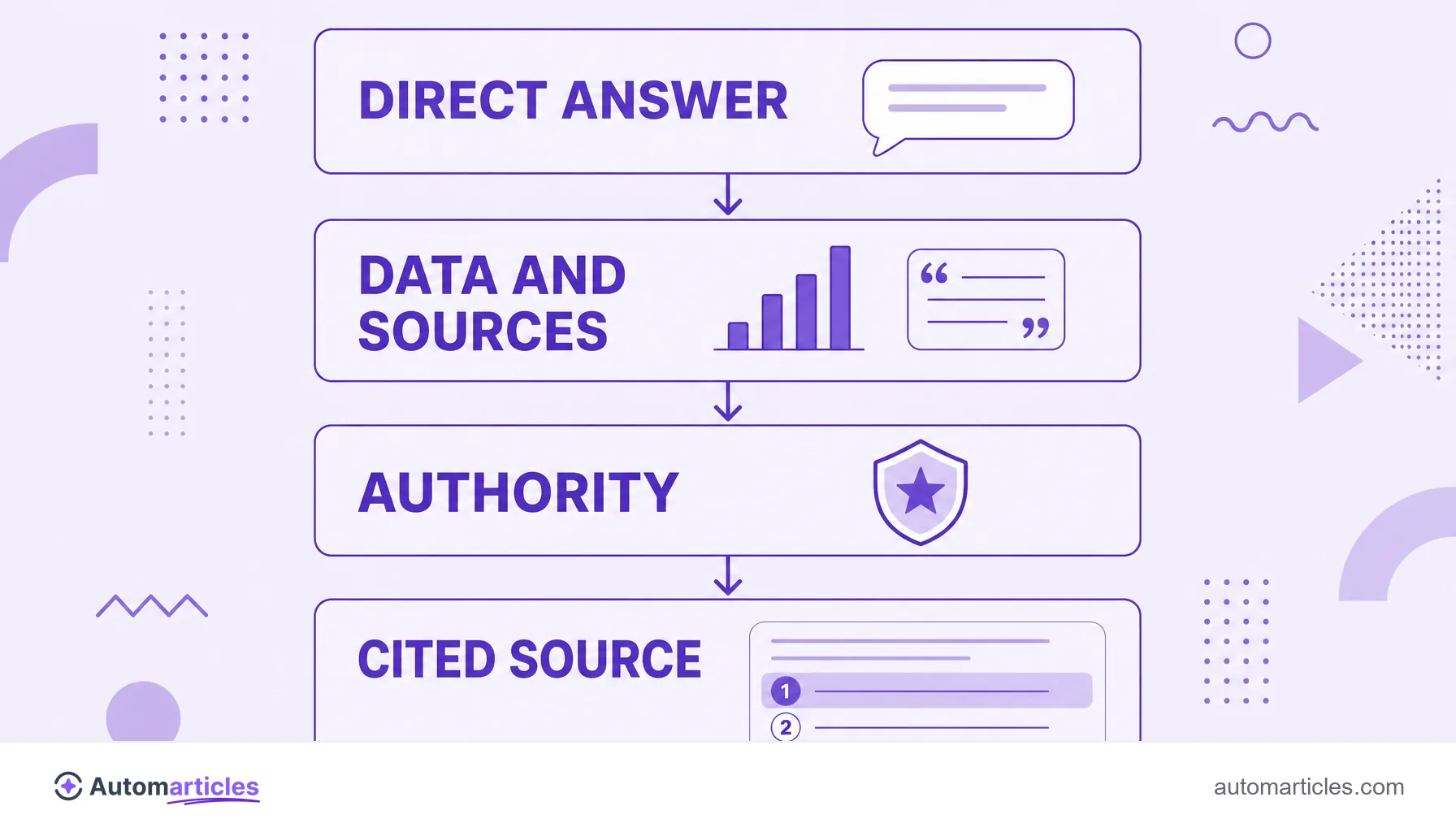
AI citation is when an assistant lists your site as the source of the answer it generated. To be cited, the content needs to:
- answer the question clearly and directly;
- bring trustworthy data and information;
- be easy for the machine to read and understand;
- have recognized authority on the topic.
What AI citation is
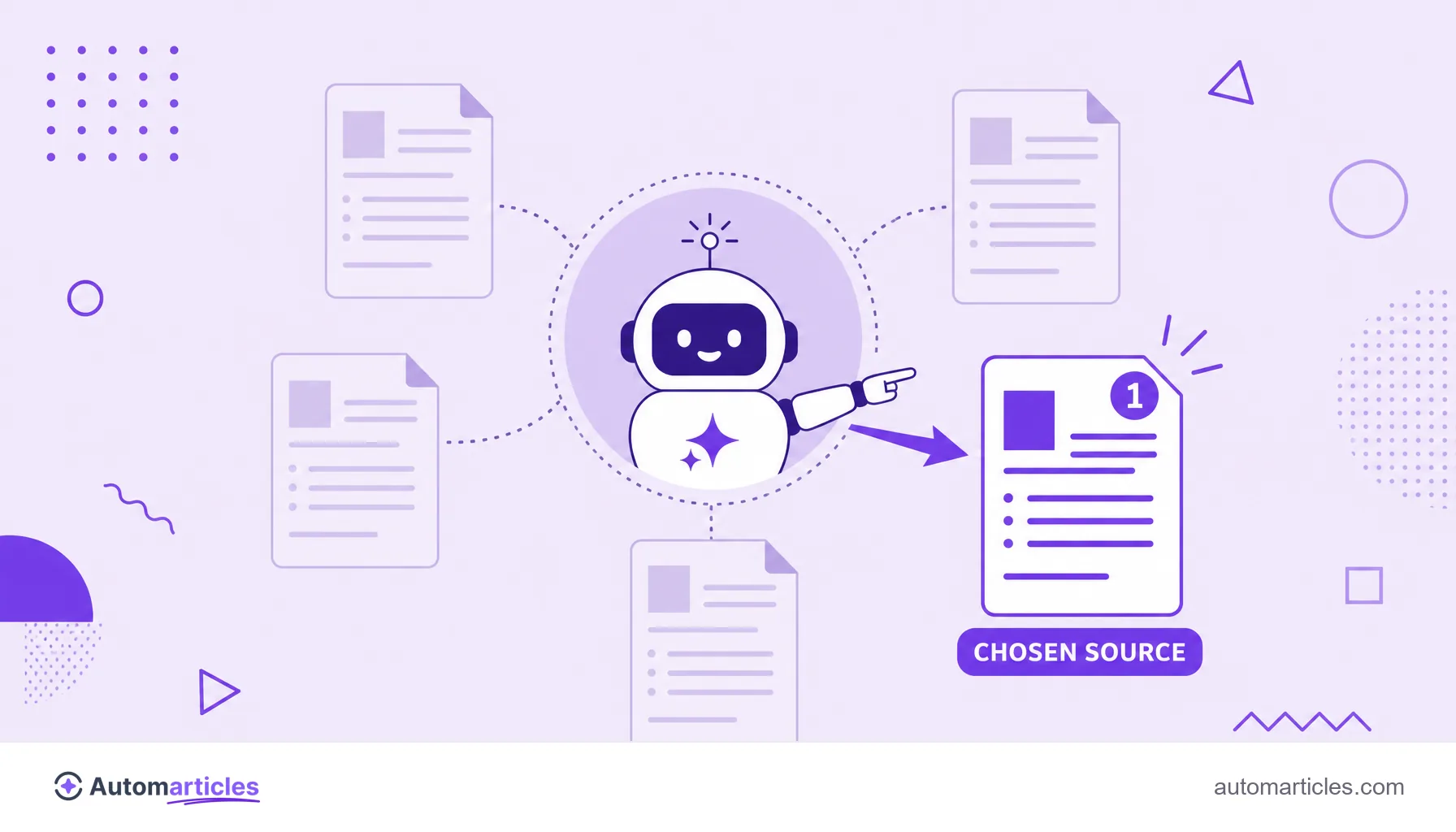
AI citation is the reference an artificial intelligence assistant makes to a specific source when assembling the answer. Instead of just writing text, the model shows where it got the information, usually with links or numbered notes next to the content. When your site appears there, you were cited.
This behavior became common in tools like Perplexity, ChatGPT with search and Google's AI Overviews, which display the sources used in the answer. The citation works like the AI's credit: it is the acknowledgment that that content helped answer the question.
Winning citations is one of the central goals of GEO and of optimization for generative engines. If people trust the AI's answer, being the cited source puts your brand in the position of reference on that subject.
AI citation and brand mention: what is the difference
Citation and mention seem like the same thing, but they are not. It is worth separating them, because each brings a different gain:
| Aspect | AI citation | Brand mention |
|---|---|---|
| What it is | Your site listed as the source of the answer | Your name cited in the answer text |
| Usually has a link | Yes, generally | Not always |
| Main gain | Credit, authority and a possible click | Brand recognition |
The two can happen together or separately: you can be cited as a source without the brand name appearing, and you can have a brand mention with no link at all. That is why tracking citation and mention side by side gives the full picture of your AI visibility.
AI citation and traditional backlink: what changes
In classic SEO, the big trust currency is the backlink. In AI search, part of that role shifts to the citation. The table shows how the two compare:
| Aspect | AI citation | Traditional backlink |
|---|---|---|
| What it is | Your site listed as a source inside an AI answer | A link from another site pointing to yours |
| Where it appears | In the assistant's answer | In the content of another page |
| Signals | Relevance and trust to the AI model | Authority to the search engine |
| Drives a direct click | Sometimes, when the answer includes the link | Yes, the link leads to your site |
| How it is earned | Clarity, data and topic coverage | Content others want to reference |
The two do not compete. A solid backlink profile usually helps your content rank, and ranking well raises the chance of becoming a source cited by AI. AI citation does not replace the backlink, it adds a new layer of reputation, earned inside the answer itself.
How AI chooses the sources it cites
Each engine has its own way of choosing sources, but there is a pattern: they look for content that is relevant, trustworthy and easy to synthesize. Some lean heavily on what already ranks well on Google, others not so much.
A study by Semrush measured this relationship and found big differences between platforms: Perplexity showed more than 91% domain overlap with Google's top ten results, while ChatGPT had the lowest overlap between the sources it cites and organic rankings. The practical read is clear: ranking well helps you get cited in some engines, but does not guarantee citation in all of them.
This reinforces why good SEO remains the base, not a replacement, of citation work. Appearing among the top results increases the chance of becoming a source, but each assistant still applies its own criteria of trust and clarity when choosing whom to cite.
How to get assistants to cite your site
Being cited is, to a large extent, making the machine's life easier. A step by step that works:
- Answer the question right away: open each section with a direct answer, in the format that answer engine optimization rewards, easy to extract.
- Bring data and sources: numbers with a clear origin increase trust and the chance of the content becoming a reference.
- Structure the content: headings, lists, tables and structured data help the AI understand and clip the answer.
- Cover the topic in depth: answering the neighboring questions too increases relevance in the model's eyes.
- Keep the content up to date: recent and correct information gets cited more, because the AI avoids outdated sources.
It is worth remembering why this matters so much now. A study by the Pew Research Center showed that, when there is an AI summary on the page, users click a link in only 8% of visits. With the click rarer, being the source cited inside the answer becomes the prize.
AI citation and academic citation: mind the term
The phrase AI citation causes confusion because it describes two different subjects. Before searching, it is worth knowing which one you are after:
- AI citation in GEO: the meaning of this glossary, when the AI lists your site as the source of the answer.
- Citing a text made by AI: the academic rule of how to reference AI-generated content in a paper, something handled by standards like APA and MLA.
- AI citation generator: tools that build bibliographic references automatically, another use of the term.
For academic work, the general rule is to cite the tool used, the version and the access date, always checking the standard required by your institution. In this glossary, however, AI citation always refers to optimizing content to be listed as a source by assistants.
How to track your AI citations
Since each answer is generated on the fly, tracking citations requires a method. A practical way:
- List questions from your niche: gather the real customer doubts and run them in the main assistants.
- Check the displayed sources: see whether your site appears among the links or source notes of the answer.
- Compare with competitors: see who is cited in your place and why.
- Follow the evolution: repeat over time, since sources change from one query to another.
With this tracking, you find out on which topics you are already a trusted source for the AI and where you still need to reinforce clarity, data and authority to win the citation.