
Anchor text: what it is and how to optimize for SEO
By Tiago CostaUpdated on July 2, 2026
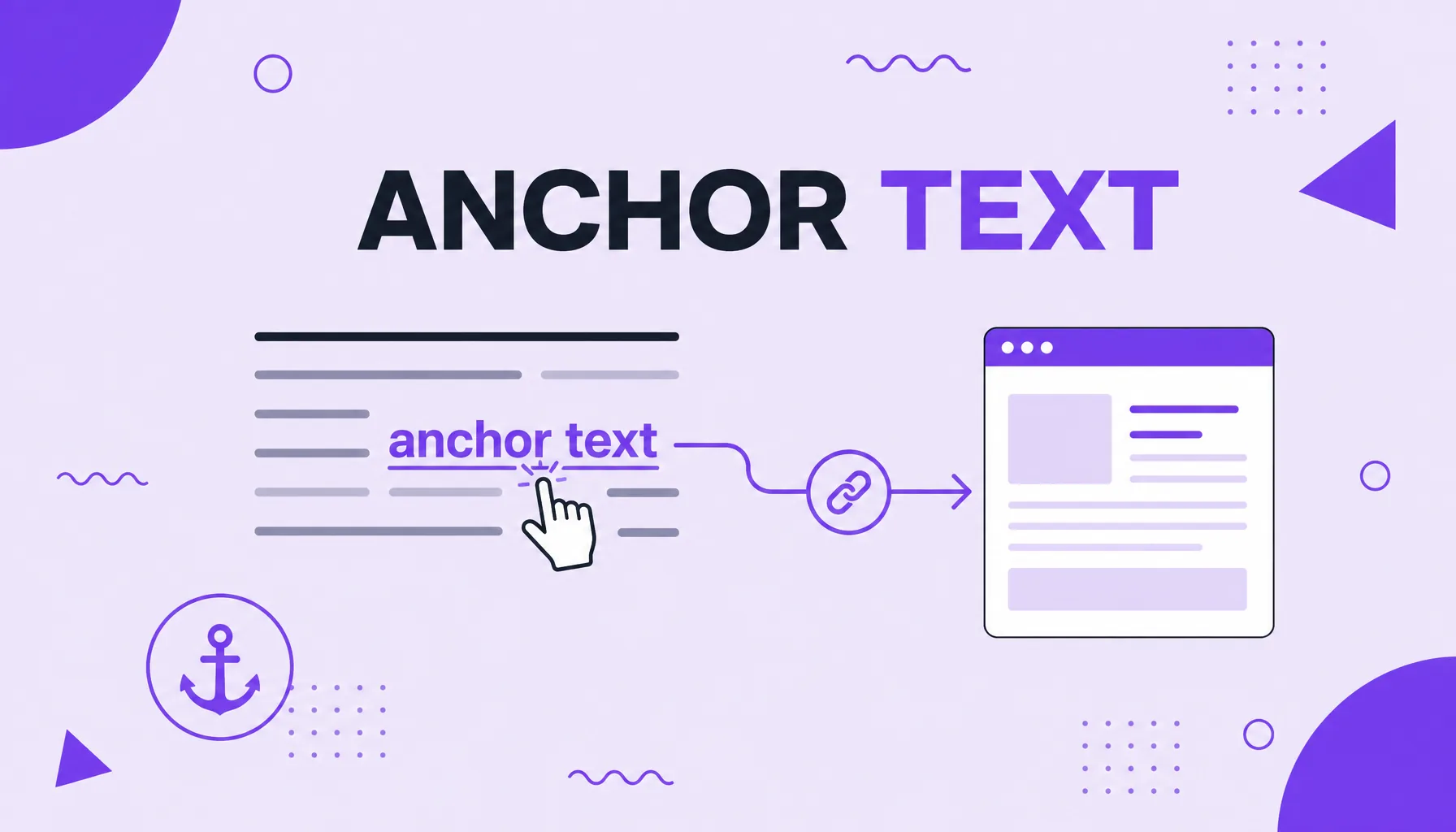
Anchor text is the clickable part of a link, the highlighted words a person clicks. It:
- gives context about the destination page;
- helps the user know where the link leads;
- is read by Google as a relevance signal;
- works on internal and external links.
What anchor text is
Anchor text is the visible, clickable part of a link. It is that snippet, usually highlighted, underlined or in another color, that a person clicks to be taken to another page. While the destination address stays hidden in the code, the anchor text is what appears to the reader.
The role of anchor text goes beyond the visual. It is a kind of label for the link: it describes, in a few words, what the person will find on the other side. A link with the anchor on-page SEO guide promises something quite different from a link with the anchor click here, even if both lead to the same page.
This label serves two audiences at once. For the reader, it helps decide whether it is worth clicking. For Google, it is a context clue: the search engine uses the anchor text to understand what the destination page is about. That is why anchor text matters so much in internal links as well as in external links and in every backlink pointing to your site.
How to anchor a text: the HTML behind it
To anchor a text is to turn a word or phrase into a link. This is done with the <a> tag (for anchor), which wraps the text and takes the href attribute with the destination address.
A simple example:
<a href="/blog/on-page-seo">on-page SEO guide</a>
In this case, everything between the opening and closing of the tag, the snippet on-page SEO guide, is the anchor text. This part is what becomes clickable and visible on the page. To edit a text with an anchor, you just adjust the words between the tags (the visible text) or the address in the href (the destination), independently.
The anchor does not always have to be text. When the link wraps an image, what plays the anchor role is the image's alt text, the alt attribute, which describes the figure for the search engine and for screen readers. That is why every clickable image should have a descriptive alt: without it, the link has no label.
Types of anchor text
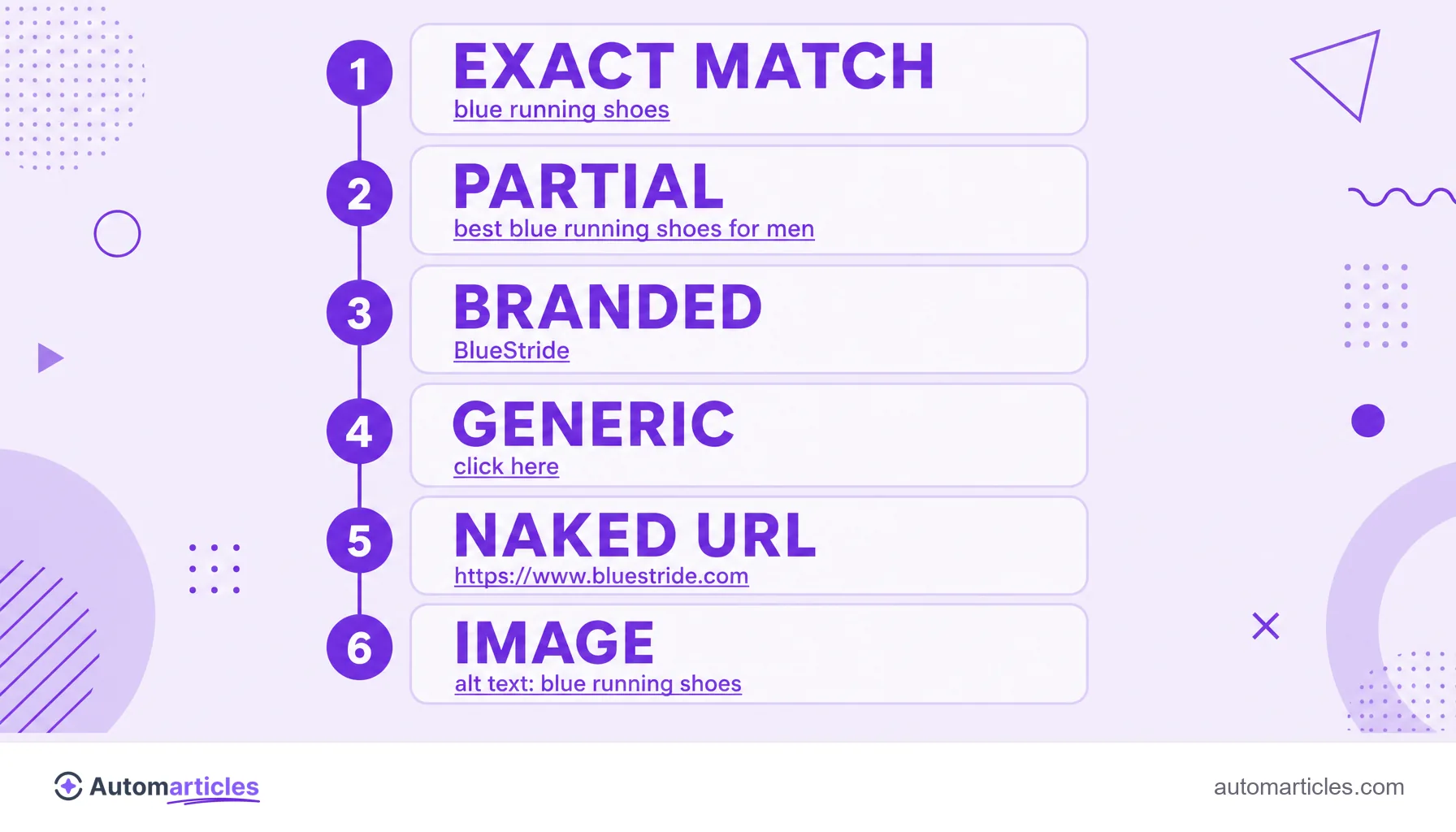
Anchor texts are usually classified by how they relate to the keyword and the destination. Knowing the types helps you vary anchors naturally:
| Type | What it is | Example |
|---|---|---|
| Exact match | Repeats the exact keyword of the destination | anchor text |
| Partial | Includes the keyword within a phrase | how to use anchor text in SEO |
| Branded | Uses the brand name | Automarticles |
| Generic | Does not describe the destination | click here, learn more |
| Naked URL | The address itself becomes the anchor | www.example.com |
| Image | The image's alt text | descriptive alt of the figure |
The exact match anchor is the most powerful to reinforce relevance, but also the riskiest when overused. Generic anchors of the click here type waste the chance to give context. The ideal is a natural mix, with a majority of descriptive and partial anchors that sound good within the sentence.
Why anchor text matters for SEO
Anchor text is one of Google's oldest and still relevant signals. The idea is simple: if many quality pages point to a destination using similar anchors, the search engine interprets that page as relevant to that topic. It is context coming from outside and inside the site.
The data reinforces this weight. The Zyppy study of 23 million internal links found that pages with at least one exact match anchor text received at least five times more traffic than pages without any exact anchor. The same study showed that anchor text variety has a strong relationship with more clicks, a sign that always repeating the same anchor pays off less than describing the destination in different ways.
It is worth remembering that much of this effect comes from outside: each backlink brings the anchor text chosen by another site. In house, however, you control 100% of the anchors of your internal links, which makes internal anchor optimization a direct and cheap lever. This context strength is part of what PageRank and the following algorithms came to consider when evaluating links.
How to optimize anchor text
Optimizing anchor text is finding the balance between giving clear context and sounding natural. A routine that works:
- Describe the destination: the anchor should make clear where the link leads, without depending on the rest of the sentence.
- Write inside the sentence: the best anchor is the one that is part of the text organically, not a loose click here.
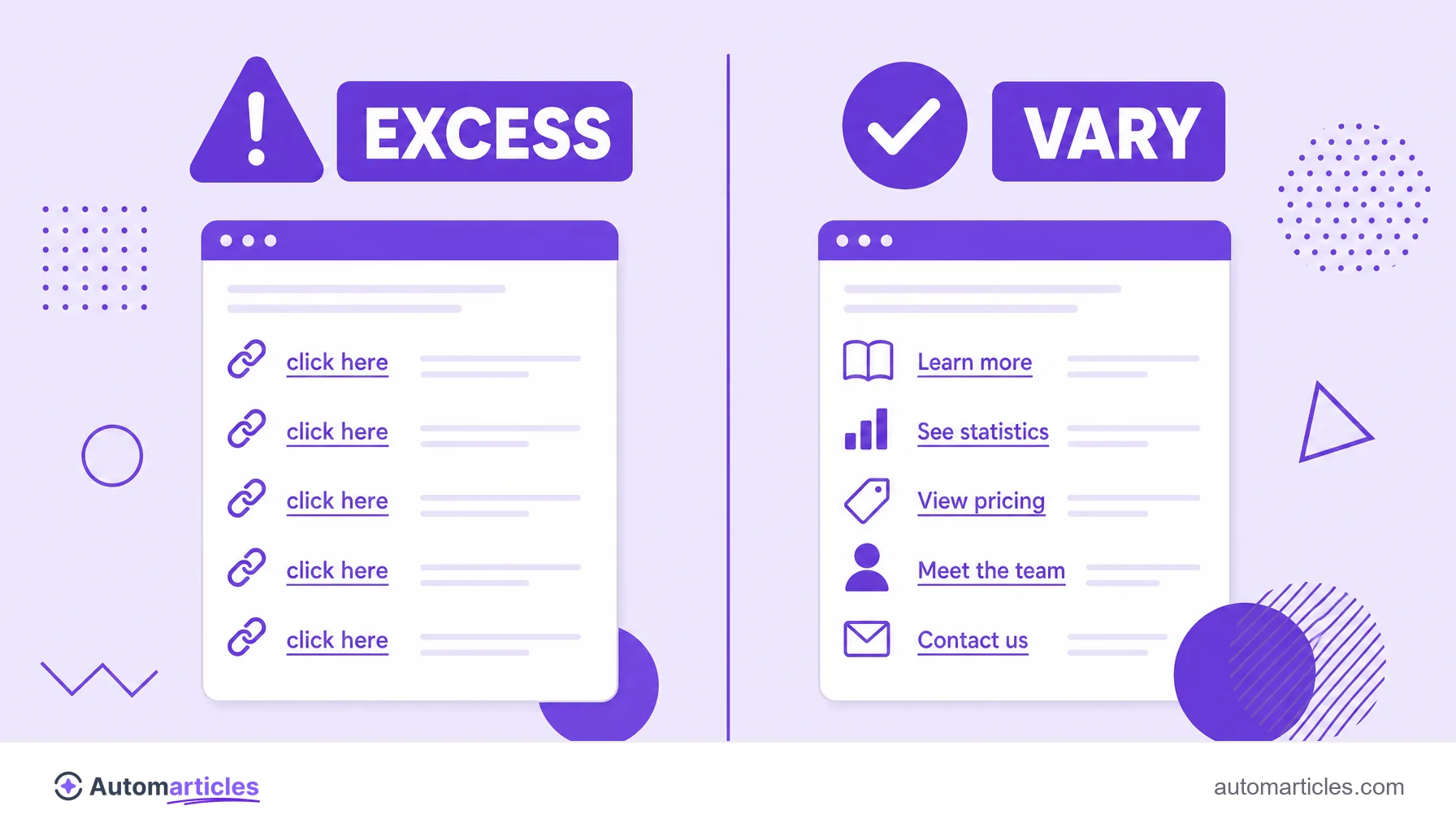
- Vary the anchors: use different phrasings for the same destination, instead of always repeating the exact keyword.
- Keep relevance: the anchor, the surrounding text and the destination page need to talk about the same subject.
- Be concise: short, specific anchors usually work better than long, vague phrases.
Applied together, these practices improve both the reader's experience and how the search engine reads your internal link structure. A good anchor text is the one that the person does not even notice as a technique: it simply describes, naturally, what is on the other side of the link.
Common mistakes and the risk of over optimization
The biggest mistake with anchor text is excess. Filling content with exact match anchors, all with the same keyword, creates an artificial pattern that Google associates with an attempt at manipulation. It is the link version of keyword stuffing, and it can lead to losing positions instead of gaining them.
Other frequent slips:
- Anchors that are too generic: a string of click here says nothing to the reader or the search engine.
- Anchor that does not match the destination: promising one thing in the anchor and delivering another on the page frustrates the user and confuses Google.
- Always repeating the same exact anchor: it loses the extra context that variation brings and sounds forced.
The rule is naturalness. If you read the text out loud and the anchors sounded strange or repetitive, there is probably over optimization. Varied, descriptive anchors that are coherent with the destination are what keep linking strong and safe over time, inside and outside link building.