
Link building and metrics
Link building and the authority and performance metrics.

Link building
Link building is the set of strategies for earning backlinks, that is, links from other sites that point to yours. Each backlink works like a vote of confidence that helps Google understand that your pages are relevant and deserve visibility. Done with quality, link building raises domain authority, improves your position in search results and brings qualified referral traffic.

Disavow
Disavow, or link disavowal, is a Google Search Console feature that lets you ask the search engine to ignore certain backlinks when evaluating your site. It was created for cases where a page has accumulated toxic or artificial links that cannot be removed manually and that can lead to a penalty. In practice, you submit a text file listing the domains or URLs that Google should disregard, without those links being deleted from the web.

Guest post
A guest post is an article you write and publish on someone else's site, rather than on your own blog, usually in exchange for a backlink pointing back to your pages. It is a classic link building tactic: you deliver relevant content to the partner's audience and, in return, gain exposure to a new audience and a vote of confidence that helps build authority and improve rankings in search engines.
PBN
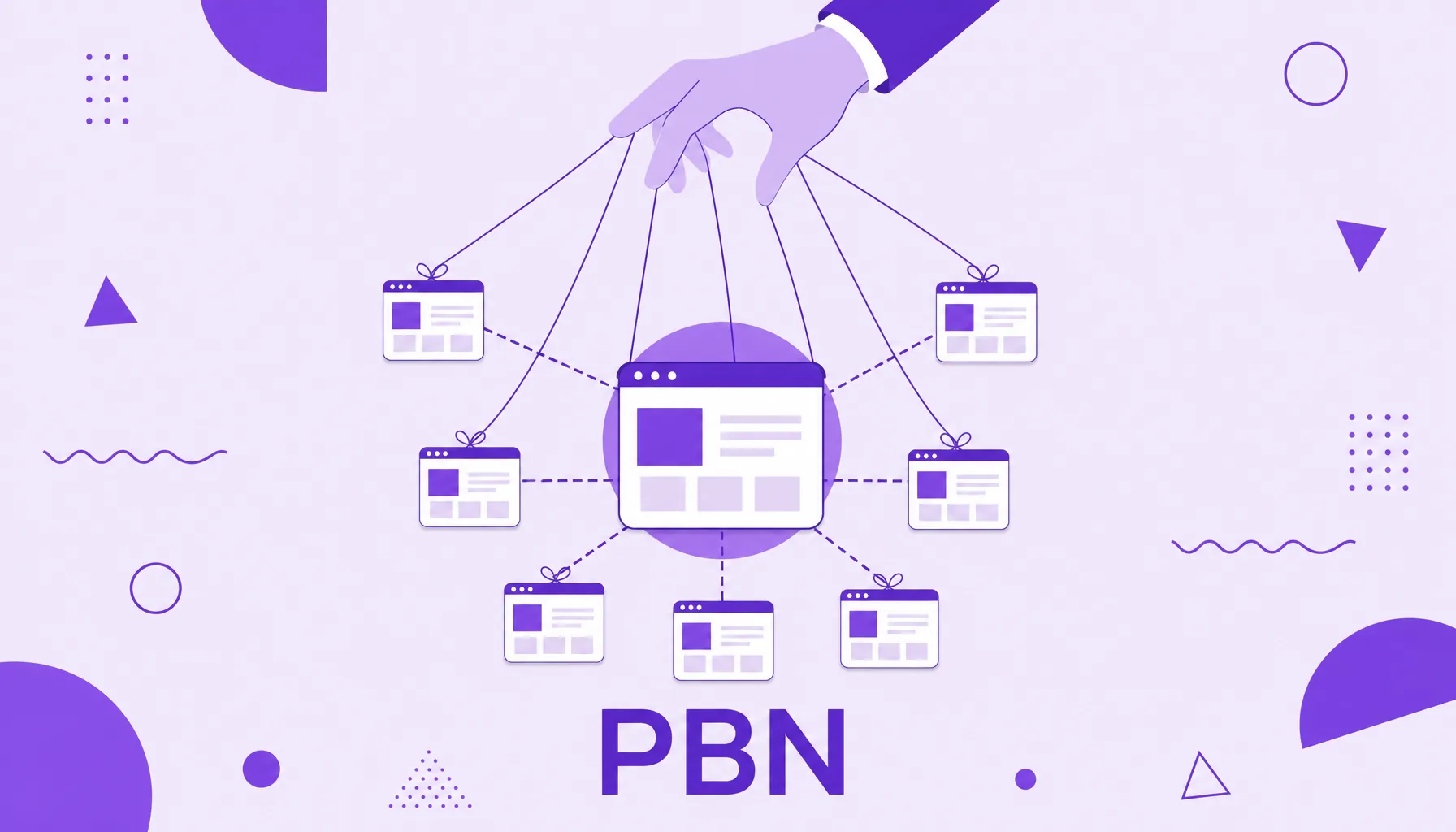
PBN stands for Private Blog Network: a group of seemingly independent sites, but controlled by the same person, created for the sole purpose of generating artificial links to a main site and manipulating rankings. It is a black hat SEO tactic that violates Google's guidelines and, when detected, exposes the site to manual penalties and to the loss of the entire investment.

Domain authority
Domain Authority (DA) is a metric created by Moz that runs from 0 to 100 and estimates the strength of an entire site to rank in search engines. It is calculated mainly from the domain's link profile, works on a logarithmic scale (going from 20 to 30 is far easier than from 70 to 80) and is used to compare sites against each other. It is important to remember that domain authority is a third-party estimate, not an official factor used by Google.

Link juice
Link juice is the informal name for the authority that a link passes from one page to another. When a site links to your content, part of that page's value flows through the link and helps the destination page rank better. The stronger and more relevant the source, the more link juice it passes on, which is why quality backlinks remain one of the pillars of SEO.
Domain rating
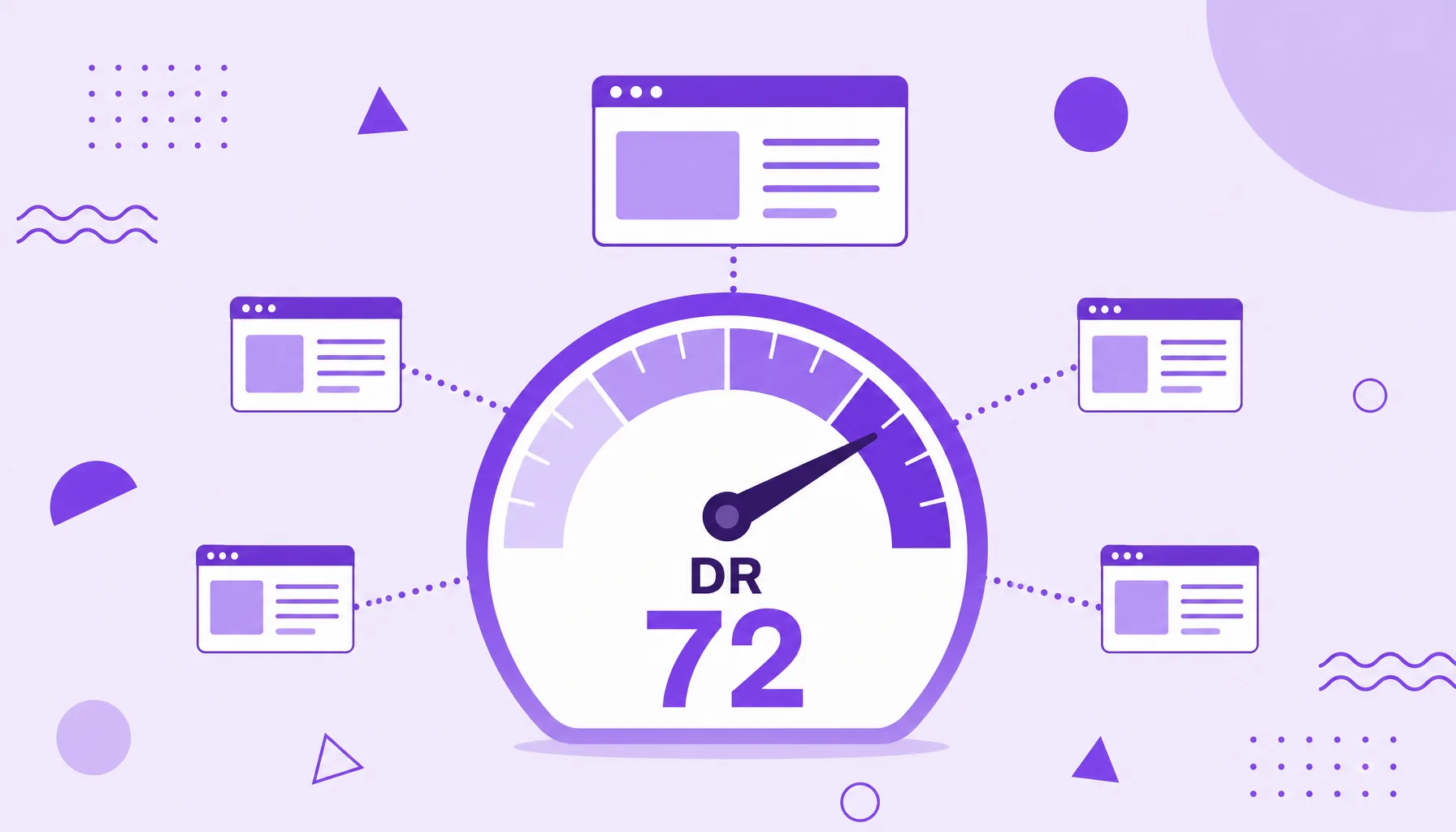
Domain Rating (DR) is a metric created by Ahrefs that estimates the strength of a domain's backlink profile on a scale from 0 to 100. The more unique and relevant sites point to yours, the higher your DR tends to be. It is important to remember that this is an Ahrefs score, not a Google one, and it works as a relative authority reference to compare domains, not as an official ranking factor.

Spam Score
Spam Score is a metric created by Moz that estimates, as a percentage, the likelihood of a domain being penalized or banned by search engines. It works by comparing the site against a large database of pages that have already been penalized and counting how many suspicious signals it shares with them. The higher the Spam Score, the more the domain resembles problematic sites, which serves as an early warning about the health of your link profile, and not as a score used directly by Google.

Link farm
A link farm is a group of sites created or arranged to swap links with each other in high volume, with the sole purpose of artificially inflating authority and manipulating rankings in search engines. Because the links come from neither editorial merit nor real relevance, Google treats the practice as a link scheme that violates its guidelines. Sites involved with link farms run a serious risk of penalization and of losing positions and traffic from one moment to the next.