
LSI: o que é indexação semântica latente em SEO
Por Tiago CostaAtualizado em 2 de julho de 2026
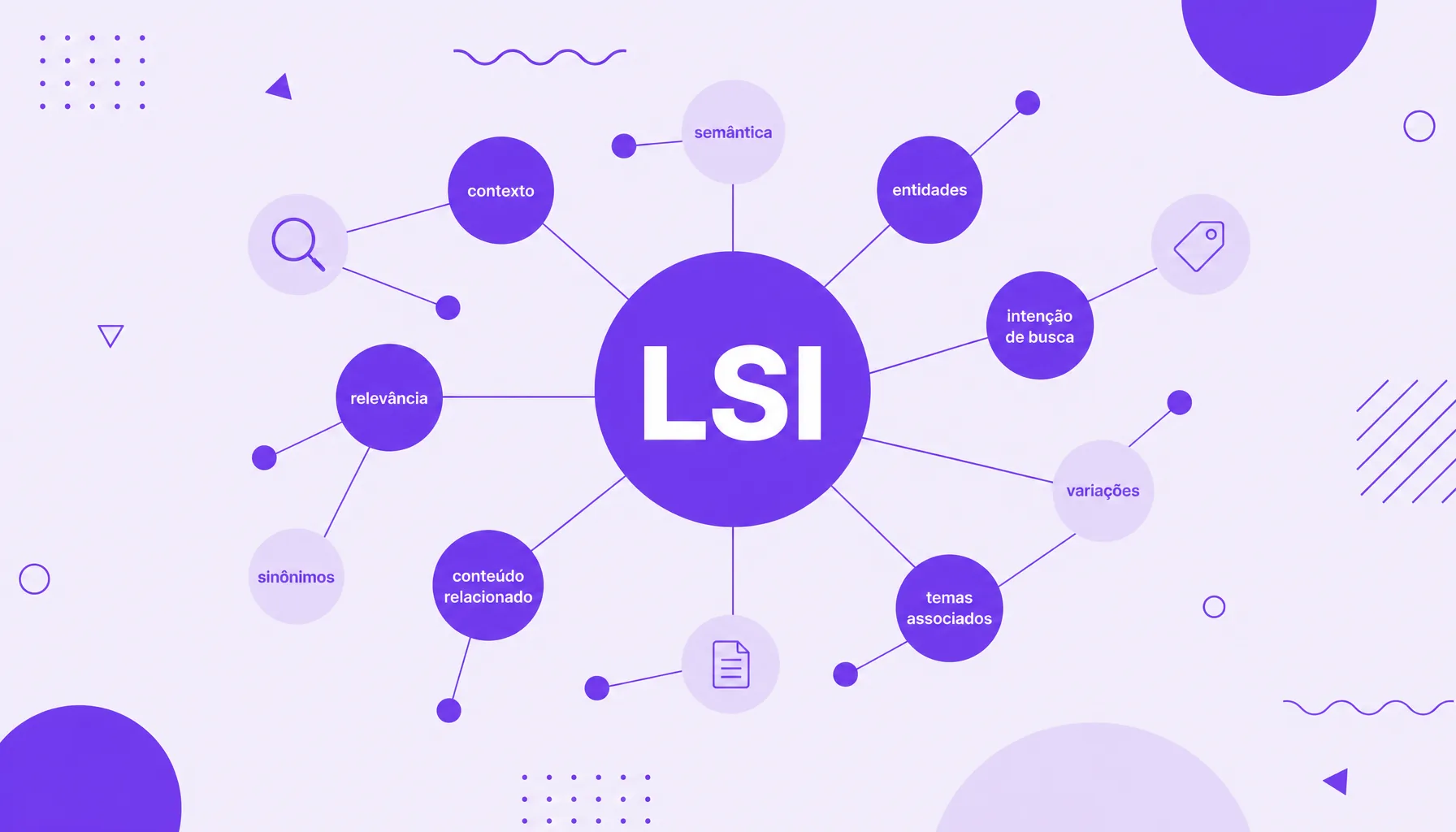
LSI (Latent Semantic Indexing, ou indexação semântica latente) é uma técnica matemática que relaciona palavras pela frequência com que aparecem juntas em muitos textos. No SEO, o termo é usado, de forma imprecisa, para descrever palavras semanticamente relacionadas ao tema principal. O Google afirma que não usa LSI, mas cobrir bem um assunto com seus termos relacionados continua sendo boa prática.
O que é LSI (Latent Semantic Indexing)
LSI é a sigla de Latent Semantic Indexing, em português indexação semântica latente. Trata-se de uma técnica de recuperação de informação patenteada no fim dos anos 1980, que analisa uma grande coleção de documentos para descobrir relações escondidas (latentes) entre as palavras.
A ideia central é simples: termos que aparecem com frequência nos mesmos contextos costumam ter significados relacionados. Ao mapear esses padrões de coocorrência, o sistema consegue aproximar palavras como carro, veículo e automóvel, mesmo sem nenhum dicionário dizendo que elas são parecidas.
Vale um aviso de contexto: a sigla LSI também nomeia escolas de idiomas e empresas de áreas bem diferentes. Neste verbete, LSI significa sempre a técnica de indexação semântica latente aplicada à busca e ao SEO.
O mito das palavras-chave LSI
Em algum momento, a comunidade de SEO passou a chamar de palavras-chave LSI qualquer termo relacionado ao assunto principal, como sinônimos e variações. O nome pegou, virou recurso de ferramenta e até categoria de conteúdo. O problema é que ele mistura duas coisas diferentes.
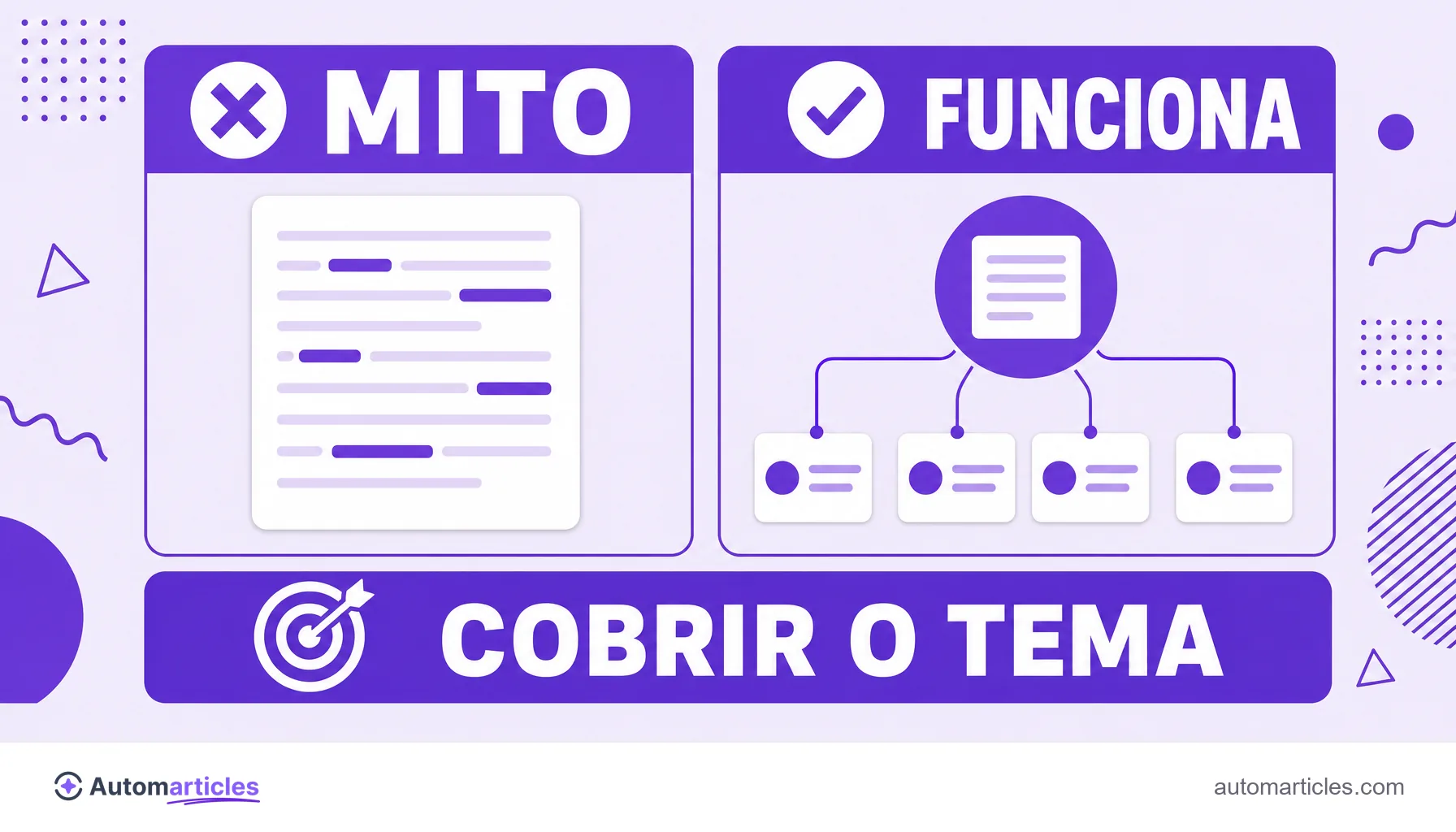
A LSI original foi criada para coleções pequenas e estáticas de documentos, nada parecido com a escala e a dinâmica da web atual. Por isso, o próprio Google desmente a ideia. Em declarações públicas, o Search Advocate John Mueller afirmou que não existem palavras-chave LSI e que quem recomenda usá-las está enganado.
A conclusão prática não é ignorar termos relacionados, e sim parar de tratá-los como uma fórmula mágica chamada LSI. O que funciona é cobrir o tema de verdade, com o vocabulário natural de quem entende do assunto.
LSI e SEO semântico: qual a relação
Embora o Google não use LSI, ele evoluiu muito na compreensão de significado. Com sistemas como BERT e MUM, o buscador entende contexto, entidades e a relação entre conceitos, muito além de casar a palavra exata da consulta com a palavra exata da página.
É aí que entra o SEO semântico, a prática de otimizar por significado e por tópicos, e não só por palavras isoladas. Na prática, ele empresta a intuição correta que estava por trás da ideia de LSI (usar o vocabulário natural do tema) e a aplica com as ferramentas modernas do Google.
Ou seja: o rótulo LSI ficou datado, mas a preocupação em escrever com riqueza semântica, cobrindo subtópicos e termos que um especialista usaria, continua muito válida.
Como encontrar termos semanticamente relacionados
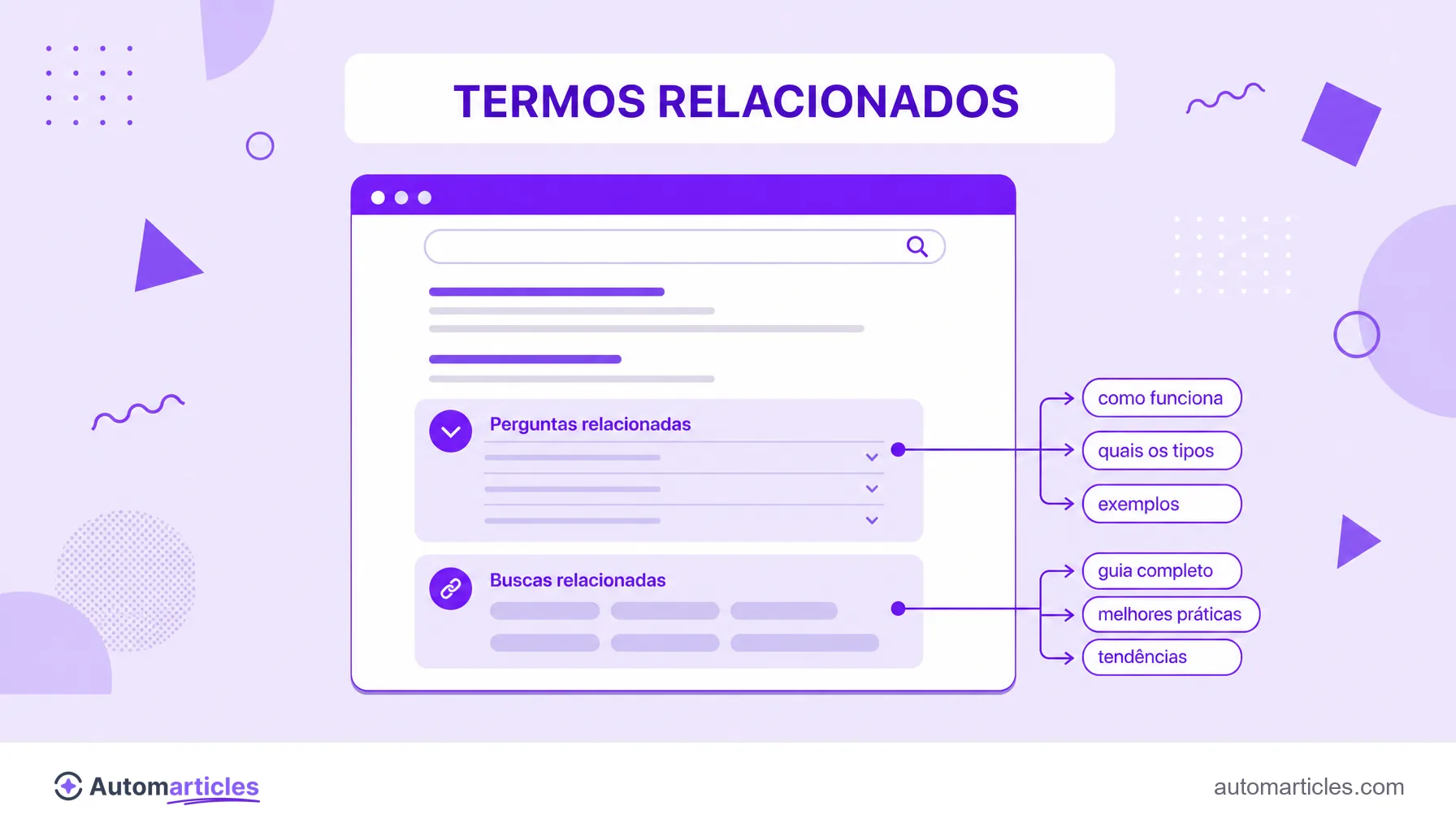
Se o objetivo é cobrir bem um tema, existem fontes muito mais confiáveis do que uma lista genérica de palavras-chave LSI. A própria SERP entrega boa parte desse mapa:
- People Also Ask: as perguntas relacionadas mostram dúvidas e subtópicos que o público associa ao tema.
- Buscas relacionadas: as sugestões no rodapé da página revelam variações e intenções conexas.
- Autocomplete: as sugestões do buscador ao digitar apontam termos populares em volta da palavra.
- Concorrentes bem ranqueados: os subtítulos das páginas do topo mostram os subtemas que o Google já valoriza.
Uma boa pesquisa de palavras-chave organiza essas descobertas em subtópicos, em vez de virar uma lista solta de sinônimos para encaixar no texto.
Como usar termos relacionados no conteúdo (sem keyword stuffing)
Ter uma lista de termos relacionados não significa forçá-los no texto. A régua é sempre a naturalidade: eles devem aparecer porque o assunto pede, não porque uma ferramenta mandou.
- Escreva por subtópicos: ao explicar cada faceta do tema, os termos relacionados surgem sozinhos.
- Priorize a leitura: se uma frase soa artificial só para caber uma palavra, reescreva.
- Evite repetição forçada: empilhar variações é densidade de palavra-chave em excesso, algo que o Google entende como manipulação.
- Use variações de forma fluida: alternar sinônimos deixa o texto mais leve e igualmente compreensível para o buscador.
Em resumo, o melhor conteúdo semântico não parece otimizado. Ele apenas cobre o assunto de forma completa, com o vocabulário de quem realmente domina o tema.
LSI, TF-IDF e outras técnicas de relevância
A LSI não é a única sigla que a comunidade de SEO empresta da recuperação de informação. Outra bem conhecida é o TF-IDF, que pondera a importância de um termo em um documento frente a um grande conjunto de textos.
Vale entender a diferença. O TF-IDF olha para a importância relativa de cada palavra; a LSI busca relações latentes entre palavras a partir de padrões de coocorrência. As duas são úteis como intuição, mas nenhuma delas descreve com fidelidade o que o Google faz hoje, que se apoia em modelos de linguagem e vetores semânticos (embeddings) muito mais sofisticados.
A lição que sobrevive é conceitual: significado importa mais do que a palavra exata. Escrever para o tema, e não para uma única expressão, é o que aproxima o seu conteúdo da forma como os buscadores modernos entendem o mundo.