
Semantic SEO: what it is and how Google understands content
By Tiago CostaUpdated on July 2, 2026

Semantic SEO is content optimization based on meaning, entities and topics, not just exact keywords. In practice, semantic SEO:
- covers a topic in depth, answering several related questions;
- uses terms and synonyms that Google associates with the subject;
- connects entities (people, brands, concepts) clearly;
- focuses on search intent, not on exact keyword density.
What semantic SEO is
Semantic SEO is the optimization approach that focuses on the meaning of content, not just on the exact match of a keyword. Instead of repeating the same term dozens of times, the goal is to cover a subject completely, with the vocabulary, the questions and the concepts that orbit that theme.
The shift follows the evolution of search engines themselves. For years, Google matched a query against the words present on the page. Today it interprets context, relationships between ideas and the search intent behind the query. Optimizing for meaning is speaking the same language as this more mature algorithm.
In practice, content with good semantic SEO answers one central question and, along the way, clears up the neighboring doubts the reader did not even know they had. That is the opposite of stuffing the page with the same phrase to try to trick rankings.
How Google learned to understand meaning
Google's semantic turn has clear milestones. Updates like Hummingbird, RankBrain, BERT and MUM taught the engine to interpret whole sentences, disambiguate words and understand relationships between concepts, rather than merely counting how often a term appears.
At the center of this machinery is the Knowledge Graph, the database that connects entities (people, places, brands, concepts) and the facts that link them. That is why Google knows two subjects belong together, even when a page talks about one without literally naming the other.
For anyone producing content, the lesson is direct: the engine understands that themes relate to each other. Covering a subject and its natural branches signals real command, something the mechanical repetition of words could never simulate.
Entities, topics and the difference from keywords
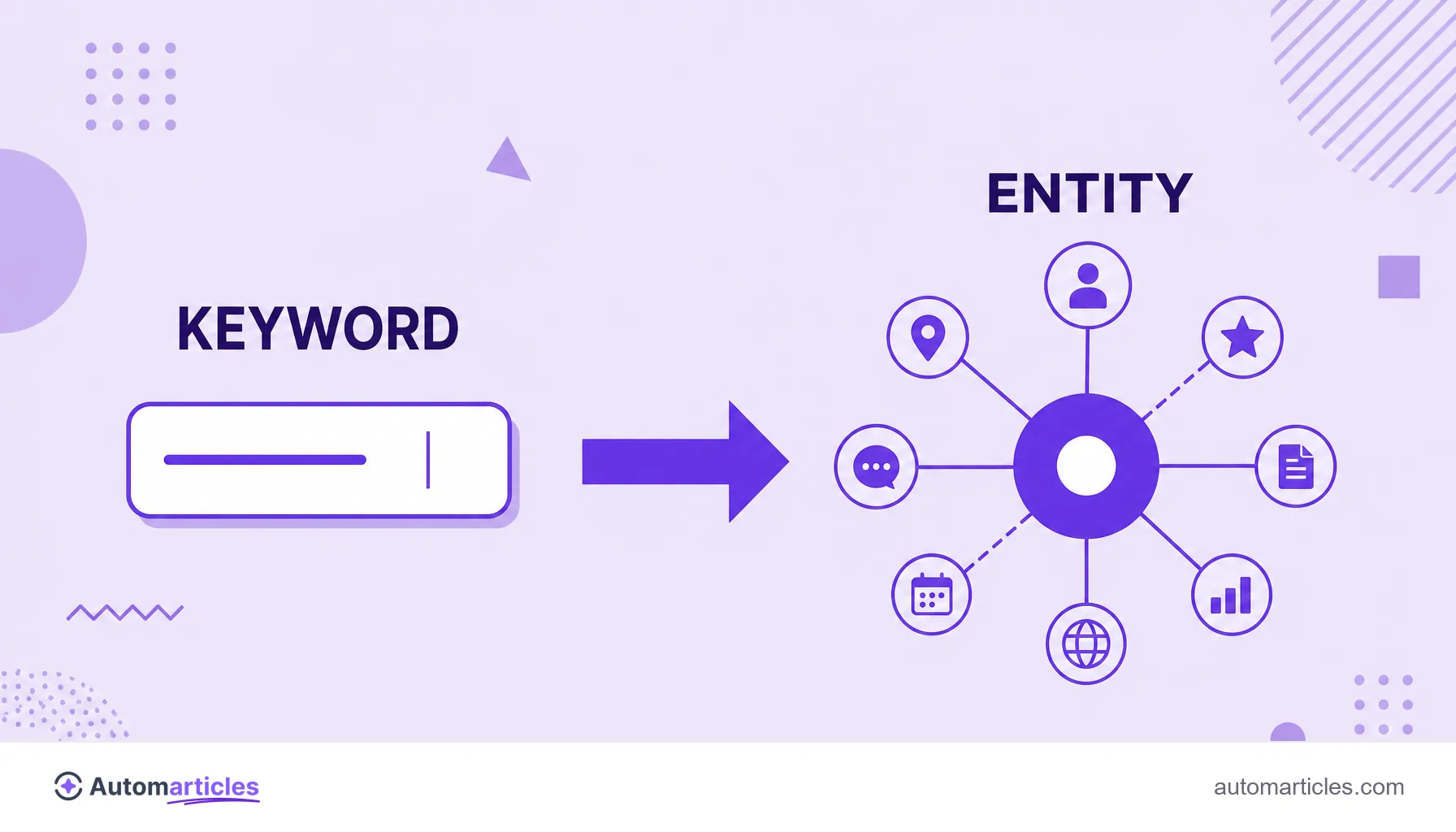
Keyword and entity are not the same thing. A keyword is the phrase typed into search; an entity is the real world thing it refers to, with its own identity for the engine. A semantic article organizes content around entities and topics, not around an exact text string.
Two ideas help make this concrete:
- Related terms: the concept of LSI popularized the notion that certain terms appear together when a subject is covered thoroughly. Talking about interest rates without ever mentioning installments, fees or financing sounds shallow to the algorithm.
- Term weight: metrics like TF-IDF help reveal which words are truly distinctive of a theme within a set of documents, beyond simple frequency.
The result is content that covers the semantic field of the subject: synonyms, subtopics, questions and technical terms that, together, prove to Google that the page handles the theme with competence.
Semantic SEO and search intent
Optimizing for meaning starts with understanding what the person really wants. The same word can hide different intentions, and semantic content delivers the right answer for each of them.
Think of a search for apple: it could be the fruit, the technology brand or a recipe. Google uses the context of the query and the history to decide, and your page only enters the race if it is clearly anchored in the right meaning. Covering the dominant search intent of a term well is worth more than repeating the exact word.
When you handle a subject broadly and consistently across several pieces of content, you build topical authority: the reputation of being a reference on that theme. It is this accumulation that makes Google trust your pages for a wider range of related searches.
Why optimizing for the exact keyword alone is not enough
Repeating the exact keyword to exhaustion is an old tactic that now works against you. The engine sees the excess as a signal of low quality, and the reader feels the artificial text. Worse: focusing only on the exact term usually leaves out dozens of variations the same page could serve.
The size of the funnel helps explain the risk. A study by Ahrefs of around 14 billion pages found that 96.55% of them get no organic traffic from Google at all. A large share fails precisely because they treat a subject shallowly, without covering the full meaning the engine expects.
The semantic path flips the logic: instead of chasing a word, you master a topic. That way, a single quality page can rank for the main query and for a long list of variations and related questions.
How to apply semantic SEO in practice
Putting semantic SEO to work is more method than secret. A routine that works:
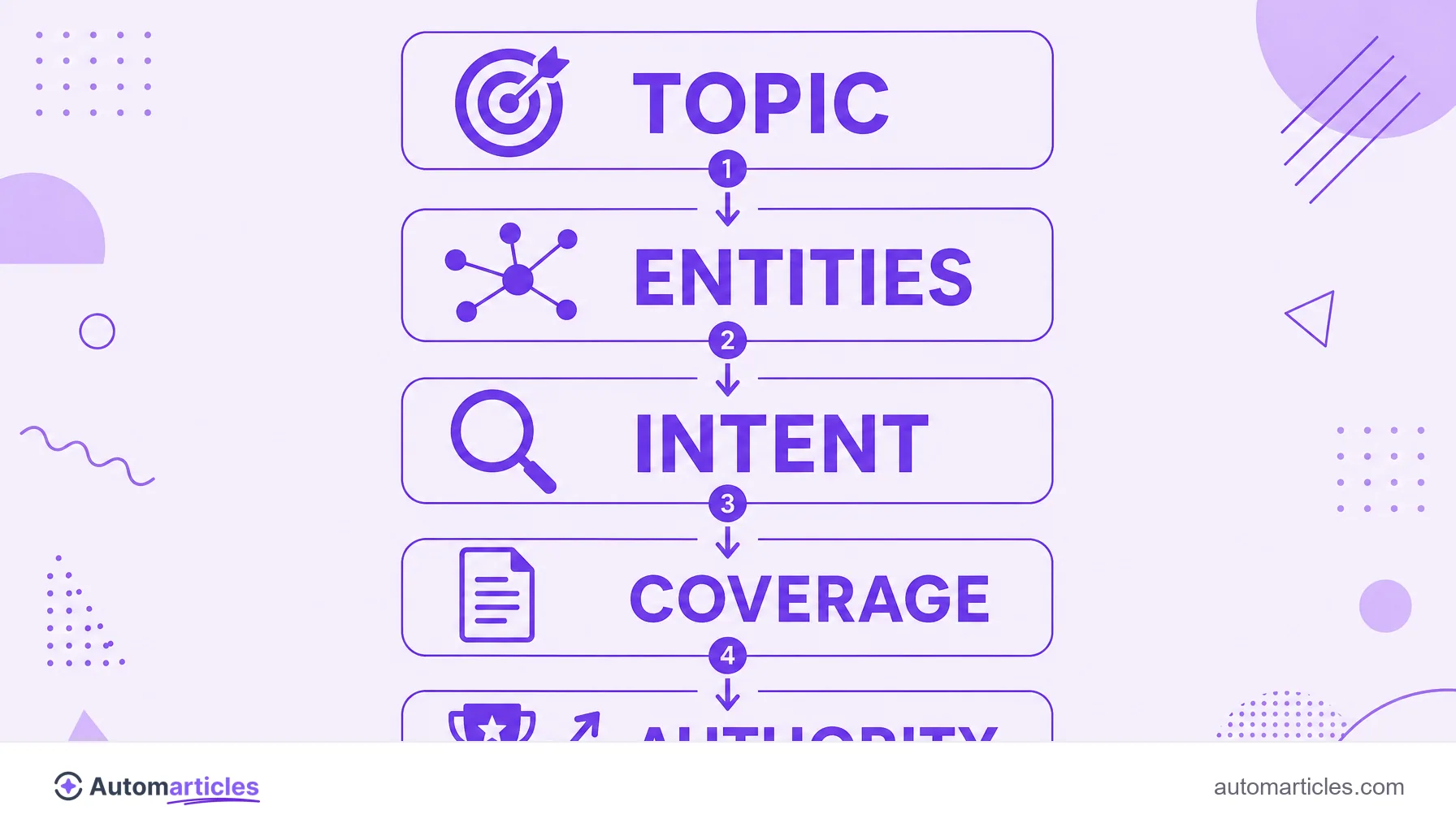
- Map the topic, not just the word: list subthemes, questions and terms surrounding the subject before writing.
- Cover the semantic field: use synonyms, examples, definitions and comparisons that prove real depth.
- Answer the dominant intent: analyze what already ranks for the term and deliver the format search rewards.
- Structure for readers and machines: good titles, lists and structured data help Google understand how the content is organized.
- Connect related content: internal links between pages on the same theme reinforce semantic relationships and your authority.
Google's documentation reinforces that the goal is useful content, made for people. Optimizing for meaning is, deep down, writing clearly and truly covering the subject, two habits that please both the reader and the algorithm.