
Keyword: what it is and how to use it in SEO
By Tiago CostaUpdated on July 2, 2026

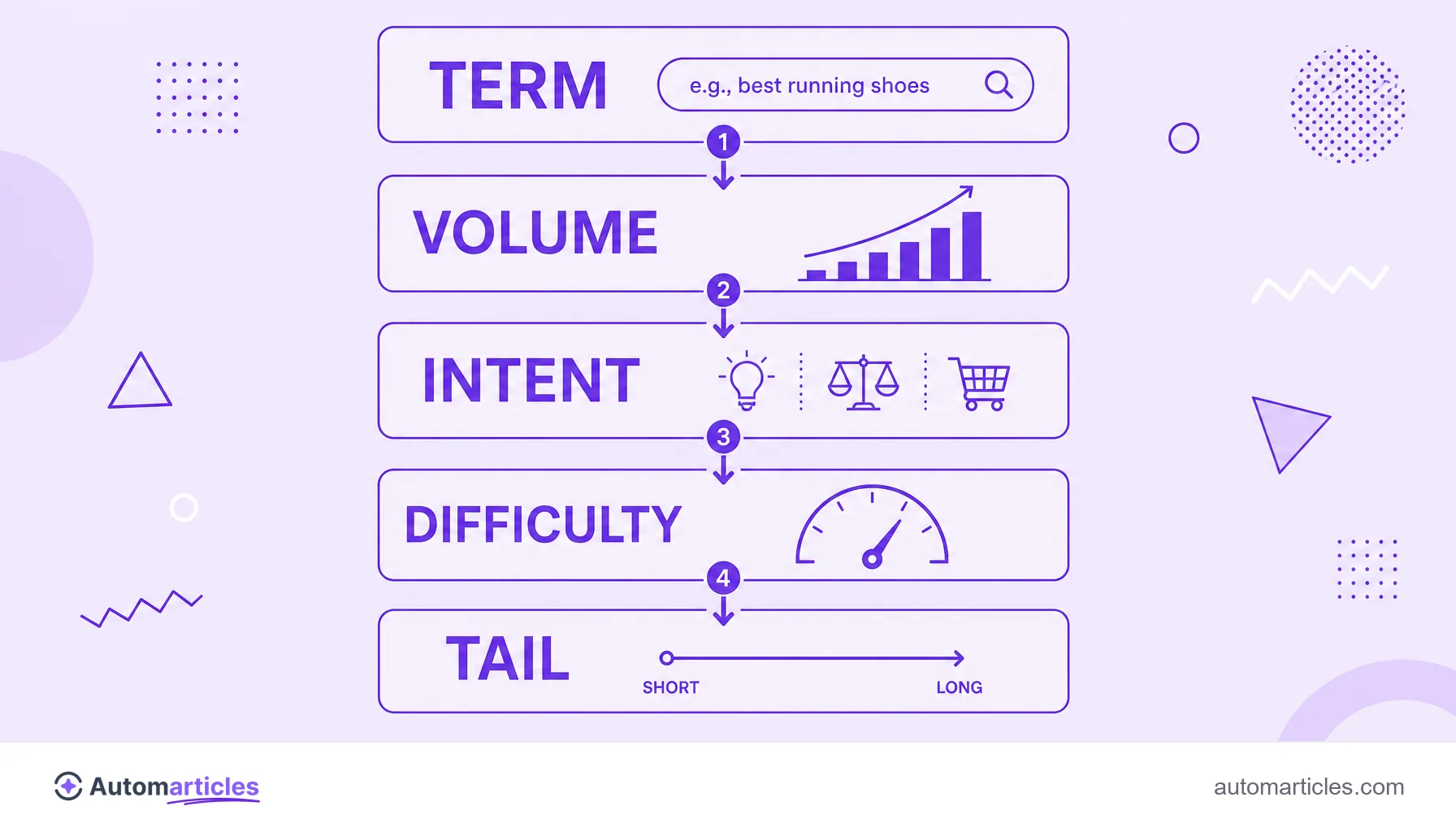
A keyword is the term a person types into a search engine and that a page chooses to target in order to rank. In practice, every keyword carries three main pieces of information:
- the subject the audience is looking for;
- the intent behind the search (inform, compare, buy);
- the search volume and the competition of the term.
What a keyword is
A keyword is any term or phrase someone types into a search engine to find what they need. On the other side, it is also the term a website chooses to work on in order to appear when that search happens.
It is the central element of SEO: it works as the bridge between the user's question and the answer your content offers. When the two match, Google understands that your page is relevant to that search and puts it in the race for positions.
Despite the name, a keyword is rarely a single word. "Sneakers" is a keyword, but "running shoes for overpronation" is too, and it is usually far more valuable, because it clearly reveals what the person wants.
Types of keyword
Keywords can be classified in two main ways. The first is by length and specificity:
| Type | Example | Characteristic |
|---|---|---|
| Short tail | sneakers | High volume, high competition, vague intent |
| Mid tail | running shoes | Intermediate volume and competition |
| Long tail | running shoes for overpronation | Less volume, less competition, clear intent |
The second way is by search intent: there are informational keywords ("what is a keyword"), navigational ones ("Google Keyword Planner") and transactional ones ("buy running shoes"). The more specific long-tail keywords are usually the best entry doors for those just starting out, precisely because they face less competition.
Long tail: where the search volume is
There is a myth that it is only worth targeting the giant terms. The data tells another story. According to a study by Ahrefs, almost 93% of all keywords in its U.S. database get fewer than 10 searches per month, which represents around 2.3 billion terms.
Translating: most searches are not in a few obvious, hotly contested words, but spread across a myriad of specific long tail terms. Added up, these low search volume terms account for a huge chunk of the total traffic on the internet.
For a blog, this is good news. Instead of going head to head with big brands over a generic term, you can win dozens or hundreds of specific keywords, each bringing a more qualified audience that is ready to act.
How to choose the right keywords
Choosing keywords well is what separates content that brings traffic from content nobody finds. The process, called keyword research, usually looks at four criteria:
- Search volume: how many people look for the term per month, to size up the traffic potential.
- Difficulty: the keyword difficulty estimates how hard it will be to rank against the competition already positioned.
- Intent: what the person really wants when searching, so you deliver the right content format.
- Relevance to the business: how much that term connects to what you offer and to your audience.
The ideal sweet spot is usually a term with meaningful volume, difficulty compatible with your site's authority and intent aligned with what you can offer. That is where the content effort tends to pay off fastest.
How to use the keyword in your content
Once you have chosen the main keyword, the secret is to use it naturally, not forced. The places where it most helps the search engine understand the topic are:
- In the title and the H1: the page's main heading should make the topic obvious.
- In the title tag and the meta description: what appears in the search result and influences the click.
- In the first paragraph: to confirm early what the content is about.
- In subheadings and throughout the text: smoothly, including variations and related terms.
What you must avoid is overdoing it. Repeating the keyword to exhaustion to try to trick the algorithm is keyword stuffing, a practice that hurts readability and can be penalized. Today Google understands synonyms and context, so a natural keyword density, focused on answering the intent well, works much better.

Keyword or key word: how to write it right
A small spelling doubt also shows up in search: is it one word, "keyword", or two words, "key word"? In the SEO and marketing world, the standard is the single word keyword, and that is the form used by every major tool.
The plural simply adds an s: keywords. You will still find "key word" written as two words in older or more general texts, but in technical SEO content the one word form has become the norm.
It is worth remembering that in everyday marketing, "keyword", "search term" and "query" are used almost as synonyms. What changes is the context: the important thing is to understand the concept behind it, not to memorize a single spelling.