
Keywords and on-page
Keyword research and on-page optimization.

Header tag
A header tag, in the context of SEO and the web, is each HTML title tag from H1 to H6 that organizes the hierarchy of a page's content. The H1 names the main subject, while H2, H3 and the following levels open sections and subsections in order of importance. Used well, header tags make the text scannable for the reader and help Google understand the structure and topic of each page.

H1
The H1 tag is the main heading of a web page, the highest level heading in HTML, which signals to readers and to Google what the central topic of the content is. As a rule, each page has a single H1, shown prominently at the top, which sums up the page's promise and usually reflects the main keyword in a natural way.
Slug
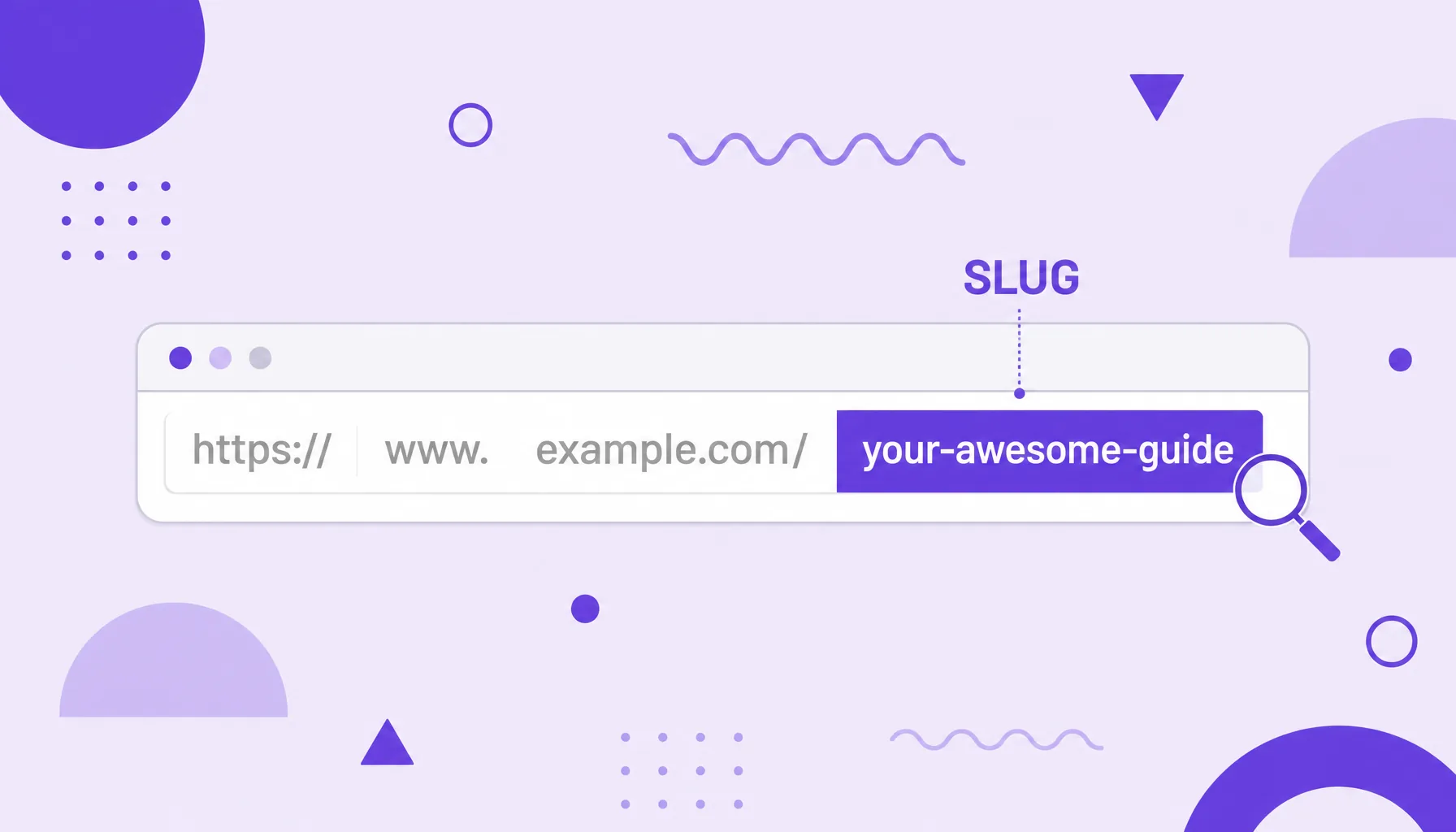
The slug is the final, editable part of a URL that identifies a page in a descriptive way, usually right after the domain. In an address like example.com/blog/what-is-a-slug, the slug is the what-is-a-slug portion: a short, lowercase, hyphen separated text that sums up the content for both people and search engines.

Noindex
Noindex is a directive that tells search engines not to include a page in the search results. It is applied through a robots meta tag in the HTML or through an HTTP header, and it makes Google drop the page from the index even when other sites link to it. Unlike robots.txt, which blocks crawling, noindex requires the page to stay crawlable so the search engine can read the instruction.

Readability
Readability is how easily a text can be read and understood. It depends on factors such as sentence length, word choice, paragraph structure and page formatting. Readable content is content the reader moves through effortlessly, from start to finish, which is why readability is one of the pillars of good content for both people and search engines.

Subheadings
A subheading is a secondary heading, marked in HTML as H2 or H3, that splits content into scannable sections and subsections. While the H1 announces the general topic of the page, subheadings organize the internal blocks, guide reading and help both the user and Google understand the structure of the text. In on-page SEO, good subheadings improve readability and reinforce the relevance of each section.

LSI
LSI, short for Latent Semantic Indexing, is an information retrieval technique from the 1980s that identifies relationships between terms based on the patterns in which they appear together across many documents. In SEO jargon, the name ended up becoming a synonym for so called LSI keywords, the terms semantically related to a topic, even though Google states that it does not use LSI in its algorithm.

TF-IDF
TF-IDF (Term Frequency, Inverse Document Frequency) is a statistical measure that weighs the importance of a word within a document relative to how often it appears across a whole collection of texts, known as the corpus. The logic is straightforward: a term that shows up a lot on a page but is rare in the rest of the documents tends to describe that content better. In SEO, TF-IDF helps you understand which words give context to a topic, even though it is not a direct Google ranking factor.
Meta tags
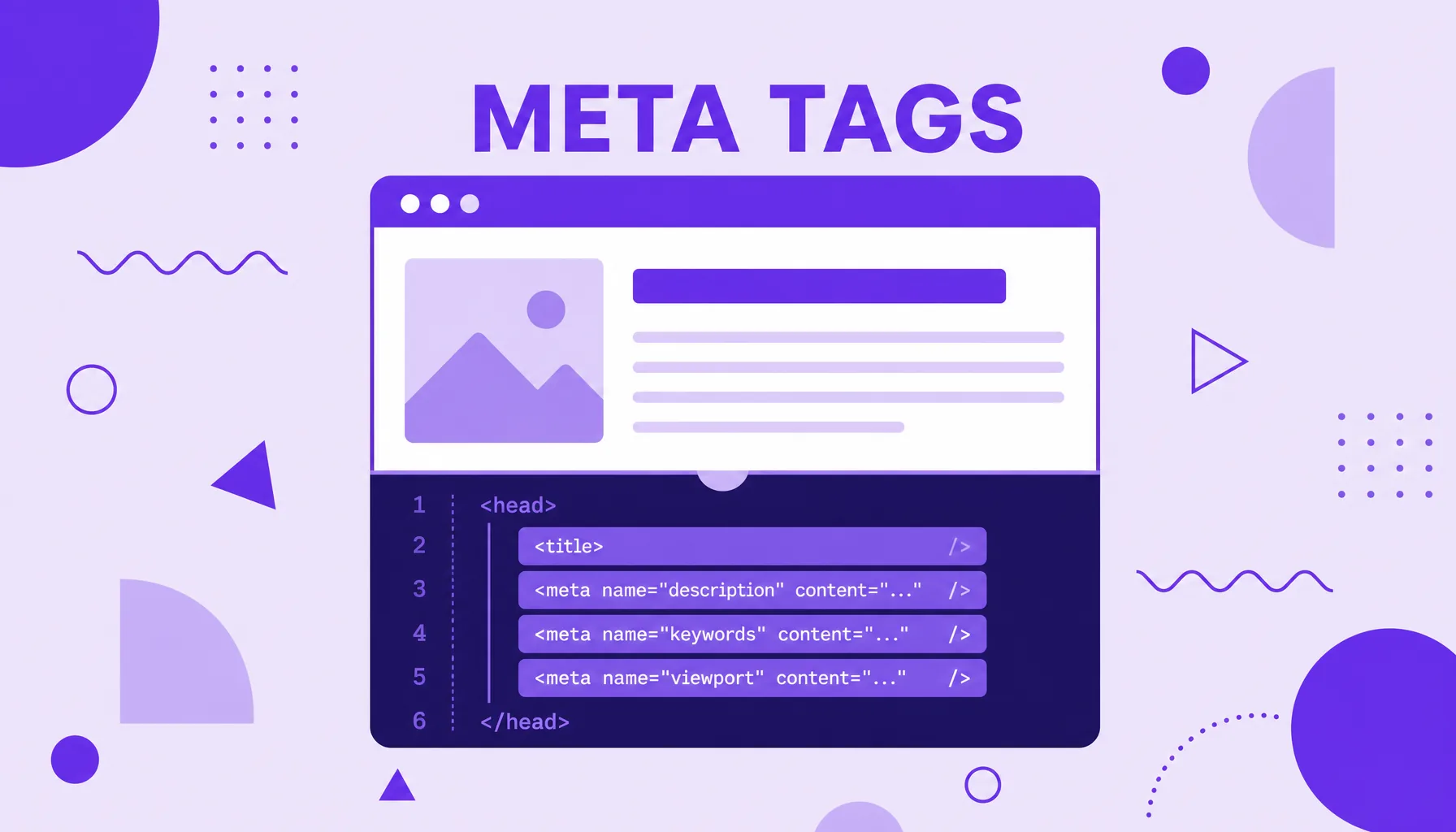
Meta tags are snippets of code placed in the HTML head of a page that pass information about it to search engines and social networks, without appearing in the visible body of the text. They describe the title, summary, indexing directives, language and how the link should be displayed when shared. Some influence SEO indirectly, others control whether and how the page appears in results.

Open Graph
Open Graph is a meta tag protocol, originally created by Facebook, that controls how a link looks when someone shares it on social networks and messaging apps. With tags such as og:title, og:description and og:image in the page header, you define the title, the description and the image of the preview card, instead of letting the social network pick random pieces of the content. It is what turns a raw link into an attractive, clickable card.
Keyword research
Keyword research is the process of finding, evaluating and prioritizing the terms your audience types into search engines. It combines data on search volume, difficulty and intent to decide which words are worth investing content in. It is the foundation of any SEO strategy, because it defines what to write about and in what order, aligning production with people's real questions.

Schema markup
Schema markup is the markup code you add to a page's HTML using the Schema.org vocabulary to explicitly describe what each element means (a product, a review, a frequently asked question, an event). It does not change what the visitor sees, but it helps Google understand the content accurately and display rich results, such as stars, prices and questions directly on the results page.
People also ask
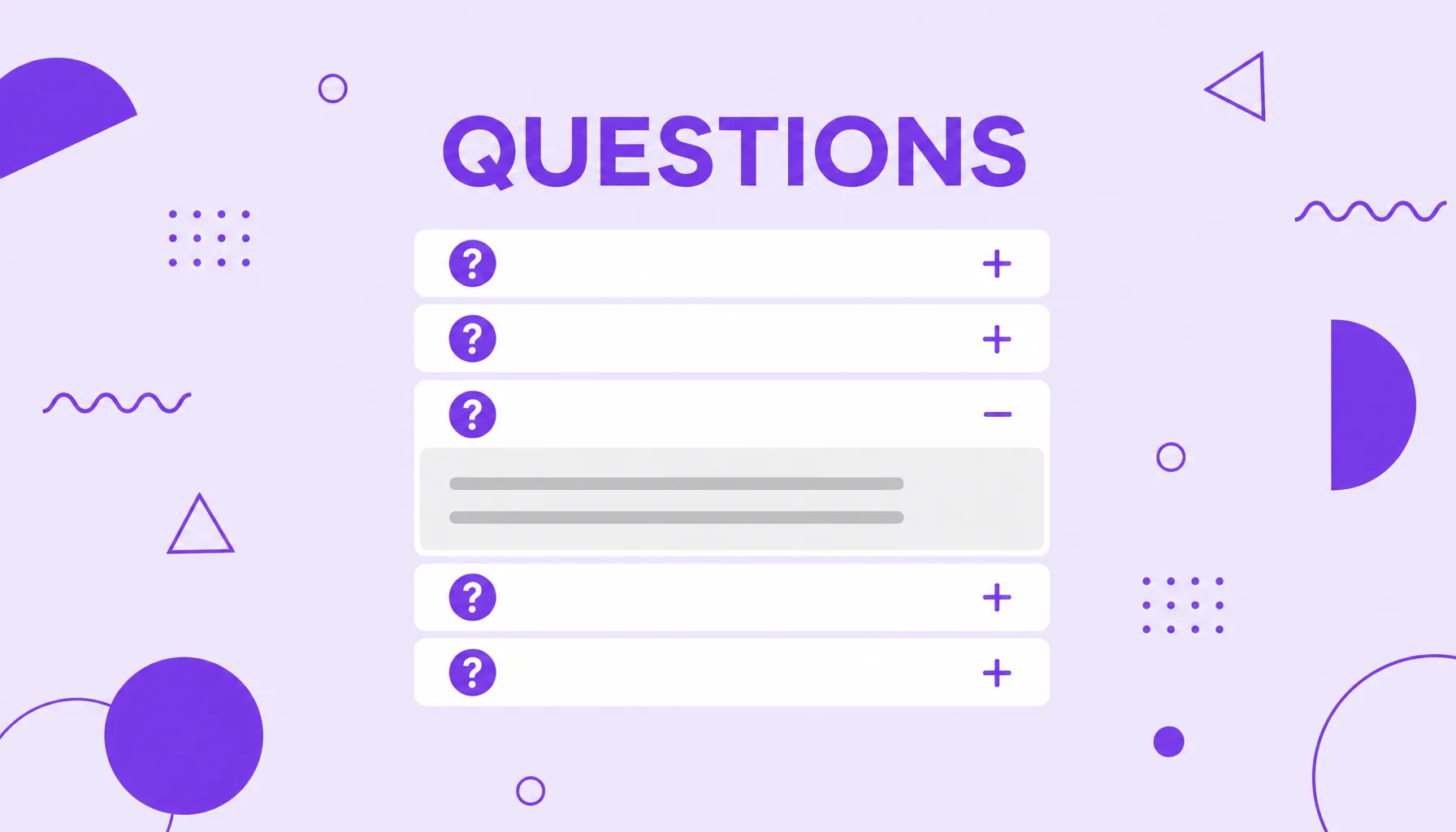
People Also Ask, or PAA, is the box of related questions that Google displays in the middle of the results page. Each question expands into an accordion, revealing a short answer pulled from a page and a link to the source. For content creators, this box is at once a goldmine of subtopics and real audience questions and a new prominent position to win in search.

Alt text
Alt text (alternative text) is the text description of an image, written in the HTML alt attribute, that explains its content and function for anyone who cannot see it. It is read aloud by screen readers, playing a central accessibility role, appears in place of the image when it fails to load and helps search engines understand and index the image in search. A good alt text is specific, describes what matters and avoids repeating keywords artificially.

Scannability
Scannability is how easily a person can run their eyes over a piece of content and grasp the main ideas without reading every single word. A scannable text uses subheadings, lists, short paragraphs, bold and other visual cues that guide diagonal reading, the dominant pattern of people who read online. In practice, it is what makes the reader decide in a few seconds whether that page answers their question.
External link
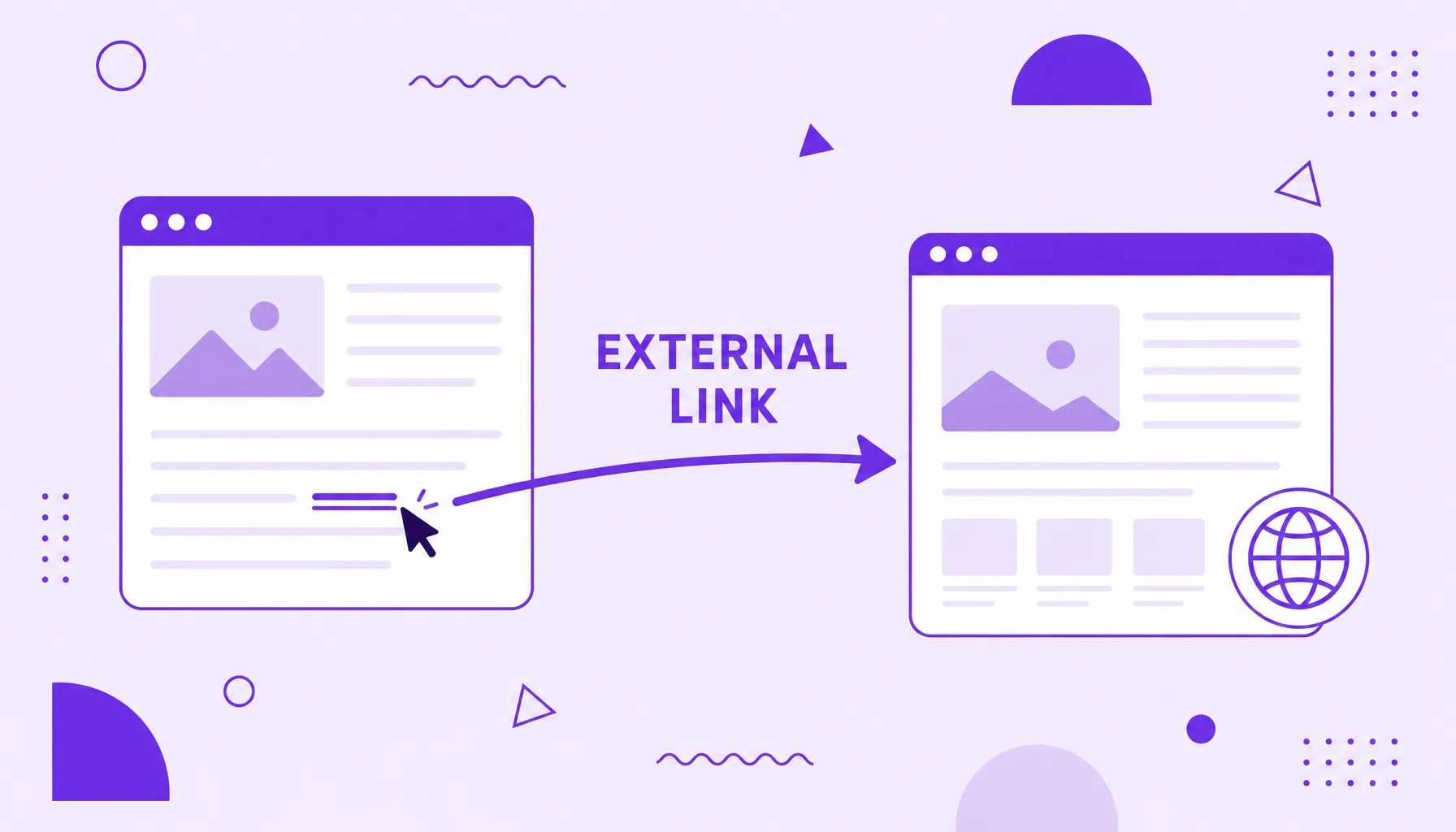
An external link is a link that leaves a page and points to an address on another domain, whether to cite a source, indicate a reference or recommend complementary content. In SEO, these links (also called outbound links) help the reader, give the search engine context about your page's topic and, when they point to trustworthy sites, reinforce the content's credibility. They are the opposite of the internal link, which connects pages within the same site.

Related searches
Related searches are the query suggestions that Google displays at the bottom of the results page, just below the organic links. They show other terms people tend to search about the same subject and work like a window into the user's mind, revealing variations, questions and related intents around that query. For anyone doing SEO, they are a free and direct source of keyword and topic ideas.

Long-tail keyword
A long-tail keyword is a long, specific query, usually with three or more words, that has low search volume but very clear intent and a high conversion rate. Instead of fighting over generic, crowded terms, you target detailed searches like best running shoes for overpronation, which attract fewer people but people much closer to deciding. Added together, these specific searches make up most of everything searched on the internet.

Short-tail keyword
A short-tail keyword, or head term, is a generic, short term, with one or two words, that gathers high search volume and, for that very reason, extremely high competition. Examples are shoes, marketing or insurance. Because the intent behind these terms is vague, they convert less and are very hard to rank, but they work as an anchor for a topic and signal authority when a site manages to rank them.
Mid-tail keyword
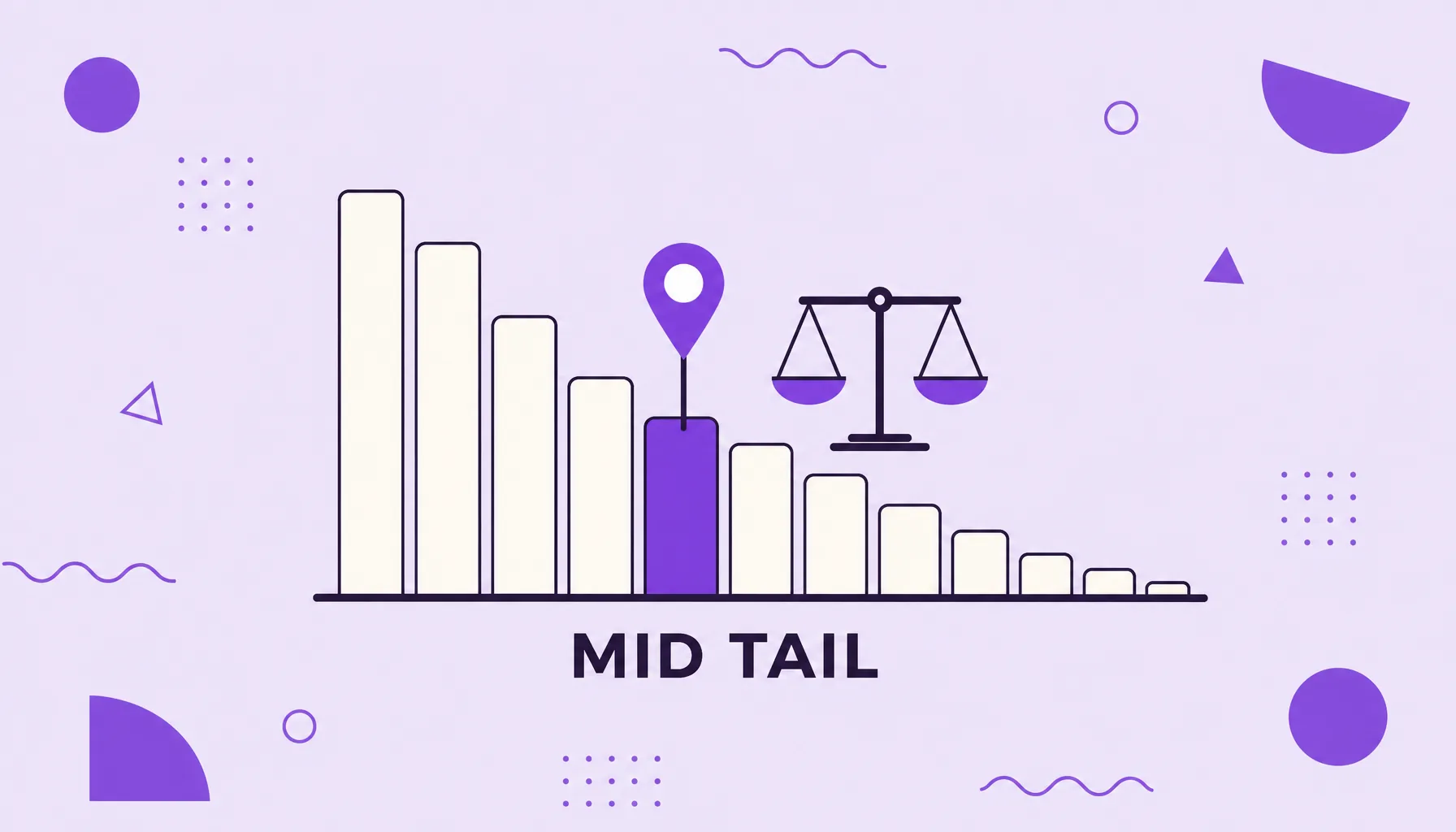
A mid-tail keyword is the intermediate term between the short tail and the long tail. It usually has two to three words, moderate search volume and competition, and a more defined intent than a generic term. Examples are running shoes or content marketing. It is considered the balance point of keyword research: it brings relevant traffic without the brutal fight over head terms.
Seed keyword
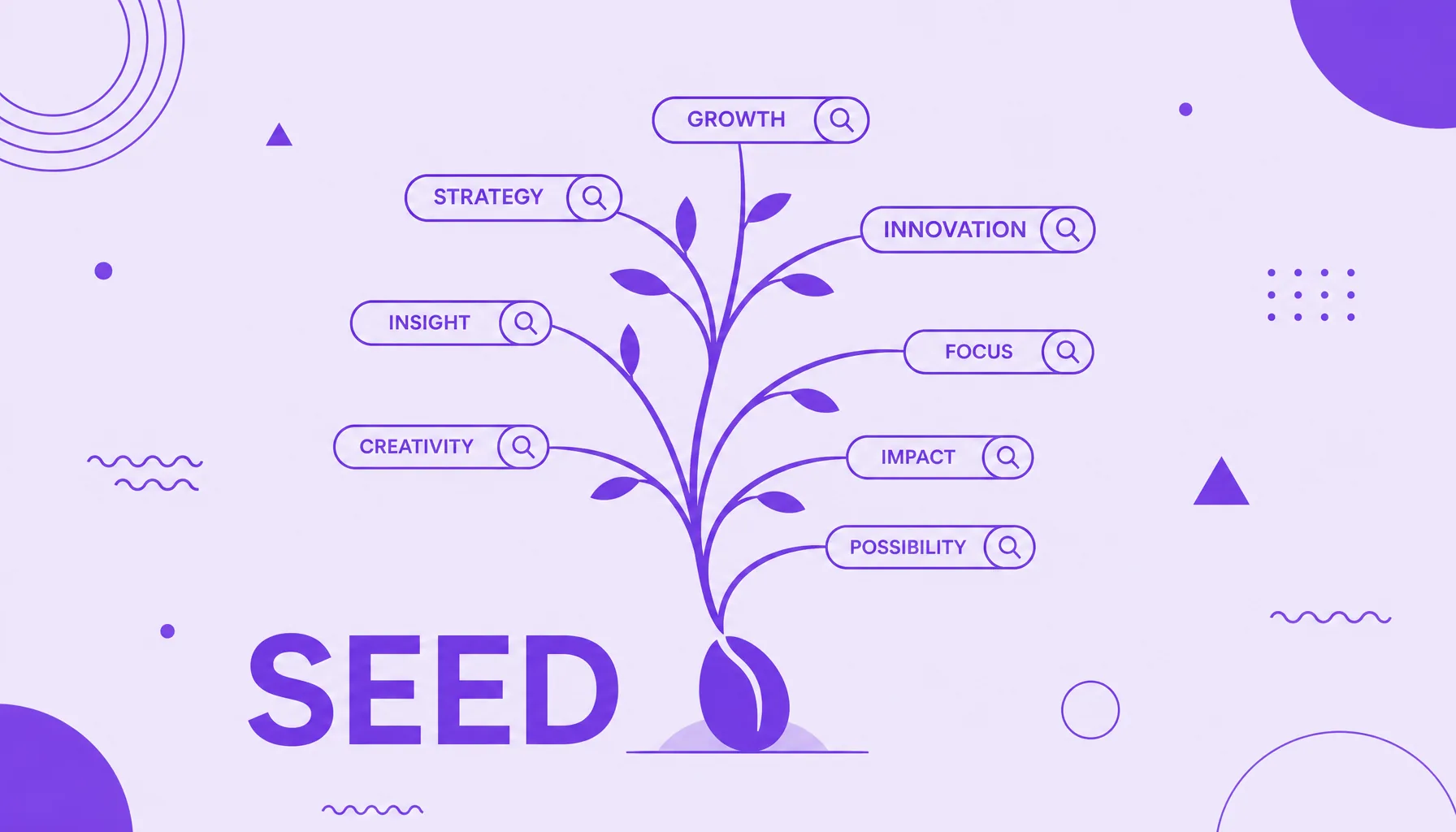
A seed keyword is the initial, broad term used as the starting point for keyword research. From a single seed, like coffee or marketing, SEO tools generate hundreds of variations, questions and related terms that you can turn into content. The seed is not the final target, but the trigger that opens up a topic's map of opportunities. It should not be confused with the seed phrase of cryptocurrency wallets, a completely different concept.

SERP analysis
SERP analysis is the detailed study of the results page that Google returns for a keyword, done before producing content. The goal is to understand three things: the intent behind the search, the page format that already ranks at the top and the level of competition. By reading the SERP this way, you discover what the search engine has decided to reward for that term and write based on evidence, not guesswork.
Keyword density
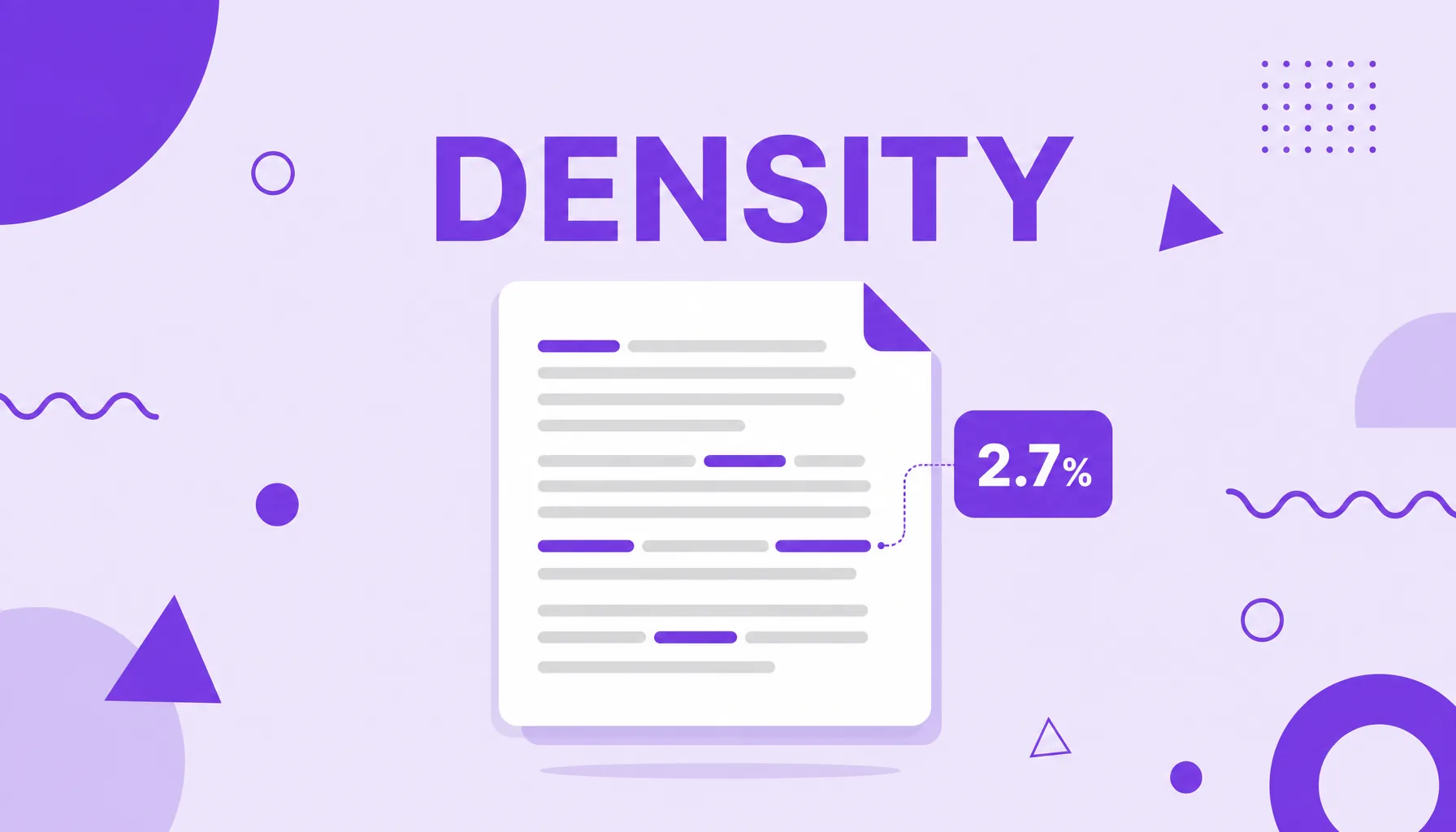
Keyword density is the proportion of times a keyword appears relative to the total number of words in a text, expressed as a percentage. It is calculated by dividing the number of appearances of the term by the total word count. For a long time people believed in an ideal density, but today Google understands context and synonyms, so there is no magic number: what matters is using the keyword naturally, without forced repetition.
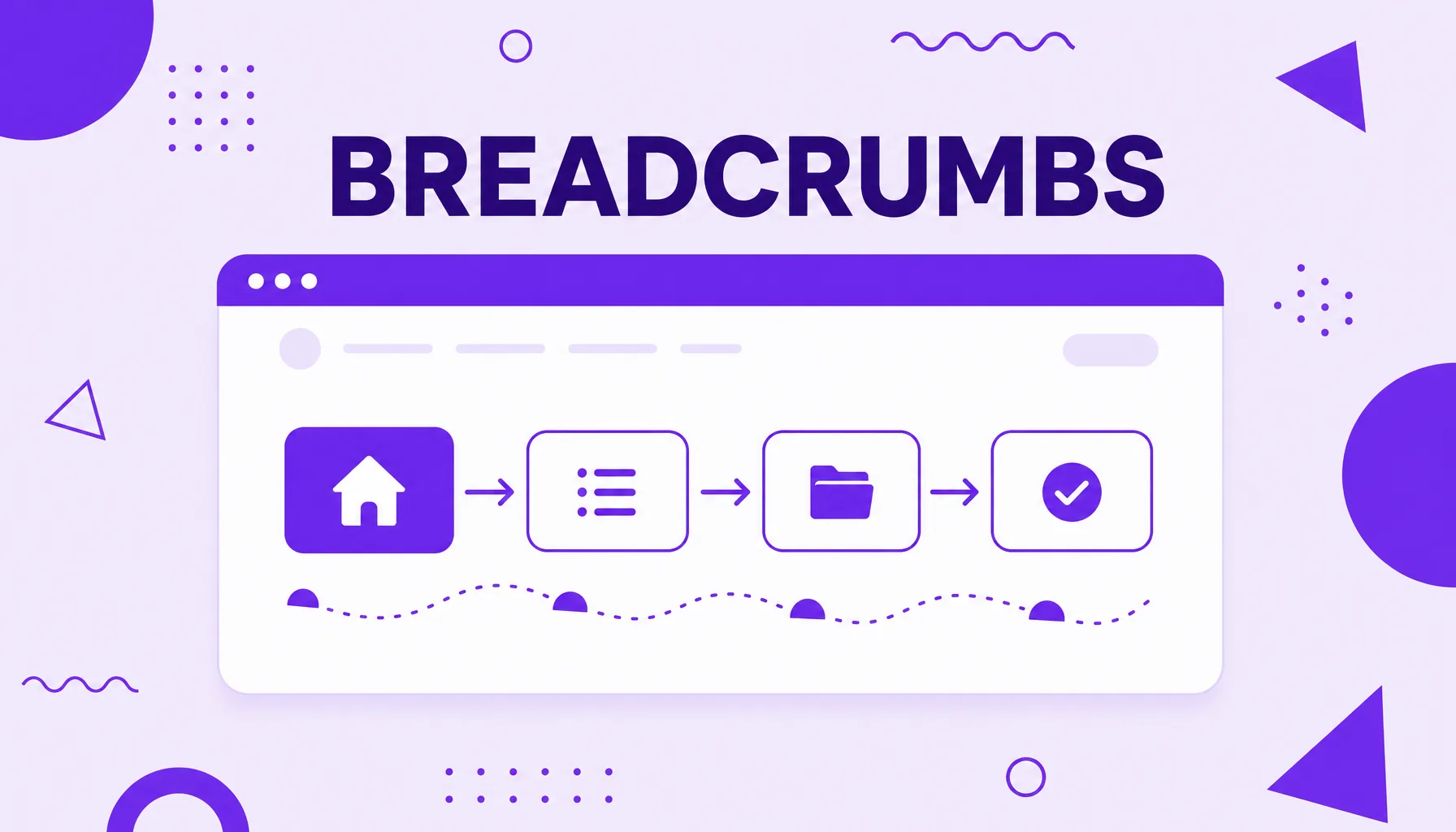
Breadcrumbs
Breadcrumbs, or the navigation trail, are the row of links that appears near the top of a page and shows where it sits within the site hierarchy, in the format Home greater than Category greater than Current page. Besides helping the visitor get oriented and jump back to previous levels with one click, breadcrumbs organize the structure for search engines and can appear as a path in the Google result.