
Domain Rating: what the Ahrefs metric is and how it impacts SEO
By Tiago CostaUpdated on July 2, 2026
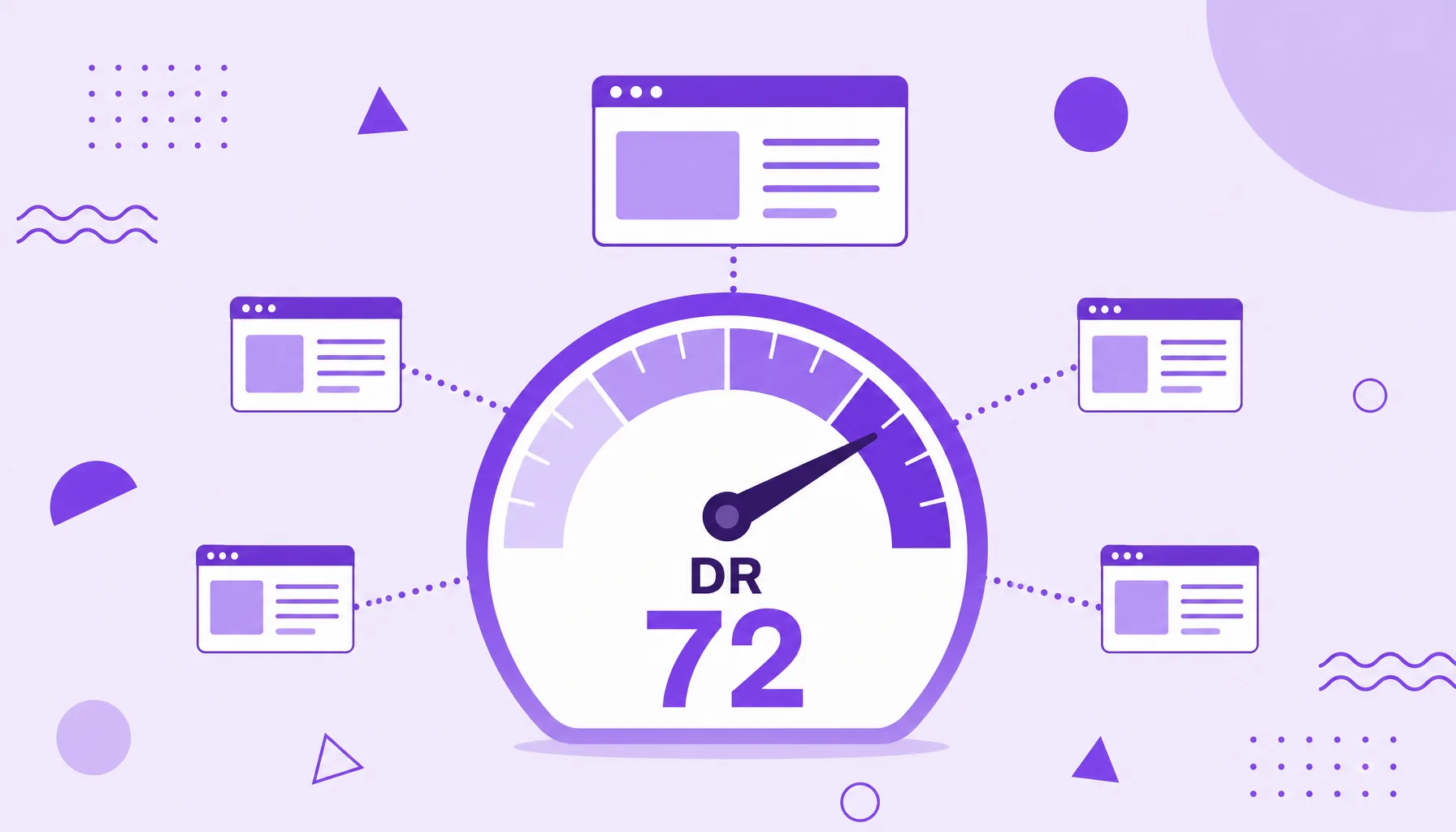
Domain Rating (DR) is the Ahrefs metric, on a 0 to 100 scale, that measures the strength of a domain's backlink profile. In short:
- the more unique and strong domains point to the site, the higher the DR;
- the scale is logarithmic, so going from 70 to 80 is far harder than from 20 to 30;
- it is an Ahrefs score, not an official Google factor;
- it is meant to compare authority between domains, not to guarantee a position.
What Domain Rating (DR) is
Domain Rating, or DR, is the metric Ahrefs uses to represent, in a single number from 0 to 100, the strength of a domain's link profile. The idea is to translate the reputation built through backlinks into a score that is easy to compare across sites.
The reasoning is the same as the web's votes of confidence: each different domain that points to yours works like a recommendation. A high DR indicates that many sites, and strong sites, reference yours, which usually comes with a good ability to rank.
One essential detail: DR is a proprietary Ahrefs measure, not a Google one. It is close to the more general idea of domain authority, but each tool calculates its own version. That is why the number works as a relative reference, not as an absolute truth about your SEO.
How Domain Rating is calculated
DR comes almost entirely from the backlink profile. In simplified terms, Ahrefs looks at:
- How many unique domains point to the site (the number of different sites weighs more than the total number of links).
- The strength of those domains, measured by the DR of whoever links: a link from a DR 80 site is worth far more than ten links from DR 5 sites.
- How many other sites each linking domain also points to, since a link gets more diluted when the source spreads links across many pages.
The scale is logarithmic, which changes everything in how you read it. Going from DR 20 to 30 takes relatively few quality links, but moving from 70 to 80 can take years and hundreds of new referring domains. It is also worth noting that DR considers dofollow links, the ones that pass authority, and not those marked as nofollow.
What a good Domain Rating is
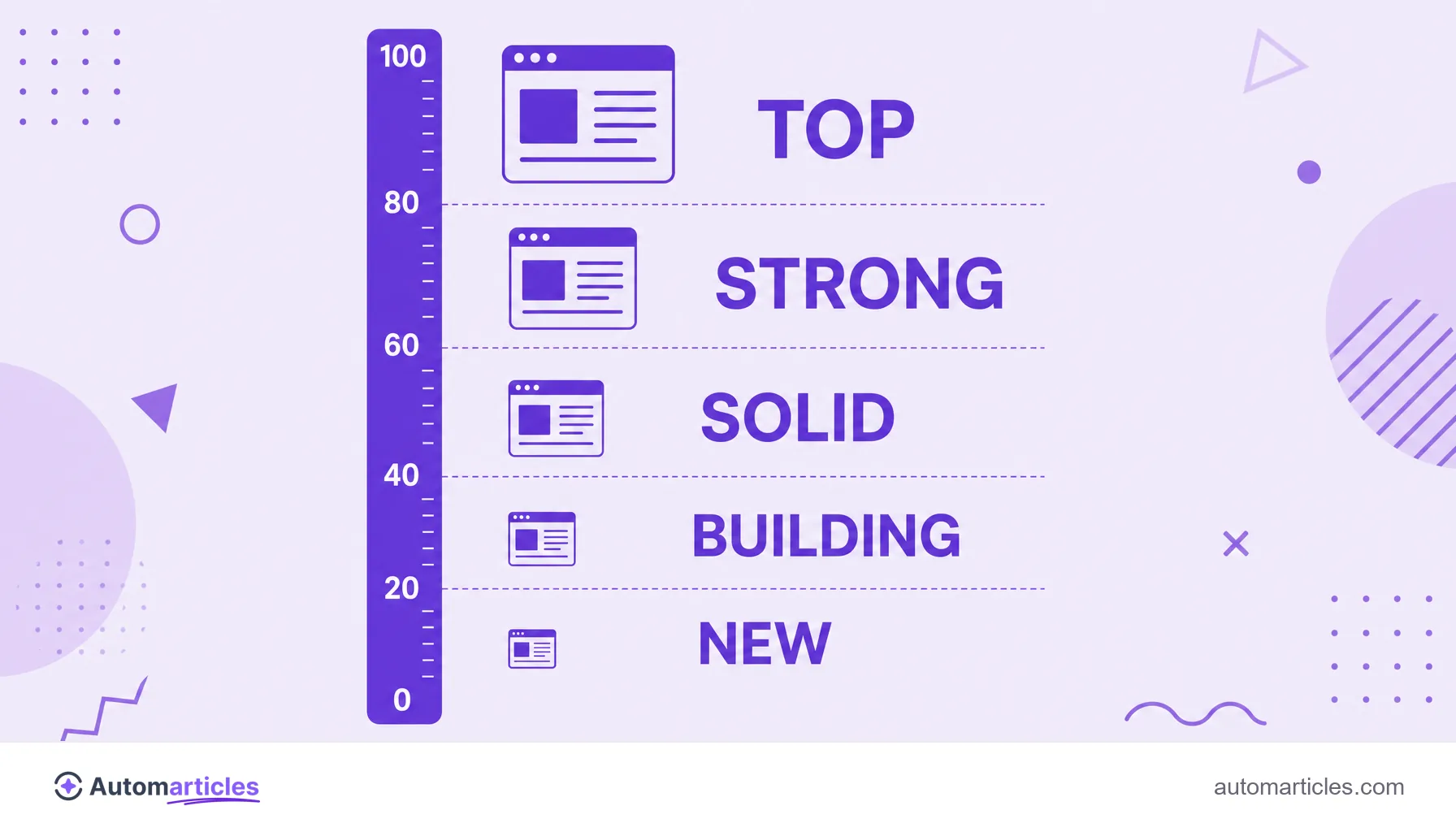
There is no magic number. A good DR is always relative to your niche and to the competitors fighting for the same searches. Even so, this general reading helps you place yourself:
| DR range | General reading |
|---|---|
| 0 to 20 | New site or one with few backlinks, starting to build authority. |
| 20 to 40 | Link profile in development, already competitive in smaller niches. |
| 40 to 60 | Solid authority, able to fight for medium difficulty terms. |
| 60 to 80 | Strong domain, a reference in its sector. |
| 80 to 100 | Big brands and portals with a huge volume of links. |
The smartest use of DR is comparative: look at the average DR of those already ranking on the first page for your keyword and use that as a thermometer for the link building effort required. Chasing a high number out of vanity, with no traffic behind it, is a waste of time.
Domain Rating and Domain Authority: the differences
DR and DA are constantly confused, but they come from different companies. Domain Rating is from Ahrefs; Domain Authority (DA) is from Moz. Both try to measure the strength of a domain through the lens of links, but they use their own indexes and calculations, so the values are not interchangeable.
Since each tool crawls the web in its own way, the same site can have DR 55 on Ahrefs and DA 48 on Moz without either being wrong. Comparing one site's DR with another's DA makes no sense: it only makes sense to compare metrics from the same source.
There are also other third party scores on the market, such as Moz's Spam Score, which estimates a domain's risk rather than its strength. What matters is choosing a reference metric and always using the same one to track progress and compare competitors.
How to increase Domain Rating
Since DR depends on referring domains, raising the score is, in practice, the work of earning good links from different sites. A plan that works:
- Prioritize new, not repeated domains: ten links from ten sites are worth much more than ten links from the same site.
- Seek relevant, strong sources: a link from a respected site in your niche truly moves the needle.
- Produce content that attracts links: original data, studies and reference materials are natural magnets for backlinks.
- Invest in relationships: guest posts, partnerships and PR generate qualified mentions.
- Clean up the profile: toxic links or those from spam schemes can hurt more than help.
Avoid shortcuts. Buying links or joining artificial schemes can inflate DR for a while, but it puts the site on a collision course with Google's guidelines. Real authority is built slowly, with content people want to cite.
Does DR matter for SEO? How to use it and what to ignore
DR is not a Google ranking factor, and the search engine itself has never confirmed using a domain authority score in this format. But that does not mean the metric is useless: it is a good shortcut to estimate a site's link strength.
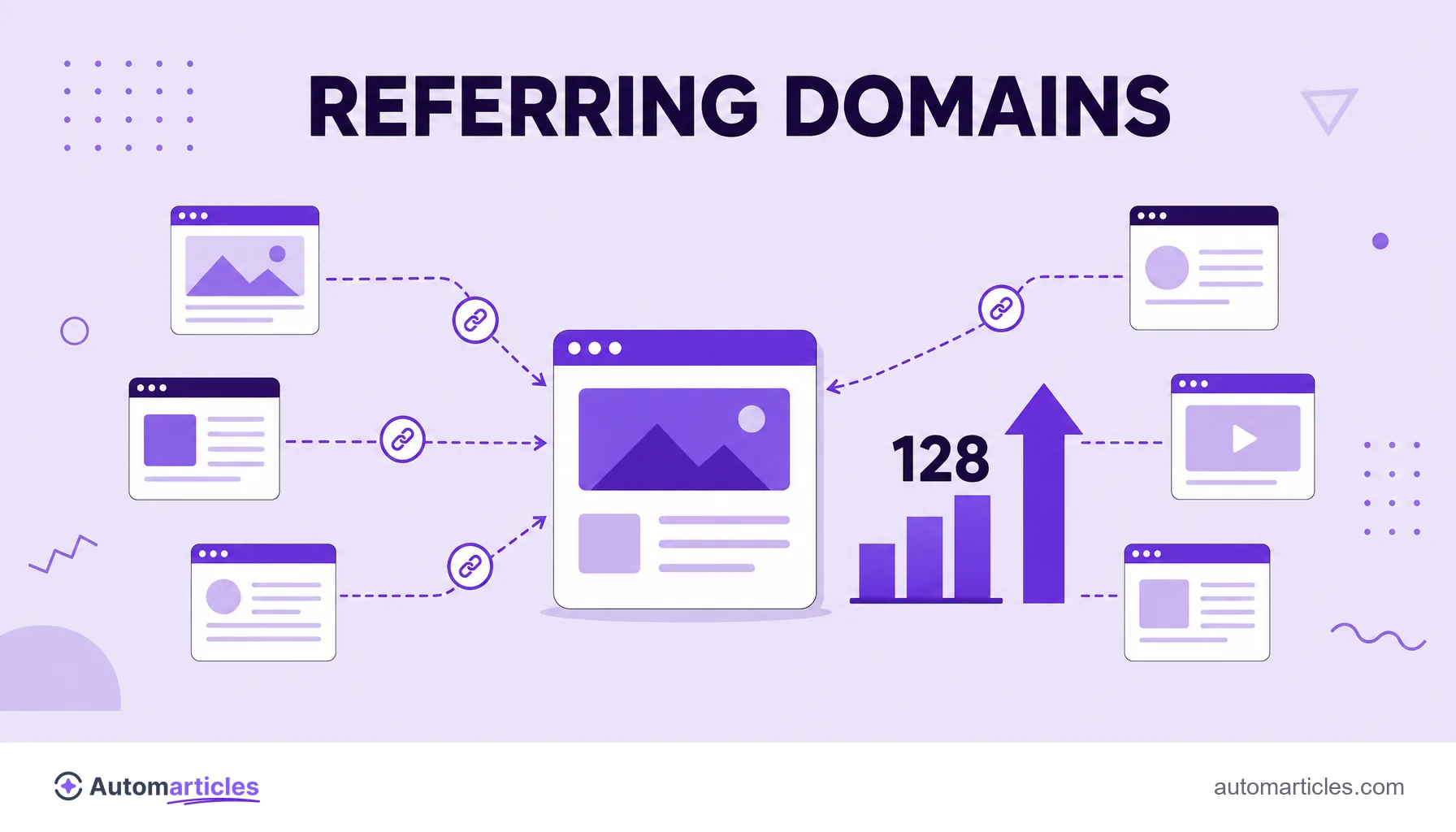
There is solid ground behind this. In a study of about 14 billion pages, Ahrefs found a clear correlation between the number of referring domains pointing to a page and the organic traffic it gets, plus more keywords ranked. Since DR sums up exactly that link profile, it ends up moving together with the ability to rank, even without being a direct cause.
The right way to use DR is as a compass, not as a final scoreboard. It helps you assess competitors, prioritize link building opportunities and measure progress over time. What is not worth it is chasing the number for its own sake: traffic, conversions and relevance remain what really matters.