
What a content gap is (content gap analysis)
By Tiago CostaUpdated on July 2, 2026

A content gap is a topic or keyword that competitors cover and your site does not yet. Content gap analysis is used to:
- compare your content with competitors' content;
- find keywords you do not rank for;
- reveal audience questions unanswered on your site;
- prioritize new briefs by traffic potential.
What a content gap is
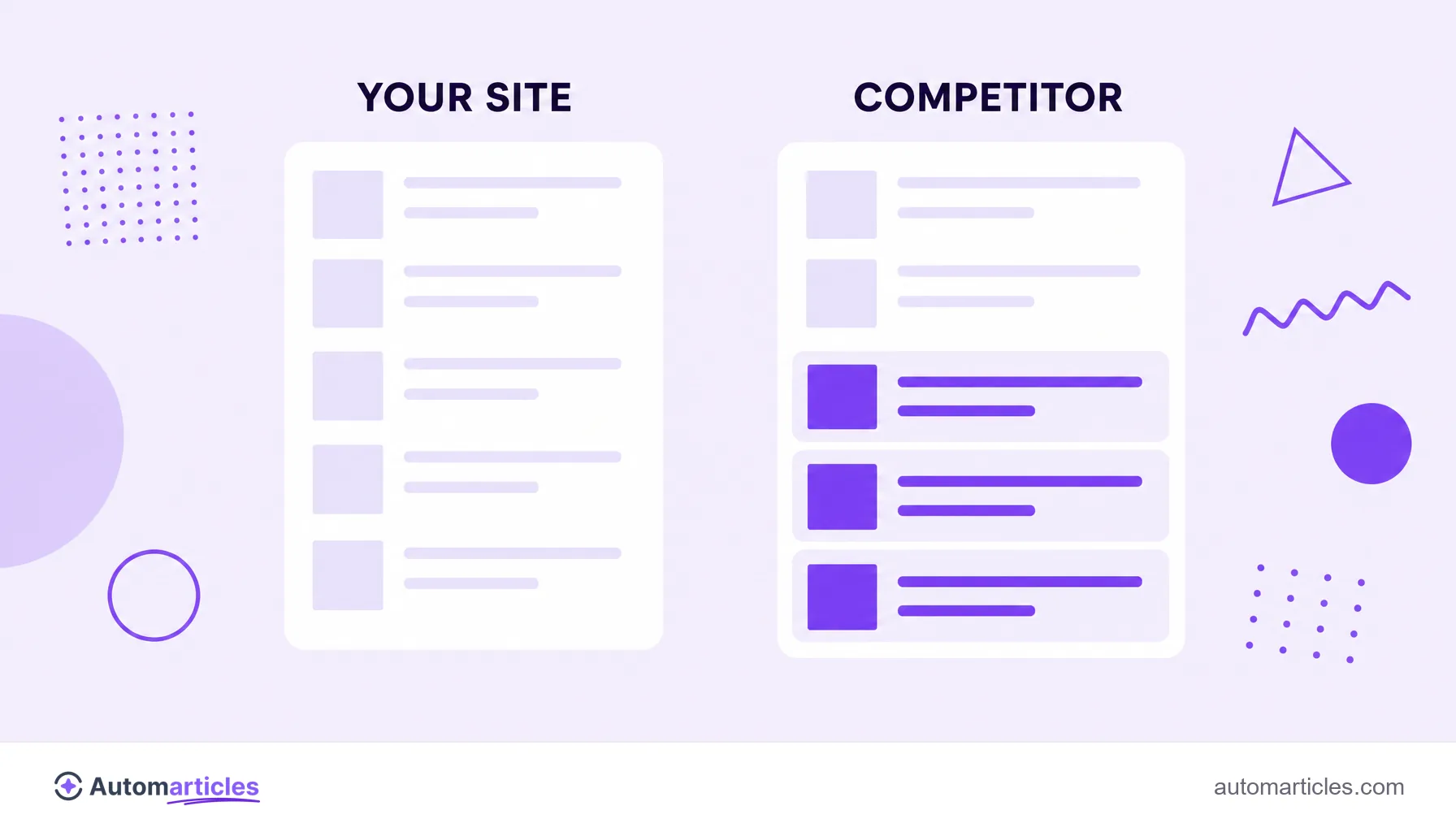
A content gap is the difference between what your audience looks for and what your site offers. In practice, it is any relevant topic, question or keyword the competition already covers and your domain left out.
These gaps appear naturally. No site is born covering a topic in full, and search demand changes all the time. The problem shows up when a competitor answers an important question from your audience and you do not, because a visitor (and a potential customer) goes straight to their site.
Content gap analysis is the work of mapping these gaps in an organized way, cross-referencing your content, your competitors' content and real search demand. The result is a prioritized list of briefs with clear traffic potential, instead of writing in the dark.
The types of content gap
Not every gap is the same, and separating the types helps you decide what to tackle first:
- Keyword gap: terms with good volume that competitors rank for and you have no page at all for.
- Topic gap: an entire subject missing from your coverage, even if you already handle neighboring topics.
- Funnel gap: you cover the top (general questions), but you lack mid and bottom funnel content that supports the buying decision.
- Format gap: the topic exists on your site, yet the audience wants another format, such as a step-by-step guide, a comparison or a table.
- Depth gap: your page exists, only it is thin compared to what already ranks, so it does not compete.
Mapping by type avoids the trap of only chasing loose words. Often the biggest opportunity is to close an entire topic and earn topical authority on the subject.
How to run a content gap analysis step by step
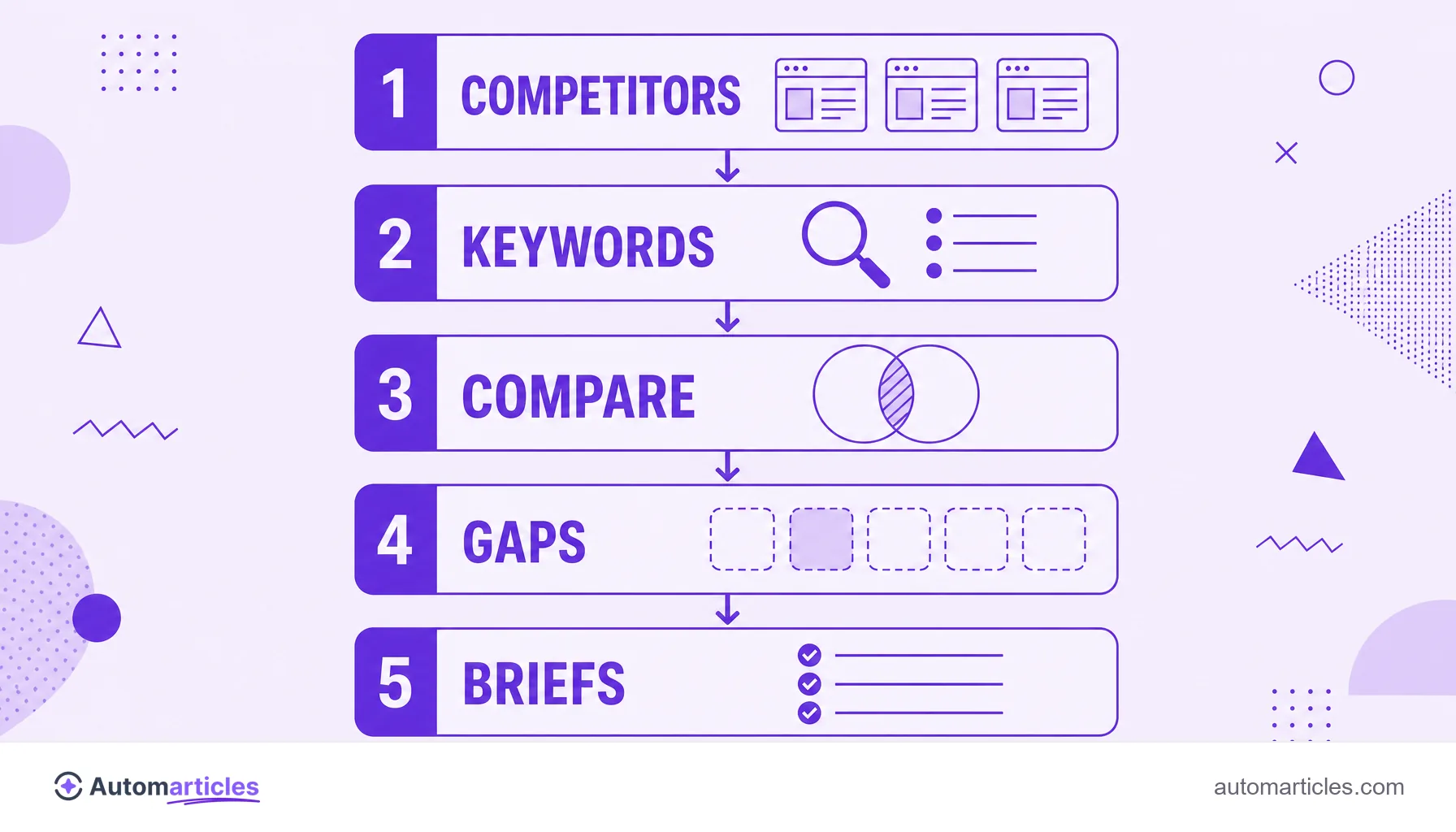
A content gap analysis always follows the same logic, with or without a paid tool:
- List the right competitors: not only business competitors, but whoever fights for the same searches you do (the SERP competitors).
- Gather their keywords: use keyword research to find which terms they rank for.
- Cross-reference with your site: filter the terms where competitors show up and you do not, or you show up far below.
- Add audience questions: People Also Ask, related searches and support questions reveal gaps that tools do not always catch.
- Prioritize by potential: sort by volume, intent and ease, and turn the best gaps into briefs.
This effort has a clear reason. According to a study by Ahrefs of around 14 billion pages, 96.55% of them get no organic traffic from Google. Closing gaps with the right intent is exactly what separates your content from that invisible majority.
Tools to find content gaps
You can start for free, but tools speed the work up a lot:
- SEO tools: features like Ahrefs' Content Gap, Semrush's Keyword Gap and similar reports compare several domains at once and list the missing terms.
- Google itself: search your topic and read People Also Ask and related searches to gather real questions at no cost.
- Search Console: it shows the terms where you already appear in low positions, a sign of content that exists but is thin.
- Conversations with customers: questions that repeat in support and sales are usually content gaps waiting to become articles.
The tool speeds things up, but the decision is still yours. Its role is to point out the gap, not to say whether that topic makes sense for your strategy.
Content gap and the topical authority strategy
Finding loose gaps is useful, but the real gain comes from fitting them into a strategy. Instead of writing a standalone article for each term, the ideal is to use gaps to complete a content cluster, the group of articles that covers a topic from several angles.
That is where the topic map comes in. It shows, visually, what already exists and what is missing within each topic, turning content gap analysis into a content plan. Closing the gaps of an entire cluster signals to Google that your site is a broad reference on the subject.
This way, the gap stops being just a lost word and becomes a step within a consistent content marketing effort that builds authority instead of chasing random terms.
Content gap, marketing gap, research gap and communication gap
The word gap appears in several contexts, and it is worth separating them to avoid confusion:
- Marketing gap: any distance between the expected result and the real one, such as the difference between audience demand and what the brand delivers. The content gap is one slice of this, focused on content.
- Research gap: in academic or market research, it is the knowledge gap a study sets out to fill.
- Process gaps: the difference between the ideal process and the one carried out, a classic management theme.
- Communication gap: the noise between the message sent and the message understood.
They all start from the same idea of a gap to be closed. In this glossary, however, content gap always means the content gap relative to competitors and search demand.