
Content cluster: what it is and how the strategy works
By Tiago CostaUpdated on July 2, 2026
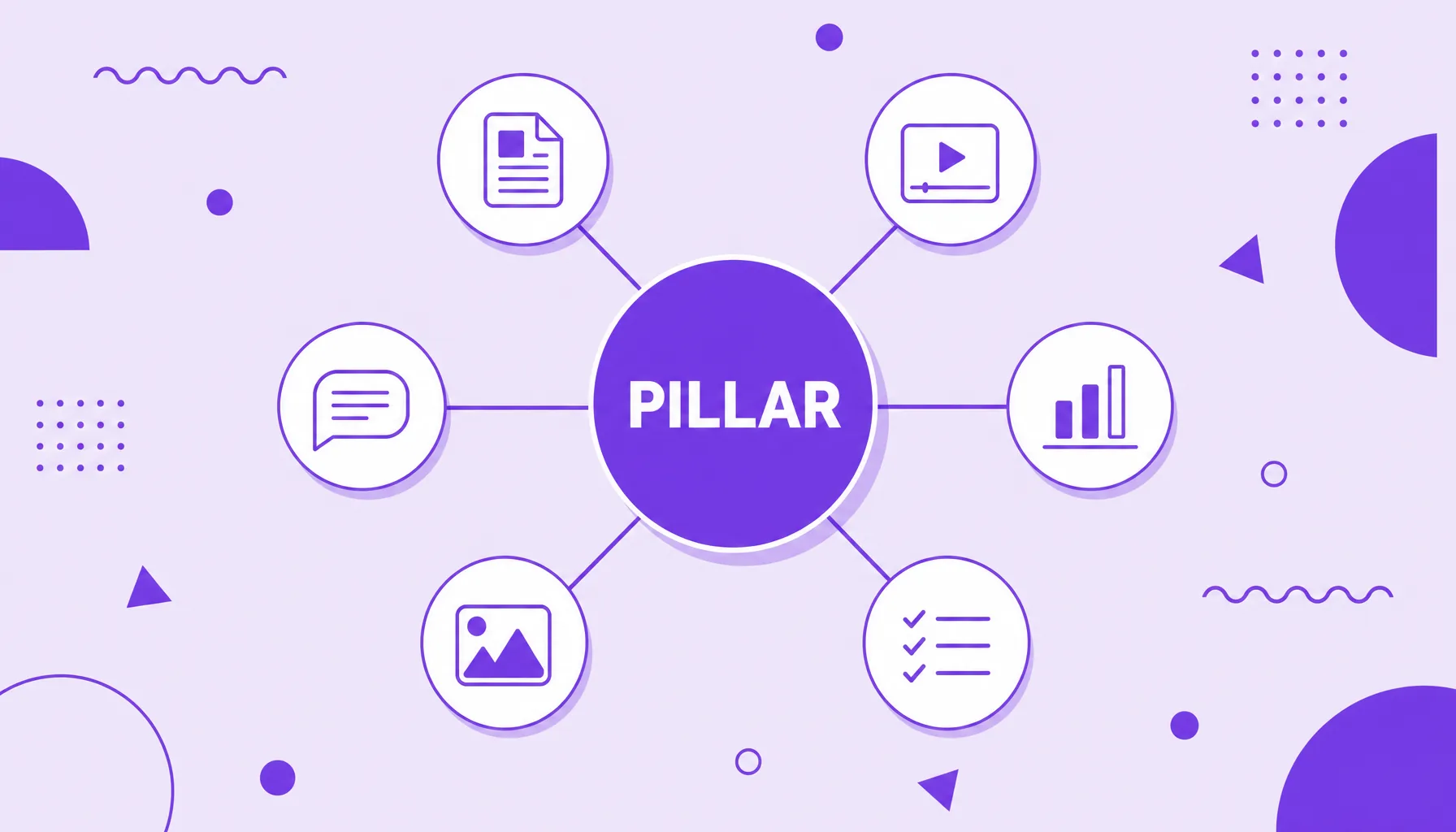
A content cluster is a set of pages on the same topic, connected to a central page. It works like this:
- a pillar page covers the topic broadly;
- several supporting pages go deep on each subtopic;
- internal links connect the pillar and the supporting pages;
- the group signals authority on the subject to Google.
What a content cluster is
A content cluster (or topic cluster) is a group of related content pieces that revolve around the same central theme. Instead of writing loose articles, you organize the content into a structure: a main page covers the subject comprehensively and several smaller pages handle specific angles, all connected to one another.
Think of a bicycle wheel. The central hub is the pillar page, which presents the topic as a whole. The spokes are the internal links tying that hub to the supporting content, each one dedicated to a question or subtopic. Together, they form a complete map of the subject, easy to navigate for both the reader and the search engine.
This logic was born from a shift in how Google understands search. Instead of looking word by word, the search engine started interpreting topics and the relationship between them, and the cluster is the content answer to that evolution.
How it works: pillar, supporting content and internal links
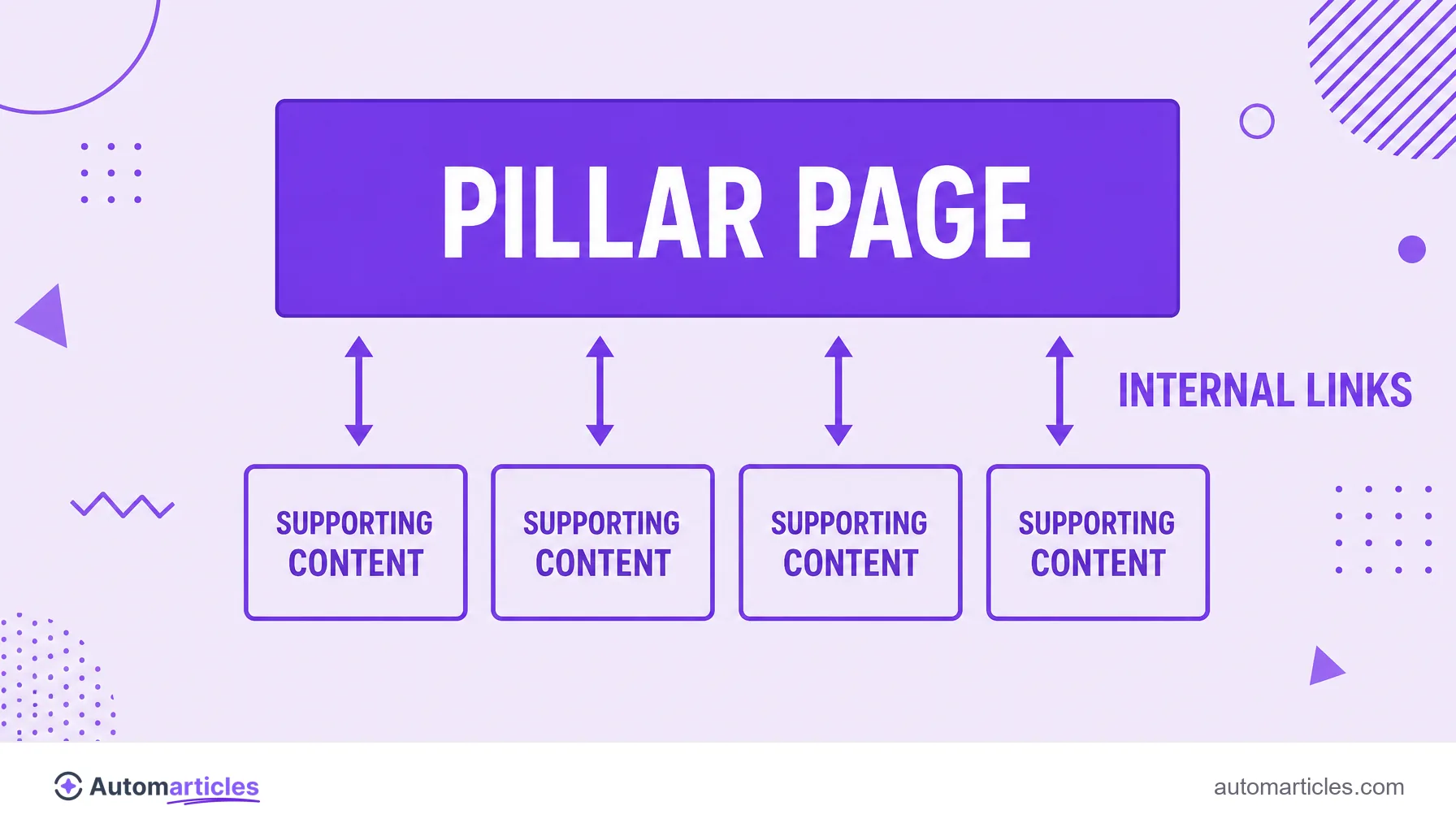
Three elements hold up a content cluster, and it is the relationship between them that makes the strategy work:
- Pillar page: broad, in-depth content that gives the overview of the topic. It usually targets a wider keyword and serves as an entry point.
- Supporting content (cluster): articles focused on specific subtopics, usually more long-tail, that answer particular questions in depth.
- Internal links: each supporting piece links back to the pillar, and the pillar links to the supporting pieces, weaving the network that connects everything.
The role of internal links is the most underestimated. They are what show Google that those pages belong to the same universe and what distribute authority among them. Without that binding, you just have a pile of standalone articles; with it, you have a cluster that works as a team.
Why the cluster strategy works in SEO
The cluster strategy gained traction because it matches the current way of ranking: by topics, not by isolated words. Covering a subject completely and with good interlinking signals topical authority, and topical authority is one of the most consistent paths to climbing positions.
There is practical evidence behind this. HubSpot, testing the model on its own blog, found that the more internal links were created between related pages, the higher those pages climbed in the results and the more impressions they accumulated. In other words, the cluster's interlinking is not decoration, it is part of the mechanism that pushes content up.
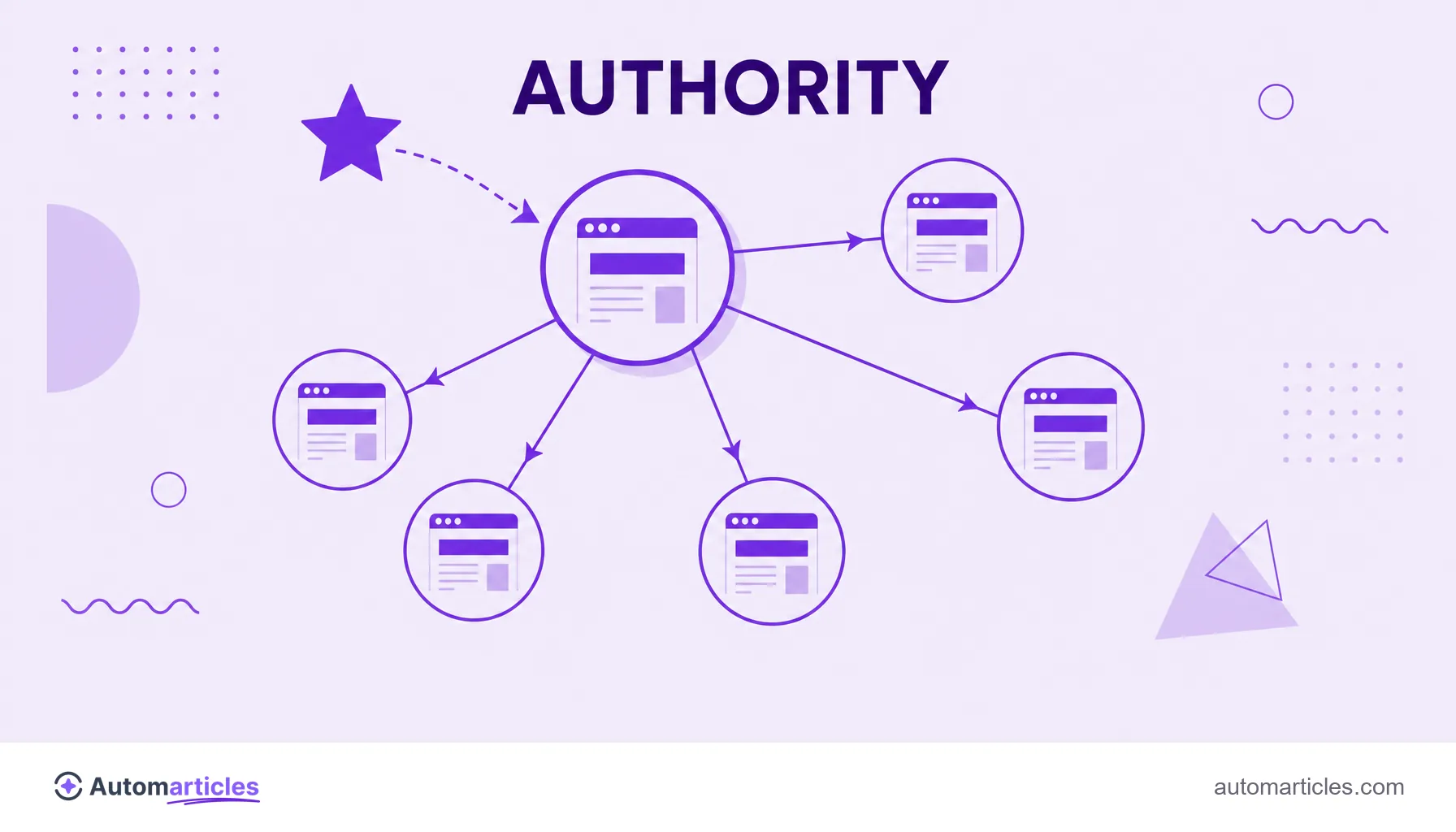
The gain is collective. When one page in the cluster earns backlinks and rises, it shares relevance with its neighbors through the internal links. That way, a single good result tends to lift the whole group, instead of benefiting just one URL.
Cluster, pillar page and cornerstone: who is who
The terms around clusters are easily confused. It is worth separating each role:
| Concept | What it is |
|---|---|
| Content cluster | The whole structure: pillar plus interlinked supporting content. |
| Pillar page | The central page of the cluster, which covers the topic broadly. |
| Cornerstone content | The most important content on the site, which you want to rank above all. A pillar is usually a cornerstone. |
In practice, the cluster is the map; the pillar is the capital of that map; and the cornerstone is the decision about which pages are strategic enough to receive priority in links and optimization. A good cluster usually has the pillar as its cornerstone piece.
How to build a content cluster step by step
Building a cluster is more planning than writing. A step by step that works:
- Choose the central theme: a broad subject, relevant to your audience and aligned with what your business solves.
- Do the keyword research: use keyword research to find the broadest term (the pillar) and the long-tail variations (the supporting pieces).
- Draw the topic map: organize the subtopics into a topic map to see what each piece will cover and avoid overlap.
- Respect search intent: check the search intent of each term to deliver the right format (guide, comparison, tutorial).
- Interlink everything: when publishing, connect each supporting piece to the pillar and the pillar to each piece, always with descriptive anchors.
You do not need to publish the entire cluster at once. The common path is to launch the pillar and keep adding supporting content over time, strengthening the structure with each new article.
Common mistakes when creating content clusters
A few slips undermine a cluster's potential. The most frequent:
- Cannibalizing keywords: creating several supporting pieces that target the same term makes the pages compete against each other instead of adding up.
- Forgetting internal links: publishing the pages without connecting them means giving up the strategy's main benefit.
- Leaving holes in the topic: important subtopics left uncovered become a content gap that a competitor can fill.
- A shallow pillar: a superficial pillar page does not support the cluster nor convince Google that you master the subject.
Reviewing the cluster from time to time, updating the pillar, adding supporting pieces and reinforcing the links, is what keeps the structure alive and competitive as the topic evolves.