
Topical authority: what it is and how to build it
By Tiago CostaUpdated on July 2, 2026
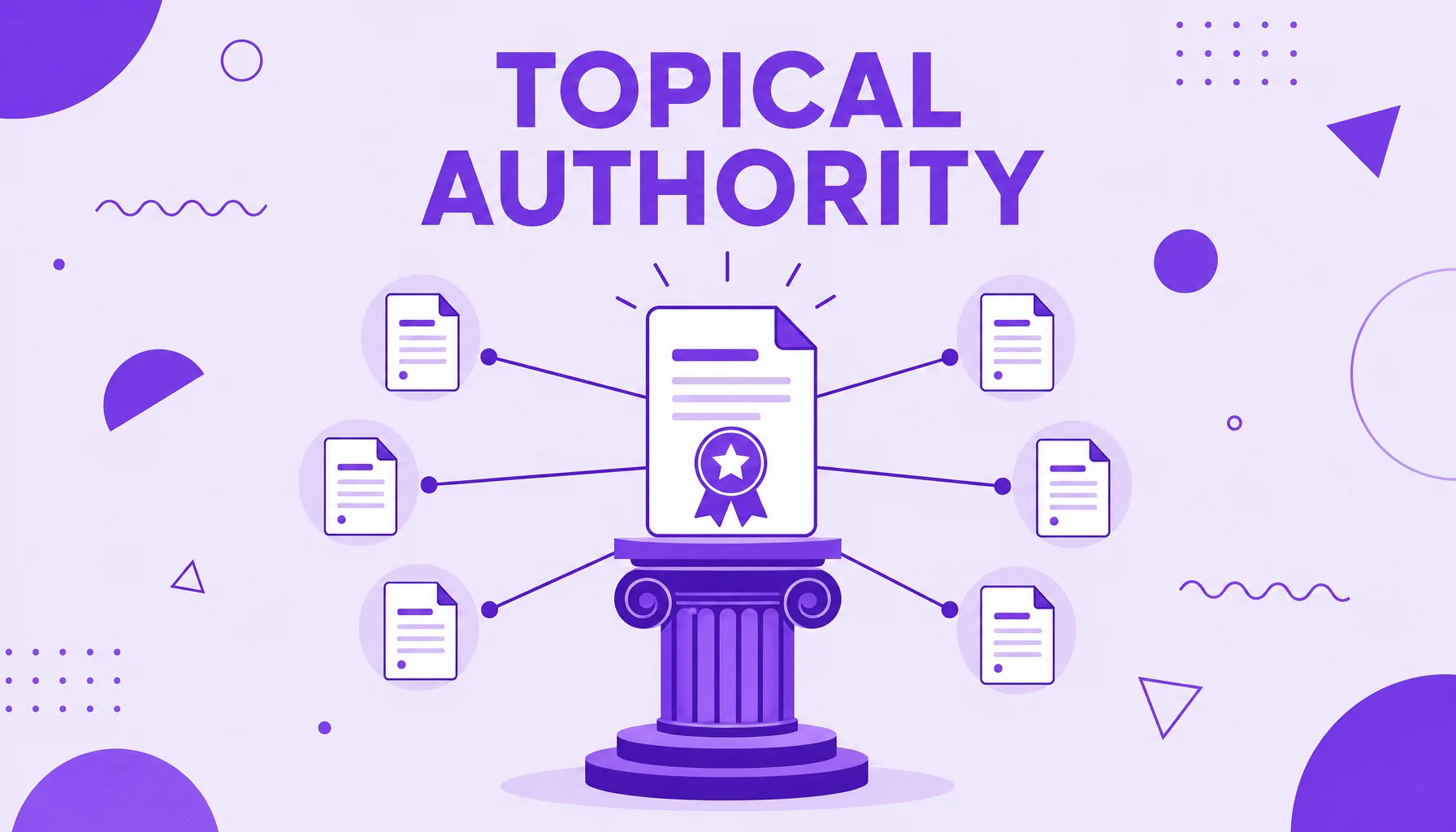
Topical authority is a site's reputation as a deep reference on a theme. You build that authority when you:
- cover the theme broadly, not just one keyword;
- connect the pieces to each other with internal links;
- show experience and trustworthy sources;
- keep production consistent over time.
What topical authority is
Topical authority is the degree of recognition a site earns as a reference on a specific subject. It is not about ranking a single word, but about covering a theme in full, with so many useful, connected pieces that the search engine starts to see the domain as an expert in that field.
The logic is similar to the real world. A doctor who only talks about cardiology, teaches and publishes about the heart gains more credibility on that topic than a generalist who talks a bit about everything. On the web, Google observes the same pattern: a site that answers almost every question on a topic tends to be treated as a trustworthy source and to rank more easily within it.
That is why topical authority goes hand in hand with semantic SEO, optimization based on meaning and entities rather than exact words alone. Covering a theme deeply helps Google understand what your site is really about.
Why topical authority matters for SEO (and for AI)
Building authority on a theme changes how the search engine treats all of your content about it. Instead of fighting page by page, the whole site gets a relevance boost on the subject. There is a network effect: each new piece leans on the credibility already accumulated by the previous ones.
This effect shows up in ranking data. A study by Ahrefs, which analyzed 3 million searches, found that the page in the first position also ranks, on average, in the top 10 for nearly a thousand other related keywords. In other words, whoever dominates a theme does not reap one result, but hundreds, because a strong page spreads across dozens of connected queries.
In the era of AI answers, this weighs even more. Generative models and search engines prefer to cite sources that show depth and consistency on a subject. Covering a theme well is what increases the chance of your content being chosen as a reference inside those answers, not just ranking in the blue list.
Topical authority vs domain authority: the difference
It is easy to confuse the two concepts, but they measure different things. One looks at links, the other at theme coverage:
| Concept | What it measures |
|---|---|
| Domain authority | The overall strength of the site, closely tied to the quantity and quality of the backlinks it receives. It is a broad metric, not specific to a subject. |
| Topical authority | The strength of the site within a specific theme, tied to the depth and consistency of the content on that subject. |
In practice, they reinforce each other. A site with strong topical authority attracts natural backlinks (because it becomes a reference), which raises domain authority. And a strong domain gives an initial boost to new content. The good news for those starting out: you can beat giant sites in specific niches precisely by building topical authority, without needing the same mountain of links.
How to build topical authority: clusters and pillar pages
Topical authority is not bought, it is built with structure and patience. The most effective method is to organize content by themes, not by loose pieces:
- Draw a topic map: before writing, build a topic map with all the questions and subtopics that surround the subject. It is the treasure map of your coverage.
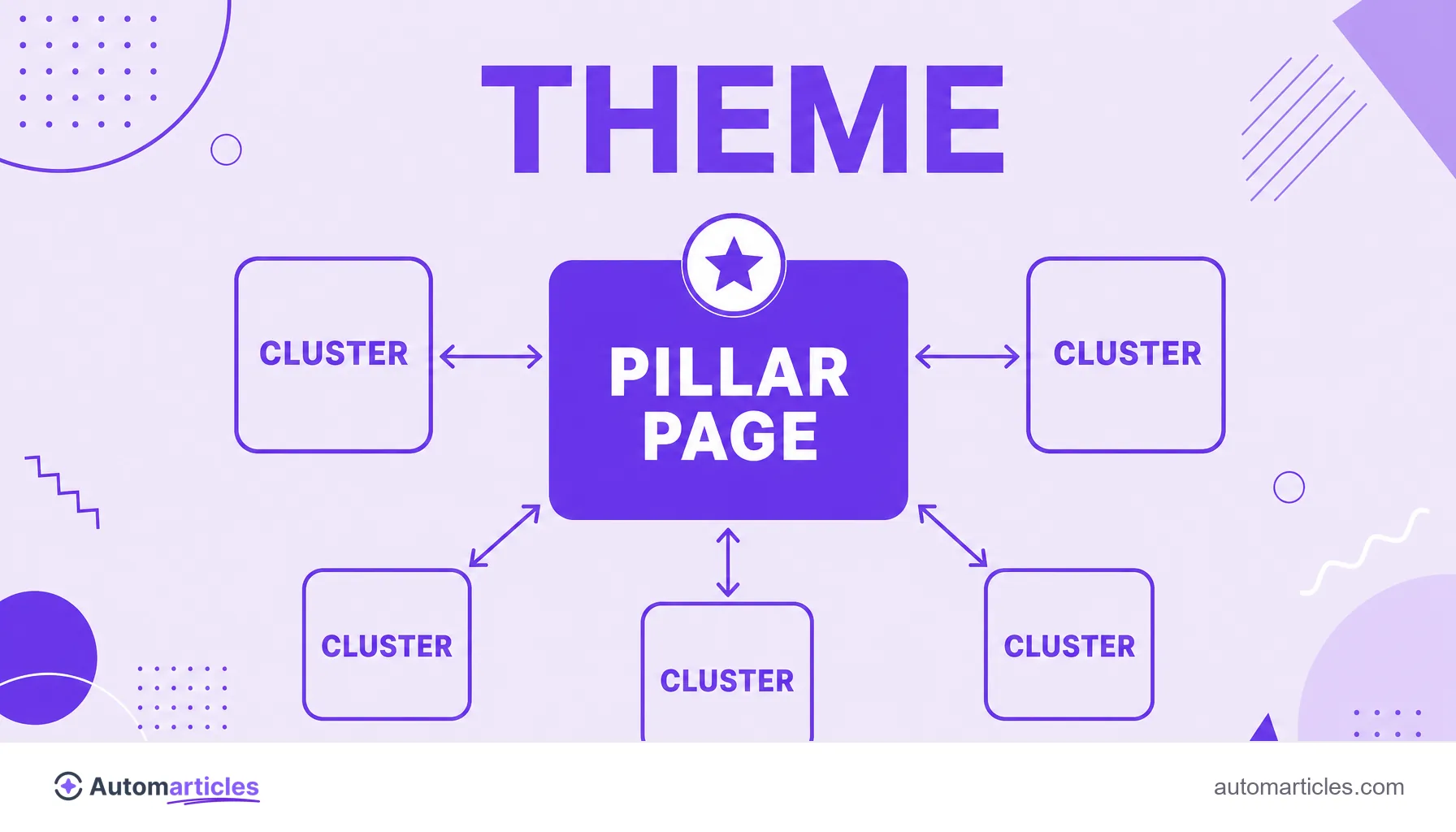
- Create a pillar page: the pillar page covers the central theme comprehensively and serves as the entry point to the subject.
- Produce a content cluster: around the pillar, write a content cluster with articles that go deeper into each subtopic.
- Connect it all with internal links: consistent internal linking between pillar and cluster shows Google that the set forms complete coverage of the theme.
This pillar plus cluster arrangement is the skeleton of topical authority. It turns dozens of standalone articles into an organized library, easy for the search engine to understand and for the reader to navigate.
E-E-A-T: the authority that comes from who writes
Covering many subtopics is not enough if the content does not convey trust. This is where E-E-A-T comes in, the set of criteria of experience, expertise, authoritativeness and trustworthiness that Google uses to assess quality. Topical authority rests on these signals.
In practice, this means showing who is behind the content: identified authors, with real bios and credentials; correct, up to date information; and reliable sources to back up claims. A blog about health or finance, sensitive topics, needs these signals with even more rigor. Depth without credibility does not build authority, only volume. The combination of the two is what makes Google trust the site as a reference.

Common mistakes when trying to build topical authority
Many people sabotage their own authority without realizing it. Watch out for these frequent slips:
- Spreading across too many themes: a site that talks about everything is a reference in nothing. Focusing on a few themes yields more authority than covering ten subjects halfway.
- Leaving obvious gaps: an important content gap in the middle of the theme weakens the coverage. It pays to map what is missing and fill it.
- Publishing shallow content: filling the blog with thin content for the sake of volume dilutes quality and hurts the whole theme.
- Creating pages that compete with each other: several articles about the same question cause keyword cannibalization, where your own pages fight over the same search.
The opposite path is what works: choose a territory, cover it end to end with quality and keep production consistent. Topical authority is the result of accumulation, not of a single successful article.