
Topic map: what it is, what it is for and how to build one
By Tiago CostaUpdated on July 2, 2026

A topic map is the visual plan of the subtopics needed to cover a subject completely. It helps you:
- see every angle of a theme in one place;
- decide what to write and in what order;
- avoid gaps and repeated content;
- guide the building of a content cluster.
What a topic map is
A topic map is the visual representation of everything you need to cover about a subject to become a reference in it. It starts with a central theme and opens into branches, each carrying a subtopic, a question or a specific angle tied to that theme.
The result looks like a mind map, but with a clear SEO goal: ensuring complete coverage. While a list of topics is linear and makes it easy to forget what is missing, the topic map shows the entire territory of the subject at once, keeping in plain view both what you already have and the holes that still need filling.
In short, it is the plan before the build. You do not just start writing loose articles; first you draw the map of the theme and only then decide where to start building.
What a topic map is for
A topic map solves the most common problem for content creators: writing a lot about a little and a little about a lot. By putting the whole theme on the table, it brings a few direct gains:
- Complete coverage: you see every subtopic and avoid leaving out what the audience is looking for.
- Less overlap: it becomes clear when two articles would cover the same thing, which reduces cannibalization.
- Topical authority: covering a subject in depth is what builds topical authority and signals mastery to Google.
- Prioritization: with the map ready, it is easier to decide what to write first.
Depth pays off. Analyzing hundreds of thousands of articles, Semrush found that long texts, over 3,000 words, get on average around 3 times more traffic and 3.5 times more backlinks than medium-length articles. It is not the word count itself that matters, but the complete coverage it usually represents, and a topic map is exactly what helps you reach that depth without padding.
Topic map, mind map and concept map: the differences
Because the format resembles other diagrams, it is common to confuse the topic map with similar tools. The difference is in the purpose:
| Type | What it is for |
|---|---|
| Topic map | Planning the content coverage of a subject for SEO, mapping the subtopics to be written. |
| Mind map | Organizing ideas freely around a concept, useful for brainstorming. |
| Concept map | Showing logical relationships between concepts, with named connections between them. |
In practice, the topic map borrows the visual of the mind map, but with a specific destination: becoming a content plan. Each branch of the topic map should be able to turn into a page, answering a real query from the audience.
How to build a topic map step by step
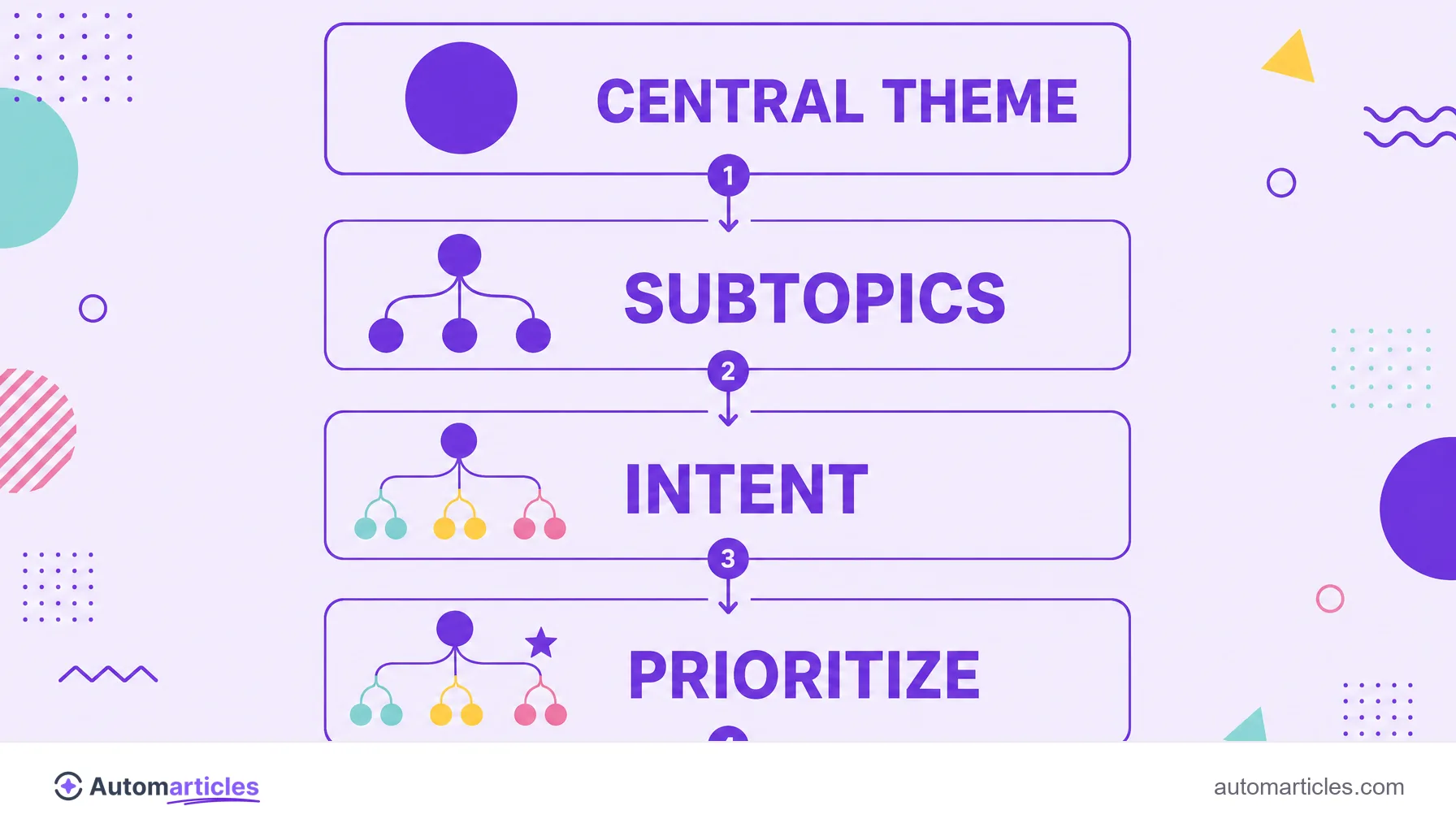
Building a topic map is an exercise of research plus organization. A simple script:
- Define the central theme: the broad subject you want to own sits at the center of the map.
- Gather the subtopics: use keyword research, People Also Ask and related searches to discover the questions and variations that orbit the theme.
- Group by intent: gather the subtopics according to search intent, separating what is learn, compare and decide.
- Draw the branches: connect each subtopic to the center and create sub-branches when an angle calls for more than one article.
- Mark priorities: highlight on the map what has more volume, more alignment with the business or less competition.
The map does not need to be born perfect. It is a living document: as you publish and discover new audience questions, new branches come in and the territory of the subject expands.
From map to cluster: turning the plan into content
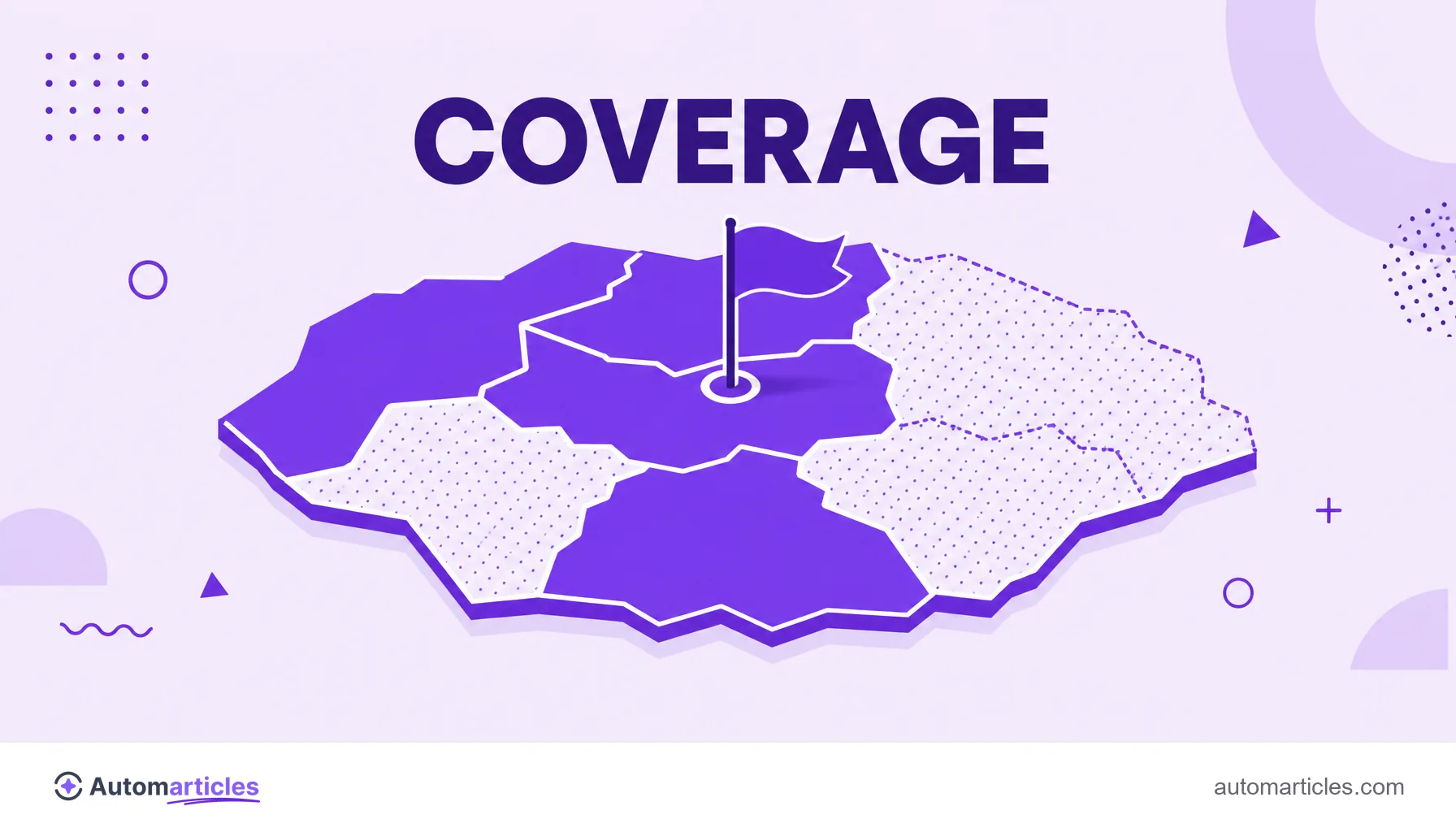
The topic map and the content cluster are two sides of the same coin. The map is the plan; the cluster is the execution. Each branch of the map becomes a page, and the structure you drew defines how those pages will connect.
In the turn from plan to build, the central theme usually becomes the pillar page, while the branches become the supporting content. The subtopics you mapped and have not yet covered clearly point to each content gap to tackle next.
That is why the topic map is not a planning ornament. It is what ensures the cluster is born complete, with a clear path from the first article to full coverage of the subject.
Tools to build your topic map
You can draw a topic map with whatever you have at hand, from paper to software. The most common options:
- Mind mapping tools: visual apps let you create branches and reorganize everything with ease.
- Spreadsheets: less visual, but great for listing subtopics, volume, intent and the status of each page.
- SEO tools: platforms like Semrush and Ahrefs group keywords by theme and help you discover subtopics you had not thought of.
The format matters less than the habit. A topic map reviewed often, fed by the audience's real questions, is worth more than a pretty diagram no one looks at again.