
Nofollow link: what it is and how to use it in SEO
By Tiago CostaUpdated on July 2, 2026
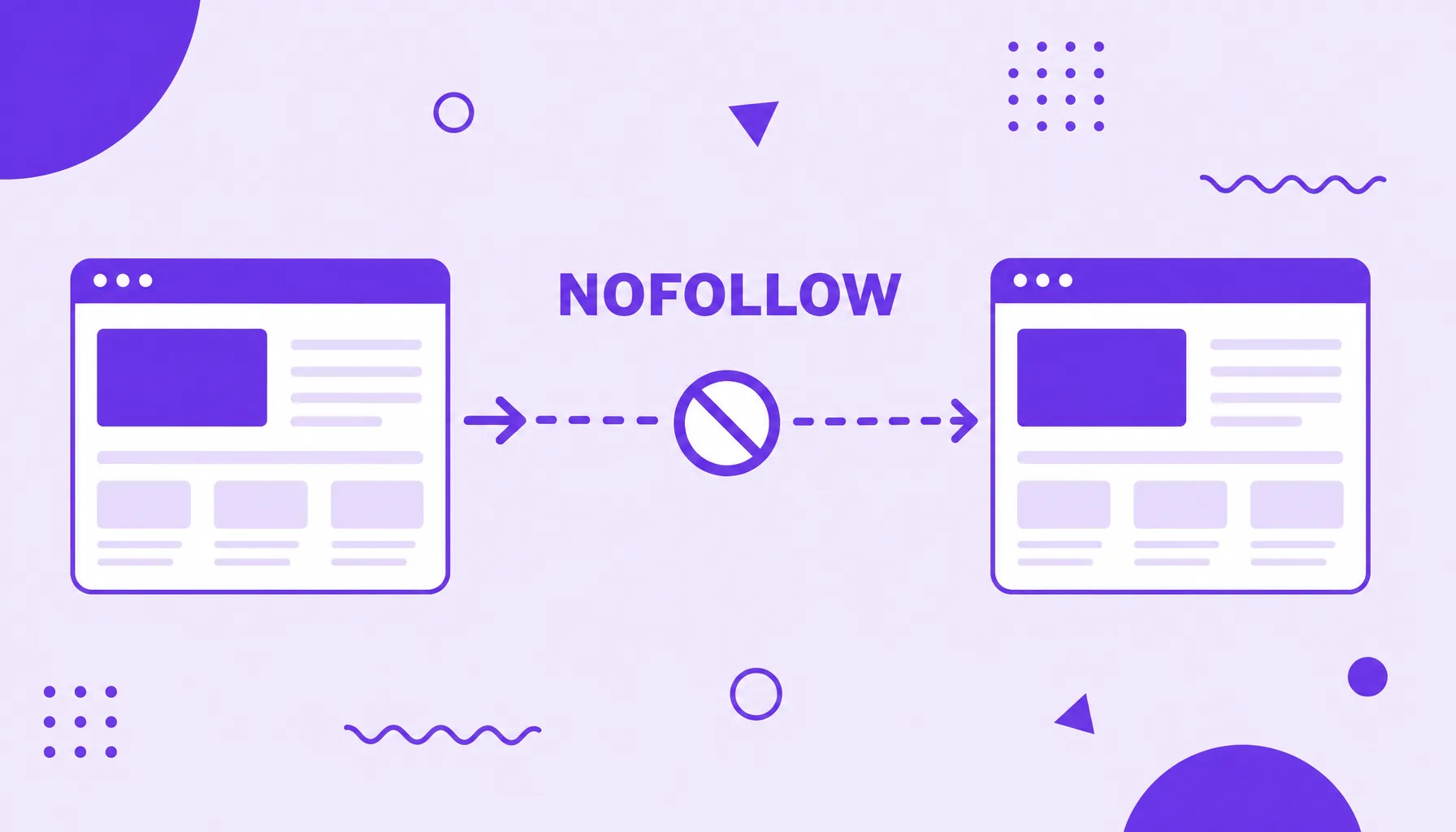
Nofollow is a link attribute (rel="nofollow") that asks Google not to pass authority to the destination page. In practice, a nofollow link:
- stays clickable and takes the user to the destination;
- does not transfer SEO authority (link juice);
- is used for paid links, comments and unendorsed sources;
- since 2020, is treated by Google as a hint, not an order.
What a nofollow link is
A nofollow link is a link that carries the rel="nofollow" attribute in the HTML code. That attribute works as a note to the search engine: I point to this page, but I do not want to endorse it or transfer authority to it. In practice, the link stays clickable and takes the user to the destination normally, only without the weight of an SEO vote.
Within a link's structure, nofollow looks like this: a href="https://example.com" rel="nofollow". Without that attribute, the link is considered dofollow by default and passes authority normally.
Nofollow was created by Google in 2005 to fight comment spam on blogs. The idea was simple: if the links left in comments did not pass authority, spammers would lose the incentive to fill them with links. Since then, the attribute has become an important tool to control which backlinks you endorse.
Nofollow vs dofollow: what the difference is
The difference between the two is direct and revolves around one thing: the transfer of authority, sometimes called link juice.
| Attribute | What it does |
|---|---|
| Dofollow | The default link. It passes authority and helps the destination page rank better. |
| Nofollow | Asks Google not to pass authority. It serves for traffic, brand and referral, without the SEO vote. |
A healthy link profile usually mixes both naturally. A site that only receives dofollow links, always from the same sources, can look artificial. That is why nofollow links have their role too: they help build a profile that looks organic in Google's eyes. And although they do not pass PageRank directly, they still build domain authority indirectly, by generating visibility and traffic.
rel sponsored and rel ugc: the evolution of nofollow
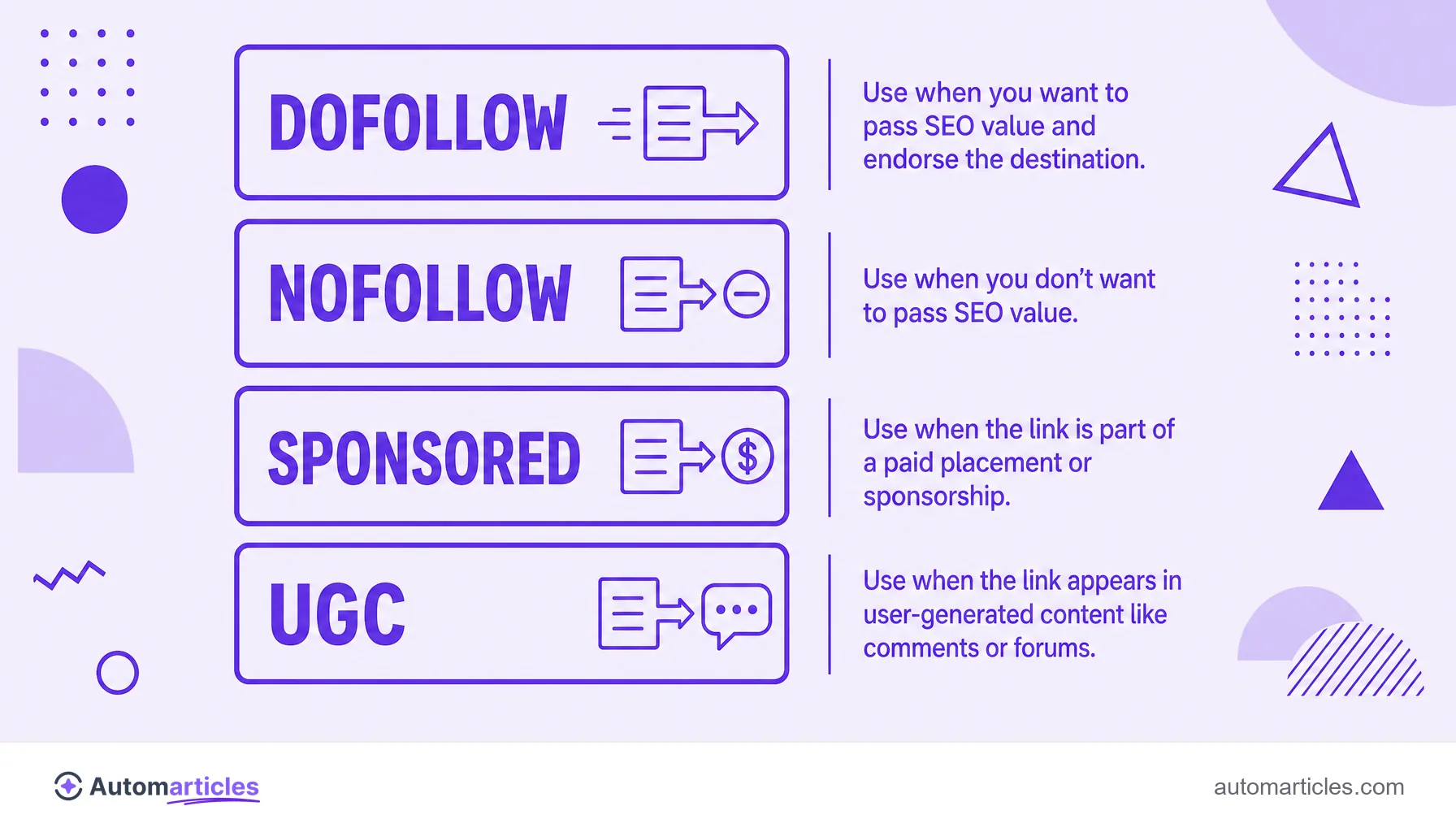
In September 2019, Google announced an important change in how it treats nofollow. Instead of a single attribute, there are now three, to better describe the nature of each link:
- rel="nofollow": the classic one, for links you do not want to endorse.
- rel="sponsored": for paid links, from ads, sponsorships or affiliates.
- rel="ugc": for links in user generated content, such as comments and forums.
Along with it came another novelty: according to the official Google documentation, these attributes stopped being an absolute order and started working as a hint that the search engine can consider for ranking. In other words, Google can now, in some cases, take a nofollow link into account.
Despite the evolution, the traditional nofollow remains the most common. A study by Ahrefs of the top 110,000 sites found that 10.6% of all backlinks are nofollow, while the ugc and sponsored attributes still have very low adoption.
When to use nofollow links
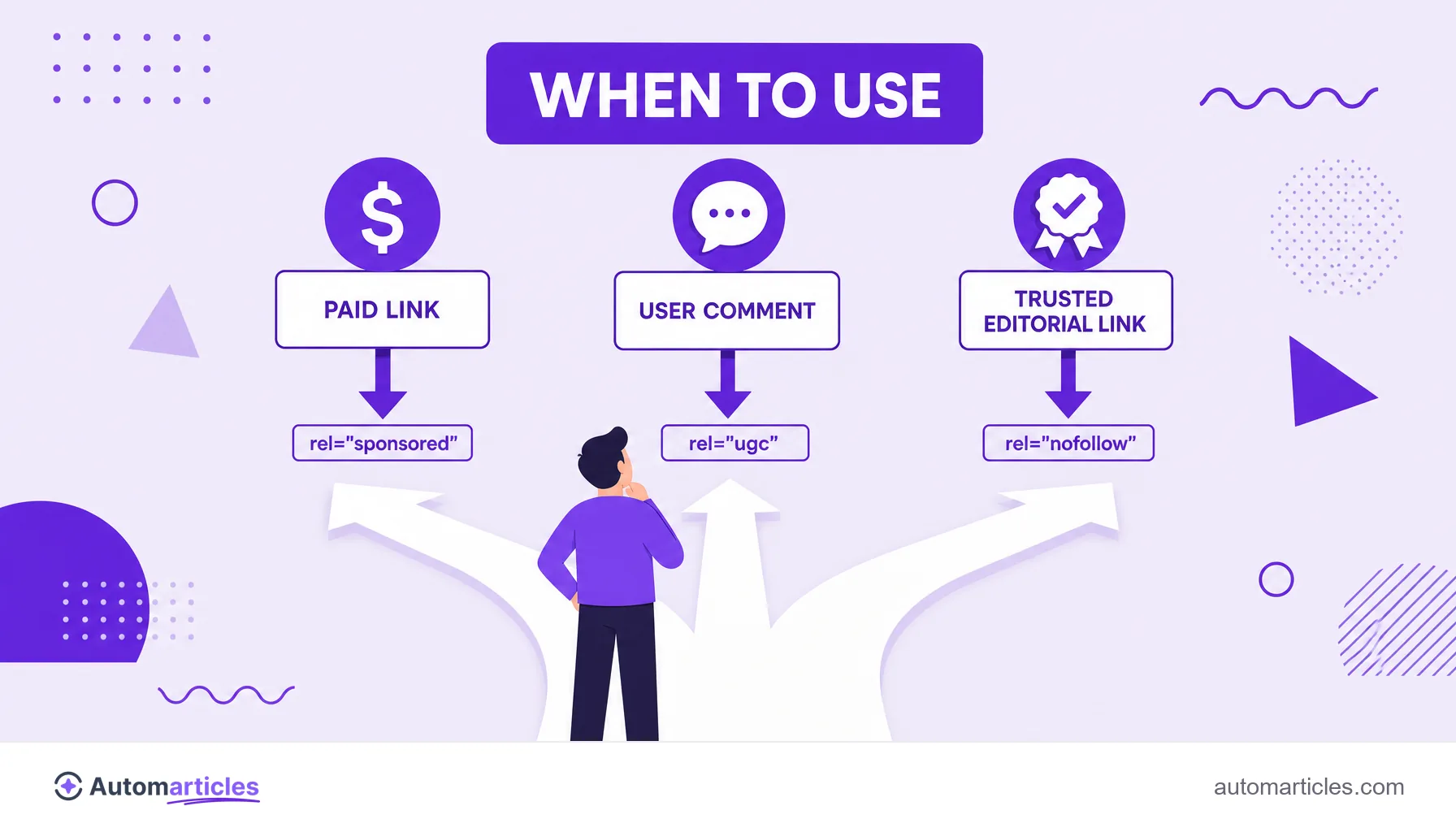
Knowing when to apply nofollow avoids both endorsing pages you do not know and violating Google's guidelines. The most common cases are:
- Paid links: any bought, sponsored or affiliate link should carry rel="sponsored" (or nofollow). Passing authority on a paid link violates Google's rules.
- User content: comments, forums and profiles with links inserted by third parties call for rel="ugc" or nofollow, since you do not control where they point.
- Sources you do not endorse: when citing a dubious site as an example, nofollow makes it clear that you do not endorse it.
- Utility links: login pages, terms of use or areas that do not need SEO strength.
On the editorial links you insert on purpose, such as in your own guest post or between reference pages in your sector, dofollow is usually the right call, because there you really do want to endorse the destination. This control is part of the work of off-page SEO.
Do nofollow links help SEO?
There is a myth that a nofollow link is useless for SEO. The reality is richer. Even without passing direct authority, these links deliver real value:
- Referral traffic: a nofollow link on a busy site can bring many visitors, and that traffic is worth it on its own.
- Visibility and brand: appearing in relevant outlets builds recognition, even without the SEO vote.
- Natural profile: a healthy mix of dofollow and nofollow signals organic link growth.
- Discovery: since nofollow became a hint, Google may follow some of these links to find new pages.
In other words, chasing only dofollow links is a shortsighted strategy. The focus should be earning relevant mentions, not filtering every link by its attribute. If, at some point, you accumulate many toxic links, then it is worth using disavow to ask Google to ignore them.
Nofollow on Instagram and other meanings of the term
If you searched for nofollow and Instagram apps showed up, do not worry: the word gained a second meaning, unrelated to SEO. It helps to separate the two:
- Nofollow in SEO: the link attribute of this glossary, which controls the transfer of authority.
- Instagram no follow apps: tools that show who does not follow you back on the social network. Many are called NoFollow or Non-Followers, but they have nothing to do with links or with Google.
To find out who does not follow you back on Instagram, these apps do work, but be careful about giving third party services access to your account. In this glossary, however, nofollow is always the SEO link attribute.