
What a lead is in digital marketing and how to generate leads
By Tiago CostaUpdated on July 2, 2026
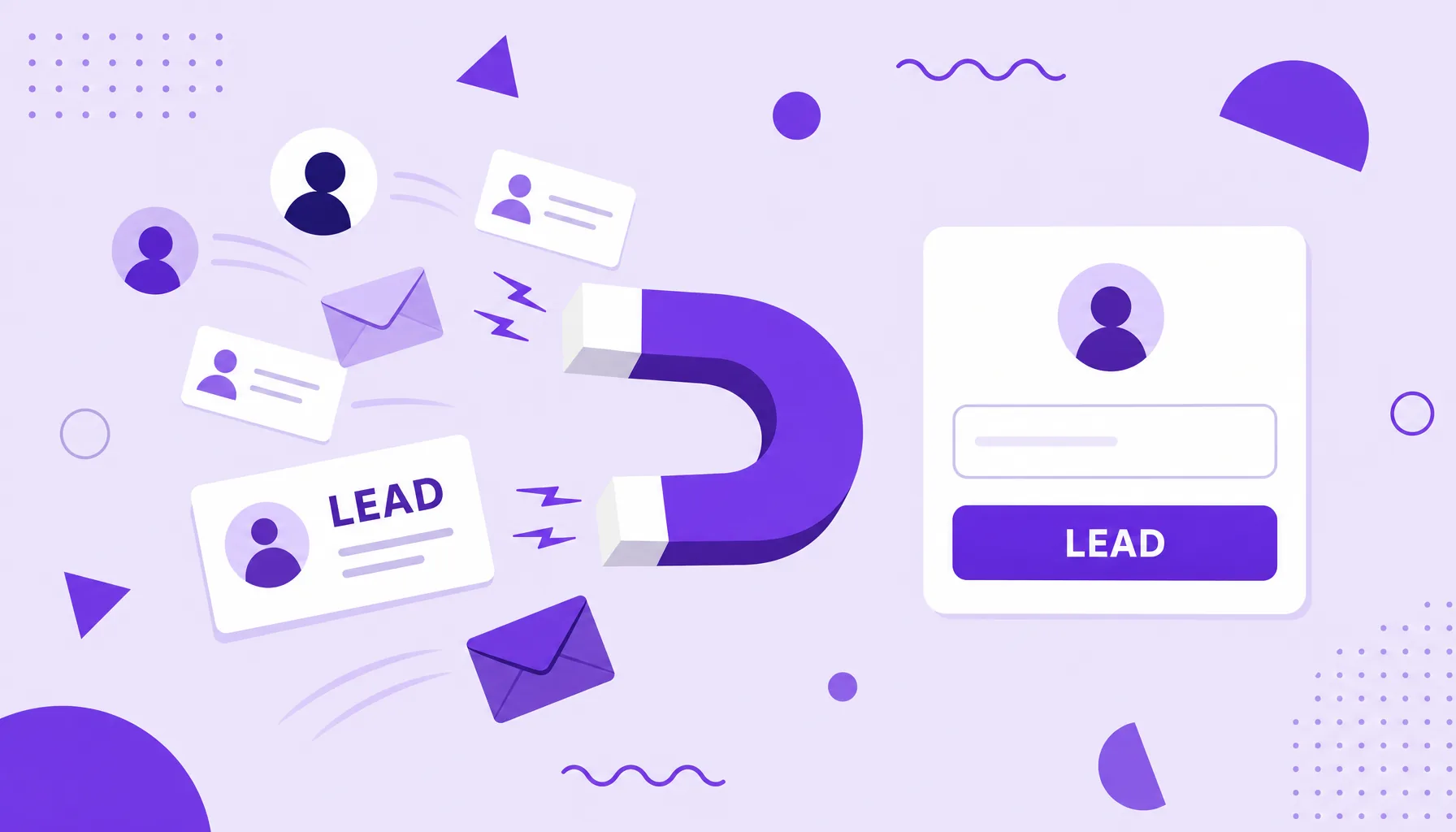
A lead is a contact who has shown interest in your product or service and shared their own details, such as a name and email. In practice, a lead:
- filled in a form, downloaded a resource or requested contact;
- gave the company permission to communicate with them;
- is not a customer yet, but a real sales opportunity;
- can be qualified and nurtured up to the buying decision.
What a lead is and what it means
In digital marketing, a lead is a person (or company) that has shown some interest in your brand and, in exchange for content or an offer, handed over contact information. They went from an anonymous visitor to an identifiable contact.
The term comes from the English verb to lead, in the sense of guiding, which is why it describes someone who entered the start of the sales process and can be guided toward a purchase. A visitor who only read an article is not a lead yet. They become a lead when they leave a detail (email, phone, name) and allow contact, usually by filling in a form on a landing page.
It helps to separate two close roles: the lead is the potential contact, while the customer is the one who has already bought. That is why the expression "lead customer" tends to refer to the lead who has advanced through the journey and is close to (or has just made) the purchase.
Types of lead: from curious visitor to ready to buy
Not every lead is at the same point. Classifying contacts by temperature and by maturity avoids wasting energy on those who are not ready to buy and helps prioritize those who are:
| Type of lead | What defines it |
|---|---|
| Cold lead | Shared a detail, but still knows little about the solution and has no urgency. |
| Warm lead | Already engages with content and compares options, without deciding. |
| Hot lead | Shows clear buying intent and asks for a proposal or a demo. |
| MQL | A marketing qualified lead, with a suitable profile and engagement. |
| SQL | A sales qualified lead, ready for a commercial approach. |
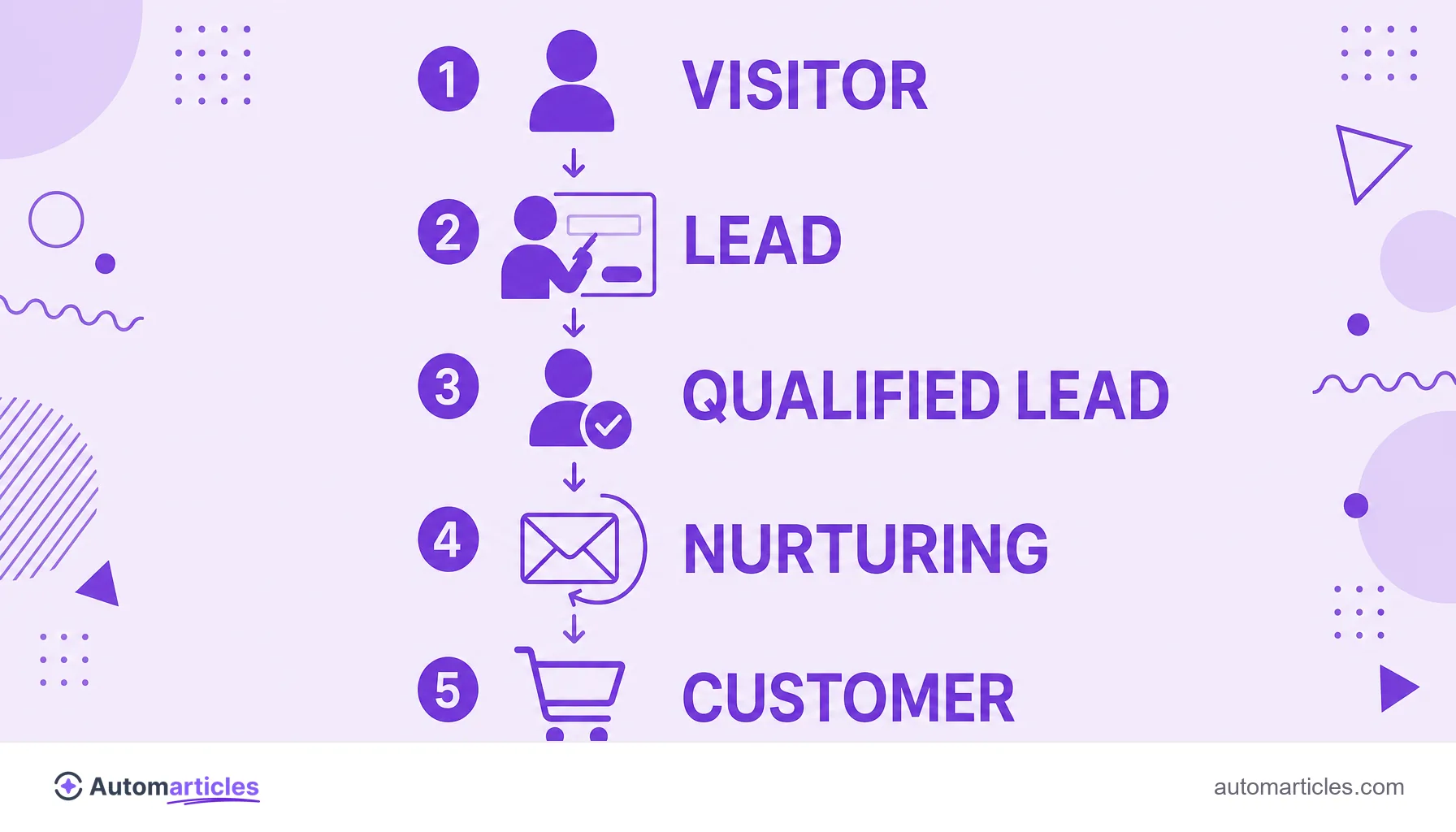
A qualified lead is one that fits the ideal customer profile and has shown consistent interest. Understanding which stage of the sales funnel each contact is in is what lets you send the right message at the right time.
How a lead is generated in practice
Lead generation happens when you offer something valuable in exchange for a contact. The most common path has four pieces that work together:
- A relevant offer: a resource, a free trial or a discount that works as a lead magnet.
- A conversion page: the landing page, focused on a single action, with no distractions.
- A form: where the person leaves the details you need (the shorter it is, the higher the completion rate).
- A call to action: the CTA that invites the click, with a clear verb and an explicit benefit.
According to the conversion data from Ruler Analytics, the average conversion rate from visitor to qualified lead sits around 2.9%, which shows why attracting qualified volume and reducing form friction makes such a difference in the result.
How to qualify and nurture your leads
Capturing the contact is only the beginning. Most leads are not ready to buy on day one, and that is where lead nurturing comes in: a sequence of content and messages that educates the contact and guides them along the journey to the decision.
Two resources help organize this work:
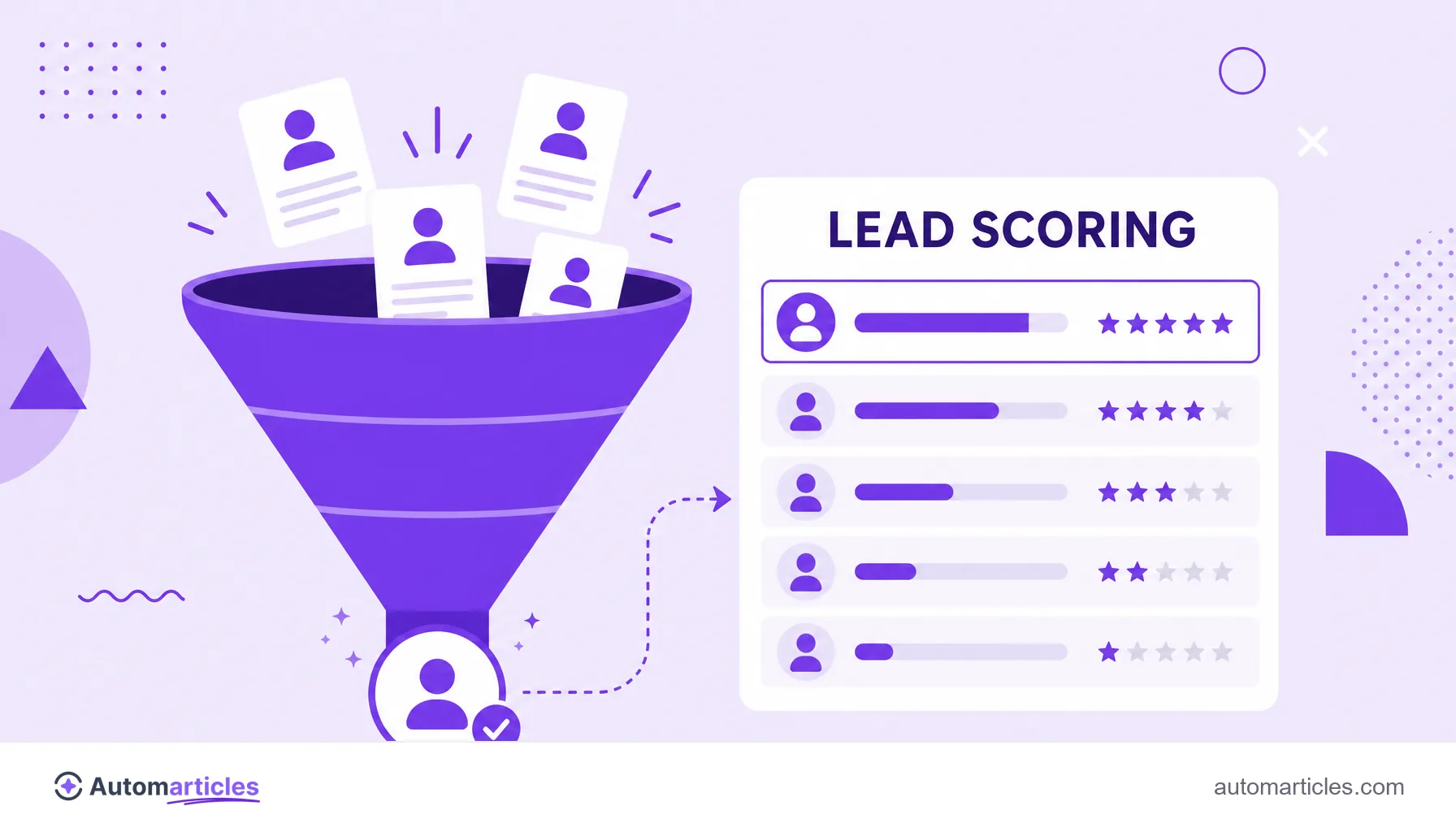
- Lead scoring: a points system that adds up profile signals (role, company, segment) and behavior signals (opens, clicks, pages visited) to indicate when the lead is mature.
- Ideal profile: comparing each contact with your persona avoids passing to sales someone who would never fit the solution.
The gain is concrete. Forrester Research estimates that companies that excel at lead nurturing generate around 50% more sales ready leads at a 33% lower cost per lead, a return that makes it worth investing in the relationship before trying to sell.
Lead on Instagram, lead customer and other meanings of the term
Because "lead" is a word borrowed from English, it appears in different contexts and causes confusion. It is worth clarifying the main ones:
- Lead on Instagram: it is the same marketing concept. These are contacts who arrive through the network, whether from lead ads, direct messages or the link in the bio that leads to a landing page.
- Lead customer or commercial lead: names used by sales teams for the contact with buying potential, especially in sectors such as automotive (the well known dealership "lead").
- Lead in journalism: a completely different meaning. It is the opening paragraph of a news story, which sums up the essentials. Nothing to do with marketing.
- Lead as a metal: in English, lead is also the metal. That is why searches like "lead metal" have nothing to do with generating contacts.
In this glossary, whenever we talk about a lead we mean the marketing and sales contact, the business opportunity.
How to generate more leads: a step by step
Generating leads consistently is less about luck and more about method. A routine that works:
- Attract the right audience: produce content aligned with the intent of the people you want to reach, supported by content marketing and SEO.
- Offer irresistible magnets: resources, tools or trials that solve a real problem for your audience.
- Multiply your capture pages: the more specific offers, the more entry doors. A study by HubSpot points out that sites with more than 40 landing pages generate around 12 times more leads than sites with only 1 to 5 pages.
- Reduce friction: short forms, fast loading and a clear CTA raise the conversion rate.
- Track and optimize: measure the source, cost and quality of each lead to invest in what brings a return.
In the end, what sustains growth is not a spike of sign ups, but a predictable machine that attracts, converts and nurtures contacts every day.