
Paid traffic: what it is, how it works and the main types
By Tiago CostaUpdated on July 2, 2026
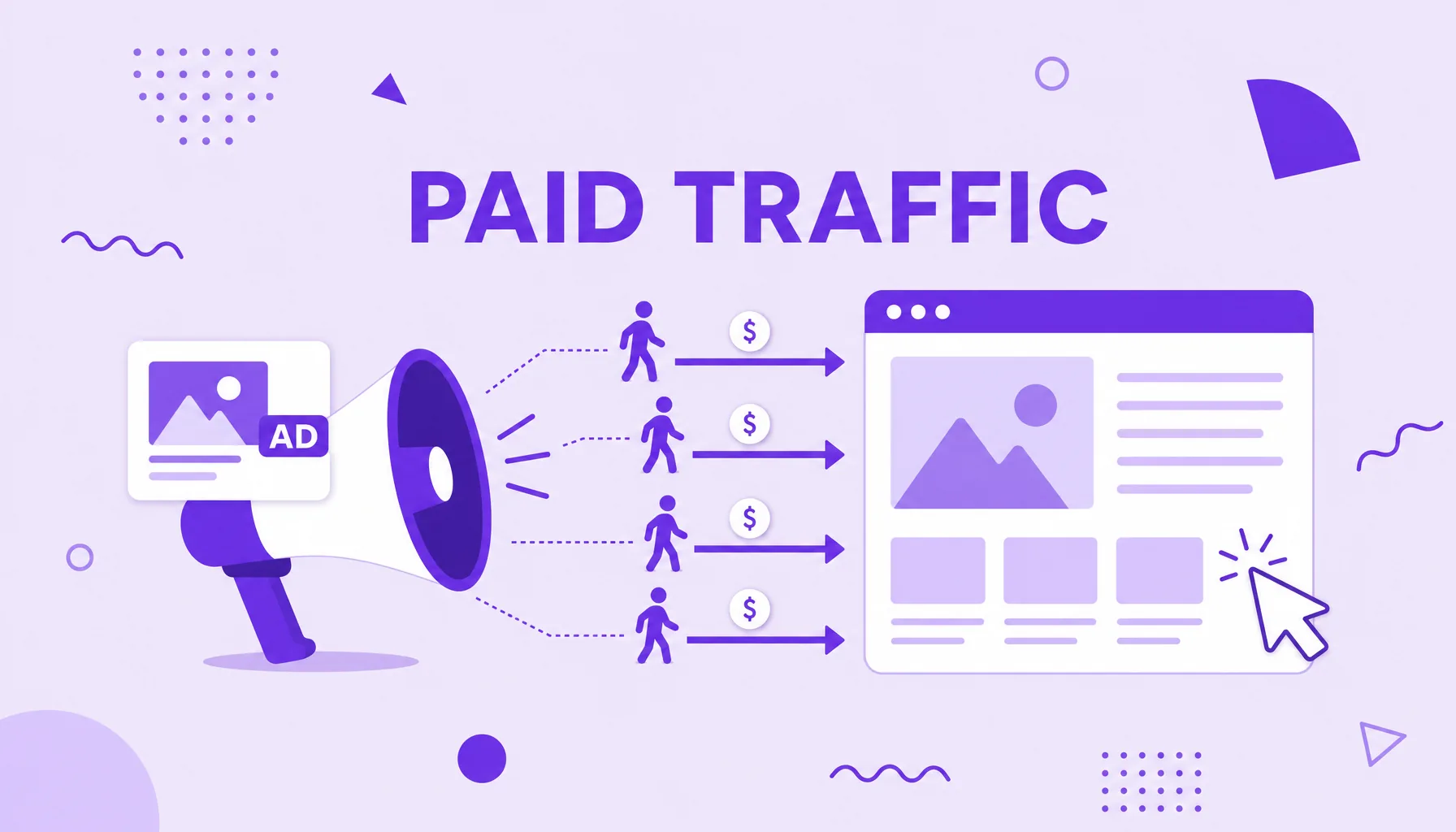
Paid traffic is any visit that reaches your site through ads, rather than spontaneously. The main types are:
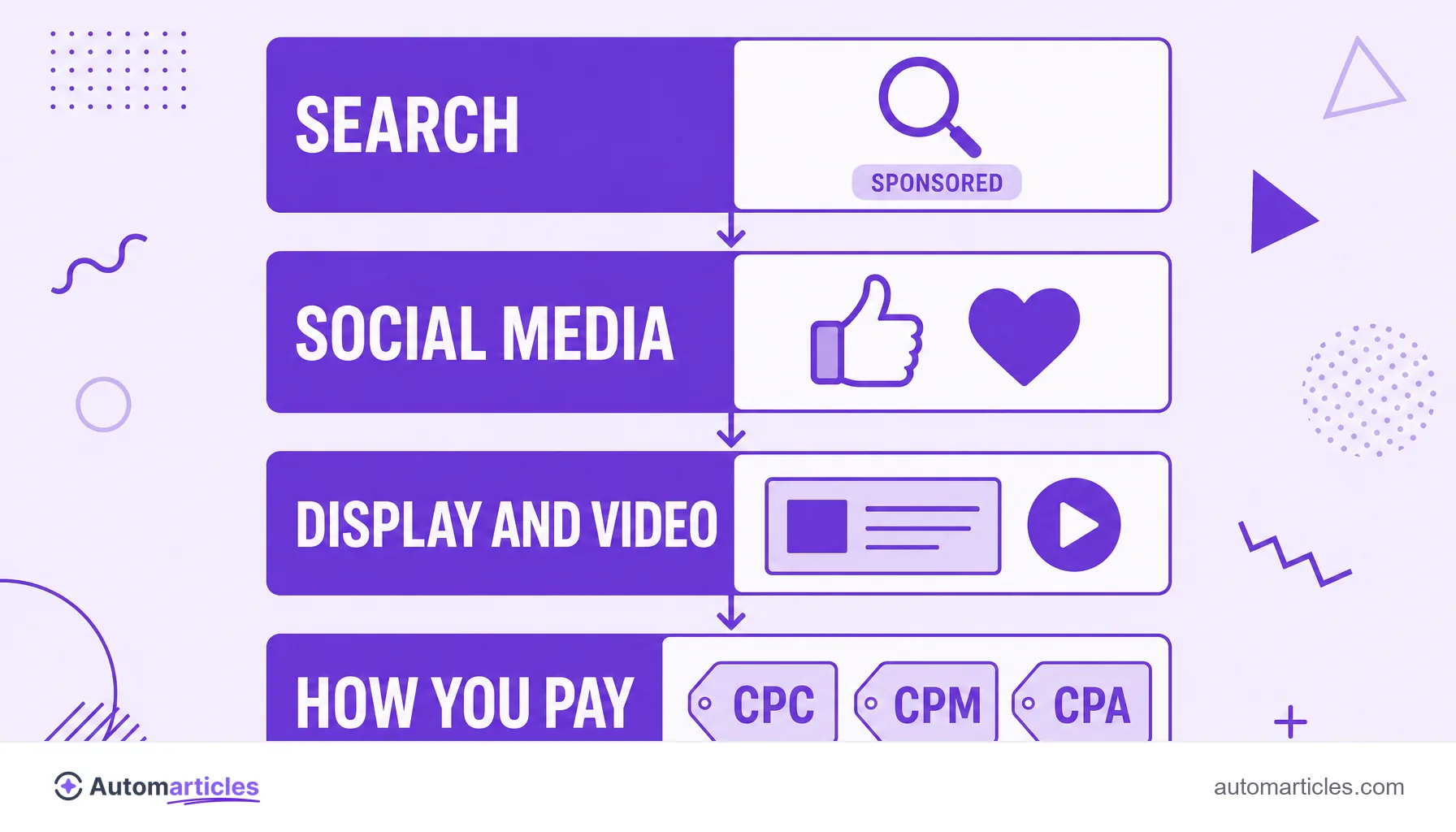
- Sponsored links in search (Google Ads and Microsoft Ads);
- Paid social media (Meta Ads, TikTok Ads and LinkedIn Ads);
- Display and video (banners and ads on YouTube);
- Native ads and sponsored content;
- Remarketing, which reaches people who already visited the site.
What is paid traffic
Paid traffic is the name given to any visit that reaches a site, store or profile because someone paid for an ad, and not because the link showed up spontaneously. Instead of waiting for the search engine or the social network's algorithm to deliver the content, the advertiser buys space and reach right away.
The logic is simple: you decide how much to invest, who to show up for and where, and the platform displays your ad to that audience. Payment usually happens per click, per thousand views or per specific action, such as a sign-up or a purchase.
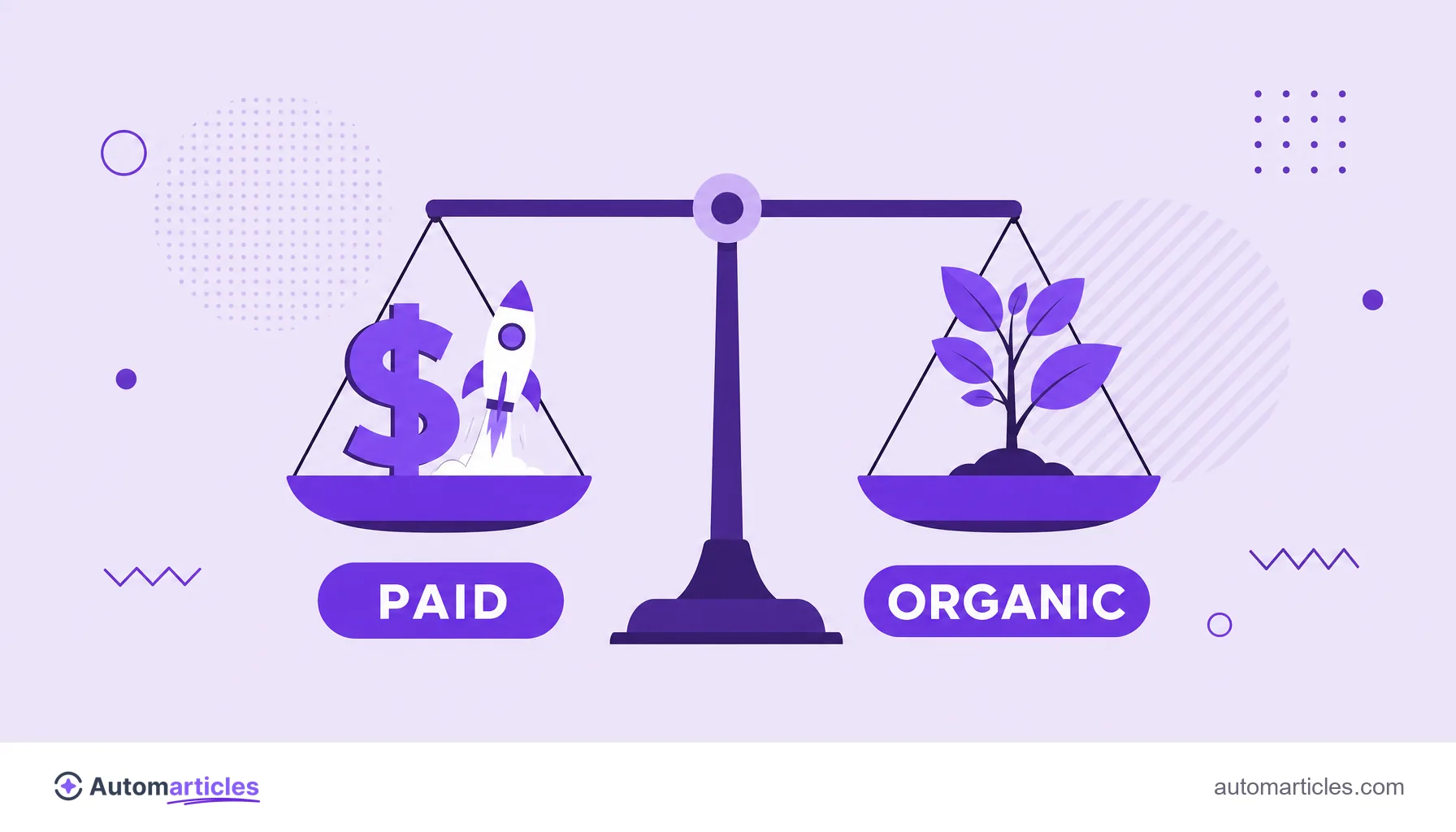
Paid traffic is the complementary opposite of organic traffic. While organic depends on time, content and reputation, paid turns on and off like a tap: the moment the budget runs out, the visits stop.
How paid traffic works
Behind every ad there is a real-time auction. When someone runs a search or opens an app, the platform decides, in milliseconds, which ads to show and in what order. That decision does not look only at the bid amount, it combines three main factors:
- Bid: how much you are willing to pay for a click or per thousand views.
- Ad quality: how relevant and useful it is to whoever sees it, including the landing page experience.
- Targeting: the audience you chose by interest, behavior, location, age or searched term.
The cost is measured by acronyms such as CPC (cost per click), CPM (cost per thousand views) and CPA (cost per acquisition). This figure varies a lot by industry and competition: according to 2026 data from WordStream, the average cost per click on Google Ads in the search network was around $5.42. That is why where the click leads matters as much as the ad: a good landing page with a clear CTA is what turns the paid click into a result.
Main types and channels of paid traffic
Paid traffic is not a synonym for Google Ads. It spreads across several channels, each with an ideal format and moment:
| Channel | Format | Good for |
|---|---|---|
| Google Ads (search) | Sponsored links at the top of the SERP | Capturing people already looking for the solution |
| Google Ads (display and YouTube) | Banners and videos | Reach and brand awareness |
| Meta Ads | Ads on Facebook and Instagram | Sparking interest by behavior |
| TikTok Ads | Native short videos | Young audiences and viral content |
| LinkedIn Ads | Ads targeted by job role | B2B sales and lead generation |
Each channel has a different response behavior. In search, for example, 2026 data from WordStream points to an average click-through rate (CTR) of 6.64% on Google Ads, because the ad reaches people with hotter intent. On social media, the click usually costs less, but demands strong creative to interrupt the scroll.
Paid traffic vs organic traffic: which to choose
The right question is not which is better, but which makes sense for each goal and moment. The two models have opposite and complementary strengths:
| Criterion | Paid traffic | Organic traffic |
|---|---|---|
| Speed | Immediate result | Takes weeks or months |
| Cost | You pay per click or view | No cost per click |
| Durability | Stops when the budget ends | Keeps paying off over time |
| Best use | Launches, promotions and tests | Authority and sustainable growth |
In practice, the most mature strategies use both together. Paid traffic brings quick visits and data, useful even to validate which topics convert, while investing in SEO builds a flow of organic traffic that reduces the dependence on ads over time. Those who use only paid media stay hostage to the budget; those who bet only on organic give up speed.
What is the best paid traffic for beginners?
For anyone starting out, the best channel is the one where the target audience already is and that lets you measure results clearly. Two entry doors tend to work well:
- Google Ads in search: ideal when people are already actively looking for your product or service. The intent is high and the result is easy to measure.
- Meta Ads: ideal to generate demand and introduce the brand to an audience that is not looking for you yet, with a low entry cost.
The advice for beginners is always the same: start with a small budget, test different ads and audiences, and track the numbers closely. Send the click to a landing page focused on a single action and think about the journey inside a sales funnel, so you do not pay for visits that evaporate without converting.
Can you make money with paid traffic?
Yes, and that is how much of e-commerce, digital products and affiliate businesses operate. The math, however, only works when every dollar invested comes back multiplied. For that, two metrics guide the operation:
- ROAS (return on ad spend): how much revenue each dollar of ads generates.
- CAC (customer acquisition cost): how much it costs, in ads, to win a new customer.
Making money with paid traffic is less about spending more and more about converting better. Without a clear offer, a good landing page and CRO work to raise conversion, the ad just burns budget. With a strategy, it becomes one of the most predictable and scalable ways to grow, since you only need to invest more in what already pays off.