
What CAC (customer acquisition cost) is and how to calculate it
By Tiago CostaUpdated on July 2, 2026
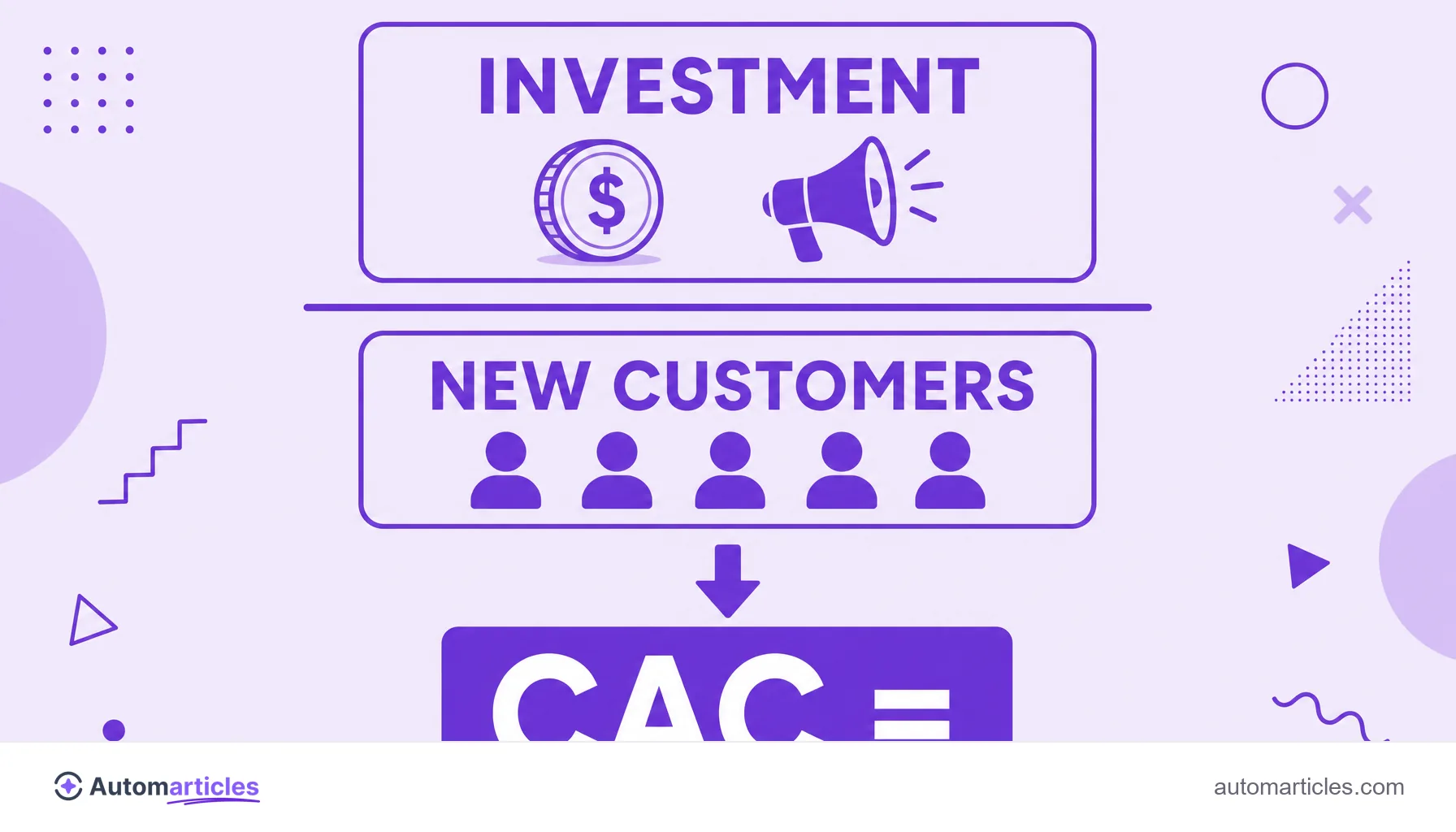
CAC (Customer Acquisition Cost) is how much you spend, on average, to win a customer. You calculate it like this:
- add up the marketing and sales investments for the period;
- count how many new customers came in during that period;
- divide the total invested by the number of customers;
- the result is the CAC, the average cost per customer.
What CAC (customer acquisition cost) is
CAC stands for Customer Acquisition Cost. It is the metric that answers a simple and decisive question: how much does your company need to spend, on average, to turn a stranger into a paying customer.
This value is not only ad spend. CAC brings together everything that goes into the effort to win customers: paid media, salaries of the marketing and sales team, tools, content production and commissions. By dividing that total by the number of customers acquired, you find the average price of each new customer.
CAC is one of the most important indicators of any business because it measures efficiency, not just volume. There is no point in attracting many customers if each one costs more than it returns. That is why it is almost always read alongside metrics like the value of the customer over time and the conversion rate of the sales funnel.
How to calculate CAC: formula and example
The CAC formula is straightforward:
CAC = (marketing investment + sales investment) / number of customers acquired in the period
Imagine a company that, in one month, spent 8,000 on marketing and 4,000 on sales, totaling 12,000. In that same month, it won 40 new customers. The calculation looks like this:
| Item | Value |
|---|---|
| Marketing investment | 8,000 |
| Sales investment | 4,000 |
| Total invested | 12,000 |
| Customers acquired | 40 |
| CAC | 300 |
In other words, each new customer cost 300. The trick is to standardize the period and include all relevant costs. A common mistake is to count only media and forget salaries and tools, which makes the CAC look smaller than it really is. It also helps to measure CAC by acquisition channel, since the cost of organic traffic tends to be very different from the cost of paid traffic.
What a good CAC is
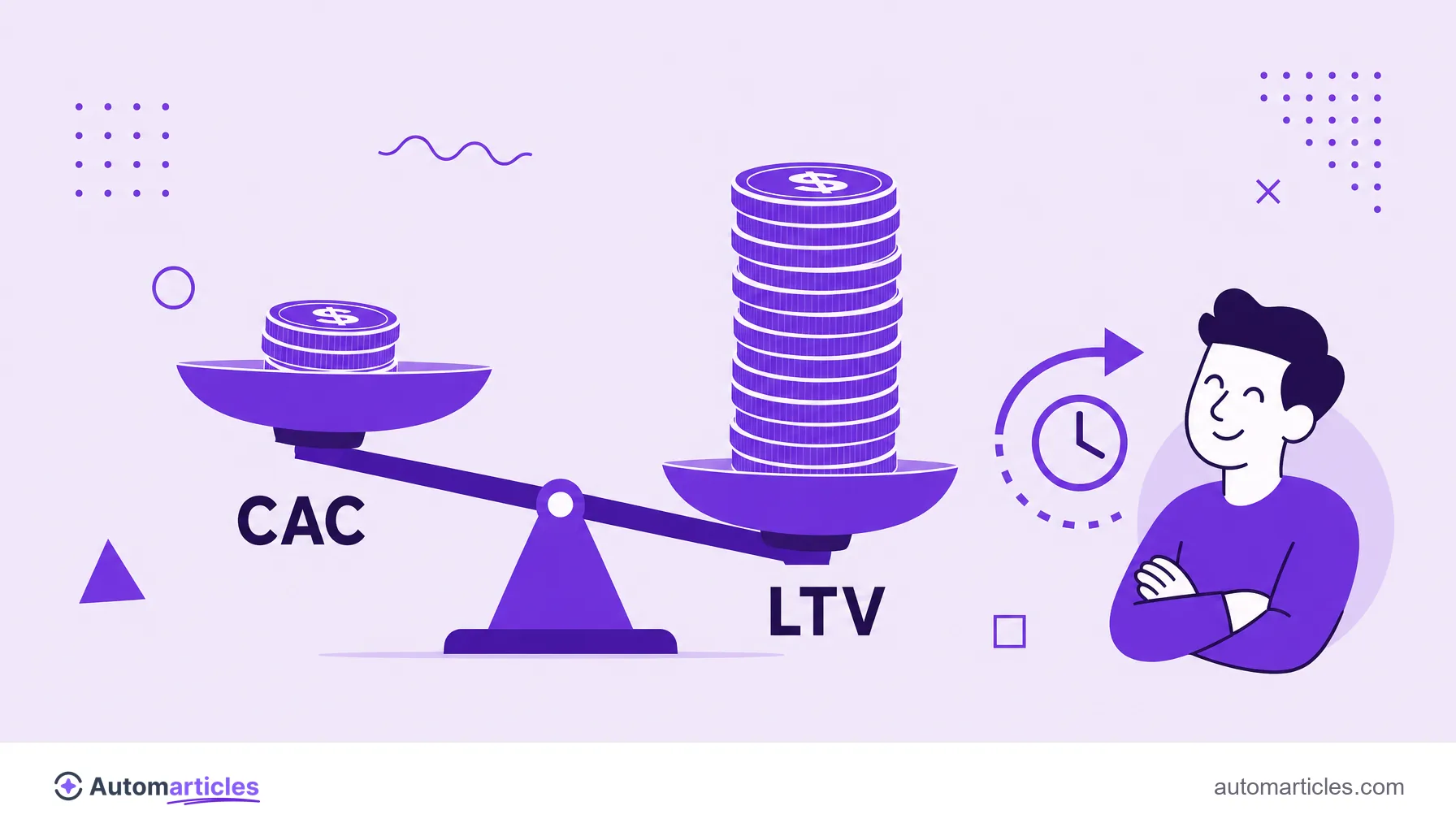
There is no magic number for a good CAC, because it depends on how much revenue each customer generates. What separates a healthy CAC from an unsustainable one is the comparison with the LTV (the value of the customer over time, or lifetime value).
The most used reference is the LTV to CAC ratio. A ratio of around 3 to 1, that is, the customer generates roughly three times what it cost to win them, is usually considered healthy in many business models. If the ratio is near 1 to 1, the business spends almost everything it earns just to acquire customers. If it is well above that, it may be a sign that there is room to invest more in growth.
Another parameter is the payback time: how many months the customer takes to pay back their own CAC. The faster that return, the more cash room the company has to reinvest in demand generation.
CAC, LTV and churn: how they connect
CAC does not live alone. It forms a trio with LTV and churn, and it is the combined reading that reveals the health of growth.
- CAC: how much it costs to win a customer.
- LTV: how much revenue that customer generates while they stay with you.
- Churn: the rate of customers who cancel or stop buying in a period.
The connection is logical. When churn is high, customers stay a short time, the LTV shrinks and the CAC weighs more and more, because you have to replace those who left. When churn is low, the customer stays, the LTV grows and the same CAC becomes much more worthwhile. That is why reducing cancellation usually improves the acquisition economics without cutting a single cent of the cost. Caring for the lead experience from the start, delivering what was promised, is what keeps that balance standing.
CPV and CMV: what they are and why not to confuse them with CAC
When analyzing costs, three similar acronyms often get mixed up: CAC, CPV and CMV (COGS). Each one measures something different:
- CAC (Customer Acquisition Cost): how much you spend to win a customer, adding marketing and sales.
- CPV (Cost per Sale): the cost associated with closing a specific sale. While CAC looks at the customer, CPV looks at the transaction, which matters when the same customer buys several times.
- CMV, or COGS (Cost of Goods Sold): the direct cost of producing or acquiring what was sold, an accounting concept tied to margin, not to acquisition.
The practical difference is big. CAC and CPV measure how much it costs to generate revenue; COGS measures how much it costs to deliver the product. Confusing the three leads to wrong decisions, like cutting acquisition investment thinking the problem is in the margin, or the opposite. Keeping each metric in its place is what lets you read the business clearly.
How to reduce CAC
Reducing CAC means gaining efficiency: winning the same customers while spending less, or more customers with the same budget. The topic became urgent because acquiring customers got more expensive. According to Paddle's analysis of how CAC changes over time, acquisition cost rose around 60% in five years, both in B2B and B2C, pushed by growing competition across all channels.
Some paths that reduce CAC consistently:
- Invest in low marginal cost channels: the organic traffic coming from SEO and content costs more at the start, but dilutes the CAC over time, since a well ranked article attracts customers for months without paying per click.
- Improve conversion: optimizing pages and flows with CRO makes the same traffic generate more customers, lowering the cost of each one.
- Qualify leads better: talking to those with the right profile avoids spending sales effort on those who will not close.
- Increase referrals: satisfied customers bring new customers at almost zero cost.
The logic is always the same: beyond cutting spending, increase the return of each dollar invested. A lower CAC frees up cash to reinvest in growth and makes the business more resilient to periods of expensive media.