
SERP analysis: what it is and how to do it
By Tiago CostaUpdated on July 2, 2026

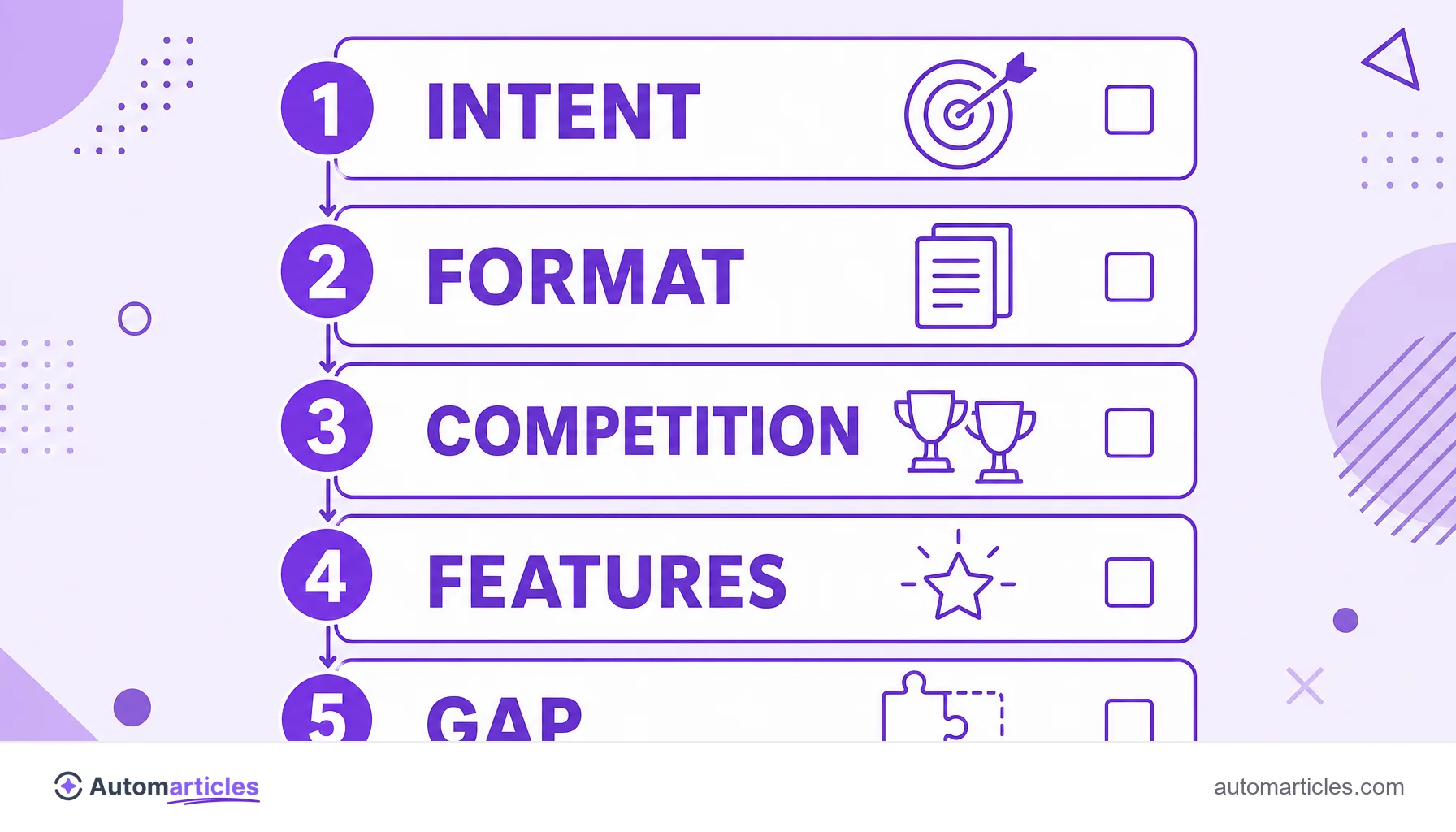
SERP analysis means studying the results page of a keyword before writing. It answers three questions:
- what the search intent is (to inform, compare or buy);
- which page format dominates the top (guide, list, store, video);
- how competitive the results are and how authoritative the sites are;
- which features the SERP activated (featured snippet, People Also Ask, AI Overview).
What SERP analysis is
SERP analysis is the study of the results page that the search engine displays for a specific keyword. Instead of writing in the dark, you first look at what is already live: which pages hold the top positions, what type of content they bring, which visual features Google activated and which user desire all of it serves.
In practice, analyzing the SERP is like reading the answer key before the exam. The search engine has already tested thousands of pages for that term and decided which ones deserve the top. That choice reveals, with no room for guessing, what the person expects to find and the format that tends to be rewarded. Ignoring this signal is the most expensive mistake for anyone producing content: you can write an excellent text and still fail to rank, simply by delivering the wrong format for the intent of that search.
Why analyze the SERP before writing
Every SERP carries Google's answer to the search intent of that term. If the top ten positions are stores and product pages, the intent is to buy, and a blog article will hardly compete there. If they are guides, tutorials and lists, the intent is to learn, and that is where educational content finds room. Reading this before writing prevents producing the right piece for the wrong search.
The analysis also shows the size of the challenge. By observing the authority of the ranking domains and the depth of the texts, you estimate the keyword difficulty in practice and decide whether it is worth entering that fight now or aiming for a more accessible term. And the prize for getting it right is big: according to the CTR study by Sistrix, the first organic result gets on average around 28% of clicks, while the tenth ends up with less than 3%. Climbing positions does not add traffic, it multiplies it.
What to observe in a SERP analysis
A complete reading goes well beyond looking at who is in first place. These are the points that matter most:
| What to observe | What it reveals |
|---|---|
| Dominant intent | Whether the search wants information, comparison or purchase, defined by the type of page that appears. |
| Content format | Long guide, list, step by step tutorial, product page or video. |
| Depth | Number of subtopics, length and richness of the texts that already rank. |
| Authority of the results | Whether the top is dominated by big brands or if there is room for smaller sites. |
| SERP features | Featured snippet, People Also Ask, AI Overview, images, videos and local pack. |
The features deserve special attention. A People Also Ask block hands you, for free, a list of subquestions to cover in your text. The presence of a featured snippet shows that there is a position zero up for grabs, a spot above the first organic result that you can try to occupy with a direct answer.
How to do a SERP analysis step by step
You do not need anything fancy to start. A simple routine already delivers most of the value:
- Search in an incognito tab: look up the keyword while logged out, to reduce personalization and see a more neutral result.
- Classify the intent: look at the first five results and decide whether the search is informational, comparative or transactional.
- Map the format: note the type of page that repeats (guide, list, tutorial) and plan to deliver the same format, only better.
- List the active features: record whether there is a featured snippet, People Also Ask, videos, images or AI Overview, because each one is another opportunity.
- Study the real competition: open the first results, see which subtopics they cover and, above all, what they leave out. That gap is your angle.
The goal is never to copy what already exists. It is to understand the pattern that Google rewards and surpass it, adding examples, sourced data, clearer answers and a structure that is easier to scan.
SERP analysis in the age of AI
The SERP has changed its face in recent years. The AI Overviews, summaries generated by artificial intelligence at the top of the page, started answering many searches right there, without the user needing to click. Analyzing the SERP today includes checking whether that term triggers an AI summary and which pages it cites as sources.
This new behavior carries real weight. A study by the Pew Research Center showed that, when there is an AI summary on the page, users click on a link in only 8% of visits, against 15% when there is no summary. The lesson for content creators is clear: beyond ranking, the goal becomes turning into the source that the model chooses to cite. Objective answers, attributed data and a scannable structure are what increase that chance.

Tools for SERP analysis
A manual search on Google is the starting point and solves much of the analysis. To gain scale and history, specialized tools help you see what the eye cannot:
- Semrush and Ahrefs: show the active features per term, the position history and the estimated authority of each result.
- SE Ranking: tracks the evolution of positions and flags which SERP features appear for each monitored keyword.
- Browser extensions: free plugins display metrics of the results right on the search page, useful for a quick reading.
Whatever the tool, the method is the same: first understand the intent and the format, then measure the competition and, finally, design the content that fills the gap. Repeating this reading regularly also reveals changes, such as a term that started showing an AI Overview or shifted its intent over time.