
Keyword difficulty: what it is and how to assess it
By Tiago CostaUpdated on July 2, 2026
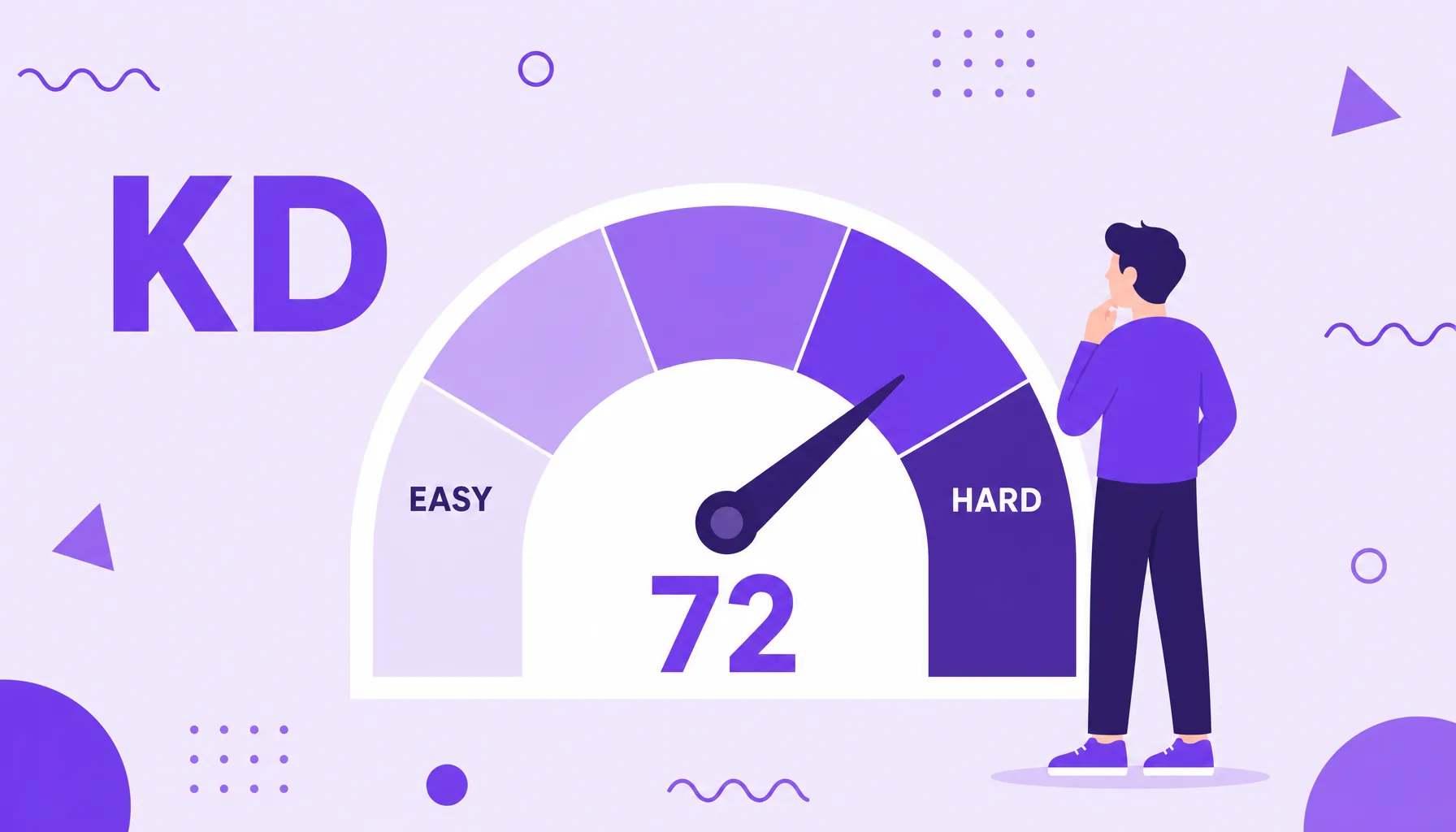
Keyword difficulty (KD) is the estimate of the effort to rank for a term against the competition. Tools calculate that score by looking mainly at:
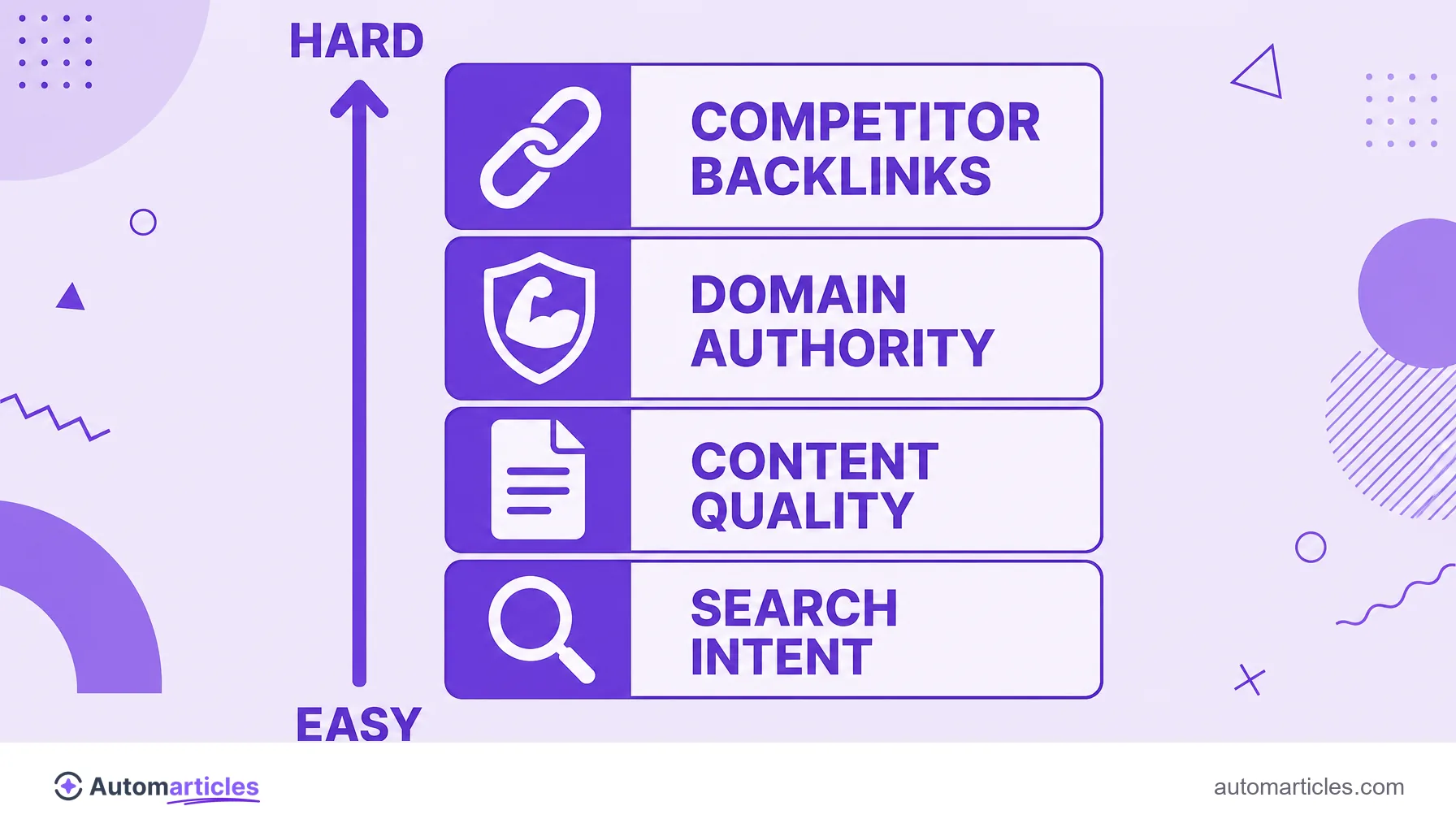
- the strength and number of backlinks of the pages already ranking;
- the authority of the domains at the top;
- the quality and depth of the competing content.
What keyword difficulty (KD) is
Keyword difficulty (KD) is an estimate of how hard it would be to place a page among the top Google results for a given term. It looks at who is already up there and measures the size of the obstacle.
Tools like Ahrefs, Semrush and Moz translate that contest into a score, almost always from 0 to 100. A low KD indicates that the competitors at the top are weak or that the search is lightly contested; a high KD signals very strong pages holding the first positions. Working this indicator well is a central part of keyword research, because it helps separate reachable terms from distant dreams.
Keep in mind that keyword difficulty is always relative: the same term can be easy for a strong site and hard for a new blog. The number is a reference point, not an absolute truth.
How keyword difficulty is calculated
Each tool has its own formula, but almost all start from the same main ingredient: the links of the pages already ranking. The logic is direct: if the top ten positions are held by pages with many backlinks, it will take a lot of strength to join that group.
The most common factors in the calculation are:
- Backlinks of the top pages: how many different domains point to the results already ranking.
- Domain authority: metrics such as Domain Rating and domain authority sum up the overall strength of the competitors.
- Content quality: some tools also consider depth, relevance and how well the content answers the search.
No wonder links weigh so much. In a study of 11.8 million results, Backlinko found that the page in the first position has, on average, 3.8 times more backlinks than the pages in positions 2 to 10. That is why KD is, to a large extent, a snapshot of the competition's link strength.
KD is not everything: intent, your site and the SERP
Relying only on the difficulty score is a classic mistake. KD is a useful summary, but it ignores context that changes everything. Three points deserve attention:
- Search intent: the search intent behind the term defines the format that ranks. A low KD on a search that only shows stores does not help someone writing an article.
- Your site's strength: a KD of 40 is easy for an established domain and hard for a new blog. Difficulty is always relative to who is trying.
- What the SERP actually shows: the SERP analysis reveals nuances the score does not capture, such as weak results, forums or outdated content at the top.
The scale of the challenge also has a backdrop: in an analysis of billions of pages, Ahrefs found that 96.55% of pages get no organic traffic from Google. Most content never ranks, and choosing terms with matching difficulty is exactly what separates those who stay in that 96% from those who get traffic.
How to assess difficulty in practice (step by step)
The tool's score is the starting point, not the final decision. A simple routine to assess a term with your own eyes:
- Search the term on Google: see who holds the top ten positions and what kind of page appears.
- Check the competitors' authority: if the top is dominated by strong brands, the effort will be large; if there are small blogs and forums, there is an opening.
- Analyze the content depth: read what ranks. Can you answer better, with more examples, data and clarity?
- Look at the link profile: top pages with few backlinks are a good sign of opportunity.
- Compare with your reality: cross all of this with your site's current strength before deciding.
This manual reading complements the number and avoids two traps: discarding an easy term just because the score looked scary, or investing months in an impossible term just because the volume was tempting.

Difficulty vs volume: how to pick words worth it
The instinct to aim at very high volume terms usually comes at a high cost. They almost always bring the greatest difficulty and the heaviest competition. For most sites, the best balance lies in medium or low difficulty terms with clear intent.
This is where the long tail strategy comes in: longer, more specific searches, with less search volume, but also with lower KD and more defined intent. Winning dozens of these searches usually brings more qualified traffic than dreaming of a single, giant, unreachable term.
The practical recommendation for beginners: prioritize low KD terms to win the first positions, gain authority and only then move to more contested words. Building difficulty by difficulty is the sustainable path.
Tools to measure keyword difficulty
There are several tools to estimate KD, each with its own scale. The most used are:
| Tool | How it shows difficulty |
|---|---|
| Ahrefs | Keyword Difficulty (KD) from 0 to 100, based mainly on the backlinks of the top pages. |
| Semrush | Keyword Difficulty as a percentage, combining authority, links and SERP signals. |
| Moz | Keyword Difficulty from 0 to 100, tied to Moz's authority metrics. |
Because the scales differ, a KD of 35 in one tool does not equal exactly a KD of 35 in another. Use the score as a reference within the same tool and always confirm with a look at the real SERP. The number guides; the results page decides.