
O que é um crawler (web crawler) e como funciona no SEO
Por Tiago CostaAtualizado em 2 de julho de 2026
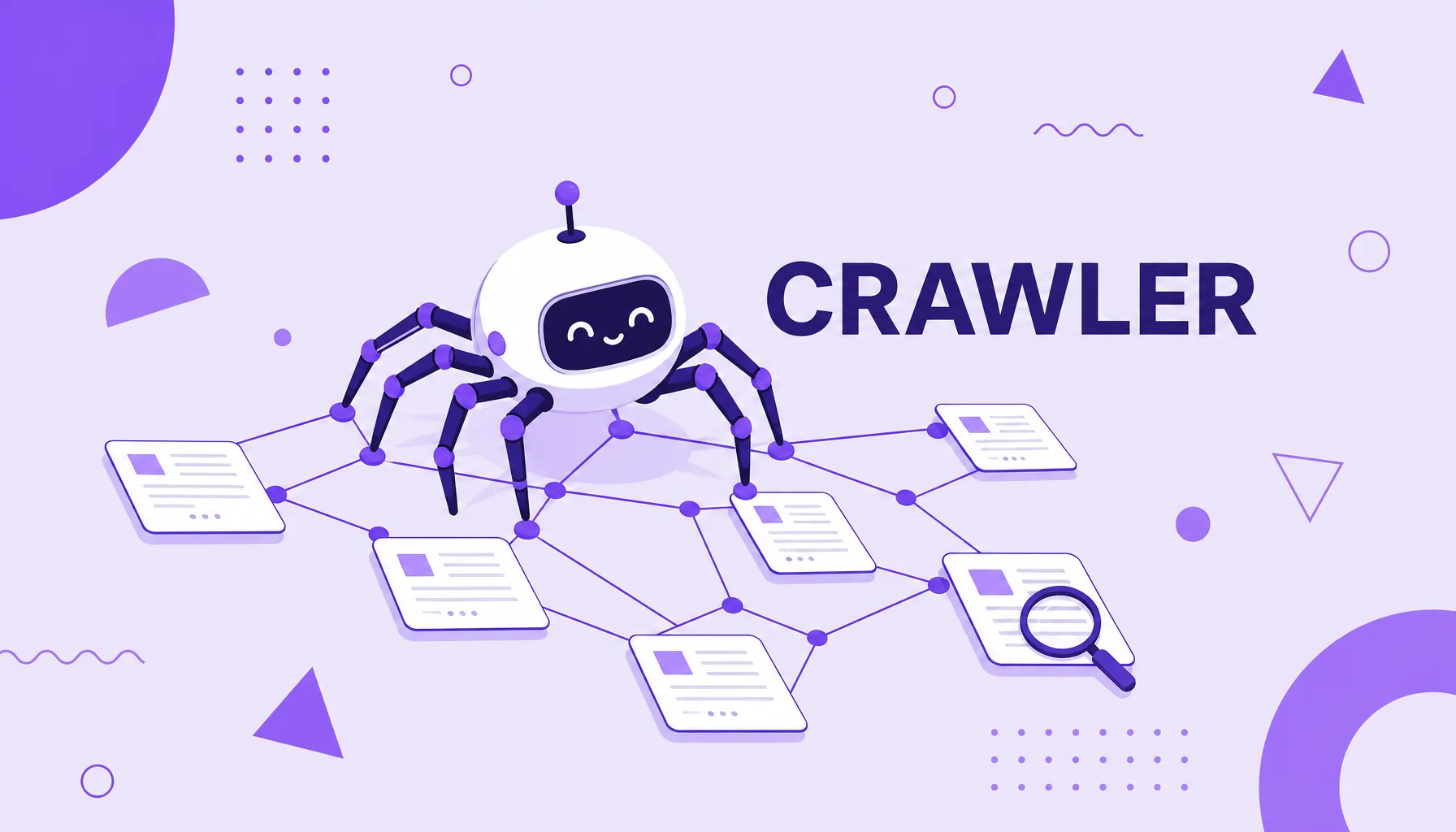
Crawler (ou web crawler) é o robô que os buscadores usam para descobrir e ler as páginas da web. Na prática, um crawler:
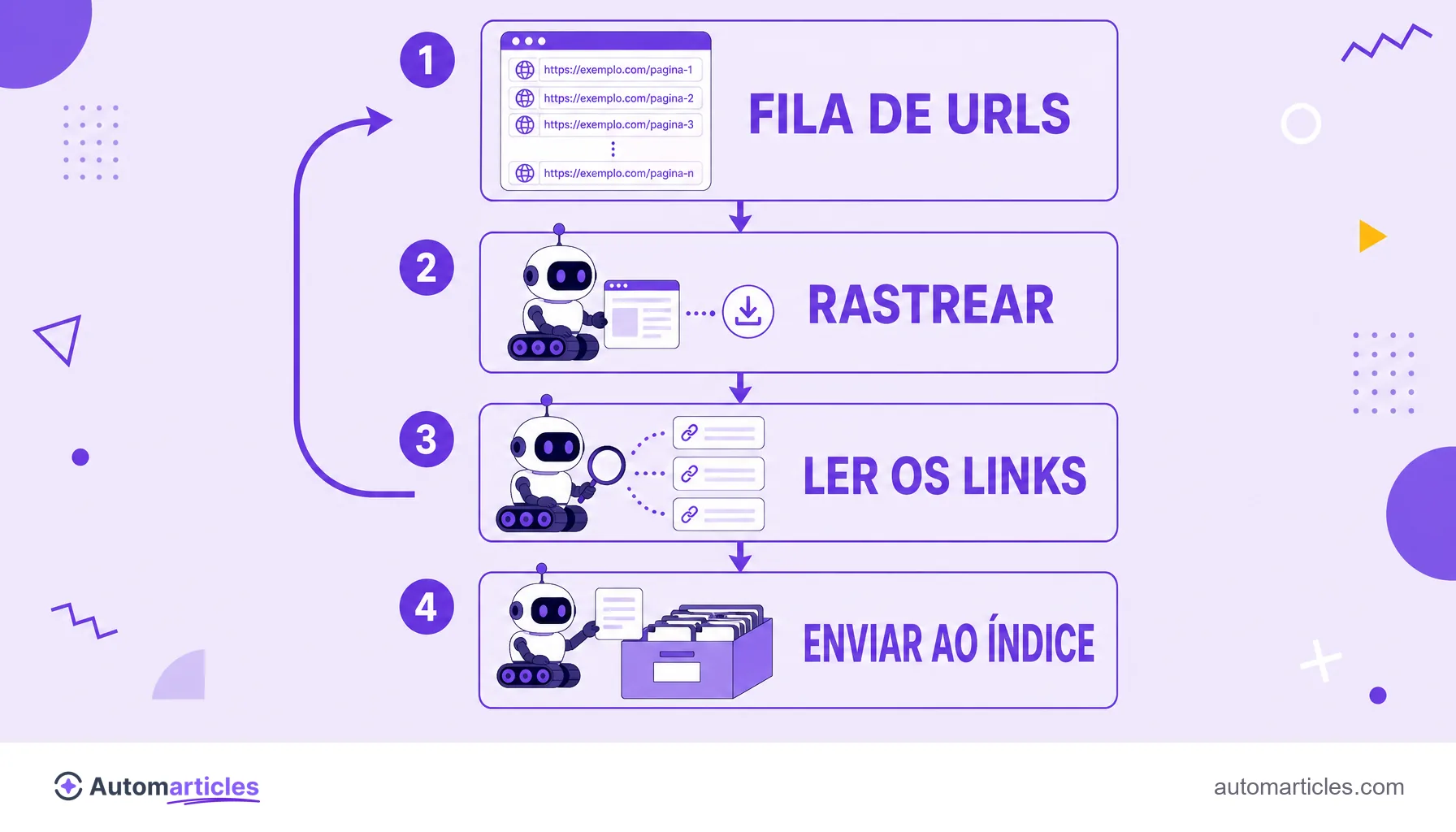
- parte de uma lista de URLs conhecidas e visita cada página;
- lê o conteúdo e segue os links para achar novas páginas;
- envia o que encontra para o índice do buscador;
- respeita instruções como o robots.txt e a tag noindex.
O que é um crawler e como ele funciona
Um crawler é um programa automatizado que navega pela web de forma sistemática, saltando de link em link para descobrir e ler páginas. Ele recebe vários nomes que significam a mesma coisa: web crawler, spider (aranha), robô ou bot. O mais famoso de todos é o Googlebot, o rastreador do motor de busca do Google.
O funcionamento é um ciclo simples que se repete em escala gigantesca. O crawler começa com uma lista de URLs já conhecidas, visita cada uma, lê o HTML da página, extrai todos os links encontrados e adiciona os novos endereços a uma fila para visitar depois. Assim, página após página, ele mapeia a web inteira.
A escala desse trabalho é difícil de imaginar. Segundo a documentação do Google sobre como a Busca funciona, o índice alimentado por esses rastreadores já cobre centenas de bilhões de páginas e ocupa mais de 100 milhões de gigabytes. Tudo isso começa com o passo mais simples: um robô visitando um endereço.
Rastreamento, indexação e ranqueamento: onde o crawler entra
É comum confundir o trabalho do crawler com o buscador inteiro, mas ele é só a primeira de três etapas. Entender essa divisão evita muito erro de SEO:
- Rastreamento (crawling): o crawler encontra e baixa a página. É aqui que o robô entra em cena.
- Indexação: o buscador analisa o conteúdo baixado e o guarda no índice. Veja o processo de indexação em detalhe.
- Ranqueamento: quando alguém pesquisa, o buscador ordena as páginas já indexadas por relevância.
A consequência prática é importante: ser rastreado não garante ser indexado, e ser indexado não garante ranquear bem. Mas nada acontece sem a primeira etapa. Se o crawler não consegue acessar uma página, ela simplesmente não existe para o buscador, por melhor que seja o conteúdo.
Os principais crawlers da web (e os novos bots de IA)
Cada grande plataforma tem o seu próprio crawler, e conhecer os principais ajuda a interpretar os acessos que aparecem nos registros do servidor. Os mais relevantes hoje:
| Crawler | De quem é e para que serve |
|---|---|
| Googlebot | Rastreador do Google, alimenta o maior índice de busca do mundo. |
| Bingbot | Rastreador do Bing, da Microsoft. |
| GPTBot | Bot da OpenAI, coleta conteúdo para treinar modelos de IA. |
| ClaudeBot e PerplexityBot | Rastreadores de assistentes de IA que buscam conteúdo para responder e citar. |
A grande novidade dos últimos anos foi justamente a chegada dos crawlers de inteligência artificial. Além de buscar para indexar, eles buscam para treinar modelos e para gerar respostas em tempo real, o que torna a decisão de permitir ou bloquear cada bot uma escolha estratégica de conteúdo.
Como controlar o que o crawler acessa
Você não é refém do crawler: existem várias formas de orientar por onde ele passa e o que faz com o que encontra. As principais ferramentas:
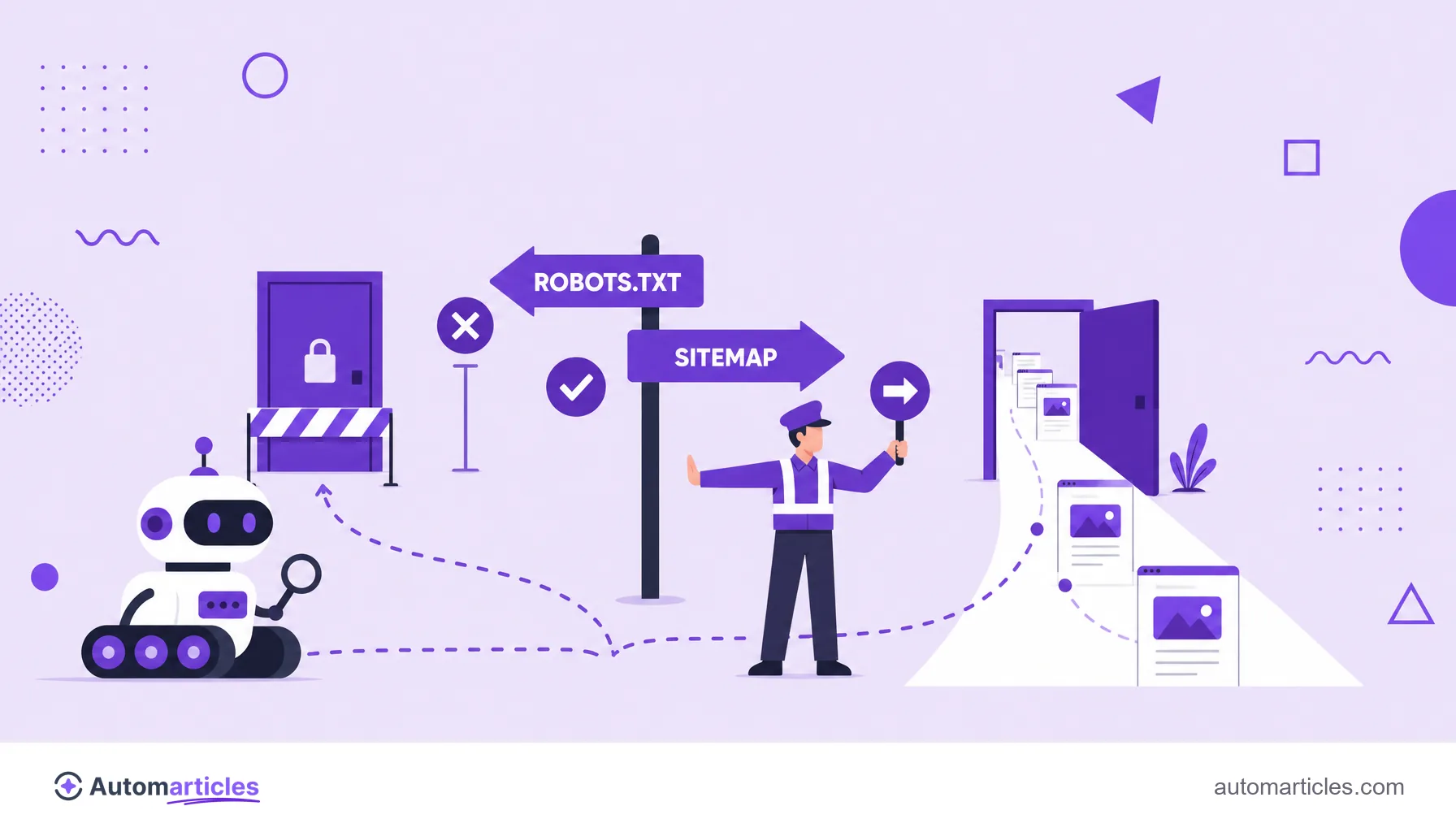
- robots.txt: o arquivo de robots.txt diz aos robôs quais áreas do site eles podem ou não rastrear.
- Sitemap: o sitemap XML entrega ao crawler uma lista organizada das URLs importantes, facilitando a descoberta.
- Orçamento de rastreamento: em sites grandes, cuidar do crawl budget garante que o robô gaste o tempo dele nas páginas que importam.
- Noindex: a diretiva de noindex deixa o crawler ler a página, mas pede que ela fique fora do índice.
Um alerta que vale ouro: robots.txt e noindex resolvem problemas diferentes. O robots.txt impede o rastreamento; o noindex impede a indexação. Bloquear no robots.txt uma página que você queria desindexar impede o robô de ver o noindex, e o tiro sai pela culatra.
Crawler é crime? Bots do bem e bots do mal
Rastrear a web pública não é, em si, ilegal. Buscadores fazem isso o tempo todo, e é graças a esses robôs que a internet é pesquisável. A linha entre um bot legítimo e um problemático está no comportamento, não na tecnologia.
Um crawler do bem se identifica, respeita o robots.txt, controla a frequência de acesso para não sobrecarregar o servidor e coleta apenas conteúdo público. Já práticas como ignorar o robots.txt, raspar dados pessoais ou protegidos, burlar logins ou derrubar um site com excesso de requisições podem, sim, violar termos de uso e leis, e é aí que mora o risco.
A dimensão do tráfego automatizado ajuda a entender a preocupação. O relatório de bots da Imperva estimou que quase metade de todo o tráfego da internet (49,6% em 2023) veio de robôs, e não de pessoas. Nem todo bot é bem-vindo, por isso saber distinguir o rastreador de um buscador de um raspador abusivo faz parte do trabalho de quem cuida de um site.
Como facilitar o trabalho do crawler no seu site
Quanto mais fácil for para o crawler encontrar e entender suas páginas, maior a chance de elas serem indexadas rápido. Um checklist prático:
- Mantenha um sitemap atualizado: ele é o mapa que aponta o robô para as páginas certas.
- Capriche nos links internos: páginas sem nenhum link apontando para elas (as órfãs) dificilmente são descobertas.
- Cuide da velocidade: páginas que carregam rápido permitem que o robô rastreie mais em menos tempo.
- Evite becos sem saída: corrija links quebrados e cadeias de redirecionamento que desperdiçam o rastreamento.
- Confira o acesso: a ferramenta de inspeção de URL mostra como o Googlebot enxerga uma página específica.
No fim, ajudar o crawler é ajudar a si mesmo. Uma arquitetura limpa, rápida e bem interligada é lida com facilidade pelos robôs e, não por acaso, também oferece uma experiência melhor para as pessoas.