
Google Spam Update: qué es y cómo combate Google el spam
Por Tiago CostaActualizado el 2 de julio de 2026

El Google Spam Update es una actualización que refuerza los sistemas automáticos antispam de Google. Suele apuntar a prácticas como:
- contenido generado en masa y de baja calidad;
- abuso de reputación de dominio y de contenido de terceros;
- cloaking, textos ocultos y páginas engañosas;
- esquemas de enlaces creados para manipular el ranking.
Qué es un Google Spam Update
Spam update es el nombre que Google da a las actualizaciones dirigidas exclusivamente a combatir el spam en los resultados de búsqueda. En lugar de cambiar la forma en que evalúa la calidad general de las páginas, el buscador mejora los sistemas que detectan y degradan contenidos que violan sus políticas contra el spam.
Estas actualizaciones suelen aplicarse mediante un sistema automático que Google llama SpamBrain, un mecanismo basado en inteligencia artificial que identifica patrones de manipulación a escala. Cuando una de estas actualizaciones se lanza, rastrea la web en busca de señales de prácticas de black hat, las tácticas que intentan engañar al ranking en vez de merecer la posición.
En la práctica, un spam update no castiga a quien comete un desliz puntual, sino a quien construye el crecimiento sobre técnicas prohibidas. Es Google cerrando las brechas que algunos sitios explotan para posicionar sin entregar valor.
Qué penaliza el spam update
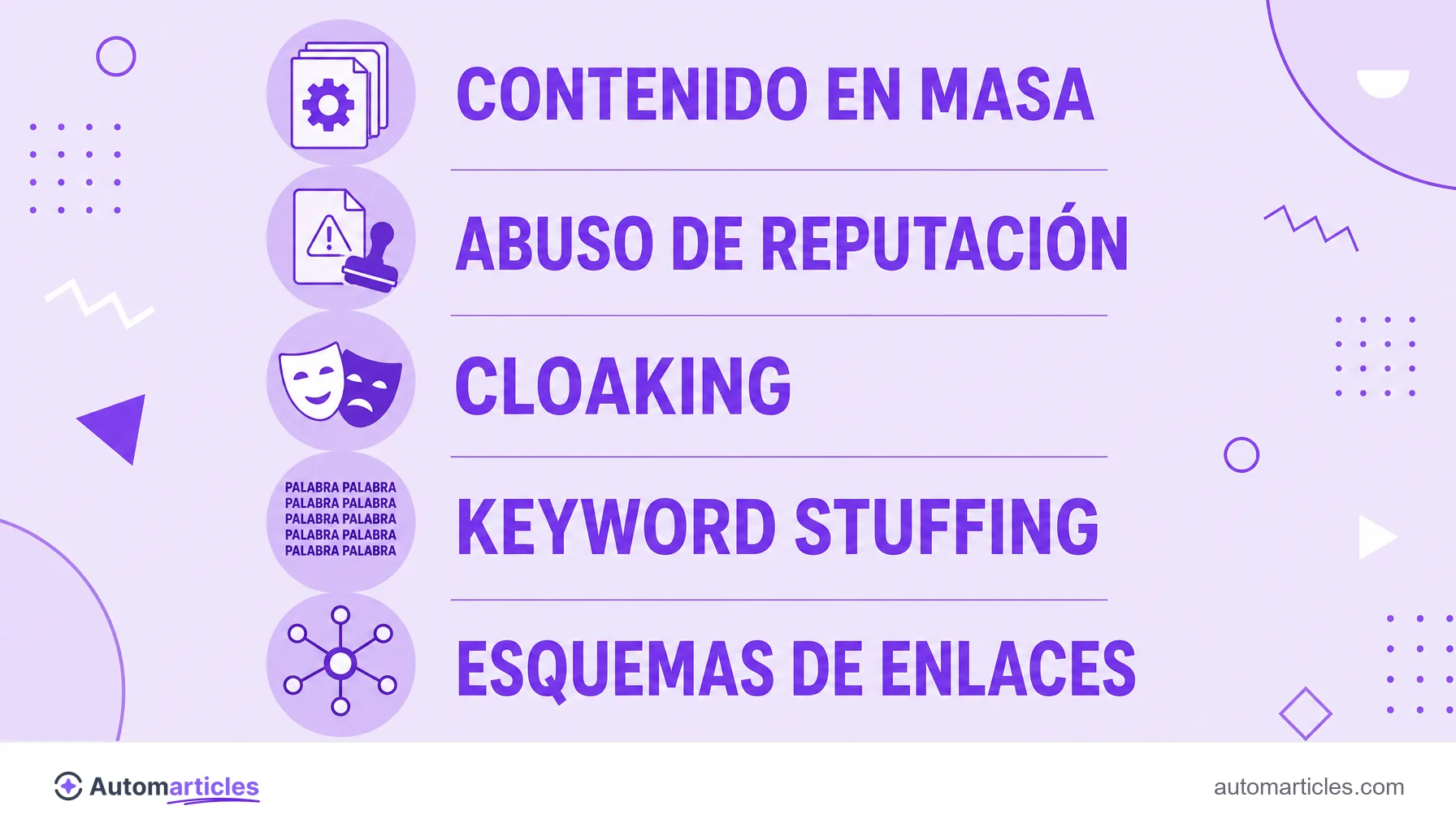
Cada spam update puede centrarse en un conjunto de prácticas, pero algunas violaciones son objetivos recurrentes. Las principales son:
- Contenido generado en masa: páginas producidas a escala, muchas veces por IA, solo para posicionar, sin revisión ni valor propio.
- Abuso de reputación del sitio: publicar contenido de terceros de baja calidad en un dominio fuerte solo para aprovechar su autoridad.
- Cloaking y páginas engañosas: mostrar al buscador algo distinto de lo que ve el usuario, práctica detallada en la entrada de cloaking.
- Keyword stuffing: el exceso artificial de palabras clave en un intento de forzar relevancia.
- Esquemas de enlaces: compra de enlaces, link farms y redes creadas solo para inflar la autoridad.
Buena parte de estos objetivos se solapa con el contenido pobre: cuando la página no entrega valor y encima usa trucos para posicionar, se convierte en candidata natural a ser alcanzada por un spam update.
Spam update y el contenido generado por IA
La gran novedad de los spam updates recientes es el foco en el contenido generado en masa por inteligencia artificial. Google dejó claro que no penaliza la IA en sí, sino el uso de la IA para producir páginas a escala, sin originalidad, con el único objetivo de manipular la búsqueda.
La preocupación se basa en la realidad de los resultados. Un estudio continuo de Originality.ai estima que cerca del 17% de los veinte primeros resultados de Google ya son generados por IA, un nivel muy por encima del registrado hace pocos años. Ese crecimiento ayuda a explicar por qué el buscador reforzó los sistemas antispam justamente contra la producción automatizada de bajo valor.
La salida para quien usa IA de forma legítima es sumar curaduría humana, datos verificables y señales de experiencia y autoridad. Lo que separa un buen contenido asistido por IA de un spam generado por IA no es la herramienta, sino el valor real entregado al lector.
Spam update frente a core update: cuál es la diferencia
Es común confundir los dos tipos de actualización, pero tienen propósitos distintos. Entender la distinción ayuda a diagnosticar una caída de tráfico:
| Spam update | Core update |
|---|---|
| Combate violaciones de las políticas contra el spam. | Reevalúa la calidad y la relevancia generales de los resultados. |
| Alcanza a quien usa técnicas manipuladoras. | Puede afectar a cualquier sitio, incluso sin violaciones. |
| La recuperación depende de eliminar el spam. | La recuperación depende de mejorar la calidad del contenido. |
Si tu sitio cayó durante un spam update, el camino es cazar y corregir prácticas prohibidas. Una caída en un core update, en cambio, pide una mirada más amplia sobre la calidad y la utilidad del contenido. Diferenciar los dos evita perder tiempo arreglando el problema equivocado.
Cómo recuperar un sitio afectado por un spam update
Recuperarse de un spam update es posible, pero rara vez rápido: Google solo reprocesa el sitio en la actualización siguiente o a medida que vuelve a rastrear las páginas. El trabajo es de limpieza y paciencia. Una rutina:
- Identifica la violación: compara la fecha de la caída con los anuncios de actualización y revisa las políticas contra el spam para hallar lo que se incumplió.
- Elimina el contenido problemático: borra o reescribe páginas generadas en masa, duplicadas o engañosas.
- Limpia el perfil de enlaces: en casos de enlaces artificiales, elimina lo que puedas y usa el disavow para los enlaces tóxicos que queden.
- Migra a prácticas white hat: sustituye los atajos por técnicas white hat y por un link building basado en el mérito.
- Documenta y espera: registra todo lo corregido y sigue el rendimiento en las próximas actualizaciones.
No existe un botón de recuperación instantánea. La señal que Google espera es la consistencia: un sitio que abandonó el spam de una vez y pasó a merecer las posiciones que ocupa.

Cómo prevenir los spam updates
La mejor defensa contra un spam update es no depender nunca del spam. Los sitios construidos sobre buenas prácticas rara vez sienten estas actualizaciones, e incluso ganan posiciones cuando caen competidores manipuladores. Algunos principios:
- Produce para personas: escribe contenido útil, original y revisado, pensando primero en quien lee.
- Huye de los atajos: nada de contenido en masa sin curaduría, compra de enlaces ni trucos técnicos.
- Construye autoridad real: gana menciones y enlaces por mérito y profundiza los temas para reforzar la autoridad temática.
- Cuida la experiencia: páginas rápidas, honestas y fáciles de navegar transmiten confianza al usuario y al buscador.
- Monitoriza las actualizaciones: sigue los anuncios oficiales para reaccionar pronto ante cualquier oscilación.
Ver cada regla de Google como un suelo, y no como un techo, es lo que mantiene un sitio inmune a la mayoría de los spam updates con el tiempo.